The Annapurna region features Tilicho Lake Trek among its most thrilling and hazardous walking trails. One of the highest lakes in the world, Tilicho Lake, is situated at an altitude of 4919 meters (16138 feet) above sea level. It is a pristine glacier lake with the backdrop of the Himalayas range.
The Tilicho Lake Trek is a journey to the foothills of the world’s 10th highest mountain, Annapurna, reaching up to Tilicho Lake. The route to Tilicho Lake provides views of various terrains that combine forested areas with treeless high places alongside villages of Gurung and Manangba populations.
Your journey begins as you step out of Kathmandu, bringing you to the proximity of the Himalayas. Moreover, the trek is not just about the Himalayas and the Lake. It is also about the swift-flowing rivers and cascading waterfalls on the trail with cultural immersion.
Tilicho Lake is located in the Annapurna region of Nepal, within the Annapurna Conservation Area. The lake is situated near Tilicho Peak (7134 meters/23,405.5 ft) and Thorong La Pass (one of the highest passes in the world).
History and Significance of Tilicho Lake
Tilicho Lake is an important sacred site that has particular significance to the Hindu and Buddhist cultures.
The Ramayana mentions Tilicho Lake in Hindu mythology because the legend says sage Kak Bhusundi first told Garuda (the celestial eagle) the epic tale at this sacred location.
People of Hindu faith consider this mountain lake a sacred site because eating in its water both cleanses their sins and brings peace to their souls. The lake gets regular pilgrims from Gurung and Manangba communities for religious purposes combined with prayers.
Trek Facts
Trek Name: 12 Days Tilicho Lake Trek Region: Annapurna Conservation Area, Nepal Beginning Point: Kathmandu (1400 m/4593 ft) Trek Beginning point: Jagat (1300 m/4396 ft) Trek Ending point: Manang (3540 m/11614 ft) Duration: 12 days Trek Distance: 120 km/ 75 miles Difficulty: Moderate Maximum Elevation: 4919 meters (16138 feet) at Tilicho Lake Best Season to Visit: Autumn and Spring Accommodation: Teahouse/Guesthouse/Hotel Transportation: Private Jeep/Public bus/Flight Permit: Annapurna Conservation Area Permit (ACAP), TIMS
Highlights of Tilicho Lake Trekking
Experience remote trekking to the world’s highest-altitude lake, Tilicho Lake, at 4,919 meters.
The thrill of walking on the classic Annapurna Circuit Route and living in proximity to the Himalayas.
Views of towering peaks like Dhaulagiri, Mt. Annapurna I, Mt. Manaslu, Gangapurna, Tilicho Peak and more.
Witness the rich Tibetan Buddhist culture of the locals and their unique lifestyle, which includes many Gompas and monasteries to visit.
Rich sub-tropical forest in the Annapurna Conservation area.
You might encounter snow leopards, musk deer, langur monkeys, red pandas, spotted deer, and hundreds of birds and butterflies.
Cross the popular 22 Ghumti at while reaching Tilicho Lake.
Visit Apple Orchid and try apple local delicaies of the region.
Geography and Climate of Tilicho Lake
Many people ask where is Tilicho Lake located? Tilicho Lake is located in Manang district in Annapurna Conservation Area. Tilicho Lake covers 4.8 square kilometres of terrain in a 3.9-kilometre-long area with a 1.6-kilometre breadth.
The lake gathers water from surrounding peak glaciers that create its turquoise appearance during seasonal transitions. Climate varies widely throughout the season across this region.
Travellers consider spring months from March through May together with autumn months from September to November as the optimal periods for trekking because of their clear skies and mild temperatures.
The extreme winter weather delivers thick snowfall which complicates the journey while monsoon conditions result in dangerous trail conditions due to slippery surfaces.
New Route from Mustang to Tilicho Lake
For many years, trekkers have reached Tilicho Lake through Khangsar and the Tilicho Base Camp, starting from Manang. The newer and shorter Mustang route has recently become the preferred path for visitors.
The journey from Jomsom Mustang’s administrative capital brings trekkers directly to Tilicho Lake in a single day. The path combines off-road biking and trekking throughout its distance.
Trekkers crossing 22 Ghumti of Tilicho Lake
The next stop for travelers coming from Jomsom is Mesokanto Pass which is at 5200 meters high. The difficult trek across Mesokanto Pass requires seven hours before trekkers can continue their hike for one more hour to finally arrive at the lake.
The descent from Jomsom to the destination takes between two and three hours to complete. Trekkers seeking to experience this difficult trail should acclimate properly and prepare carefully since it crosses extreme high elevations and uneven terrain.
Culture and Wildlife on Tilicho Lake Trekking
Landscapes
The landscapes range from the green plain land of Besisahar to the desert-like terrains of Manang on Tilicho Lake trekking. As you trek to higher altitudes, the trail passes through alpine pastures, rocky ridges, and high-altitude glacial terrains before reaching Tilicho Lake.
Tilicho, at nearly 5000 meters (above 1600 ft), is a wonderful trek destination in the Himalayas of Nepal. The difference between the lowland subtropical area and the snow-capped peaks makes the journey awe-inspiring.
Wildlife
This trek lies within the Annapurna Conservation Area, which houses a variety of wildlife. Blue sheep, Himalayan Taha, snow leopard, musk deer, and many more animals can be seen during Trekking Tilicho Lake.
It is also a great trek for bird watchers. You might be able to see Himalayan griffons, lammergeiers, etc., during the trek.
People
The Tilicho Lake Trek passes through villages, with the majority of people being Gurung, Thakali, and Manangi. The Manang district, where Tilicho is located, has a population of 5658, according to the census of Nepal 2021. Moreover, there are 1671 people in Nason rural municipality, where the Tilicho lake is situated.
The people living here follow Buddhism and are influenced by Tibetan culture. The people are engaged in trade with Tibet.
Culture
The people living in the Manang Tilicho Lake region are influenced by Tibetan culture. The prayer wheels, prayer flags, Buddhist temples, and chortens (stupas) along the way are evidence of Tibetan culture.
Further, Lhosar, the Tibetan New Year, is a famous festival celebrated in this region. The people of Manang and surrounding villages have preserved their unique customs, language, and lifestyle. So, whenever you are on a Tilicho Lake journey, you can expect to experience them all.
Where Does Tilicho Trek Start?
Frozen Tilicho Lake.
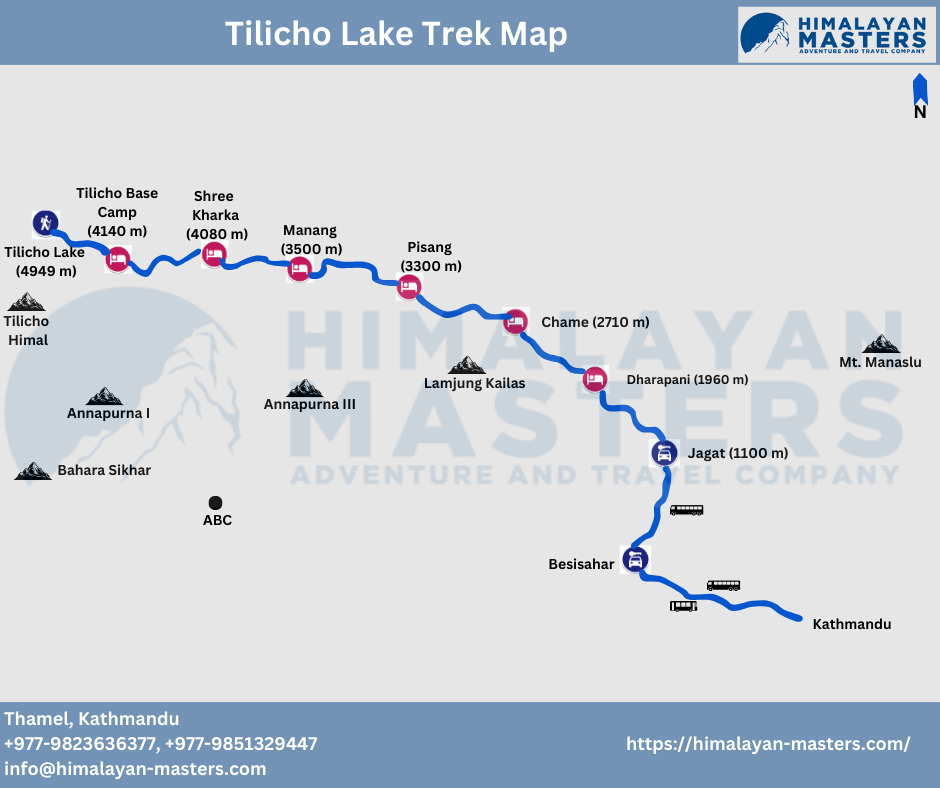
As per this Tilicho Trek Itinerary, prepared by our experts’ group, we will follow the same trek route as the popular Annapurna Circuit Trek until Manang. Firstly, we need to drive to Besisahar and take a private shared jeep to Jagat, then start trekking to Dharapani on the next day.
You will be strolling past the forest of fern, bamboo, and oak, as well as vibrant rhododendron forest, apple orchards, and other wildflowers during its season.
With many such wonders, we reach Manang village on the 5th day. We can visit this beautiful village before heading towards Tilicho Lake. You can see mules grazing on a large pasture land or carrying goods as you walk by.
After a beautiful time in Tilicho Lake, we trekked back to Siri Kharka and followed the exact same route to Kathmandu.
A Typical Day on Tilicho Lake, Nepal
A general schedule of the Tilicho Lake Trek with Himalayan Masters starts with an early meal. After you wake up in the teahouse or the lodge where you spend the night, you will be greeted with a beautiful sunrise view and breakfast.
Following breakfast, you will sort out your daypack, where you will carry items like water, a couple of snacks, a camera, and some spare clothes. The trekking guide will let you know the plan for the day regarding the hike, the type of terrain expected, and the weather forecast.
You will then begin the trekking along marked trails, passing through fields, forests, and eventually alpine meadows. The morning trek always takes 3-4 hours, and it is accompanied by rest stops for a break, to drink water and to have a look at the beautiful views.
Lunch will be at around noon at some teahouse or lodge, depending on the trail that is taken. After lunch, the trekking goes for another 2-3 hours up to the next reachable teahouse or lodge, where you spend the night.
There you can have dinner in at around 7 to 8 pm. Remember to savour Nepali or mountainous delicacies. In the evening, after the dinner, the guide will provide you with the information concerning the following day and possible changes or additional arrangements if required.
Notes to Remember about Tilicho Lake Trekking
You will be trekking for 7-10 days on a strenuous route reaching up to a maximum elevation of 4919 meters. So, it is recommended that you acclimatize, take enough rest, and do some physical training.
Spring and autumn are the best season for Tilicho Lake Trek. Winter and monsoon seasons are really challenging.
Although there are ATMs and banks in Chame, we recommend that you exchange your money in Kathmandu.
Carry all your essential documents and permits for the Tilicho Lak Trek.
You can customize your trek and complete it in at least 5 days and up to about 15 days.
Do not carry unnecessary items and valuables; pack light.
A porter can carry a maximum weight of 26 kg. However, if you have less weight, you can share a porter.
Respect local culture and customs. Therefore, wear decent and avoid any revealing clothes.
The 12 Days Itinerary Outline Table of Tilicho Lake Trekking
Day
Itinerary
Sleep Altitude
Time
1
Drive to Jagat from Kathmandu via Besisahar
1300 m
9 hr
2
Trek to Dharapani from Jagat
1860 m
6-7 hr
3
Trek to Chame from Dharapani
2670 m
6-7 hr
4
Trek to Upper Pisang from Chame
3300 m
5-6 hr
5
Trek to Manang from Upper Pisang
3540 m
7-8 hr
6
AcclimatizationDay at Manang (hiking options)
3540 m
—
7
Trek to Siri Kharka from Manang
4060 m
4-5 hr
8
Trek to Tilicho Base Camp from Siri Kharka
4150 m
5 hr
9
Trek to Tilicho Lake & back to Siri Kharka
4060 m
7-8 hr
10
Trek back to Bhraka (Braga) from Siri Kharka
3360 m
4-5 hr
11
Trek back to Lower Pisang & drive to Besisahar
760 m
8 hr
12
Drive back to Kathmandu from Besisahar
1400 m
6-7 hr
Itinerary
Expand All
Day 01:
Drive to Jagat from Kathmandu via Besisahar
Your Tilicho Lake Trek starts from Kathmandu. Once you have breakfast in your hotel early in the morning, then we will pick you up and head towards today’s destination, Jagat.
We will be driving along the Trishuli River, which is one of the major rivers of Nepal, through the Prithivi Highway. After driving for about 6 to 7 hours, we will reach Besisahar, which is about 175 km (109 miles) drive.
If you are driving in a private vehicle, you can ask the driver to stop anywhere for short breaks, lunch, and to witness the awe-inspiring scenery.
From Besisahar, we will take a private shared jeep and drive for an additional 35 km (22 miles) to reach Jagat for about 2 hours. We will spend overnight in Jagat.
About Besisahar
Besisahar is the regional headquarters of Lamjung district. Besisahar has a well-established settlement, which serves as an entry point for several treks in the Annapurna region, like Annapurna Circuit Trek, Nar Phu Valley Trek, Ghale Gaun Cultural Trek, etc.
You can find a good quality guesthouse here, with an attached bathroom, hot shower, Wi-Fi, etc. Additionally, you can eat Nepali and Western cuisines, which are available on the menu.
About Jagat
Jagat is a small local village situated above the Marsyangdi River. One of the attractions of this village is the Chyamche Waterfall. You can hike up to the waterfall and have a relaxing bath.
Teahouses Facilities in Jagat
8-10 basic teahouses.
Attached bathroom.
Hot shower, hot water, Wi-Fi, etc. are available.
Neat and warm accommodation.
Food from the menu.
: Breakfast, Lunch and Dinner
: Tea House
: 9 hours
Day 02:
Trek to Dharapani from Jagat
Trek Route: Jagat → Chyamche → Tal → Karte (Khotro) → Dharapani Beginning Point:Jagat (1340 m/ 4396 ft) Ending Point:Dharapani (1960 m/6430 ft) Distance: 15.7 km (10 miles) Total Ascent: 560 meters (1837 ft) Lunch: Tal Overnight: Dharapani
After having a hearty breakfast in the teahouse at Jagat, we will start our trek at around 8 am. Today’s destination is Dharapani, which is about 15.7 kilometres away, a 6-7 hours trek.
The trail follows the sloppy or plain uphill path. After trekking for a couple of hours, you can see Octopus Waterfall just before reaching Tal. After a 3.5 to 4-hour trek, covering around 10 km, we will stop at Tal to have lunch.
Remember to enjoy the melody of the Marsyangdi River while having lunch. After spending a couple of hours in the teahouse, we will continue our trek to Dharapani.
Dharapani is an additional 3-hour trek from Tal, around 6 km. We will arrive in Dharapani around 4 to 5 pm. You can rest there, go to Dharapani Waterfall, or visit around the village while your dinner is being prepared.
About Tal
Tal is a small local village in Nepal Tilicho Lake Trek. Besides the river Marsyangdi, Tal is situated between two mountains. There are about 8-10 normal teahouses serving local as well as some western cuisines.
The accommodations here are satisfactory enough. They offer an attached bathroom outside the room, a clean and warm bed to sleep in, Wi-Fi, a hot shower, hot water, and electronics charging for some extra fees.
About Dharapani
Dharapani is a significant village in the Annapurna region. The village serves as a checkpoint for several treks around Annapurna, including trekking to Larke-La Pass. It is also a checkpoint for the Annapurna Conservation Area Permit (ACAP) and Manaslu Pass.
Dharapani lies along the Marsyangdi River, where the teahouses and local houses are established on either side of the road. The majority of people living here are Gurungs.
Teahouses Facilities in Dharapani
8-10 good quality teahouses.
Attached bathroom.
Hot shower, hot water, heated dining hall, etc. are available.
Information board for trekker en route Tilicho Lake.
Our 3rd day’s trek route follows a complete motor road. Only at a few places, we will take a detour and take the trekking trail. As it is a motor road, you might encounter various jeeps.
However, trekking on a rocky path through the traditional village of the Gurung community. You can see the Marsyangdi River flowing against you below the lush sub-alpine forest.
After trekking for about 1.5 to 2 hours, covering about 4.5 km, you will reach Danakyu. On the way, you can visit Thonje Buddhist Monastery. Once you reach Danakyu, you can see huge tunnels for horticulture and floriculture farming, especially apple orchards.
With an additional 1-hour trek, about a 4 km trek, we will reach Timang, where we are going to have lunch today. This 1 hour’s trek goes through a beautiful pine, fir, and maple forest, and Timang Waterfall on the way.
While your lunch is being prepared, you might want to visit Timang Football Ground and have a mini-game.
After lunch, the trek continues for about 2-3 hours to reach Chame via Koto, covering nearly 8-9 km. Once you reach there, order your dinner, then you can either rest or visit the local market.
About Timang
Timang is a small Gurung Village on Tilicho Lake trekking. From here, you can see the beautiful view of Lamjung Himal and a lush jungle view.
There are about 3-4 teahouses here. Food and accommodation here might be basic but good enough. Food made from freshly prepared seasonal vegetables gives you enough energy for the trek.
About Chame
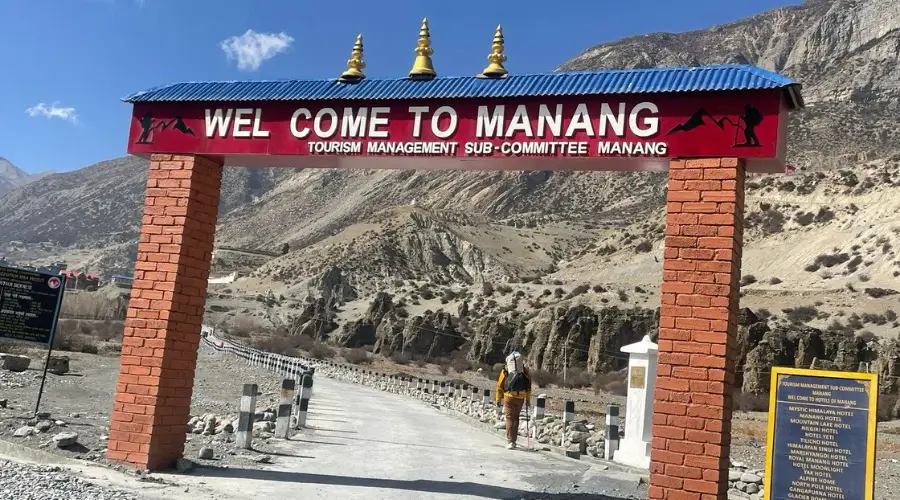
Chame is a major village surrounded by mountains during Tilicho Tal/Lake Trek Nepal. It is the headquarters of Manang district and serves as Himalayan headquarters.
There are banks, ATMs, money exchange services, hospitals, schools, district courts, army camps, jails, etc. From the village, you can see a great view of the Langtang Himal and the Annapurna range. You can also visit Hot Springs nearby.
Teahouses Facilities in Chame
20-30 good teahouses.
Big and warm beds.
Attached bathroom.
Wi-Fi, hot shower, hot water, electronics charging, etc., are available for an additional charge.
The trek from Chame to Upper Pisang is going to be around a 5-6-hour trek, covering 13 km.
After trekking for around 2 hours, we will reach Bhratang at around 10 am.
Bhratang (also known as Talekhu) is a beautiful village on the Tilicho Lake Trek map. The most alluring feature of the village is a very beautiful apple orchard. You can eat all sorts of apple products here, such as apple juice, Marpha (dried apple), wine, pie, etc. Many varieties of apple are grown here, which makes the village rather more interesting.
After exploring the apple farms, we will continue our trek to Dhikur/Dhukur Pokhari, where you will have lunch today. You can order all local and Western foods that are available on the menu.
With the invigorating lunch, we now need to head towards our day’s destination, Upper Pisang, to stay overnight. The trek after the lunch covers around 4 km, about 2 hours trek.
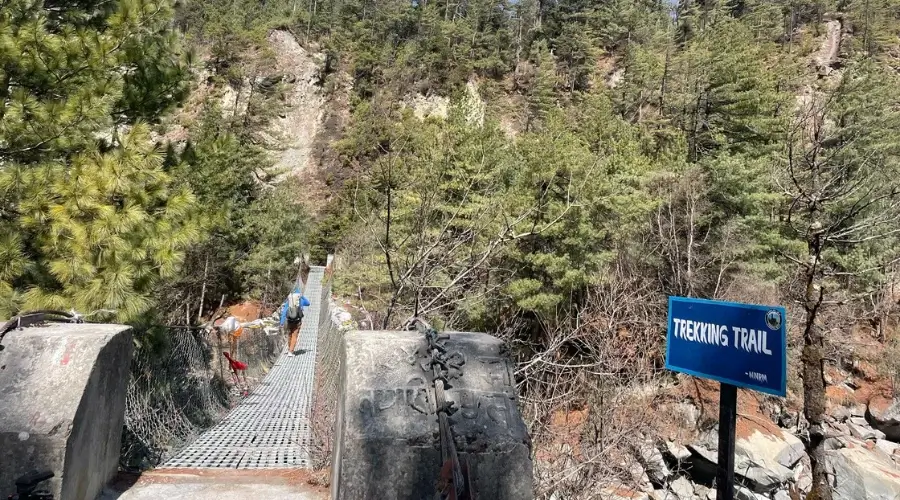
The first section of the route after lunch follows a slightly uphill path after crossing a suspension bridge, leaving a motorable road to Lower Pisang. However, just about 20 minutes before reaching Upper Pisang, you need to walk on a slightly steep trail.
Signboard of Chame Village
About Dhikur/Dhukur Pokhari
Dhikur village is located amidst the jungle, where you might be able to see various wildlife. It is a perfect place to have lunch and witness green mountain views. Although there are only 3-4 teahouses, they offer good enough food and accommodation.
About Upper Pisang
Upper Pisang is one of the notable villages in the Tilicho Lake Trek, coinciding with the trek route of Annapurna Circuit Trek. From the village, you can see several majestic mountain views of mountains like Annapurna II, III, IV, Gangapurna, Pisang Peak, and Tilicho Peak.
There is also an old monastery that you can visit. Additionally, you can see a newly built monastery opposite the mountain in the middle of the jungle. Since the majority of people are Gurung, you can experience their culture and lifestyle.
Teahouses Facilities in Upper Pisang
5-7 good quality teahouses.
Good NTC and NCELL network coverage.
Wi-Fi, hot shower, hot water, etc., are available for an additional charge.
There are two options to reach Manang: via Ongre Airport in Humde or Ghyaru. We will follow the trekking route via Ghyaru instead of the roadway via Humde.
Our 5th day’s trek route is a little challenging. You need to trek for 19 km, for about 7-8 hours. Today’s route follows flat and gradual ups and downs along the ridgeway and sloppy path.
After walking around 4 hours via Ghyaru, we will reach Nawal (Ngawal). It is our stop point for lunch. The route goes through an alpine forest comprised of trees like salla, dhupi, etc. You can see various mountains of the Annapurna range, Chulu Peak, and Pisang Peak from Nawal.
After a delicious lunch, we will then head towards our destination, Manang, to spend the night there. The route from Nawal to Mugie follows a slight downward slope.
After trekking for about an hour, we will reach Mugie, where our trek trail meets the roadways. Then, we will again trek on a motorable route to Manang. With an additional half an hour’s trek, you will reach Bhraka. Manang is now just about 1 hour away from here.
After covering almost 4-5 km, you will be in one of the most famous villages of the trip, Manang. Once you reach there, you can rest or visit around the local market and acclimatize to avoid altitude sickness.
About Nawal
Nawal is a local village on the Tilicho Trek route. There are about 5-6 good quality teahouses and a few other local houses. You might be able to see various wildlife around here, such as blue sheep, local yak, and different bird species like pheasants, Danphe, etc.
About Manang
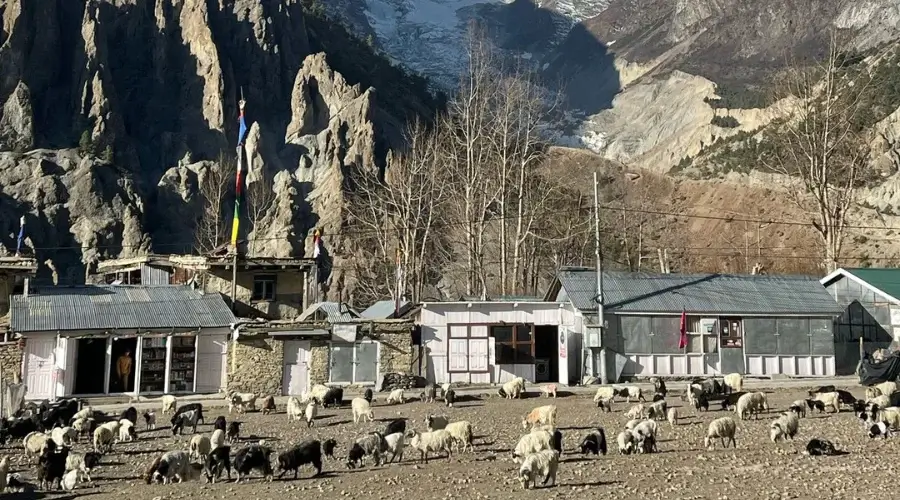
Manang, situated at an elevation of 3540 meters (11,614 ft), is a beautiful picturesque village on the Tilicho Lake route. The village is densely populated compared to other villages in the region. The majority of the people living here are dependent on agriculture or animal husbandry.
Manangi people follow Buddhism, the origins of Tibet. Manang is also a check post for ACAP. There are hospitals, boarding schools, and government schools. Around 200 households’ settlement live in this area.
You can see a great panoramic mountain view of peaks like Gangapurna and Annapurna II from the village.
In recent days, the village has also been known for its cinematic videography.
Teahouses Facilities in Manang
15-20 good quality teahouses.
Attached bathroom (shared and private rooms are available).
Wi-Fi, electricity, hot water, hot shower, etc. (available for an extra fee).
Warm and comfortable accommodation.
Heated dining hall.
: Breakfast, Lunch and Dinner
: Tea House
: 7-8 hours walking
Day 06:
Acclimatization Day at Manang
As you have been trekking continuously for 4 days and a day’s driving, you must have been pretty exhausted. So, day 6 of our Tilicho Lake Trek itinerary is a rest day or also an acclimatization day.
Today, you can rest and visit the local village and get to know the area, its people, and its culture better. Further, you can also visit the Himalayan Rescue Association (HRA) office, the Himalayan Culture Museum, or local stupas and monasteries.
However, if you wish to, there are 3 hiking options, and you can acclimatize to increasing elevation. You can visit Gangapurna Lake, Ice Lake, or visit 100-Lama Cave Monastery.
Gangapurna Lake Hiking from Manang:
It is a 3-hour trek (2 hours to go and 1 hour to return). Gangapurna Lake is a glacial lake which originates from Mount Gangapurna (7454 meters/24,455 feet). From the lake, you can see breathtaking views of the mountains surrounding the lake, with turquoise blue water.
Ice Lake Hiking from Manang:
Ice Lake, known as Kicho Tal, is a stunning high-altitude glacial lake near Manang village. The lake is situated at an elevation of 4620 meters (15,157 ft). It takes about 4 hours to reach there and 3 hours to return.
100 Lama Cave Monastery from Manang:
It is a sacred Buddhist monastery in the Manang region. Perched on a cliff, it is believed that 100 Buddhist monks/lamas lived in the cave in ancient times.
It is also believed that Guru Rinpoche (a great 8th-century Buddhist master) meditated there, adding religious and spiritual importance.
: Breakfast, Lunch and Dinner
: Tea House
: 3 hours (If you are hiking)
Day 07:
Trek to Siri Kharka from Manang
Trek Route: Manang → Khangsar → Siri Kharka Beginning Point:Manang (3540 m/11614 ft) Ending Point: Siri Kharka (4060 m/13320 ft) Distance: 8 km (5 miles) Total Ascent: 536 meters (1758.5 ft) Lunch: Siri Kharka Overnight: Siri Kharka
On the 7th day of our Manang Tilicho Lake trek, at first, we will hike on an upward route to the river. Hiking via the coniferous forests, we first reach the village of Khangsar (3734 m/12,251 ft). Khangsar is about 1.5 to 2 hours away, about 5 km, from Manang.
We can stop here for a cup of tea or coffee. It is also the farthest point up to where the vehicle can reach. Hereafter, there is no motorable road.
After a cup of tea/coffee, we now take an uphill trekking route that leads down to a river. We will cross the river and then continue on a path through the coniferous forest.
After walking for about 2 hours, we will reach the Tibetan settlement Khangsar, but we will continue our journey forward to reach Siri Kharka.
During the trek, we can see a gorgeous view of Gunsang Himal. The trek from Manag to Siri Kharka takes about 3-4 hours. Therefore, we will reach Siri Kharka for lunch and an overnight stay.
Note: If you would like, you can hike up to Upper Khangsar Viewpoint, above 4000 meters, for excellent mountain views.
About Siri Kharka
Siri Kharka is a small traditional village in the Nepal Tilicho Lake trekking. The village is situated at an elevation of around 4060 meters (13,320 ft) elevation. The area is known for alpine meadows and exploring high-altitude wildlife.
Teahouses Facilities in Siri Kharka
4-5 teahouses.
Toilet and bathroom outside.
Gas shower (water heated with gas instead of electricity).
Twin bedroom.
Wi-Fi and hot water are available for an additional charge.
Clean accommodation and food from the menu.
: Breakfast, Lunch and Dinner
: Tea House
: 4-5 hours walking
Day 08:
Trek to Tilicho Base Camp from Siri Kharka
Trek Route: Siri Kharka → Tilicho Base Camp Beginning Point: Siri Kharka (4060 m/13320 ft) Ending Point: Tilicho Base Camp (4150 m/13615.5 ft) Distance: 6 km (3.7 miles) Total Ascent: 90 meters (295 ft) Lunch: Tilicho Base Camp Overnight: Tilicho Base Camp
22 ghumti of Tilicho Lake.
From Siri Kharka, we will start the trek early in the morning and trek towards Tilicho Base Camp. The trail to Tilicho goes via the landslide-prone area on the path along the cliff.
The trek from Siri Kharka to Base Camp of Tilicho takes around 3 hours, covering approximately 6-7 km.
Although the path is formed on a rocky mountain, walking might be risky if you are not careful. For a safe and comfortable trekking experience, listen to the instructions from your guide and walk slowly.
About Tilicho Base Camp
Tilicho Base Camp is situated at an elevation of 4150 meters (13,615 ft) at the bank of Marsyangdi River. On the Tilicho Lake area path, you can see small bushes, no big timber trees.
Further, you might see wild animals such as blue sheep, musk deer, Himalayan tahr, etc., and various bird species like vultures, eagles, Himalayan pheasants, etc.
Teahouses Facilities in Tilicho Base Camp
3-4 basic teahouses.
Gas shower.
Wi-Fi, hot water, electronics charging, etc. are available.
Clean and warm accommodation.
Food from the menu is available.
Heated dining hall.
: Breakfast, Lunch and Dinner
: Tea House
: 5 hours walking
Day 09:
Trek to Tilicho Lake & back to Siri Kharka
Trek Route: Tilicho Base Camp → Tilicho Lake → Tilicho Base Camp → Siri Kharka Beginning Point: Tilicho Base Camp (4150 m/13615.5 ft) Ending Point: Siri Kharka (4060 m/13320 ft) Distance: 13.5 km (8 miles) Maximum Altitude: Tilicho Lake (4919 m/16142 ft) Total Ascent: 770 meters (2526 ft) from Tilicho Base Camp to Tilicho Lake Total Descent: 844 meters (2769 ft) from Tilicho Lake to Siri Kharka Lunch: Packed Lunch Overnight: Siri Kharka
View from Tilicho Lake Trek.
Day 9 of our trekking to Tilicho Lake Nepal is the most exciting day of our trek. Today, we will be reaching the final destination of our trek, Tilicho Lake/Tal.
The 9th day of our trek might be a little challenging. Today, we need to trek on a remote path for around 7-8 hours, covering around 13.5 km. Therefore, we have to wake early and start the trek at 6:30 to 7 am.
After having breakfast early in the morning, we will start trekking on a steep uphill route up to Tilicho Lake. After trekking for around 2 hours, covering almost 4 km, we will reach the most awaited destination of our trek, Tilicho Lake.
You can spend a couple of hours in the lake, take some photos and videos, and enjoy the tranquil environment around the lake. You can also have some snacks in one of the teashops up there; there are only 2 teashops. They only sell tea/coffee and some snacks.
Once you have enjoyed the view and all, now it’s time to return to Siri Kharka, on the same path that we took before via Tilicho Base Camp.
It takes around 1.5 hours to trek back to the Base Camp and approximately 2 hours to Siri Kharka from the Base Camp.
While returning, you will be returning with a lifetime of experiences and unforgettable memories of the trek. Remember to re-live the environment and views of the Manang Tilicho Lake Trek.
About Tilicho Lake
Tilicho Lake is the highest altitude trek in the world, situated at an elevation of 4919 meters (16,142 ft).
It is a glacial lake that is formed by the melting glaciers of the Annapurna and Tilicho peaks. The lake remains frozen almost throughout the year and only melts during the summer season.
From the lake, you see magnificent views of various mountains, such as Tilicho Himal, Annapurna Himalaya range, and Khangsar Kang (Roc Noir) peak.
Apart from just natural beauty, the lake also holds religious importance. It is a sacred destination for the locals. There is also a temple where locals worship. Further, you can observe and enjoy different festivals, such as Janai Purnima, Buddha Jayanti, Losar, and other local festivals.
: Breakfast, Lunch and Dinner
: Tea House
: 7-8 hours walking
Day 10:
Trek back to Bhraka (Braga) from Siri Kharka
Trek Route: Siri Kharka → Khangsar → Manang → Bhraka Beginning Point: Siri Kharka (4060 m/13320 ft) Ending Point: Bhraka (Braga) (3360 m/11023.5 ft) Distance: 12 km (7.4 miles) Total Descent: 716 meters (2349 ft) Lunch: Manang Overnight: Bhraka
From Siri Kharka, we will follow the same trail back to Manang village and Bhraka.
First, we will hike via Marsyangdi Valley to the village of Goths. Then, we will walk through the forest of Khangsar village and finally back to Manang Village. Manang is the lunch place on our 10th day of the Tilicho itinerary.
After walking for about 3 hours, covering nearly 8 km, we can reach Manang. While your lunch is being prepared or if you wish to visit around the Manang village, you can roam around the village for a few hours.
Once you are done, we need to continue our trek for an additional one hour, about 4-4.5 km, to reach Bhraka and spend the overnight there. Moreover, if you wish to, you can ask your guide to stay in Manang itself and arrange accommodation.
About Bhraka
Bhraka is a small, traditional village on the route of a trek to Tilicho Lake. The village, situated at an elevation of 3360 meters (11,024 ft), is known for its historic Bhraka Monastery, dating back over 500 years. The monastery is carved on a cliff, from where you can see incredible views of the Annapurna range.
The village is also popular for its rich Tibetan Buddhist culture and scenic landscapes, located along the Annapurna Circuit. There is also a chorten (Chorten de Braga) and a cave (Milarepa Cave) nearby that you can visit.
Teahouses Facilities in Bhraka
3-5 basic teahouses.
Rooms with twin beds and shared bathroom.
The dining hall area has a central heating system.
Basic local foods like Dal Bhat, noodles, pasta, soup, etc.
Hot water, charging, and Wi-Fi costs additional fees.
: Breakfast, Lunch and Dinner
: Tea House
: 7 hrs
Day 11:
Trek back to Lower Pisang & drive to Besisahar
Trek Route: Bhraka → Mugie → Humde → Lower Pisang Drive Route: Lower Pisang → Chame → Dharapani → Jagat → Besisahar Beginning Point: Bhraka (3360 m/11023.5 ft) Ending Point: Besisahar (760 m/2493.5 ft) Trek Distance: 11.3 km (7 miles) Drive Distance: 82.1 km (51 miles) Total Descent: 2600 meters (8530 ft) Lunch: Lower Pisang or on the way Overnight: Besisahar
Day 11 is the last day of our trekking.
On the first part of our 11th day of trekking, we will trek from Bhraka via many villages, such as Mugie and Humde, and reach Lower Pisang. It is going to take around 3 hours, around 11 km, to reach Lower Pisang.
We will have some lunch here and take a private shared jeep to Besisahar on the same path that we took before.
Besisahar is around 82 km away from Lower Pisang. You can now enjoy a comfortable ride and enjoy the views from the window of your vehicle. Recall all your Tilicho Lake Trekking memories from before. If you have missed any place to visit before or make a short stop, you can ask your driver to stop anywhere.
About Lower Pisang
Lower Pisang (3200 m/10,499 ft) is a beautiful local village en route to Tilicho Lake. There are around 7-10 basic teahouses with basic facilities here. Although the teahouses are basic, they offer good quality food and accommodation. There are many other local households living on the banks of the Marsyangdi River.
: Breakfast, Lunch and Dinner
: Tea House
: 3 hours walking and 4-5 hours driving
Day 12:
Drive back to Kathmandu from Besisahar
Drive Route: Besisahar → Mugling → Malekhu → Kathmandu Beginning Point: Besisahar (760 m/2493.5 ft) Ending Point:Kathmandu (1400 m/ 4600 ft) Besisahar to Kathmandu Distance: 175 km (108.7 miles) Total Ascent: 640 meters (2100 ft) Lunch: On the Way Overnight: Kathmandu
Temple in Hanuman Dhoka, Kathmandu, Nepal
Day 12 is the last day of our Tilicho Lake Trek map. We will have a delicious breakfast in our hotel and drive to Kathmandu around 8 am.
Note: You can catch a public bus to Kathmandu from Besisahar up until 2 pm.
On the way back, you will be driving against the Trishuli River through the sub-tropical mountains and several local settlements.
There are several short trip options that you can take from Besisahar. You can take a public bus or a private jeep to Pokhara, Chitwan National Park, Bardiya National Park, etc.
You can visit around the “City of Lakes”, Pokhara, and do various adventurous activities such as boating, ice skating, paragliding, and many more. Otherwise, visit Chitwan National Park or Bardiya National Park to explore diverse and rich wildlife and vegetation.
: Breakfast and Lunch
: Hotel
: 6-7 hours driving
Gallery
useful info
Tilicho Lake Trek Best Season
best time for Tilicho Lake Trek
The best season for Tilicho Lake is pre-monsoon (March to April) and post-monsoon (October to November). March to May is relatively favourable for the trail because the weather is stable, and the red rhododendron blossoms add a pinch of colour to the trail.
This period is characterized by good weather and beautiful mountain scenery. The post-monsoon season, that is, the months from September to early November, is perfect for trekking as the weather is quite cool and clear.
The tropical monsoon rains would have washed the dust, and the land would have appeared very green. The best time to hike is during days when there is no snow.
Nevertheless, the winter season (December to February) is very cold, and the probability of snow is high. Hence, the trek might be very difficult and, at times, unavailable.
The rainy season or summer Tilicho Lake Trek, particularly the monsoon from June up to the early part of August, is also advisable because the trails become slippery, and untoward incidents such as landslides also occur frequently.
Manang Tilicho Lake Trekking Experience
It is recommended for professional trekking lovers and those who already have trekking experiences at high altitudes. Due to the height and steepness of the trail coupled with the elevation, it is relatively hard for first-time climbers to climb.
Prior experience in multi-day trekking, particularly in steep rocky terrains, and the ability to cope with the consequences of spending many hours in trekking is very important. Pre-treks at a higher altitude of 3,000m are advised since they assist one in learning how the body will respond to low oxygen levels.
Tilicho Lake Weather
The Tilicho Lake weather can change drastically depending on the altitude and season. Nights at the Tilicho Base Camp during spring and autumn range between 10-20°C and about 0°C.
At higher altitudes, the climate is relatively colder. Further, during the times you are at Tilicho Lake trekking, temperatures may be extremely freezing during spring and autumn.
The temperature, especially during winter, often drops as low as -20°C or even lower, particularly on high grounds. The winter season is accompanied by frequent snowfall, making the trek even more challenging.
In contrast, the monsoon or summer season is characterized by heavy rain, making the trail very wet and humid. This increases the chances of landslides.
Tilicho Lake Trek Difficulty
The Tilicho Lake Trek can be considered a moderate or difficult trek as the trek involves crossing or reaching some high-altitude terrains. Trekkers need to be ready to walk for many hours on quite steep and rocky terrains on such a high Tilicho Lake elevation.
Wetness and slippery terrains, and sometimes very sunny, also increase the difficulty of the trek. This trail is characterized by several grips and dips, which prove to be rather intensive at times.
In addition, you will be rewarded with the best views of the green valleys, the alpine pastures, and the Annapurna and Dhaulagiri Massifs. Because of this, this particular trek is ideal for people who have good physical health and prior trekking experience.
You can even do an Annapurna circuit with the Tilicho Lake trek if you want to extend your trek or have enough gas in your tank.
Roads on the Trek and How to Avoid
The Tilicho Lake Trek is a section of the larger Annapurna Circuit area that has experienced a lot of recent road development. These roads, especially on the lower parts of the circuits, can downplay the trekking experience due to increased vehicle movement and the resultant dust.
They mainly exist between Besisahar and Manang for the eastern part and from Muktinath up to Jomsom and Beni for the western part.
To avoid using such roads whilst trekking and maintain the real hiking experience, it is recommendable to use other trails that are a little off the principal roads.
To avoid the motorable roads from Dhikur/Dhukure Pokhari to Mungi, we have prepared an itinerary via Upper Pisang instead of Lower Pisang on the 5th day of Tilicho Lake.
Trip Grade: Fitness Level, Medical, and Health
Tilicho Lake Trek is classified as a strenuous trek, mostly due to the number of days of the journey and the altitude. Trekkers should thus be able to walk for about 6-8 hours a day for several days on a stretch, much of this on rough terrains.
For this, you need to have a good cardiovascular state, well-developed leg muscles, and sufficient stamina. Fitness is preferred, provided by regular exercise, cardio workouts, strength training, and hiking. For example, at least a few months before the trek.
Special Training for Manang Tilicho Lake Trek
In particular, you do not need any special training for the Manang Tilicho Lake trek. However, you can do some exercise to build cardiovascular endurance, strength, and stamina.
It’s necessary to engage in regular physical activity, including running, cycling, and swimming, to improve cardiovascular fitness. Strength training, particularly for the legs, back, and core, helps build the muscles needed for trekking.
Additionally, mental preparation is important, as long treks can be mentally taxing. Yoga and breathing exercises can enhance mental resilience and improve lung capacity, which is beneficial for high-altitude trekking.
Altitude Sickness During Tilicho Lake Trek Nepal
The primary risk in Tilicho Lake Trek is altitude sickness or acute mountain sickness (AMS), as the trek’s highest point reaches approximately 5,000 meters. To minimize its effects, it is advised to get acclimatized to it by observing gradual ascent and having rest days.
One can also avoid alcohol and sleeping pills, drink lots of water, have small and frequent meals, and get plenty of exercise. Trekkers should be familiar with the symptoms of AMS, so if it were to happen, then its effects would be managed accordingly.
View from Tilicho Lake Trek.
Emergency and Evacuation on Tilicho Lake
In the Tilicho Lake Trek situation, emergency evacuation may be necessary, particularly due to altitude sickness, injuries, and other sicknesses.
There are no signs of human habitation within the whole distance of the trek, and medical facilities are rare. Therefore, a hospital may be quite a few hours away.
Trekkers must trek with an accompanying competent guide who has first aid training and the measures to be taken in case of emergencies. Preventive measures like having travel insurance with heli-skiing and emergency evacuations would be useful.
Tilicho Lake Trek Cost
Tilicho Lake Trek cost is typically determined by the number of days spent trekking and the kind of services offered to the trekkers. Additionally, the level of accommodation also determines the overall trek’s cost.
In general, a basic Tilicho Lake Trek package offered by Himalayan Masters costs $995 per person. The package includes permits, food, tents, guides and porters, and transfers to and from the start and finish of the trip.
This Tilicho Lake Trek cost includes most of the costs that you are likely to factor into during the trek, thus making your experience a smooth one.
Additional expenses include local accommodation based on the availability of better hotels and another form of transport, extra trips around the area, and the hire of trekking gear if the client has none.
Additional Expenses
Additional expenses include local accommodation based on the availability of better hotels and another form of transport. Furthermore, extra trips around the area and hiring trekking gear if the client has none could add up to the budget.
Snacks for the trek, drink items, buying souvenirs, or extending the trip can cost additional expenses. The extra charge for a hot shower, Wi-Fi, hot water, charging electronics, etc., also comes under additional expenses.
Therefore, you can expect to spend $15-$20 per day on the Tilicho Lake Trek cost.
Insurance for Tilicho Lake Nepal
Tilicho Lake Trek involves one being in areas that are sometimes unreachable and remote. Therefore, travel insurance is critical to every trekker in Nepal.
Beautiful View of Tilicho Lake Nepal
Health insurance is a must; travel insurance that includes medical, evacuation by helicopter, cancellation of the trip, and loss or theft of personal property is also advisable.
ATM on the Tilicho Lake Nepal Trek Routes
Although there is an ATM service in Chame, it is not always reliable. So, we recommend that you carry enough cash for the trek. You can find many ATM booths in Kathmandu and up to Besisahar. Moreover, there is an additional 3.5% charge every time you pay with a MasterCard or Visa card. In that case, also, it would be wise to get money exchanged or withdrawn in cash.
Money Exchange on Tilicho Lake Trek Route
As said before, to avoid any extra charge while making payment, you can get your money exchanged in any authorized money exchange booth or at the bank. You can exchange your money into Nepali currency here in Kathmandu, Besisahar, or in Chame, too.
To exchange money, you will need to submit a copy of your passport and visa ticket.
Tilicho Lake Trek Permits
You will need to acquire the Annapurna Conservation Area Permit (ACAP) and Trekkers’ Information Management System (TIMS) Card for Tilicho Lake Trek. ACAP is required for all trekkers entering the Annapurna region, and TIMS cards are required to secure their safety and security by keeping a record of their whereabouts.
You can issue these permits in Kathmandu or Pokhara. But you need not worry about them, as we will arrange them for you and include them in the trip package itself.
It will be wise to have photocopies of the same and have the permits with you all the time during the trek, as many checkpoints will require you to produce them.
Annapurna Conservation Area Permit (ACAP)
Cost for Nepali citizens: NPR 100 per person
Cost for SAARC nationals: NPR 1,000 per person
Cost for other foreign nationals: NPR 3,000 per person
Trekkers’ Information Management System (TIMS) Card
Cost for Nepali citizens: No TIMS card is required.
Cost for SAARC nationals: NPR 600 per person for group trekkers, NPR 1,000 per person for individual trekkers
Cost for other foreign nationals: NPR 1,000 per person for group trekkers, NPR
Packing List for Trekking Tilicho Lake
Clothing
Base Layers (Moisture-wicking tops and bottoms)
Insulation (Fleece jacket or vest, Insulated jacket)
Waterproof and Windproof Jacket with hood
Waterproof and Windproof Pants (optional)
Sun Hat
Warm Beanie or Hat
Buff or Scarf
Lightweight Gloves
Warmer Gloves or Mittens
Footwear
Sturdy Trekking Boots (waterproof with ankle support)
Moisture-wicking Socks (synthetic or wool)
Gaiters (optional for keeping dirt and snow out of boots)
Equipment
Daypack (25-35 liters)
Warm Sleeping Bag (rated for -10°C to -15°C)
Adjustable Trekking Poles
Water Bottles (minimum 2 litres capacity)
Water Purification Tablets or Filter
Sunglasses (with UV protection)
Personal First Aid Kit (including altitude sickness medications)
Blister Treatment Kit (moleskin, blister pads)
Toiletries (biodegradable soap, toothbrush, toothpaste, hand sanitiser)
Trekking Towel (quick-dry)
Sunscreen and Lip Balm (high SPF)
Power Bank or Solar Charger (for charging devices)
Trekking Map and Guidebook (optional)
Miscellaneous
Cash (Nepalese Rupees for expenses along the trek)
Passport and Permits (ACAP, TIMS card, and other necessary permits)
Travel Insurance (covering high-altitude trekking and evacuation)
Snacks (energy bars, nuts, dried fruits)
Things to avoid while packing
Heavy or bulky items
Too many clothes
Non-essential gadgets
Large toiletries (like large shampoo bottles, soap, or toothpaste)
Unnecessary food
Too many shoes
Jewellery and valuables
22 ghumti of Tilicho Lake.
Accommodation and Food on the Tilicho Lake Itinerary
Meals & Accommodations While on the Tilicho Lake Trek, there is a limited number of teahouses that offer basic meals and lodging services.
En Route Tilicho Lake.
Accommodation
The accommodation on the Tilicho Lake itinerary is at the teahouses. These teahouses have twin-sharing rooms with simple beds and communally used toilets and bathrooms just for the rooms. There could be limited or few facilities in such areas in terms of the standard of these amenities.
The teahouse’s owners are friendly and make visitors feel comfortable and relaxed, allowing them to rest after a tiring day of walking. They provide a warm blanket and a clean bed to sleep in.
The dining halls have a heating system, where you can dine and chat with your fellow trekkers. The amenities and services like hot shower, Wi-Fi, attached bathroom, etc., might be limited at higher altitudes.
You can expect to be sending about 5 to 8 dollars in accommodation per night. However, accommodation throughout the trek is included in the trip package itself.
Alpine Homes Manang, Manang Hotel and Lodge, Hotel Tilicho Manang, etc., are some of the Tilicho Base Camp hotels/teahouses en route.
Accommodation Challenges
During peak trekking periods, travellers need to use dining spaces as overnight sleeping areas since there are insufficient lodges available. Both Tilicho Base Camp and Khangsar have only minimum accommodation services requiring advance booking.
Foods
The teahouses offer various meals, and a local dish that includes most meals in Nepal is the dal bhat. Salads and fruits are also offered, in addition to pasta, pancakes, and omelettes, among other meals.
One is advised to consider that the higher one goes, the higher food prices will be because it is hard to transport foodstuff to such regions. Trekkers are encouraged to bring snack bars for these treks since they might get tired along the way.
Breakfast
Porridge with milk, honey, or fruits
Tibetan bread
Pancakes
Egg items
Chapati
Muesli or cornflakes
Tea or coffee
Lunch
Dal Bhat and veg and non-veg curry
Fried rice
Noodles
Mo: Mo
Chowmin
Pizza
Veg and non-veg soups
Dinner
Dal Bhat and curry
Thukpa
Spaghetti
Pizza
Sherpa step
Puddings
Chocolate or sneaker roll
Electricity and Battery Recharge on Tilicho Lake Route
Almost all the teahouses in Tilicho Lake Trek have electricity. But that, too, can be erratic due to power outages, especially as you ascend the trek. Teahouses usually take a small amount of money to charge electronic devices.
To be sure and on the better side, you can carry a power bank and extra batteries. The improved Manang National Broadcasting line extends its electricity services up to Base Camp. Now trekkers can recharge their devices after the power supply.
Water During the Nepal Tilicho Lake
The water contained in bottles can be bought; however, the price increases as height is gained. It is cheaper and cost-effective, plus environmentally friendly to use water purification tablets or a filtration system.
Water is very important to take; be very keen and ensure that you refill your bottles as often as you can.
Communication During Trekking to Tilicho Lake
The means of communication during trekking to Tilicho Lake are cellular networks and Wi-Fi. You can get a cellular network connection through Nepali SIMs (NTC and NCELL).
Almost all the teahouses on the route have Wi-Fi, but they charge an extra charge for it. If you want to be connected to the internet through the trek, you can buy a Nepali SIM in Kathmandu and use a cellular connection.
Safety and Security on Trek to Tilicho Lake
Nepal is generally safe for travellers, but it’s wise to stay updated on current conditions. While robbery during trekking is rare, it’s possible. You can store valuables at our office or your hotel.
Follow emergency procedures advised by your guide. Although natural disasters are uncommon, they can still occur. Altitude sickness is common at higher altitudes, so inform your guide if you experience any symptoms.
Tilicho Lake Trek Distance
Manang to Tilicho Lake Distance: 19.7 km/12.2 miles
Tilicho Lake from Kathmandu: Approximately 285 km (177 miles)
Besisahar to Chame Distance: 67.7 km (42 miles)
Besisahar to Manang Distance: 98 km (61 miles)
Pokhara to Manang Distance: 173 km (107.5 miles)
Pokhara to Tilicho Lake Distance: 192.7 km (120 miles)
Manang to Khangsar Distance: Approximately 10 km (6.2 miles)
Jomsom to Tilicho Lake Distance: 13 km (8 miles)
Muktinath to Tilicho Lake Distance: Approximately 13.2 km (8.2 miles)
Muktinath to Thorong La Pass to Tilicho Lake Distance: Approximately 26 km (16 miles)
Guide vs Solo Trekking Tilicho Lake
Trekking to Tilicho Lake can be completed independently or with a guide. If you are trekking alone, it is essential to have detailed instructions about the trek, including the route, food, accommodation, emergency contacts, weather, local customs, and more. Learning some Nepali phrases could also be beneficial.
Alternatively, if you opt for a guided trek, you won’t have to worry about organizing anything. Your experienced guide will take care of all the arrangements and will be your companion throughout the trek.
It’s important to remember that the Nepal government mandates hiring a licensed guide for trekkers in high mountainous regions.
Porter vs No Porter on Tilicho Lake Trekking
Considering a porter for your trek through Thorong La Pass at 5416 meters (17,769 ft) may be beneficial if you’re not accustomed to carrying a backpack weighing over 10 kg.
This challenging trek lasting about 8-9 hours can be made easier by hiring a porter, allowing you to fully enjoy the scenery.
While a porter can carry up to 26 kg, you will still need to carry a daypack containing essentials such as medicine, sunscreen, camera, water bottle, and snacks. If your load is not heavy, you can also consider sharing a porter with another trekker.
The cost of hiring a porter typically ranges from $20 to $25.
Tips on Hiring a Porter for Nepal Tilicho Lake
Please make sure not to pack too much. We offer a duffle bag that is specifically created to make it easier for the porter.
Please make sure not to pack too much. We offer a duffle bag that is specifically created to make it easier for the porter.
The porters will move more quickly than you and will only reunite with you at the teahouse, where you will spend the night.
When you employ the porter, you are not just providing him with a source of income but also ensuring the well-being of his entire family.
Tipping Culture for Guides and Porters
Your guide and porter work hard to make sure you have a pleasant and enjoyable experience. Although tipping is not required, it is a way to show appreciation for their excellent service.
The entire tip goes directly to them without any deductions. The standard tipping rate is 10% of your trip cost, but giving more is always appreciated.
Alternative Trekking Routes on Tilicho Lake Trek
Here are the other multiple trekking options that one can select concurrently with the Tilicho Lake trek or pick out as a whole different trek if you want to traverse other regions. Some of the popular alternatives include:
Nar Phu Valley Trek: This trek starts from Koto near Chame and takes you to the Nar and Phu valleys. These valleys are still relatively untouched and culturally rich. It has an amazing view of Annapurna and Kang La Pass, and we get to explore monasteries, which are quite cultural.
Poon Hill Trek: If one wishes to go for a relatively less strenuous trek and yet, be rewarded with the sight of the majestic series of the Himalayas at dawn, Poon Hill Trek would be an ideal choice too.
Annapurna Base Camp (ABC) Trek: Another famous package is the Annapurna base camp and Tilicho Lake trek, which leads you to the Annapurna I base camp. An amazing combination of terraced fields, bamboo forests, and high pastures are major alluring features of this trek. Since it is possible to divert from Manang, it can be linked with the Tilicho Lake Trek.
Upper Mustang Trek: Upper Mustang, also known as the “Last Forbidden Kingdom”, is one of the driest and most culturally different areas in Nepal. The region’s main highlights are monasteries and caves, as well as the Tibetan-like culture of the people, which started from the town of Jomsom to Lo Manthang.
Extending Trip
Extending Tilicho Lake Trek
You can extend your standard Tilicho lake by a few days and add more visiting days around Manang village or trek instead of travelling in a vehicle from Manang to Jagat.
Further, you can customize and add other alternative treks to your original Tilicho Lake itinerary. You can do a short Annapurna Circuit with Tilicho Lake Trek. If you do so, the Tilicho Lake trekking can be extended to 18-20 days from the 12-day Tilicho Lake trek.
Tilicho Lake Trip Extension to National Parks
Extending your trip to National Parks could be the best escape to be relieved from a long, gruelling trek. Chitwan National Park and Bardiya National Park are two of the best options for observing wildlife and relaxing.
Chitwan National Park is also a UNESCO World Heritage Site, where you can see a variety of flora and fauna. Seeing one-horned rhinoceros, Bengal tigers, elephants, etc., in their own habitat is an experience of a lifetime.
Similarly, Bardiya National Park is a less visited destination, making it a perfect place if you are looking for wilderness. You might be able to see Royal Bengal Tigers in their natural habitat and a variety of bird species.
Alternative Routes and Transportation Options
The route options for reaching Tilicho Lake depend on whether trekkers want easier paths or more challenging ones. The main trek follows the Annapurna Circuit, starting at Tilicho Lake and then continuing through Thorong La Pass before reaching Muktinath.
The second option involves using the original journey through Manang. People seeking a more hiking experience can opt for the recently established route through Mustang. Travel options to start the trek exist through private jeep service and public bus transportation from Kathmandu to Besisahar.
Trekkers must continue their journey by boarding another jeep from Jagat to start their official trekking experience. At the end of their Mesokanto Pass journey leading to Jomsom travelers can take an instant flight back to Pokhara to substantially shorten their travel period.
How do you reach Tilicho Lake on a bike?
Adventure travelers can reach Tilicho Lake through riding from the Mustang region. Travelers must bike off-road from Jomsom to Mesokanto Pass before finishing the journey through a short trek to the Tilicho lake.
Bikers who desire challenging journeys are converting to this route as a preferred adventure option.
Travellers need to prepare themselves by securing necessary items like fuel and backup components combined with additional protective apparel when confronting harsh climate conditions for the demanding bicycle expedition.
How Long is the Tilicho Lake Trek?
The Tilicho Lake Trek leads hikers towards world-renowned Tilicho Lake. It is among the highest lakes on Earth inside Nepal’s Manang district. The trekking duration has different ranges depending on which starting point and route combination the travellers select.
The trek spans 10 to 14 days when combining the Annapurna Circuit but amounts to 6 to 7 days for those who begin at Manang. Traveling on Jomsom–Thini route lets you finish the round-trip trek in three days.
Filming & Adventure Popularity
Professional filmmakers and adventurous photographers commonly choose Tilicho Lake for their movies and creative shots. Multiple documentaries and travel vlogs feature the blue lake, which is kept in frame by snowy mountain peaks.
Adventurers and content creators discover Tilicho Lake attractive because of its pristine conditions alongside demanding paths and multiple high passes and harsh altitudes.
The Nilgiri Himal, Namkhu Lekh, Dhumba Lake, and Hyarzhu Viewpoint provide perfect backdrops for photography and videography.The area provides an ideal location for wildlife filmmakers who want to document rare wildlife species, particularly the elusive snow leopard.
Routes to Tilicho Lake
Before, trekkers managed their journey to Tilicho Lake through Khangsar and Tilicho Base Camp from Manang, following the traditional path.
The Mesokanto La Pass (5,120m) stands as the highest point on this trek since it has no hotel or lodge facilities at this elevation. Tilicho Lake visitors need to carry their entire supply of food plus necessary sleeping materials.
Trekker on the way to Manang
Tourists now have another route available starting from Jomsom to Thini to Tilicho which includes taking two hours by car followed by a six-hour walk to Mesokanto Pass.
Travellers need to spend one hour strolling from their starting point toward the lake. Recently this alternative trekking path has attracted more visitors because it provides both lesser crowds and shorter distances.
Safety issues On Tilicho Lake Trek
Travellers on the route to Tilicho Lake need to consider altitude sickness risks since they will cross both high elevations and harsh weather zones. Deaths from altitude sickness in Manang and Mustang have risen throughout the recent period.
People who trek need to properly adjust their bodies to higher altitudes while maintaining hydration levels since they should drop their elevation immediately whenever they encounter critical symptoms.
Among those who cross the Thorong La Pass route some individuals also the medicinal herb Yarsagumba during their journey. The legal trading of Yarshaghumba is only for local residents.
Tilicho Trek Avalanche Zone
Tilicho Lake is a high-risk avalanche zone. The 22 Ghumti (22 corners) of Tilicho is the one of the most avalanche prone zone in the whole trek. The route has gravelled loose rocks during the spring and autumn season.
But during the winter season the route is covered with snow which creates a high risk of avalanche. Also, the route is really inclined so one must avoid trekking in this region in winter.
How to book Tilicho Lake Trek
You can send us a message or email to book trekking to Tilicho Lake with us. You can also contact us through our trip page by clicking on the “Book Now” button, making a direct phone call, or visiting the office if you are in Nepal.
Documents for Booking Trek
Emergency contact details
A copy of the passport
A copy of the flight ticket
2 passport sized photos
A copy of travel insurance (optional)
How can I book a trek to Tilicho Lake trip at the last minute?
Last-minute booking for a trek to Tilicho Lake is viable. Contact us through WhatsApp, phone call, email, or by visiting our office. You can also book a trip at the last minute through our website.
However, you need to contact us at least one day before the trek and make full payment for the trip.
Why Choose Himalayan Masters?
Booking your Tilicho Lake Trek with Himalayan Masters gives you flexibility in booking as well as in customizing the trek. You will be trekking with one of the best guides, assisted by friendly and experienced porters if you are trekking with us.
We ensure that your journey is going to be a memorable and successful one.
Cancellation and Postpone Policy
Once you have confirmed your trek with us, the amount paid is non-refundable. However, you are welcome to visit Nepal at any time and go on a trek with us.
Feedback/Review
Please leave a review after you have completed the trek. Your suggestion helps us in improving the service we provide.
Route Map
FAQs
Why do you need the Tilicho Lake Trek package by Himalayan Masters?
While many trekkers head for Tilicho Lake Trek without a package, experts recommend booking a travel package. There are many permits and documents you need to trek in Manang village, with the limited number of guest houses along the way. For all these reasons, you need the Tilicho Lake Trek package from Himalayan Masters.
How difficult is Tilicho Lake Trek?
The round walk from Jagat to Tilicho Lake and back is about 150kms to 170kms. Walking such a distance in rough mountain terrain can be demanding. For that reason, it is graded moderately difficult.
How many days is the Tilicho Lake trek?
Our Itinerary here is 12 days long from Kathmandu. Among the 12 days, you will be trekking for nine days, and the other two days are for travelling. However, the journey will be extended by a week if you pass through Thorang La and get to Mustang from the Lake. We have even seen Tilicho Lake’s seven-day trek plan for experienced trekkers. For slow trekkers, the Tilicho Lake trek takes about three weeks.
Is Tilicho Lake from Pokhara possible?
Whether in Kathmandu or Pokhara, you should first get to Basisahar, Lamjung, and then start the trek from Jagat. Even if you are in Pokhara, Himalayan masters will be able to take your booking for the Tilicho Lake trek, and you can start the journey there.
Is there Wi-Fi on the Tilicho lake trek?
Yes, you will have Wi-Fi service in almost all guest houses. However, the speed of Wi-Fi is not very reliable. You might need to pay extra dollars for both Wi-Fi and electricity.
What is the height point of Tilicho lake take?
As per our Itinerary, the Tilicho Lake at 4,949 meters is the highest point in the trek. The Thorong La at 5,416 meters will be the highest altitude when you take a different route.
Is accommodation in the Tilicho lake area suitable?
Yes, the entire route has some decent hotels (called teahouses). You will find plenty of accommodations up in Manang. You will find only a few accommodations once you get to the Tilicho Lake trek route, i.e. Siri Kharka and Tilicho base camp.
Which month is best to visit Tilicho Lake?
Autumn (September, October, and November) and Spring (April, March, and May) are the best times to visit the Tilicho lake. Since the trekking trail is difficult, you should not trek in Summer and winter when the route is difficult.
How do you go to Pokhara from Tilicho Lake?
From Pokhara, you can find a bus to Jeep to Besisahar. From here, one can get a Jagat and then start the hike. One can also drive to Manang and then hike for two days to reach Tilicho.
Can you drive to Tilicho Lake?
No, you cannot drive directly to the Tilicho trek. The farthest one can go is from Kathmandu to Besisahar and then to the Khangsar Village. From here, you need to hike for 7 to 8 hours to reach the Tilicho base camp and then 2-3 hours to Tilicho Lake. This drive on the off-road is only possible in a high-power motorcycle or jeep.
What is the shortest trek to Tilicho Lake?
The shortest trek to Tilicho Lake is to get a Jeep to Khangsar Village and then hike for 9-10 hours. For this, you need to stop one night at Khangsar Village and another night at Tilicho Base Camp. However, you might not find a jeep to Khangsar frequently and might have to travel to Manang and then hike for one more day to reach the Khangsar.
What is special about Tilicho Lake?
Tilicho Lake is the highest altitude lake in the world at a height of 4,949m from sea level. Also, the minion of Tilicho Lake as the Kak Bhusundi Lake in Ramayana makes it an interesting journey.
What is the pass near Tilicho Lake?
The popular pass near Tilicho Lakes is the Mesokanto pass, which is quite a beaten track. Thorang La Phedi is another popular pass that goes from Manang to Mustang Valley.
How far is the walk from Manang to Tilicho?
The area distance between Manang and Tilicho Lake is about 15.7km, and the road distance is about 19 km, which takes about 2 days to complete.
How to reach Tilicho Lake by car?
No, the car can only go up to the Manang village. From there, you need to hike for two days to reach Tilicho Lake. There is an off-road trip to Khangsar village, but you can only take jeeps there.
How hard is the Tilicho pass?
Tilicho Pass is quite a challenging trek with a landslide-prone area. However, you do not need climbing kills or any gear, and with the right guidance, this trek is quite possible.
How high is the base camp in Tilicho?
The base camp is at an altitude of 4160m, which is about 800m below the Tilicho Lake itself.
What is the height of Tilicho Lake?
Tilicho Lake is situated at an altitude of 4919 meters (16138 feet) above sea level.
How is Tilicho Lake in May?
The weather condition of Tilicho Lake in May is very good, with stable temperatures and clear skies, giving you an excellent view of Tilicho Lake, the surrounding environment, and the mountains. However, it might be a little cooler at high altitudes.
What is the Tilicho Lake Trek cost for Nepali?
Nepali trekkers can complete the Tilicho Lake Trek at around NPR 15,000 to 25,000, depending on the days of the trek, accommodations, and services you take.
Is Tilicho Lake Trek 5 days possible?
Yes, Tilicho Lake Trek can be done in 5 days if you take a jeep directly to Manang from Besisahar, but you will be in a rush and will not have to acclimatize properly and enjoy the scenery.
Where is Tilicho Lake located on a map of Nepal?
Tilicho Lake is located in the Manang district, within the Annapurna region of Nepal, to the west of the Annapurna Circuit Trek.
Is Tilicho Lake the highest Lake in the world?
Although Tilicho Lake is situated at a significant height, it is not the highest lake in the world. However, Tilicho is considered the highest lake in the world due to its size, although Ojos Del Salado Lake in Chile is higher.
Which is the highest altitude lake of Nepal?
Tilicho Lake, at an altitude of 4919 meters, is the highest-altitude lake in Nepal.
How to go Tilicho Lake from Kathmandu?
You can go to Tilicho Lake from Kathmandu by driving to Besisahar, taking a jeep to Jagat, trekking to the lake, or directly driving to Manang and then starting to trek.
Can you swim in Tilicho Lake?
While it is not prohibited to swim in Tilicho Lake, we do not recommend swimming in Tilicho Lake as the water is extremely cold, especially from November to March.
How to reach Tilicho Lake, Nepal?
You can follow the Annapurna Circuit Trek route up to Manang, and then take a detour to Tilicho Lake via Khangsar village.
Which is the Tilicho Lake shortest route?
The shortest route to Tilicho Lake is by taking a jeep to Manang or Kangsar and trekking for approximately 20 km (12 miles) to the lake.
Can I go Tilicho Lake by jeep?
Driving directly to the lake by jeep is not possible, but you can go as far as Khangsar.
Can I go Tilicho Lake by motorbike?
Your motorbike will take you up to Khangsar; then, you will need to follow the trekking route.
Reviews
Khamila D
USA
Verified Purchase
Unforgettable Annapurna Circuit Adventure
The 9-day Annapurna Circuit and Tilicho Lake trek with Himalayan Master was truly an incredible adventure! Our guide, Ramesh, was not only knowledgeable and professional but also super funny, which made the tough trails much more enjoyable. His humor and positive energy kept
...
The 9-day AnnapurnaCircuit and Tilicho Lake trek with Himalayan Master was truly an incredible adventure! Our guide, Ramesh, was not only knowledgeable and professional but also super funny, which made the tough trails much more enjoyable.
His humor and positive energy kept our spirits high throughout the journey. Joy, our porter, was equally fantastic—always reliable and cheerful, even on the most challenging days.
The breathtaking views of the Annapurna range and Tilicho Lake were unforgettable, and the entire trip was so well-organized. I highly recommend this experience to anyone seeking both adventure and great company!
S
SM24
England
Verified Purchase
Annapurna 12 Day Circuit Trek with Tilicho Lake
We did the 12 Day Annapurna Circuit and Tilicho Lake trek with Himalayan Masters starting from Dharapani. Before our trip Sandip was very helpful with supporting us in choosing the right Nepal trek, duration and transport options for us via email exchange which
...
We did the 12 Day AnnapurnaCircuit and Tilicho Lake trek with Himalayan Masters starting from Dharapani. Before our trip Sandip was very helpful with supporting us in choosing the right Nepal trek, duration and transport options for us via email exchange which provided us confidence in Himalayan Masters service and their attention to detail.
We were collected from Kathmandu airport and met Sandip at Himalayan Masters office for a safety brief and talk through of expectations and our trek prior to commencing. Our Himalayan Masters guide Bikram was exceptional, ensuring safety, wellbeing and professionalism throughout. Bikram also brought charm, positivity and fun at all times ensuring we maximise our experience from selecting rooms in teahouses, food options, best views and always available if we ever needed.
Bikram added to our trek experience, with great chats all in English, teaching us Nepalese words along way and was a great pleasure to share our trip and his company with. We thoroughly recommend Himalayan Masters; thank you to both Sandip and Bikram.
Based on your preferences, location, timeframe, and budget, our team can design your dream trek based on our extensive knowledge and experience of the Himalayas. Get in touch with us for detailed information and assistance planning your dream trek. With our 97% success rate on trekking and climbing trips in 2025 and 2026 spring season, we will answer any questions you may have and guide you for an unforgettable experience.