




Annapurna Sanctuary vs Circuit Trek | Which to Choose?
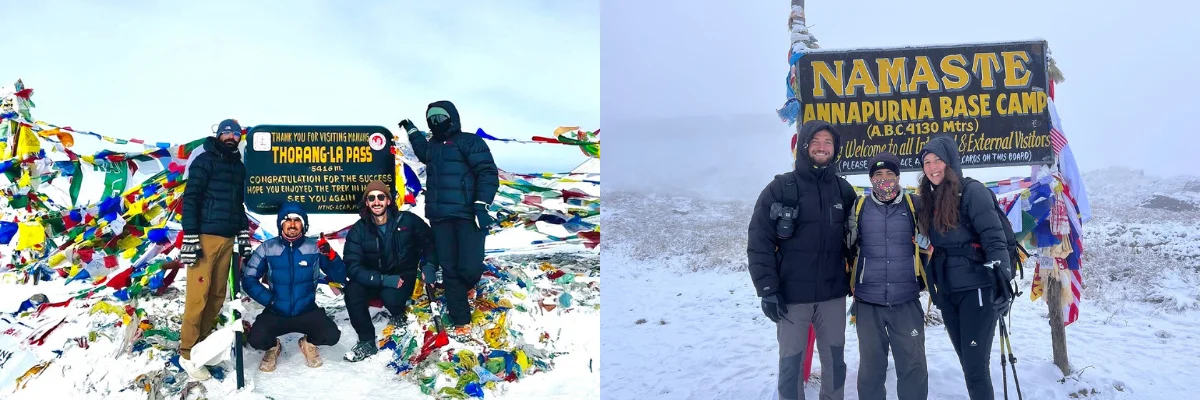
Annapurna Sanctuary vs Circuit Trek are the two different types of treks in the same region, which is Annapurna. Both offer different experiences and are suitable for the interests of different people.
We will look into the each and every differences of both treks and you will come to conclusion of which one to choose by the end of this article.
Annapurna Sanctuary vs Circuit Trek: How They Differ?
Annapurna Sanctuary also called Annapurna Base Camp trek and Annapurna Circuit trek are the treks in the same region of Nepal, which offer different experiences.
The Highest altitude of the Annapurna Sanctuary trek is 4130 meters (13550 ft), and the highest altitude of the Annapurna Circuit at Thorong La Pass is 5416 meters (17769 ft).
These two treks can be completed in 11 days, which is a standard duration, but it can be shortened or extended.
| Annapurna Sanctuary Trek (ABC trek) | Annapurna Circuit Trek |
| Annapurna sanctuary trek normally takes 11 days to complete. | Annapurna circuit trek normally takes 11 days to complete. |
| The total distance to base camp and return is 97 km (60 miles) from Nayapul. | The total distance of Annapurna circuit trek is 160 – 230 km (99 – 143 miles) |
| Maximum altitude that you will be reaching at base camp at an elevation of 4130 meters (13550 ft). | The maximum altitude that you will be reaching at Thorong La Pass is at an elevation of 5416 meters (17769 ft). |
| Starting point is Nayapul/Ghandruk/Kimche. | Starting point is Dharapani/Besisahar. |
| Ending Point is Annapurna Base Camp. | Ending point is Muktinath/tatopani. |
| Its standard route does have same way back. | It has a standard route, and it does not have same way back. |
| The landscpae in this trek is green and snowy. | The landscape in this trek is like dry desert, snowy and rough. |
| Breathtaking views Annapurna range, Machhapuchhre, Hiuchuli and Gangapurna. | Magnificent views of Annapurna Range, Tilicho Peak, Dhaulagiri, Manaslu. |
Difficulty Level
Before embarking on these treks, you have to know the difficulty level of both trek to know which suits your fitness level.
| Annapurna Sanctuary Trek (ABC) | Annapurna Circuit Trek |
| The highest altitude in this trek is 4130 meters (13550 ft), lower chances of altitude sickness. | The highest altitude in this trek is 5416 meters (17769 ft), higher chances of altitude sickness. |
| It takes less physical toll as it is slightly shorter trek. | Longer trek though they have same duration, requires higher endurance. |
| Its terrain type is forest trails, snowy trails (during winter months), and stone steps. | It’s terrain type comprise high passes, rocky trails, steep climbs and descents. |
| The weather is usually of milder temperature and lower risk of snow. | Harsh cold and snow at high altitude, especially at Thorong La. |
| Moderate fitness is ok if want to trek in this trail. | Requires high fitness and stamina for longer days and altitude. |
Scenic Highlights
From lush forests to high mountain passes, both treks offer dramatic scenery but each reveals a different face of the Himalayas.

| Annapurna Sanctuary Trek (ABC) | Annapurna Circuit Trek |
| Close up mountain views of Annapurna I, Machhapuchhre and Hiuchuli. | Panoramic mountain views of Annapurna II and IV, Dhaulagiri and Tilicho peak. |
| Sunrise spots over Annapurna Range from Machhapuchhre Base Camp. | Sunrise can be seen from Thorong La Pass or PoonHill (if inlcuded) |
| Cultural immersion includes exploring Gurung and magar villages like Chhomrong and Ghandruk. | Diverse ethnic villages like Manang (Tibetan) and Marpha (Thakali). |
| The sanctuary is surrounded 360 degrees by towering Himalayan peaks at ABC. | Diverse terrains from subtropical to alpine and rain shadow. |
Annapurna Sanctuary vs Circuit Trek: People and Cultural Experience
Apart from their durational and topographical differences, Annapurna Sanctuary vs Circuit Trek have cultural and individual differences. The Annapurna Circuit trek offers a broader and more diverse cultural experience than the Sanctuary trek.
As you move from lowland villages to high mountain settlements, you will come across different ethnic groups, which are Gurung, Thakali, Manangi, and Tibetan-influenced communities.
In villages like Braga, Pisang and Manang, mostly Tibetan Buddhist culture can be observed. Sighting of prayer flags, stone mani walls and ancient Braga monastery is common.
Locals speak their own language, like Tamu kyi and Tamang, wear their own traditional dresses and celebrate Lhosar (Tibetan New Year), Yartung (horse festival in Muktinath) and Tiji festival.
In contrast, the Annapurna sanctuary trek mostly runs through Gurung villages like Ghandruk and Chhomrong. The culture here is more unified, which centres around Gurung traditions.
These people are known for their bravery as ex-Gurkha soldiers and their warm hospitality. Sightings of chorten, prayer flags and prayer wheels are common.
If you are a guest of someone in these villages, they welcome you with a khada (ceremonial scarf), Tika and flowers. People in these villages celebrate the famous Nepali festivals like Dashain, Tihar and Lhosar with music, feasts, and rituals.
In a nutshell, the circuit trek offers a wider cultural spectrum with both Hindu and Tibetan Buddhist influences, while the Sanctuary (Annapurna Base Camp Trek) gives a deeper insight into the Gurung lifestyle.
If you’re after cultural variety, the Circuit is richer. If you want intimate interaction with one community, the Sanctuary is more personal.
What are They Best For?
Both treks are amazing treks known for their own qualities. People choose between these treks based on their interests.
The Annapurna Circuit Trek is best for those seeking adventure, cultural diversity and dramatic scenery.
It’s a longer trek than the Annapurna Sanctuary trek. The best part of this trek is the Tibetan-style highlands, visiting apple orchards in Marpha and bathing in natural hot springs at Tatopani.
The Annapurna sanctuary trek is a shorter trek, which is best for people with limited time or looking for a moderate difficulty trek.
It takes you deep into the heart of the Annapurna range with a final destination surrounded by snow peaks. It’s best known for exploring traditional villages like Ghandruk and Chhomrong, and moderate terrain.
Best Season to Go
Both treks are best done in the spring (March-May) and autumn (September-November), but have their seasonal benefits.
For the Annapurna circuit, autumn is ideal. The sky is crystal clear, views of Annapurna, Dhaulagiri and Manaslu are sharp, and the weather is dry, but it can still be cold in high-altitude settlements.
Spring is also a great season; you will be amazed by how beautiful the trails look in this season, with blooming rhododendrons in the lower regions and milder temperatures.
For the Annapurna Sanctuary trek, both spring and autumn are equally favourable. Springs add colour with wildflowers and rhododendron forests, while autumn offers clearer mountain views. Since it doesn’t go as high as the Circuit, snow isn’t a big issue.
If you trek during autumn, especially during September and October, you can be part of Nepal’s biggest festivals. During Dashain and Tihar, the villages are full of festive energy.
You can observe people’s rituals, try foods and observe the traditional dances during Tihar, which is called “Deusi Bhailo” in Nepali.
Food
Food on both treks includes similar items served in teahouses with set menus. You will find Dal Bhat (rice, lentils, pickles and vegetables) everywhere, refills are free.
Other options also include noodles, Thukpa, fried rice, boiled eggs, Momo (dumplings in the lower region), pasta, pancakes, porridge, and seasonal vegetables.
Tea, coffee and hot lemon are available at every stop. On both trails, expect carb-heavy meals that keep your energy up.
The main difference is that the Annapurna circuit has more Thakali meals, which are a tastier version of Dal Bhat with gundruk (fermented vegetables), meat curry,
and spicy pickles, especially served in places like Marpha and Jomsom. As you trek to higher elevations, the food options become limited.
Lodging/Accommodation
In both trails, you will find accommodations in teahouse style, which are simple, locally run lodges that provide room, meals and basic services. Rooms usually have two single beds, a small table, and shared toilets.
Bedding is provided, but it’s best to carry a sleeping bag for warmth and hygiene. Hot showers are available in most places for an extra charge.
The teahouses on the Annapurna Circuit are located farther apart from each other. Some villages like Manang, Jomsom and Muktinath provide more comfortable lodges with attached bathrooms.
The sanctuary trek has fewer luxury options but offers cozy stays with a traditional touch of hospitality in villages like Ghandruk, Chhomrong and Bamboo.
Electricity, Mobile Network and Wi-Fi
Both treks offer access to electricity, mobile networks and Wi-Fi, but the availability and speed depend on the location and altitude.
In the lower villages of circuit trek and sanctuary trek like Ghandruk, Jhinu Danda, Chhomorong, manang and Jomsom, you will find enough electricity and seamless Wi-Fi and mobile network, sometimes free and sometimes at a small cost.
As you go higher, charging points may be limited and solar-powered. Wi-Fi is available in many teahouses along the sanctuary trek, even in the Annapurna Base Camp, but it’s often slow and costs extra.
The circuit trek has patchy Wi-Fi beyond Manang and Thorong La. NTC and Ncell, which are mobile network service providers, work well in the lower regions. NTC generally has better coverage in the mountains.
Permit
Both of these treks require permits, which help to maintain the record and aid in building better infrastructure.
The Annapurna sanctuary trek requires two essential permits;
- Trekkers Information Management System (TIMS)
- Annapurna Conservation Area Permit (ACAP)
Annapurna Circuit Trek also requires the same permit.
Gear (Additional or same for both?)
Most gear needed for both treks is the same, which includes layers of clothing, trekking boots, thermal base layers, down jacket, windproof outer shell, trekking poles, headlamp or torch, hat, gloves, and sunglasses.
Both routes pass through cold, windy and sunny zones, so gear for sun protection, rain and cold is essential. You will also need refillable water bottles, a first aid kit and purification tablets.
However, for the Annapurna circuit, you need extra gear for high altitude. Since you will cross Thorong La Pass at 5416 meters (17769 ft), carry crampons or microspikes and gaiters in early spring or late autumn.

You might need crampons and gaiters if you are doing a sanctuary trek during winter. Also, the circuit involves longer days, so a good power bank and more socks/underwear help. Overall, the same base gear for both, but circuit demands more for cold and altitude.
Weather and Temperatures
Weather and temperatures keep changing on both treks, but the Annapurna Circuit covers a wider range of altitudes, so the temperature and weather vary more than on the Sanctuary trek.
On the Annapurna Circuit, temperatures in lower villages like Besisahar or Tatopani can reach 20 – 25 degrees Celsius during the day in spring and autumn. But as you reach higher places like Manang and Thorong La, it gets very cold.
Wildlife and Plants
The Annapurna Sanctuary trek is rich in dense forests and diverse plant life, especially in lower areas like Ghandruk, Chhomrong, and Bamboo.
The trails are full of rhododendron, oak, bamboo and alpine meadows; they are vibrant in spring when the rhododendrons bloom in red, pink and white.
The trail passes through Annapurna Conservation Area, which is home to Himalayan tahr (Wild goats), langurs (grey monkeys), musk deer and many bird species like the National bird of Nepal, the Himalayan monal, pheasants and sunbirds.
The Annapurna circuit trail also crosses a conservation area, but with changing landscapes. You start in the lush subtropical forests of Dharapani and move to the dry alpine deserts of Manang and Mustang.
Plant life can hardly be seen in those dry highlands, but you will see juniper bushes, pine, and dwarf shrubs. Here, you can see one of the rarest animals, the snow leopard, along with blue sheep, eagles and griffon vultures.
Trail Type of Annapurna Sanctuary Vs Circuit Trek
The Annapurna Circuit Trek is a long, circular trail that loops around the entire Annapurna Massif. It starts in the lowlands of Besisahar and ends in Jomsom or Tatopani, which depends on the route.
The trail goes up gradually through rice terraces, pine forests, alpine meadows and into dry, high-altitude desert landscapes. The great challenge is Thorong La Pass (5,416m), which is a steep and tough climb over a snow-covered ridge.
The major challenge is the Thorong La Pass, which is a steep and strenuous climb over a snowy ridge. It’s a high-altitude pass that requires an early morning crossing, proper acclimatization, and sometimes crampons.
The trail then goes down to Muktinath and follows the Kali Gandaki River.

In contrast, the Annapurna Sanctuary Trek is a “there-and-back” trail, not a loop. We start and end near Nayapul or Jhinu Danda. The path takes you into a glacial basin surrounded by high peaks.
There is no pass, but we steadily climb to Annapurna Base Camp. It includes mostly stone steps and is a shorter, less technical and safer option for beginners.
Side Trips on Annapurna Sanctuary vs Circuit Trek
Both treks offer rewarding detours, but the Annapurna Circuit includes more adventurous and scenic side trips than the Sanctuary route. Here is the list of side trips that you can do on each trail.
Annapurna Circuit Trek
Side treks or trips that you can do on Annapurna Circuit trek:
Tilicho Lake
One of the highest lakes in the world at an elevation of 4,919 metres (16,138 ft). A 3-day detour from Manang, this is stunning but slightly challenging with loose trails and high altitudes.
Ice Lake
It is a day hike from Braga and situated at an elevation of 4,620 meters (5,157 feet). Offers great views of Annapurna II and III. Ideal for acclimatization before the Thorong La Pass.
Muktinath Temple
Though on the main trail, it feels like a spiritual side trip. Sacred to both Hindus and Buddhists. Pilgrims bathe under 108 stone taps, which are believed to wash away your sins.
Dumba Lake
A quiet glacial lake near Jomsom, about a 1.5 hour walk. Calm setting with mountain reflections. It is considered very sacred in Buddhism.
Annapurna Sanctuary Lake
Side treks or trips that you can do on Annapurna sanctuary trek:
Jhinu Danda Hot Springs
After descending from Chhomrong, take a short detour to soak in natural hot springs by the river. Great for recovery. You can also start your sanctuary trek from Jhinu Danda.
Ghandruk Village Exploration
Famous for photography with the Annapurna range in the background. Spend an extra day here. Visit the Gurung Cultural Museum, meet locals, and enjoy traditional music and food.
Loading...
related post


Author

Bryan BK is a storyteller at heart and an adventurer by soul. As a passionate writer and traveler, he finds inspiration in the places he visits and the people he meets. Through his words, he brings destinations to life, sharing experiences that inspire others to explore, dream, and discover.


Leave Your Comment