




Lukla Weather: Why Does It Matter for Everest Trekkers?
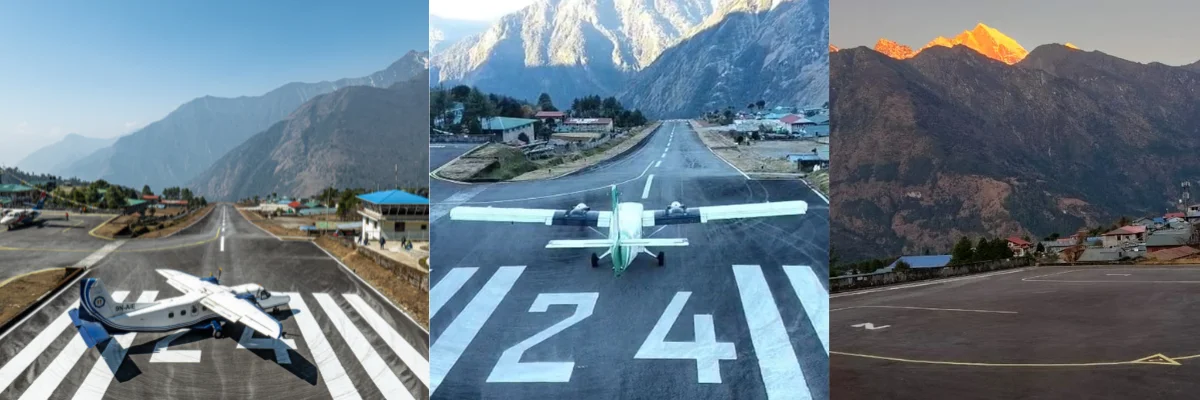
Lukla is the entry point for Everest Base Camp. However, the trek is at stake even before they land, depending on the weather at Lukla.
Lukla weather can be the difference between reaching Everest and being left back in Kathmandu, as well as understanding that it is not only about convenience.
In the case of pilots, porters, and even trekkers, weather determines timetables, security and the general experience of the Everest Base Camp trek.
In this article we will explore the weather patterns of Lukla, its impact and how locals forecast the Lukla weather.
Lukla Weather Overview
Lukla indicates what will happen before you begin your Everest Base Camp Trek. The Lukla airport has one of the most challenging runways in the world, short, steep, and situated on a mountainside.
It takes just a second to postpone or cancel flights due to clouds, high wind, or fog. Even when you are determined to hike it, changes in Lukla may necessitate spending some days or even more time before flying.
All the trekkers and porters hinge on one thing: your entry and exit point to the Everest is mostly by Lukla, rather than your muscles.

Why does Lukla Weather Matter?
The Lukla weather is not just a minor factor for the trekkers, but can define the whole experience when walking on the Everest.
This airport is located at 2,860 meters with majestic mountain ranges and deep rivers located around it.
The Lukla weather may shift within hours. A crystal clear morning may even turn into heavy fog in the afternoon, which may ground flights and abandon trekkers.
For the EBC Trek, Lukla is the sole common distinction of domestic flights from Kathmandu. Everything is cancelled because of the weather. This means that in the case of weather cancellation, you need to postpone your trek for a few days.
Second, inappropriate weather impacts safety. To take off and land, clear visibility is necessary for the pilots. Even experienced pilots may not want to fly under dangerous weather conditions.
Third, it affects logistics. Guides, porters, and trekkers rely on flights in terms of food, supplies, and planning acclimatization.
Sometimes, heavy rain may cause landslides or slippery runways, which may make trekking risky.
During the wintertime, there can be the emergence of snow and ice that hinders the process.
Your Everest trip has not really begun at the trailhead; it started with the question of whether you can safely land and start your walk in Lukla.
How does weather affect trekkers, pilots, porters & rescue operations?
Knowing the weather in Lukla, directly or indirectly, affects the entire group of people during an Everest trek.
To trekkers, the possibility of flight cancellations is sudden. Therefore, they might be forced to spend hours or even days in Kathmandu or Lukla.
This may break the acclimatization days, result in fatigue, and create additional expenses on accommodation and meals.
Even after getting onto the trail, heavy rain, snow, or strong wind may render the trek challenging and hazardous, particularly for one on a narrow mountain trail.
The initial victims of Lukla’s weather conditions are pilots. The airport has one of the shortest air runways in the world, and landings and takeoffs must be based on precise timing and visibility.
Bad weather or cloud cover and sudden fogs can render it impossible to fly and enter the air, which causes pilots to postpone or cancel a flight from Kathmandu to Lukla or vice-versa.
Porters whose services are vital to the trekkers are not left behind either. Adverse weather not only makes them slower but also trails and loads them more with work, and can be hazardous as well.
Weather also plays a significant role during rescue operations. Injured or unwell trekkers can be easily evacuated using helicopters, which are the only mode of transport that is usually safe to use.
Mog, wind, and poor visibility, however, may ground choppers, hence postponing rescue, thereby heightening risk.
Bad weather can cause overcrowding of emergency shelters or even make the trekkers spend the night, and some other times, unplanned outside.
What Makes Lukla Weather Unpredictable?
The weather in Lukla is notoriously erratic, and there are several reasons which are natural. The winds can rapidly increase their velocity by changing the conditions on the runway in minutes.
Although it may appear to be smooth at the initial stages, a puff of wind can leave landing or make takeoff very dangerous.
Another problem is valley fog and cloud cover. Lukla is in a very closed valley that accumulates clouds and mist. It has clear skies that can disappear in seconds, causing poor visibility to pilots and making it impossible to fly.

The Lukla Weather is also affected by temperature inversion, whereby the hotter air at the higher altitude causes unexpectedly low clouds and fog, especially in the afternoons.
Mornings tend to be safe in terms of flying since the air is cooler and clearer skies. Afternoon becomes warm, winds blow up, and clouds may race fast.
Online weather prediction is not always accurate compared to local weather patterns that have been developed through years of experience by the pilots and the locals. When Kathmandu is sunny that Lukla will not be sunny.
This uncertainty is what makes Lukla one of the most weather-sensitive airports in the world.
Anyone willing to reach Everest needs to understand these tendencies, be patient, and plan them in advance.
Lukla Weather by Seasons
Lukla also undergoes varying weather patterns annually, and every season has varied impacts on flights.
Certain months have sunny skies and calm weather, as compared to others that are accompanied by clouds, wind, and delays. The following is a mere explanation of what Lukla’s weather is like from spring to winter.
March to May (Spring)
Lukla has the best timing for flying for the EBC trek in the spring. The climate is moderate, with mornings generally being clear, with the visibility remaining good.
The daytime air ranges from 10 Degrees Celsius to 15 Degrees Celsius. This is a pleasant daytime temperature, favourable to the trekkers and safe enough to fly.
The wind is gentle during early spring, hence the flights are frequent. The heat around may brings afternoons of cloudiness and heavier winds that cause minimal delays.
The spring season is typically a great season to begin the Everest Base Camp trip, as compared to any other season, which is mostly full of cancellations.
June to August (Monsoon)
The most difficult period of flying to Lukla is the moon. Takeoff and landing are dangerous owing to heavy clouds, high winds, and constant rainfall. It gets darkened in a short time, and the whole valley is frequently lost in dense fog.
There is a high possibility of delays in flights by several hours and cancellations. Kathmandu or Lukla are destinations where trekkers should not be surprised to get a stay.
The trails get dirty and greasy with mud, and landslides may also become a threat on the lower part of the expedition. A lot of airlines and trekking agencies advise not to use Lukla flights unless there is a necessity.
Autumn (September and November)
The best time to fly to Lukla is autumn. The monsoon exits, and the sky is clear and sunny, and the air is dry and steady.
The visibility is large, the wind is low, and mornings are bright, and this means that flying is a safer and more predictable proposition. There is barely any delay, and flights tend to be on time.

The only obstacle is the air traffic because it is highly congested during the trekking season. Landing delays might be caused by planes that are trying to land and depart. However, autumn is the most predictable season in terms of weather.
December to February (Winter)
Winter has cold, clear, and dry weather. The mornings are usually beautiful and with excellent visibility, and the flights are smooth.
The runway can be covered by snow and causing the closure of the airports temporarily. Delays can occur due to strong winds and icy mornings. It is not very difficult in early winter, but then mid-winter may be erratic because of snow and frozen winds.
Airplane vs. Helicopter Weather Sensitivity
Both the helicopters and airplanes fly to Lukla; however, they respond very differently to the weather.
To land safely, airplanes require a longer clear runway and visibility. The small runway in Lukla framed by the high mountains is such that any slight shifts in the cloud cover or the wind thwart airplane flights in the day. The airport can be closed due to minor mist, strong winds, and light rain.

Helicopters have greater flexibility. They do not require long landing strips and can make landings in smaller, less visibility warning areas as compared to airplanes.
Helicopters are usually used in case of uncertainty when airplanes cannot use the weather. They maneuver clouds much more easily, change elevation for the better, and are in valleys flying at a lower altitude. Helicopters are an option for trekkers who get stuck in Kathmandu or Lukla due to flight delays.
But helicopters sometimes go too far. Thick clouds or visibility is almost equal to zero. The presence of strong winds along the narrow valleys can be unsafe on helicopter flights. Monsoon rains and massive winter storms may bring all aircraft to a standstill, irrespective of the aircraft type.
Helicopter flights cost more than airplane tickets and save time, besides ensuring the trekkers do not miss time. They are also vital during rescue operations, particularly when the trekkers experience a case of altitude sickness or injuries. Although they have their benefits, pilots are not going to fly in case the situation is too unsafe.
Lukla Weather Forecasting
Checking the Lukla weather is not a simple task like checking a normal weed. The weather at the mountain changes rapidly.
Most applications cannot read about the local weather patterns of the Himalayas. Not many effective methods of predicting the weather prior to a flight exist.
It is necessary to examine whether applications that concentrate on the aviation industry instead from ordinary ones. The pilot reports on display cloud cover, visibility, speed of wind, and storm chances.
General apps do not give a clear view compared to websites such as aviation weather services, METAR updates, and satellite maps.
The other effective strategy is to track the live updates at the Lukla Airport or the trekking companies in Kathmandu.
In many cases, local airlines and helicopter companies relay real-time information on day-to-day flight operations. They are in direct contact with the pilots, thus any information shared by them is the actual state of the skies.
Satellite cloud maps also come in handy. They indicate the speed of the clouds heading to the Lukla region and the occurrence of fog or storms in the valleys across. These maps enable trekkers to determine the clarity in the morning and the cloud beauty in the afternoon.
All these tools bring a good forecast to the best of our knowledge, in spite of all. The trends are not new to pilots and the Lukla inhabitants. They are aware of how mornings are always clear, how fast the fog is created by the valley, and when the winds become stronger.
A mixture of aviation news, live information, satellite images, and local headings gives trekkers the nearest idea of Lukla’s weather behaviour. Nevertheless, one should always remain open-minded as predictions can be changed within minutes in the Himalayas, even the best ones.
Tips for Lukla Weather Forecasting
To fly to Lukla or set out on a trek, it all starts with the weather. Preparation saves time, money and stress even in times of forecast. The following are major tips to consider.
First, plan for flexibility. There are frequent flight cancellations and delays, particularly during the monsoon and winter seasons. Additional days to your list to make the trek, and unexpected delays will not ruin your trip.
Second, reserve flights in the morning. The mornings in Lukla are less cloudy, and more sunlight can be observed. The times when delays are mostly experienced are during the afternoon hours when the winds increase and the clouds develop.
Third, prepare needs to stay: bring all the food supplies, warm clothes, and alternative sleeping arrangements can transform a delayed day into a much better one.
Local Weather Forecasting Methods
Technology is beneficial, but local knowledge cannot be overestimated. Weather prediction in Lukla can be done by looking at the movement of clouds, direction of wind, and shadows cast by the mountain by the pilots and the villagers.
The local people are also aware of the seasonal trends which the digital predictions fail to capture. They can caution that a day that appears warm and sunny can be quite easily followed by fog or rain.
When trekkers listen to such warnings, use the advice of the local guides, and make plans with the airlines, they are more likely to have successful travels and journeys.
Incorporation of the contemporary predictions together with the traditional methods is the most appropriate in deciding to remain alert.
Although you may not be able to control the weather, having knowledge of it will help you make wise decisions, avoid dangerous flights, and have a safe experience in Everest.
FAQs
Do helicopters still fly when airplanes don’t?
Yes. Helicopters can fly in the inability of airplanes due to the absence of long runways and the possibility of flying through smaller areas. Still, however, they are very solitary to very low visibility, heavy fog, or very strong winds.
Is there a possibility that the weather will change the route of the trek?
Trails may be rendered unsafe or impassable by heavy rain, landslides, snow, or flooding. Trekkers could be forced to use other paths, spend more time in villages, or change their schedules due to safety concerns.
Are helicopters favourable in all weather conditions?
Helicopters are more adjustable compared to airplanes, but they cannot operate in fierce storms, heavy snow, and fog, as well as the turbulent winds in narrow valleys. Safety comes first.
Can we depend on Google’s weather forecast?
Mountain weather is very localized and transitory. Google and such applications are based on generalized data and do not always detect sudden fog, valley winds or temperature inversion, and forecasting is less precise in such cases as Lukla.
What impact does Lukla’s weather have?
The weather in Lukla is a curse to all. Trekkers can experience delays, itinerary changes, and dangers along the trail. The visibility and wind must be judged by pilots to fly safely.
Porters make things so slowly when the situation is bad, and rescue efforts can be postponed in case helicopters are not able to fly.
What happens if Lukla Airport closes for many days?
When the Lukla Airport takes several days to reopen, it is possible that trekkers will be forced to remain in Kathmandu or Lukla pending the reopening of the airport. Itineraries can be changed, and flights are rescheduled. Delays increase the costs and require a flexible plan to ensure that important trekking days are not missed.
Loading...
related post


Author

Swostika is a content writer at Himalayan Masters as well as a travel enthusiast. She loves to travel and learn about different cultures and people. With a love for writing, traveling, and embracing diverse cultures, she is on a journey to explore and inspire through words.


Leave Your Comment