




Patan Nepal: The Timeless City of Art, Culture, and Living Heritage
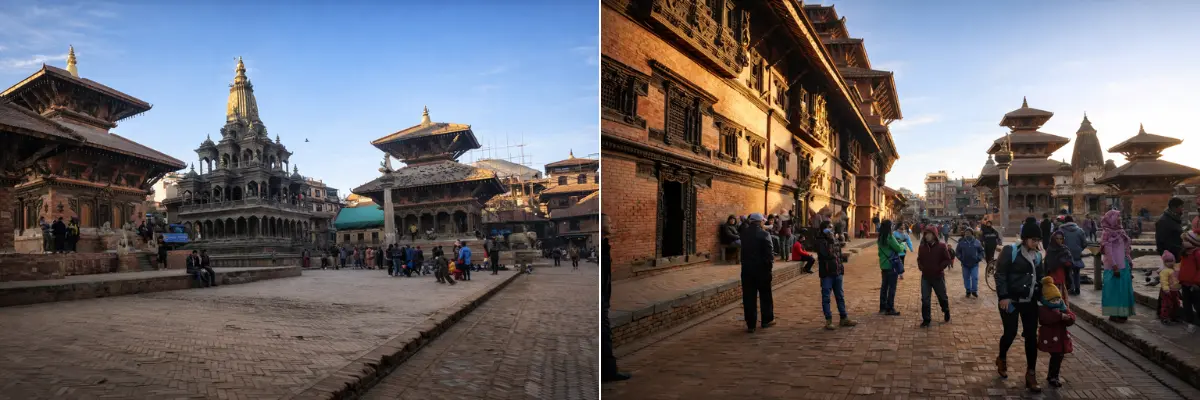
Not just a popular tourist destination, Patan Nepal is a living heritage where centuries of art, architecture, craftsmanship, and tradition are lived every single day. Just across the holy Bagmati River from Kathmandu, this ancient city welcomes you with intricately carved temples, ancient courtyards, and the rhythmic sound of metal artisans working their magic.
Also known as Lalitpur, the life in Patan seems to have remained beautifully unchanged for generations.
Patan is known for one of the richest cultural experiences in the Kathmandu Valley. Rather than locked behind museum walls, history unfolds in the narrow alleys, shaped into sacred metal sculptures, and glows in the quiet butter lamps inside centuries-old shrines.
Listed in the UNESCO World Heritage Site (1979), the city is identified as the “City of Fine Arts”. From the magnificence of Patan Durbar Square to the spiritual calm of monasteries, Patan Nepal offers an experience that is deeply cultural as well as personal.
Whether you’re an enthusiastic traveller, historian, a storyteller chasing a new story, or simply someone curious about Nepal’s art and architecture, Patan adds an extra layer to your travel.
Where is Patan Nepal Located?
Patan Nepal is located in the southern part of the Kathmandu Valley, making it easily accessible for travellers. It is one of the three historic cities of the valley, alongside Kathmandu and Bhaktapur.
The Kathmandu to Patan distance is approximately 7 km (4 miles), which is around a 25 minute drive under normal conditions. If you’re staying in Thamel, a famous tourism magnet of Nepal, the distance from Thamel to Patan Nepal is around 8-10 km (5-6 miles), depending on the route, which usually takes around 25-30 minutes by taxi or private vehicle.
If not a short taxi ride, travellers can also rent a bike and ride to the Patan heritage site.
- Patan Nepal longitude and latitude: 27.673° N, 85.325° E
- Patan Nepal altitude: approximately 1,400 meters (4,593 ft) above sea level
As it lies between Kathmandu and Bhaktapur, it is easier to visit these nearby cities too.
A Brief History of Patan Nepal
The history of Patan dates back over two millennia. It is one of the oldest continuously inhabited cities in South Asia.
Patan is believed to have been founded around the 3rd century BC. Since then, the city has been known for its art, religion, and civilization in the Kathmandu Valley.
Although there have been different documentations about the origin or first rulers of the Patan Kingdom, before the unification campaign, the earliest roots of Patan trace back to the Kirat period. During this period, the valley saw its first organized settlements.
However, it was during the Licchavi era (around the 4th-9th century) that the city began to take shape as a cultural and architectural hub. Stone inscriptions, temples, and early urban planning from this period still influence the city’s structure today.
The golden age of Patan came during the Malla dynasty (12th-18th century). During this time, the city became a masterpiece of art and architecture.
Kings of Patan competed with neighboring kingdoms to build grand palaces, temples (about 55), and courtyards (about 136 bahals), many of which still stand today around Patan Durbar Square. The intricate wood carvings, metal sculptures, and stone craftsmanship from this time are considered among the finest in Asia.
After Nepal’s unification in the 18th century, led by Prithvi Narayan Shah, Patan became part of a larger kingdom. Although it lost independence, the city continued to gain popularity as a center of artisanship and religious life, with craftsmen recognized globally.
Today, despite the 2015 earthquake, Patan shows remarkable resilience. Restoration efforts ensure it retains its traditional significance while adapting to modern times.
Today, Patan stands as a living museum, seamlessly connecting the past to the present.
Patan Durbar Square: The Cultural Soul
At the very center of Patan lies the Patan Durbar Square, a Newari architectural masterpiece. It is a place where history, art, and spirituality come together in perfect harmony.
Once the royal complex of the Malla kings, Patan Durbar Square is a prime example of Newari craftsmanship. As you enter the square premises, you can immediately see traditionally built houses, brick houses with intricately carved doors and windows, centuries-old temples, stone statues, and beautifully designed courtyards.
Every structure here reflects the artistic brilliance of Nepali artisans. Patan feels like one of the finest examples of traditional architecture in the entire Kathmandu Valley.
Among the many highlights is the iconic Krishna Temple, a unique stone temple built in the Shikhara style. Nearby, within the royal palace complex, you can see the renowned Patan Museum, offering deep insights into the religious art and history of Patan.
But what truly makes Patan Durbar Square special is its lively atmosphere. Locals gather here for daily rituals, play traditional musical instruments and dance during festivals, and artisans sell handcrafted items in nearby गल्लीहरू (alleys).
It’s not just a place to visit, it’s a place to experience. Patan reflects the simple, authentic lifestyle of the Buddhist Newari people of Nepal.

Krishna Temple Patan Nepal
Built in 1637 by King Siddhi Narsingh Malla, the iconic Krishna Mandir (Temple) is an architectural masterpiece. More than just a temple, it is one of the finest stone monuments deeply rooted in legend, devotion, and storytelling.
According to local legend, the king once had a divine dream in which he saw Lord Krishna and his consort, Radha, standing in front of his royal palace. Later, he ordered the construction of the temple at the exact same spot, giving the structure both spiritual and historic significance.
The temple’s unique construction makes it even more fascinating. Unlike most temples in Nepal, which are built of brick and wood, this temple is entirely carved from stone. However, this masterpiece is more precisely a fully stone-built structure rather than carved from a single rock.
Rising gracefully with multiple tiers and 21 golden pinnacles, the Krishna Temple is dedicated to Lord Krishna. The temple features three levels, each rich in symbolic and artistic detail.
The first floor depicts intricate carvings showcasing scenes from the Mahabharata. Similarly, the second floor has detailed carvings illustrating the Ramayana.
These carvings aren’t just for decorative purposes; they serve as visual narratives of Hindu epics, etched permanently into stone. Its symmetry, stone craftsmanship, and spiritual presence make it one of the most photographed landmarks in Patan Nepal.
During Krishna Janmashtami, the Durbar Square attracts large crowds, making it vibrant and lively. Devotees play music, chant prayers, and celebrate.
Krishna Mandir is the jewel, the soul of Patan Nepal.

Golden Temple Patan Nepal
A little farther from the Krishna Temple, the Golden Temple of Patan Nepal is one of the most spiritually rich and visually captivating sites in the city. Also known as the Hiranya Varna Mahavihar, the Golden Temple is one of the 18 major Vihar/monasteries in Lalitpur. Despite its lesser-known location, it is a revered, sacred Newari Buddhist monastery.
Dating back to the 12th century, the Golden Temple is adorned with gilded metalwork, intricate carvings, and statues of Buddha and various deities.
According to legend, one night, King Bhaskar Verma had a dream where he saw Shakyamuni Buddha asking the king to build a monastery where a magical mouse, Hiranyaverna, resided and was chased by a cat. So, the king ordered the artisans to build the monastery at the same spot. It took around 2 years to complete the construction of the temple, from 165 to 167 B.S.
One of the most fascinating aspects of the Golden Temple Patan Nepal is its unique priesthood tradition. Unlike many monasteries, the temple’s pujari (priest) is not a lifelong monk. Instead, young boys under 12 years from the Shakya and Bajracharya communities serve as priests.
The Golden Temple was later expanded and richly decorated during the Malla period, when Patan flourished as a center of art and religion. Daily rituals are still performed here, one of the daily rituals being worshiping and feeding the mouse every morning.
Its entrance itself is a masterpiece. They are guarded by detailed figures and prayer wheels that visitors can spin as they enter. As they enter the temple premises, they can experience a different kind of peaceful, spiritual atmosphere.
It is a heritage, preserving centuries-old tradition, and the harmony between Hinduism and Buddhism in Patan Nepal.

Other Sacred Sites and Hidden Gems
Often, every time the word Patan Nepal pops up, people imagine Patan Durbar Square. But its real charm lies in its quiet corners, hidden temples, ancient courtyards, and sacred spaces.
Exploring these lesser-known places offers a more intimate connection with the everyday life of Patan Nepal.
Banglamukhi Temple Patan Nepal
The Banglamukhi Temple is one of the most spiritually powerful yet underrated sites in the city. Dedicated to Goddess Banglamukhi, thousands of devotees visit the temple seeking protection, victory over obstacles, and strength.
Unlike the busy Durbar Square, it is less crowded and feels more local and devotional, especially during special rituals when the temple premises fill with chants and offerings.
Mahabuddha Temple: The Temple of a Thousand Buddhas
A little farther from the main square lies the Mahabuddha Temple, a unique structure built with thousands of terracotta tiles, each engraved with an image of Buddha.
Inspired by the Mahabodhi Temple in India, this shrine stands as a beautiful example of Buddhist influence in Patan, offering a peaceful, reflective environment.

Kumbeshwar Temple: One of the Oldest in Patan
The Kumbeshwar Temple is among the oldest temples in Patan Nepal, and one of the very few multi-tiered pagoda-style temples in the valley.
Dedicated to Lord Shiva, the temple receives a huge number of pilgrims during Janai Purnima. Pilgrims gather here for a ritual bathing in the sacred pond, which is believed to be connected to Gosaikuna Lake.
Pimbahal Pokhari (Pimbahal Pond)
Located a short walk from Patan Durbar Square, Pimbahal is one of the oldest and most popular places among locals around Patan. Believed to date back to the Licchavi period, this historic water reservoir used to be an important source of water for the local community.
Today, it is a peaceful handout spot, surrounded by traditional houses, temples, and small cafes. Here, people enjoy the quiet atmosphere, feed the fish in the pond, try boating, and observe local life.
Oku Bahal and Other Hidden Courtyards
Apart from the temples, Patan Nepal is also famous for its bahals, traditional courtyards that serve as historical, spiritual, and social hubs.
Oku Bahal is one of the most beautiful among them. The bahal has a central shrine, resting spaces, and intricate architectural details. These courtyards are where daily life unfolds; locals pray, children play, and traditions continue quietly.
The Living Kumari of Patan
Among the many unique traditions of Patan Nepal is the story of the “Living Goddess”, Kumari of Patan. While most people are familiar with the Kumari of Kathmandu, Patan has its own Kumari.
The Kumari tradition is deeply rooted in local Newar traditions and rituals. Believed to be the living embodiment of the goddess Taleju, the Kumari is selected from the Shakya clan of Nepal.
The selection process is a sacred and elaborate process. Once chosen, she resides in a traditional residence near Patan Durbar Square and Ratnakar Mahavihar (Kumari Chhen) and is worshipped during festivals and important ceremonies. She is considered a source of protection and blessing for the city. A new Kumari is chosen as the present Kumari reaches puberty.
Her fewer participations in public appearances, but deeply respected, make the Kumari of Patan a unique and subtle distinction from Kathmandu’s Kumari.
During specific festivals and rituals, devotees gather to receive her blessings, reinforcing the connection between the divine and living.
There has also been growing curiosity about the oldest Kumari in Nepal, from Patan. Dhana Kumari Bajrachary is recognized as one of the longest-serving and oldest former Kumaris of Nepal. She was chosen in 1954 at the age of two, and she served as the Patan Kumari until 1984. She continues to be revered and has never menstruated, which is highly unusual for the tradition.
The Living Kumari of Patan is not just a religious figure; it is a powerful symbol of faith, tradition, and the enduring cultural richness of Patan Nepal.
Patan Museum: A Cultural Masterpiece
Located within the historic palace complex of Patan Durbar Square, the Patan Museum is one of the finest cultural institutions not just in Nepal, but in all of South Asia. Patan Museum offers a deeper, more meaningful understanding of the art, religion, craftsmanship, and history of Patan.
Built in the restored Malla-era palace, the museum itself is a masterpiece of traditional Newari architecture. Its peaceful courtyards, beautifully carved windows, and brick structure create a soothing atmosphere that is both serene and historic.
Inside, the museum showcases different types of bronze statues, religious artifacts, and sacred art, primarily focused on Hindu and Buddhist traditions.
They are the symbolism, stories, and culturally significant objects that reflect the lifestyle of the kings of Patan, war tactics, diplomacy between different kingdoms, and artistic heritage, defining Kathmandu Valley’s history for centuries.
From intricate sculptures of deities to ancient ritual items, they are proof of the excellent artistic quality of Patan’s artisans.
Patan Museum, rather than simply displaying items, explains their meanings, purposes, and roles in everyday life. Whether you are an art lover, a history enthusiast, or a curious traveller, the Patan Museum offers a quiet yet meaningful insight into the cultural heart of the city.

Festivals in Patan Nepal: A City That Celebrates
In Patan, festivals aren’t just annual events; they are symbols of faith, unity, and community. They are part of the local Newari community.
During these festivals, the whole community comes together, plays music, sings, dances, and feasts. Year-round, the city transforms into a vibrant, joyful stage where visitors can witness its cultural dynamics.
Rato Machhindranath Jatra
One of Nepal’s longest and most significant chariot festivals, Rato Machhindranath Jatra is dedicated to the rain god. During this grand celebration, devotees pull a massive wooden chariot through the streets of Patan over several weeks.
What makes this festival truly special is the community participation. Locals gather in huge numbers to pull the chariot, offer prayers, and celebrate together.
Thousands of people attend the final stage of this Jatra, known as Bhoto Jatra, during which a sacred vest (bhoto) is displayed, making it a major cultural highlight.
Krishna Janmashtami
Celebrated with great devotion at the Krishna Temple, Krishna Janmashtami marks the birth of Lord Krishna. On this day, the temple and surrounding areas are beautifully decorated, and devotees wait in queue for hours to offer prayers.
Various communities come out playing traditional musical instruments, dressed in their traditional attire, singing and dancing, filling the atmosphere with music and spiritual energy.
Other Local Festivals and Rituals
Beyond the major festivals, Patan celebrates other smaller yet equally meaningful festivals. It is said that “Newar celebrates 366 festivals in 365 days.”
Traditional Newari celebrations, masked dances, and community rituals take place in courtyards and temples. Although often celebrated without much tourist attention, they are rich in authenticity.
Festivals like Gunla (a sacred month for Buddhists), Indra Jatra (also celebrated in parts of Patan), and various local Jatras collectively embody the rich cultural heritage of Patan Nepal.
Things to Do in Patan Nepal
Apart from exploring Patan Durbar Square, sacred temples and monasteries, Patan Museum, and experiencing vibrant local festivals, there are many more meaningful and immersive things that you can do in Patan.
Wander Through Hidden Bahals (Courtyards)
One of the most unique experiences in Patan is exploring its hidden bahals. These bahals often feature small shrines, resting platforms, and traditional houses, perfect for resting and enjoying the calm atmosphere.
Sitting quietly in a bahal gives you a real sense of local life, where elders chat, children play, and daily rituals continue as they have for centuries.

Watch Local Artisans at Work
As you walk through the streets of Patan, especially around Patan Durbar Square, you’ll often hear the rhythmic sound of hammering coming from small workshops, where local artisans, particularly metalworkers, are busy shaping intricate pieces by hand.
You can stop by and observe them casting bronze statues, carving wood, or creating intricate religious items. This creates a deeper appreciation of what makes Patan Nepal famous for its artistic excellence.
Enjoy Food in Patan Nepal
If you’re a food lover/enthusiast or wondering where to eat in Patan Nepal, then trying some local Newari cuisines is recommended.
Around Durbar Square and nearby streets, you’ll find a mix of traditional Newari eateries and modern cafés. Try local dishes like bara (lentil pancakes), chatamari (Newari-style pizza), and yomari (sweet dumplings).
Small, local shops are usually the best place to try local dishes in Patan. However, look for a shop with a little bit of crowd, or ask locals for the best place and where to eat in Patan Nepal.
Enjoy rooftop cafés with heritage views
Now that you have finished exploring Patan, or are just hungry, you can take a break and enjoy the peaceful atmosphere at one of the many cafés in the city.
Rooftop cafés offer beautiful views of temples and courtyards. Evening view of the Patan Durbar Square is simply magical.
Shop for Handicrafts and Souvenirs
Patan is one of the best places to buy authentic handmade items. From small to large, bronze statues and paubha paintings to jewelry and souvenirs, you can buy them directly from the artisans who made them.
Buying from these local vendors helps them sustain and keep motivated.
Interact With Locals
Nepali people are friendly. Even if you’re shy to ask anything of them, and even though they might not know your language, they will try and help you.
Whether asking the direction to Durbar Square, where to eat, hotels in Patan Nepal, or enquiring about the area, they are happy enough to instruct you.
This brief interaction offers a deeper meaning to your Patan Tour.
Art and Architecture: The Identity of Patan Nepal
In Patan, art and architecture are not just historical elements or a feature of the city; they are a living identity, the very definition of Patan.
Known as the “City of Fine Arts”, every street, temple, and courtyard in Patan is an example of the level of craftsmanship that has been carried down through several generations over centuries.
These arts and architectures are the finest examples of traditional Newari artistry in the Kathmandu Valley.
Visitors can see a blend of pagoda and Shikhara-style architecture around Patan. From tiered temples with intricately carved wooden struts to precisely shaped stone structures, the attention to detail is one of a kind.
Even an ordinary-looking house in Patan features beautifully carved windows and doors, turning everyday spaces into works of art.
Art in Patan Nepal is equally beautiful, especially its world-renowned metalworks. Passed down through generations, artisans continue to use the ancient lost-wax casting technique to create detailed bronze and copper statues of Hindu and Buddhist deities.
Alongside this, Paubha paintings and stone carvings further enrich the artistic landscape of the city.
What truly sets Patan Nepal apart is that its art and architecture are still alive, not preserved behind glass, but still in practice, lived, and evolving with time.

Food in Patan Nepal
The food in Patan Nepal is as rich and diverse as its culture, offering a taste of traditional Newari cuisine and culture. Eating in Patan isn’t just about satiating your hunger; it’s a way to experience centuries-old culture and explore flavors that have been part of locals’ daily lives.
Along with modern eateries offering burgers, pizza, sushi, kimbap, sizzlers, and bakery items, Newari cuisine in Patan stands out among tourists. A blend of a little sweet, a little sour, and a little spicy, Newari food is known for its bold flavors and unique texture.
The best and easiest menu to taste Newari food is the traditional “Newari Khaja Set”. It’s a serving of beaten rice, spicy meat curries, pickles, and fermented dishes. If you would like, you can add a couple of glasses of “Aila” (locally brewed alcohol).
To end, a cup of masala tea or a serving of “Juju Dhau” (traditionally prepared Newari curd) is a perfect combination.
If you’re wondering where to eat in Patan Nepal, Durbar Square and nearby streets are filled with excellent local eateries and cafes. While popular cafés offer comfort and ambiance, some of the most authentic and best flavors come from small, family-run, busy local spots.
A small tip: instead of looking for rooftop restaurants, try street vendors for a closer look at everyday life in Patan.
Accommodation in Patan Nepal
Patan Nepal accommodation offers a wide range of options, from traditional heritage stays to modern hotels and budget-friendly guesthouses.
Unlike more commercialized areas, accommodation in Patan is more authentic and peaceful. Accommodation here is often surrounded by centuries-old architecture and local life, giving a sense of connection with local tradition.
One of the best things about accommodation in Patan is that many places are located near Patan Durbar Square. This allows you to explore the city on foot. Especially in the evening, the area around Durbar Square becomes lively and peaceful.
Staying around Durbar Square, Jawalakhel, or Jhamsikhel is a good choice.
Heritage Hotels and Boutique Stays
If you want a truly authentic experience, staying in a traditional Newari-style property is highly recommended. Many heritage homes have been converted into boutique hotels, preserving original wood carvings, brick structures, and courtyard layouts.
These accommodations offer the real essence of Patan Nepal, rather than just visiting it. Staying in heritage hotels further enhances the cultural experience.
Mid-Range and Comfortable Hotels
If you’re looking for a comfortable hotel with modern amenities, Patan has several well-rated hotels. They offer a balance of convenience and local charm.
Many of these are located within walking distance. These hotels offer cozy rooms, friendly service, and easy access to restaurants and cafes.
Some hotels in Patan are within a few minutes’ walk from Durbar Square, or even offer a view of Durbar Square and Krishna Mandir, making them ideal for sightseeing.
Luxury Hotels in Patan Nepal
For luxury travellers, Patan offers 4- and 5-star accommodation. They offer facilities such as pools, spas, and fine dining. More than cultural, these hotels provide a more luxurious experience. Nonetheless, these hotels are still close to the cultural landmarks, which can be easily accessed.
Budget Stays, Homestays, and Airbnb Patan Nepal
For budget travelers or those seeking a homely environment, Patan has plenty of affordable budget stays, cozy homestays, and Airbnb Patan Nepal options.
These homestays are often family-run and provide a warm, homely atmosphere and a more personal connection with local culture. They usually provide basic amenities.
Airbnb options range from private rooms in traditional Newari houses to fully furnished apartments with modern facilities, often at reasonable prices.
As they are located near Patan Durbar Square, they are ideal for exploring the city on foot. These options are perfect for those who want to experience daily life in Patan Nepal while expending low.
Patan Industrial Area Nepal: The Modern Side
Apart from temples and heritage, Patan also has a modern and economic side represented by the “Patan Industrial Area”. Also known as the “Patan Industrial Estate”, it was established in 1963 to promote local small and medium industries, especially those connected to traditional Nepali craftsmanship.
Located near Lagankhel and Satdobato, Patan Industrial Estate focuses on promoting handicrafts such as metal statues (bronze and copper statues), wood carvings, carpets, handmade textiles, and thangka and paubha paintings.
Which started as a small factory, has now grown into one of the most important industrial hubs in the Kathmandu Valley. It offers a unique glimpse into how traditional skills have adapted into modern industry.
Today, the estate houses over 100 industries and provides employment to thousands of people. It also has workshop showrooms and small outlets where visitors can directly see and purchase authentic Nepali handicrafts, often at better prices than tourist markets.
Due to its easy accessibility, visitors can have a look at how traditional crafts are produced on a larger scale.
Education and Healthcare Service in Patan Nepal
Patan is also an important center for education and healthcare in the Kathmandu Valley. The city offers a blend of traditional and modern education, making it a vital hub for both learning and medical services.
One of the most prominent institutions is the Patan Academy of Health Sciences. Located in Lagankhel, Patan, it is a leading medical university and hospital dedicated to improving healthcare access across the country.
Patan Academy of Health Sciences (PAHS) not only provides quality medical education but also serves thousands of patients every day through its teaching hospital (Patan Hospital).
In addition, it has several schools, colleges, and training centers under its wing, contributing to the city’s growing academic environment. The fact that well-equipped hospitals, clinics, and diagnostic centers exist ensures that locals and visitors can rely on better healthcare services.
Nearby Places to Visit from Patan Nepal
While Patan is known for its rich culture and history, its central location offers easy access to explore nearby destinations.
From traditional villages to nature escapes, these places are perfect for short trips from Patan.
Bungamati: A Traditional Newari Village
Located about 8 km (5 miles) south of Patan, Bungamati is a beautiful Newari village known for its traditional lifestyle and woodcarving craftsmanship.
This village has a close association with the deity Rato Machhindranath, making it culturally significant. As you walk through its quiet lanes, you’ll notice traditional old brick houses, local artisans at work, and a slower pace of life that feels untouched by modern development.
Khokana: Heritage Farming Settlement
About 5 km (3 miles), close to Bungamati, Khokana is a historic village famous for its traditional mustard oil production. Tourists visiting Khokana can see its old lifestyle, making it a great place to observe authentic local culture and farming practices.
Godavari and Phulchowki: Nature and Hiking
For nature lovers, Godavari and Phulchowki Hill are a perfect, refreshing escape. Godavari is known for its botanical garden, peaceful environment, and fresh air, while Phulchowki, the highest hill around the valley, is ideal for hiking, birdwatching, and panoramic views.
Bhaktapur: Another Cultural Newari City
After around half an hour drive from Patan, around 12 km (7 miles) distance, Bhaktapur is a UNESCO World Heritage Site known for its well-preserved temples, courtyards, and traditional lifestyle.
While Patan is known for its art and architecture, Bhaktapur is often admired for its medieval charm and spacious squares.
Nagdaha: A Quick Lakeside Retreat
A beautiful natural lake surrounded by greenery, Nagdaha is a perfect destination for a peaceful and less crowded experience near Patan.
Popular among locals for short outings, the lake offers a calm atmosphere, especially during early mornings and evenings. You can visit Nagdaha to relax, for a short walk, or simply enjoy nature.
Practical Travel Tips
Exploring Patan is one of the best, peaceful things to do around Kathmandu Valley. However, with a little preparation, it can be even smoother and more enjoyable.
These practical tips will help you navigate the city with ease while being a responsible traveller.
- Spring (March-May) and Autumn (September-November) offer pleasant weather and clear skies. These times are perfect for photography and videography.
- Foreign nationals need to pay entrance fees to enter Patan Durbar Square.
| Site | Foreign Nationals | SAARC Nationals | Chinese | Nepalese | Remarks |
| Patan Durbar Square, including Patan Museum | NPR 1,000 | NPR 250 (BIMSTEC) | NPR 1,000 | Students with a letter from school: NPR 10; Student Card Discount: NPR 15; Others: NPR 30 | Entry fees for Nepalese are applicable only for the Patan Museum |
- The best way to explore Patan is on foot.
- Be respectful towards local culture. Dress modestly, remove shoes before entering temples, be mindful during religious activities, and when going around religious monuments, always rotate from the left-hand side.
- Although most shops accept online payment, it is better to carry some cash to pay small amounts at small shops and local eateries in Patan.
- The streets of Patan are mostly brick- or stone-paved. So, wearing comfortable shoes is essential.
- Daytime can be sunny and sweaty, especially during summer/monsoon season (June-August), so carrying a water bottle is recommended.
- Visiting Patan during festivals like Rato Machhindranath Jatra or Holi is a good idea. During these festivals, the Patan area comes alive with vibrant cultural experiences, although a little crowded.
- Hiring a local guide will help you discover hidden courtyards, understand the deeper history of Patan, interact with locals, navigate, and even arrange permits, transport, accommodation, and where to eat in Patan Nepal.
- Starting early is ideal. During these times, the environment is peaceful and ideal for photography.
Why Patan Nepal Deserves Your Visit?
Patan Nepal is not another stop in the Kathmandu Valley; it’s a place where history, culture, and everyday life come together in their truest form. From the timeless beauty of Patan Durbar Square to the charm of hidden courtyards, sacred temples, and monasteries, and the rhythmic sound of artisans at work, Patan offers an experience that feels both personal and unforgettable.
What makes Patan Nepal truly special is not just what you see, but what you feel. The energy of festivals, the warmth of local people, and the stories carved into every stone and wood, for every traveller, Patan reveals something new.
If you’re looking to go beyond typical sightseeing and truly connect with Nepal’s cultural soul, Patan should be at the top of your bucket list.
Loading...
related post


Author

Samyog Shrestha is a travel enthusiast and an excellent content writer at Himalayan Masters, the face behind the amazing content who likes to learn from experience.


Leave Your Comment