





 October 25, 2026
Money exchange in Kathmandu
Exchanging foreign currency in Kathmandu isn’t a hard job. There are numerous licensed money exchange counters, banks, and ATMs available across Kathmandu.
Currency exchange can also be done right after you land at Tribhuvan International Airport. Also, Thamel is one of the most convenient areas for international travelers, as it is famous for sightseeing and purchasing souvenirs.
However, the rate of exchange, service fees, and ATM withdrawal charges can be different. In this guide, you will know where to exchange money in kathmandu, how to compare exchange rates, and what to know about cash and card payments before traveling or trekking in Nepal.
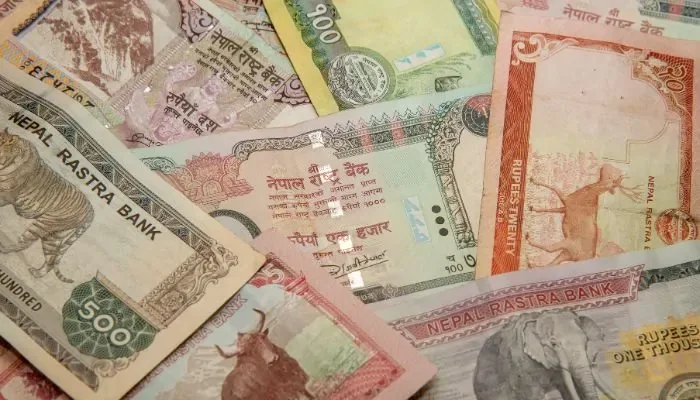
The official currency of Nepal is the Nepalese Rupee (NPR). They are commonly written as Rs. Nepalese banknotes are available in denominations of Rs. 5, Rs. 10, Rs. 20, Rs.50, Rs. 100, Rs. 500, and Rs. 1,000. Coins are also used but banknotes are common for everyday tourist transactions.
For international tourists, carrying Nepalese Rupees is helpful for local transportation, small restaurants, shopping, and expenses in remote trekking areas like the Manaslu Circuit.
What currency is available in Kathmandu, Nepal?


The currency of Kathmandu and Nepal is the Nepalese Rupee (NPR). So, you will need Nepalese rupees to travel to Kathmandu or any other villages of Nepal, such as Manaslu. The dollar and some other currencies also work, but having Nepali rupees will be good for you.
Can Tourists Pay in US Dollars in Nepal?
Some hotels, trekking agencies, most of the shops in Thamel, and tourism-related businesses in Nepal may accept dollars.
However, the Nepalese rupee (NPR) is the standard currency used in day-to-day transactions.
Local restaurants, taxis, small shops, and teahouses generally expect payment in Nepalese rupees. For convenience, exchange your foreign currency at a licensed money exchange counter or withdraw NPR from an ATM in Kathmandu.
Should I take cash to Kathmandu?
Yes, carrying some Nepalese rupees is recommended when visiting Kathmandu. Although many hotels, restaurants, and larger businesses accept international payment cards, cash remains useful for taxis, street food, local markets, small purchases, and places where card payments are unavailable.
Travelers heading to remote trekking destinations like Langtang Valley or Manaslu Circuit should arrange cash before leaving kathmandu because ATMs and electronic payment facilities can be limited along the trekking routes.
Money Exchange in Kathmandu Airport

Travelers from across the world arriving at Tribhuvan International Airport can use available currency exchange services to obtain Nepalese rupees before leaving the airport.
If you need cash immediately for transportation or other expenses, exchanging a small amount at the airport can be convenient. For larger amounts, compare the exchange rates and any service charges with licensed money exchange counters or banks in Kathmandu.
Check the current exchange rate, fees, and receipt details before completing your transaction.
How Much Does Money Exchange Cost in Kathmandu?
The cost of exchanging foreign currency or the charge of the exchange provider depends on the provider, currency, exchange rate, and any applicable service fees.
Banks and licensed money exchange counters may offer different rates. Before exchanging money, ask how many Nepalese rupees you will get after the applicable charges. Visit a few currency exchange providers, compare the final amount offered by different providers, and choose the one that offers the best deal.
Where Are the Best Places to Exchange Money in kathmandu?
The best places to exchange money in Kathmandu are as follows
Thamel: The thamel area is famous amongst tourists for its vibrant setting. While walking around the streets of Saatghumti (seven corner), Narsing Chowk, Jyatha, and Paryatan Marg, you will see boards with “Money Exchange”; there you can go, check rates, fees, and exchange.
Airport: Once you land at Tribhuvan International Airport. There are counters providing money exchange services. You can directly go to them and ask about rates and fees before exchanging.
International travelers can also exchange money at banks, but it’s a lengthy and somewhat boring process. Places inside kathmandu like Durbar Marg, Lazimpat, Gaushala, and Jhamsikhel also have money exchange counters.
How to Check Today’s Currency Exchange Rate in Kathmandu?
Foreign Exchange rates in Nepal change regularly depending on the currency and market conditions. Nepal Rastra Bank (NRP), which is Nepal’s central bank, publishes official foreign exchange reference rates.
Travelers can check the latest rates on the website of Nepal Rastra Bank before exchanging money.
Check the rates of your currency on this: https://www.nrb.org.np/forex/
Always compare the buying rate and the final amount of Nepalese rupees you will receive before making an exchange.
Withdraw money from ATMs in Kathmandu

ATMs in Nepal provide 24-hour service for money transactions. You will find an ATM in thamel, the airport, and other places. But you need to be careful of one thing. Before arriving in Nepal, you must inform your bank in your native country. You need to make sure that the bank has made certain changes to your card that will help you use it in Kathmandu.
If you have not informed the bank, your card will probably not work in Nepal. So please be careful to inform your bank to have a hassle-free ATM transaction. The major currency exchange bank in Kathmandu, Nepal, accepts Visa, Mastercard, and debit cards.
A Visa card is helpful while you are traveling in Nepal. But in each transaction, there are certain transactional limitations.
Where?
You will find ATMs everywhere in Kathmandu. In every major street, there are ATMs of several banks. At the same time, you may not find ATMs in the local streets of Kathmandu. You will find various money exchanges in Ktm. The last ATM spot on different remote trekking trails in Nepal is Lukla for Everest Base Camp, Syabrubesi for Langtang Valley Trek, and Pokhara for Annapurna Base Camp.
How?
The ATMs in Kathmandu are open 24 hours a day. If you want to withdraw money from the ATMs in Kathmandu, you can just go and withdraw the amount you want to withdraw. But remember that bank charges will be taken for every transaction. As we have already mentioned, there is a limit to the amount of money you can withdraw.
What Are the ATM Withdrawal Fees in Kathmandu?
ATM withdrawal fees in Kathmandu typically range from NPR 400 to NPR 840 (about $3 to $6) per transaction for international cards. The average ATM fee charges a flat fee of NPR 500 per transaction
Other Nepalese banks like Nabil Bank charge around NPR 600 in Kathmandu and up to NPR 850 outside the city. Likewise, Himalayan Bank and Global IME Bank generally charge NPR 500-700 per withdrawal.
Can You Use Credit or Debit Cards in Nepal?
Yes, international credit and debit cards can be used at many hotels, restaurants, supermarkets, and tourism businesses in Kathmandu and other major cities. Visa and Mastercard are commonly accepted, although acceptance varies by merchant and card network.
Before traveling, check that your card supports international transactions and ask your bank about foreign transaction fees.
When you are paying by card, review the transaction amount and currency before authorizing payment. Keep some Nepalese cash for small expenses.
How Much Cash Can Tourists Bring to Nepal?
There is no maximum limit of foreign currency you can bring into Nepal. There is a rule called the Declaration Threshold, which requires you to fill out a customs declaration when carrying up to USD 5000. If you carry more than USD 5,000 in cash or equivalent foreign currency, you must declare and certify it with customs officials at Tribhuvan International Airport.
Carrying over USD 5,000 without declaring it can lead to questioning.
How Much Cash Do You Need Before Trekking in Nepal?
The amount of cash you need for trekking in Nepal depends on your destination, trek duration, and the services included in your package.
If you purchase a trekking package, it already includes accommodation, meals, guides, and transportation; your additional cash requirements may be lower than those of an independent traveler.
However, you may still need Nepalese rupees for hot showers, charging devices, Wi-Fi, snacks, drinks, tips, and other personal expenses, depending on the route and package inclusions.
Before leaving for the trek, confirm what is included in your trek and arrange enough cash for expenses not covered by your booking.
FAQs
Should I exchange money before I travel to Kathmandu?
How much cash can I carry to Nepal?
Where can I exchange pounds in Nepal?
Can I get euros exchanged in Nepal?
Can I exchange dollars in Nepal?
What currency do tourists use in Nepal?
Is $100 a lot of money in Nepal?
What is the foreign exchange policy in Nepal?
Loading...
Author

Swostika is a content writer at Himalayan Masters as well as a travel enthusiast. She loves to travel and learn about different cultures and people. With a love for writing, traveling, and embracing diverse cultures, she is on a journey to explore and inspire through words.


Leave Your Comment