



Is Skiing and Snowboarding Possible in Nepal?
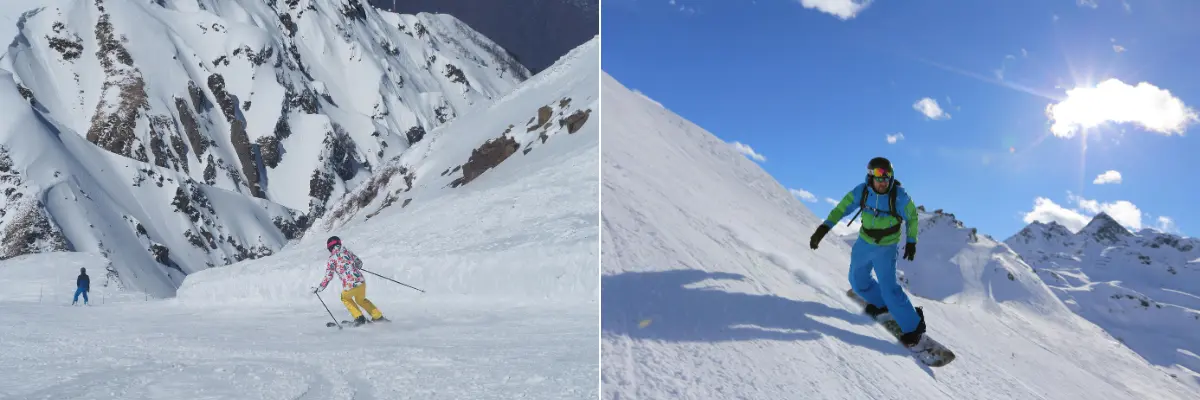
When you think of Nepal, you’d probably imagine towering Himalayan peaks, ancient temples, small traditional hamlets, or some of the most iconic trekking trails on the planet. Some adrenaline adventurers might even think of skiing and snowboarding in these snow-capped mountains.
Yes, you can ski and snowboard in Nepal. However, they are not as developed as in some countries. A new kind of winter sports is gaining interest and popularity; skiing and snowboarding are two of the most stunning landscapes.
For decades, Nepal has been known for its iconic trekking routes to the Everest and Annapurna regions. However, as the new, lesser-known trails gain attention, skiing and snowboarding remain equally thrilling.
Moreover, the question is: Is skiing and snowboarding really possible? The answer is complex and exhilarating “yes”. However, it comes with a different kind of challenges and opportunities. Along with raw, untamed nature and excitement, it requires both skill and resilience.
You will need to learn how to control speed and directions through your body movements, weight shifts, and edging techniques. It’s a thrilling activity that combines the beauty of mountain environments with fun.
What is Skiing?
Skiing is a popular winter sport where individuals glide over snow on a pair of skis, using poles for balance and control. These skies are long, narrow, and attached to ski boots.
The fundamentals of skiing are to navigate down a snow-covered slope.
In the Nepalese Himalayas, skiing in Nepal has been evolving. From trekking and mountaineering to more adrenaline-filled descents.

What is Snowboarding?
Snowboarding is another thrilling winter sport that involves descending down the snow-covered slopes on a single board. The board is attached to their feet using bindings.
Unlike skiing, snowboarders stand sideways, similar to surfing or skateboarding. The board’s speed and direction are controlled by shifting weights between the heel and toe edges of the board.
Snowboarding has a different culture and style from skiing. It is often associated with freedom, creativity, and connection to the mountain terrain.
While snowboarding in Nepal remains rare, training programs are led by the Ski and Snowboarding Foundation Nepal (NFSS).

Difference Between Skiing and Snowboarding
Although most might assume both sports to be similar, and they are somewhat similar. But the major difference between skiing and snowboarding is the difference in equipment and technique.
While skiing uses two separate skis and poles, offering more balance and easier maneuvering ability for beginners, snowboarding is different. In snowboarding, snowboarders use a single board providing a surf-like experience.
In comparison to skiing, snowboarding is considered a more challenging ride.

Some of the other major differences between skiing and snowboarding are:
| Feature | Skiing | Snowboarding |
| Equipment | Two skis, two poles, ski boots, bindings | One snowboard, snowboard boots, bindings |
| Stance | Forward-facing, feet separate | Sideways-facing, feet attached to one board |
| Learning Curve | Often easier to start, harder to master | Steeper initial learning, quicker progression to intermediate |
| Body Movement | Independent leg movements, upper body rotation | Core strength and balance, weight shifts from heel to toe |
| Skill to Learn | “Snowplow” or “pizza” | Balancing and catching edges |
| Lifts | Generally easier to get on and off chairlifts | Requires unstrapping one foot at lifts, can be awkward initially |
| Difficulty | Initially easier to learn but hard to master | Harder to learn but moderate to master |
What are the possibilities of skiing and snowboarding in Nepal?
Nepal boasts a wide range of opportunities in skiing and snowboarding. The mountains offer a raw and adventurous experience, far from the crowded hills of Europe and North America.
Home to eight of the world’s ten highest peaks, the diverse geography of Nepal is a perfect destination for winter sports. Skiing and snowboarding are slowly becoming popular, thrilling activities for those looking for untouched and wild adventure.
The NFSS, after it was founded in 2016, aims to create a snow sports culture by training young Nepalese and mountain guides. NFSS also provides training for crevasse and avalanche rescues.
They organize numerous training events, including some in remote areas like the Rolwaling Valley and Karnali. NFSS also conducts trips to Gulmarg, India, aiding Nepali ski and snowboarders’ experience with ski lifts.
Similarly, the Nepal Ski Association, affiliated with the Nepal Olympic Committee, has organized national ski championships, a move towards formalizing the sport.
So, the final answer for those wondering, “Can you ski in Nepal?” is a yes.
Some of the popular locations that offer the possibility of skiing and snowboarding in Nepal are:
Kalinchowk
Located approximately 140 km (87 miles) from Kathmandu, Kalinchowk is one of the most accessible destinations for skiing in Nepal.
Situated at an elevation of 3,842 meters (12,605 ft), Kalinchowk sees significant snowfall in winter and even features a ski lift. This ski lift is the first of its kind in Nepal, installed by the NFSS.
The NFSS offers Level 1 ski training, suitable for gentle slopes. This training is perfect for both locals and beginners training for skiing.

Annapurna Region
A world-renowned trekking destination, the Annapurna Sanctuary is another hotspot for backcountry skiing and snowboarding.
The Annapurna region, particularly around Annapurna Base Camp (ABC), is an exotic and accessible destination for trekking as well as ski touring.
Heli-skiing has been a popular winter sport in Annapurna Base Camp. A helicopter drops the skier at a certain height, then they ski down to the base camp.
Mera Peak
6,476 meters (21,247 ft) tall, Mera Peak is one of Nepal’s highest “trekking peaks”. Mera Peak is an excellent ski mountaineering expedition choice, allowing trekkers an experience of trekking, skiing, and mountaineering.
The climb is a straightforward walk, and the descent is quite exhilarating, long, intermediate-level gliding with breathtaking views of Everest, Lhotse, and Makalu.
Numerous expedition companies offer guided Nepal snowboarding and ski trips to Mera Peak.
Karnali-Kalikot
The NFSS has started basic ski training in Karnali-Kalikot since March 2024. It has started with a mission to expand skiing and snowboarding adventures in rural Nepal.
The snowy slopes of Kalikot district in the remote Karnali Province are perfect for those with beginner’s skills. This initiative aims to inspire local youths to view skiing as both a recreational activity and a potential source of income.
Other Regions
With a little preparedness, Nepal has high potential for skiing and snowboarding. The Dhaulagiri, Manaslu, Mustang, and Langtang regions offer one of the best settings for skiers and snowboarders.
When is the best time for skiing and snowboarding?
Late December to January is considered the best time for skiing and snowboarding. These months are featured with the most stable snow and clear skies. During this time, the slopes are covered with snow blankets, creating ideal powder conditions for both beginners and advanced riders.
During February to early March, the snow is still abundant, but the weather starts to get warmer. These months are also perfect for high-altitude ski touring.
However, the exact timing depends on location, too. Mid-December is unsuitable for skiing in lower-altitude slopes like Kalinchowk. Whereas, spring (April) skiing is suitable in high-altitude regions such as Mera Peak and ABC.
Therefore, it is essential that you do research on the weather and a suitable destination, according to your skill level.
Challenges to Skiing and Snowboarding in Nepal
Despite the immense potential and development in infrastructure, the ski holiday comes with significant challenges. The skiing and snowboarding experience in Nepal is more about raw and authentic adventure.
Here are some challenges that you might encounter while skiing and snowboarding in Nepal.
Lack of Ski Resort Infrastructure
There are currently no large-scale, commercial ski resorts in Nepal, comparable to those in Aspen or Chamonix. Moreover, Kalinchowk-Kuri has recently been rebuilt with a good quality Nepal ski resort, but it is limited.
Most of the skiing and snowboarding destinations in Nepal do not accommodate ski elevators and rental shops. So, nearly every skiing and snowboarding equipment has to be carried.

No Formal Ski Industry
While organizations like the Ski and Snowboarding Foundation Nepal are making big moves to establish winter sports as a culture in Nepal, the overall system is still underdeveloped.
There aren’t many internationally certified local guides and infrastructure to support these kinds of sports.
Remote and Hard-to-Reach Terrain
Most of the best potential Nepal ski areas are located in some of the most remote parts of the country. Meaning, reaching these locations requires long trekking days, extensive driving days, or expensive helicopter flights.
This makes skiing in Nepal a logistically challenging trip compared to a simple short drive to a resort.
High Altitude Risks
Skiing and snowboarding in Nepal are typically associated with high altitude, normally above around 4,000 meters. This poses a constant risk of altitude sickness and other health-related issues.
Therefore, proper acclimatization and preparedness are required. Let your body adapt to increasing elevation, for which you can add rest days in your standard itinerary.
Unpredictable Snow Conditions
The Himalayan weather is notoriously unpredictable. Western disturbances and monsoon snowfall can also result in different conditions for skiing and snowboarding year to year.
Furthermore, global warming and high winds at high altitudes can sweep snow from the peaks, affecting skiable conditions.
No Professional Rescue System
Unlike established ski regions, Nepal lacks a professional, dedicated mountain rescue system for skiers. While helicopter evacuations are possible in case of medical emergencies, ski patrol, which can act within minutes, is not operated.
This increases the personal risk, which makes comprehensive travel insurance mandatory.
High Cost for Limited Experience
Limited possibilities and unique challenges make skiing and snowboarding in Nepal somewhat expensive. A guided heli-ski trip or a full ski mountaineering expedition can cost thousands of dollars.
Likewise, there are a few rental options in Nepal, so you need to bring your own gear.
Limited Government and Tourism Support
While the government has shown some support, skiing and snowboarding haven’t come to light in Nepal’s tourism industry. While the Nepal government is focused on trekking and mountaineering, it needs to pay more focus on this winter sport.
The complicated permit process and fees have made it more expensive and complex to organize a ski trip. However, with increasing awareness and interest, there is hope that policies will evolve to support skiing and snowboarding as adventurous tourism.
Loading...
related post


Author

Samyog Shrestha is a travel enthusiast and an excellent content writer at Himalayan Masters, the face behind the amazing content who likes to learn from experience.


Leave Your Comment