




Mount Manaslu Death Rate: History, Causes, Safety Tips
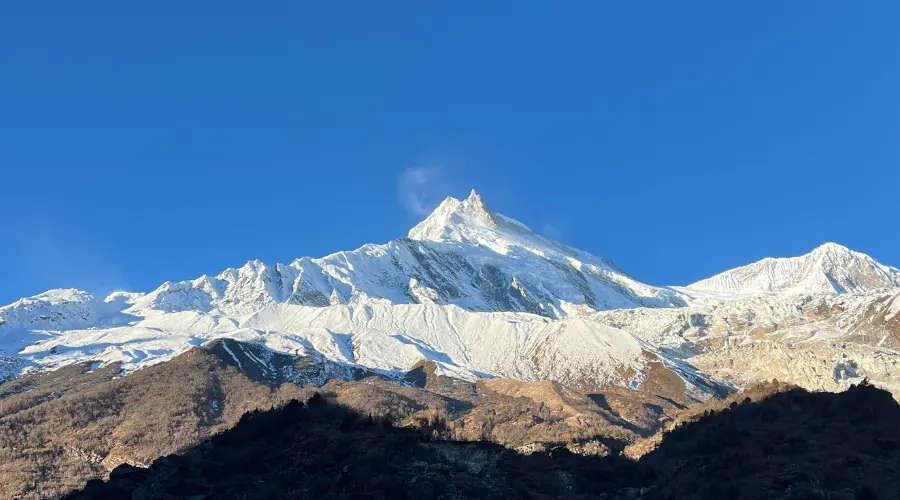
Manaslu Death Rate has become an increasingly discussed topic among climbers and adventure enthusiasts, although Mount Manaslu is often described as one of the easier 8,000-meter peaks. But don’t let that label; easier, this mountain has a long and complex history of risk, tragedy, and evolving safety.
Standing at 8,163 meters (26,781 ft), Mount Manaslu is the world’s eighth-highest mountain and is often considered a more accessible alternative to Everest. While Manaslu is statistically less deadly than peaks like Annapurna I or K2, its altitude, weather, and increasing expedition traffic have brought about attention to Manaslu deaths and the real danger hidden during the Manaslu expedition.
As interest in Manaslu continues to grow due to its relatively achievable summit success rate compared to other Himalayan giants, understanding the Manaslu Death Rate and its causes has become increasingly important.
It is equally essential to explore the mitigation measures, not just for professionals, but also for Manaslu Circuit trekkers dreaming of high-altitude adventures.
Additionally, it is important to look beyond the summit success stories and examine the factors that influence the Manaslu Death Rate.
This guide explores the Manaslu Death Rate, how it compares with other 8,000ers, the major causes of fatalities, and what climbers can do to improve their chances of safe ascent.
Overview of Mount Manaslu
The eighth-highest mountain in the world, Mount Manaslu, is located in the Gorkha district of Nepal. It lies in the Mansiri Himal range of Nepal.
Attracting thousands of trekkers and climbers, it is known for its stunning landscapes and cultural richness. It is also known for a less technical but still challenging Himalayan experience.
Despite its “non-technical” label, Manaslu is far from easy. The climb involves glacier crossings, steep snow slopes, crevasse navigation, and exposure to harsh weather conditions.
All these factors contribute to the overall Manaslu death rate. These factors are a silent reminder to climbers that altitude alone can make even an “easier” mountain extremely dangerous.
Over the past decade, Manaslu has seen a surge in commercial expeditions because of its relatively higher summit success rate. However, this growing popularity has brought about new challenges, such as crowding, logistical challenges, and new risks.

What Is the Manaslu Death Rate?
In mountaineering, the death rate is calculated using a standard mountaineering metric called the fatality-to-summit ratio. In simple terms, it shows how many climbers die compared to how many reach the summit.
For Manaslu, there have been about 3,750 successful climbs and around 90 fatalities until 2025. While the number of climbers has increased significantly in recent years due to commercial expeditions, the fatality rate has not risen at the same rate.
This record shows how safe the Mount Manaslu climb is. As a result, the current estimated Manaslu Death Rate is around 2.5%. Moreover, this figure should be understood carefully. It’s due to the low fatality rate in recent years due to improved logistics, guided expeditions, and better forecasting.
Factors like altitude, avalanches, and weather conditions continue to influence the Manaslu death rate, which has to be understood properly if you’re planning to climb the mountain.
Manaslu Deaths in History
The history of Manaslu deaths represents the triumph, tragedy, and evolving nature of high-altitude mountaineering.
During the first summits, limited technology, unpredictable conditions, and limited logistical support led to tragic outcomes. Advancements in modern mountaineering have significantly reduced the Manaslu fatality rate.
The first successful ascent was made in 1956 by a Japanese climber, Toshio Imanishi, and Nepali-Tibetan Sherpa Gyaltsen Norbu. Climbers faced the mountain with minimal support, poor weather forecasting, and limited knowledge of the route.
However, the first recorded death on Mount Manaslu occurred in 1972, during a Korean expedition. An avalanche on the northeast face of Manaslu struck a camp, approximately around 6,500 meters (21,325 ft), killing 15 people. This incident claimed the lives of Kim Ho-sup (Korean expedition leader) and Kazunari Yasuhisa (a Japanese climber), 10 Sherpas, and several members of the expedition.
Over time, dozens of climbers have lost their lives on Manaslu due to avalanches, altitude sickness, and weather-related incidents. Most incidents occurred in high-risk zones between camps and around avalanche-prone sections.
In recent years, despite advancements in gear, fixed ropes, and guided expeditions, fatalities have still occurred. The most notable incident was the Manaslu avalanche of 2012, which took 11 lives, and the Manaslu avalanche of 2022 (2 deaths).
Manaslu Death Rate Compared to Other 8000-Meter Mountains
To better understand the Manaslu Death Rate, it helps to compare it with other major Himalayan peaks. While Manaslu is often considered a “safer” mountain for climbers entering high-altitude mountaineering, its death rate shows that it still carries significant risk.
Comparing Manaslu death rate with other major peaks provides a clearer perspective on its true danger level.
| Mountain | Height (m/ft) | Death Rate (approx.) | Deaths/Summits | Key Risk Factors |
| Mount Everest | 8,849 m/29,032 ft | 2.50% | 344/13,752 | Avalanches, unstable terrain |
| K2 | 8,611 m/28,251 ft | 11.80% | 100/850 | Technical difficulty, weather |
| Kangchenjunga | 8,586 m/28,169 ft | 7.80% | 54/690 | Avalanches, remoteness |
| Lhotse | 8,516 m/27,940 ft | 1.70% | 25/1,473 | Rockfall, avalanches |
| Makalu | 8,485 m/27,838 ft | 5.70% | 51/891 | Avalanches, weather |
| Cho Oyu | 8,188 m/26,864 ft | 1.30% | 52/4,081 | Crevasses, weather |
| Dhaulagiri I | 8,167 m/26,795 ft | 13.00% | 92/707 | Long summit ridge, altitude |
| Mount Manaslu | 8,163 m/26,781 ft | 2.40% | 90/3,750 | Avalanches, altitude |
| Nanga Parbat | 8,126 m/26,660 ft | 20.10% | 85/422 | Technical climbing, exposure |
| Annapurna I | 8,091 m/26,545 ft | 13.40% | 75/559 | Steep faces, altitude |
| Gasherbrum I | 8,080 m/26,509 ft | 8.70% | 35/400 | Weather, crevasses |
| Broad Peak | 8,051 m/26,414 ft | 5.20% | 25/480 | Crowding, altitude |
| Gasherbrum II | 8,035 m/26,362 ft | 2.30% | 22/950 | Altitude, weather |
| Shishapangma | 8,027 m/26,335 ft | 8.30% | 32/385 | Avalanches, weather |
Major Causes of Manaslu Deaths
Understanding the major causes of Manaslu deaths helps climbers grasp the risks behind the Manaslu’s death rate. While the mountain is often considered achievable, the same fact leads to carelessness and unforeseen accidents.
In addition to technical and environmental hazards, when combined with fatigue and wrong decision-making under pressure, it becomes even more fatal.
Avalanches
Probably the most common cause of Manaslu deaths is avalanches. The route, particularly between Camps 2 and 3, is highly unstable and passes through slopes where snow accumulates and suddenly releases. A sudden shift in temperature can trigger deadly slides, significantly impacting the Manaslu death rate.
Under such conditions, even experienced climbers and well-organized expeditions can get caught in an avalanche. This makes avalanches the most fatal reason for Manaslu deaths.
Altitude Sickness
Like all the 8,000-meter peaks, the Manaslu summit also lies in the death zone, often referred to as the Manaslu death zone.
At this elevation, the breathable air density falls to one-third of the sea level. This causes the body to struggle to function due to low oxygen levels.
Conditions such as High Altitude Pulmonary Edema (HAPE) and High Altitude Cerebral Edema (HACE) can develop quickly, and without immediate descent, they can become fatal.
Extreme Weather
The weather on Mount Manaslu can change rapidly. A stable morning climb can turn into a dangerous situation within hours. Strong winds, snowstorms, and sudden temperature drops can delay summit pushes or trap climbers in exposed areas.
Such conditions can force climbers to take risky decisions, contributing to the Manaslu death rate.
Falls and Technical Errors
Although less technical than K2, Manaslu still requires careful movement on glaciers, crevasses, icy slopes, and fixed ropes. Slips, missteps, rope mismanagement, or exhaustion can lead to fatal falls.
Human errors, especially in high-altitude conditions or due to altitude sickness, can force mountaineers to make impaired judgment. This can eventually lead to death during Manaslu expeditions.
Dangerous Sections of the Manaslu Climbing Route
Although the route on Mount Manaslu is often described as straightforward compared to other 8000ers, each stage of the climb comes with its own set of risks.
From crevasses and avalanches to altitude-related challenges, climbers have to be ready for every challenge. Understanding these dangerous sections of the Manaslu climbing route is crucial to judging the Manaslu death rate beyond just numbers.
Manaslu Base Camp (4,800 m/15,748 ft) to Camp 1 (5,700 m/18,700 ft): Glacier and Icefall Hazards
The journey begins with glacier navigation, where climbers must navigate crevasses and unstable ice formations. This section includes icefall zones that can shift without warning, creating hidden dangers.
While it is quite manageable, climbers need to use fixed ropes for additional safety.

Camp 1 (5,700 m) to Camp 2 (6,400 m/20,997 ft): Avalanche-Prone Slopes
As climbers move higher, the terrain opens into wide snowfields, exposing them to a highly exposed avalanche section. This section is one of the most accident-prone zones in Mount Manaslu, where heavy snowfall and temperature changes can trigger slides.
Many Manaslu deaths have occurred in this section, making timing and route selection critical.
Camp 2 (6,400 m) to Camp 3 (6,800 m/22,310 ft): High-Risk Avalanche Zone
In particular, this region is notoriously known as a high-risk avalanche zone. This section has steep slopes combined with unstable snow layers, which create ideal conditions for avalanches.
Climbers often find themselves moving quickly through this zone to reduce exposure. However, even then, the risk remains persistent and heavily influences the Manaslu Death Rate.
Camp 3 (6,800 m) to Camp 4 (7,400 m/24,278 ft): Extreme Exposure and Weather
As climbers ascend higher, they are more exposed to wind and extreme cold. Weather conditions can change rapidly, and climbers have to frequently tackle strong gusts that make movement difficult. Fatigue also becomes a major factor, increasing the chances of mistakes.
Camp 4 (7,400 m) to Summit (8,163 m): The Manaslu Death Zone
As climbers approach the Manaslu death zone, above 8,000 meters, exhaustion and oxygen deprivation increase the risk of mistakes. Even simple movements become difficult, and decision-making becomes slower, making this section critical for survival.
Delays, exhaustion, or poor oxygen management in this section can quickly turn dangerous.

Safety Tips to Reduce the Risk on Manaslu
Climbing Mount Manaslu is not just about physical strength; it’s about making the right decisions at the right time. While the Manaslu death rate provides a rough idea of the risks associated with the Manaslu expedition, individual safety depends on preparation, awareness, and discipline on the mountain.
Climbers should focus on key safety practices to reduce exposure to factors that lead to Manaslu deaths and enhance mountaineering experiences.
Proper Acclimatization
One of the most important aspects of high-altitude climbing is allowing your body to adjust to reduced oxygen levels. Rushing the ascent increases the risk of altitude sickness, especially in the Manaslu death zone.
A well-planned rotation climb plays a vital role in acclimatization and proves to be a critical difference in survival and performance.
Climb with Experienced Guides
Choosing a reputable expedition company and an experienced guide offers a kind of assurity and a sense of safety. Professional teams that have been conducting the Manaslu expedition for several years are well-versed with the terrain and climate.
They also manage route fixing, monitor physical conditions, and make informed decisions. This eventually helps reduce the risks of deaths in Manaslu.
Monitor Weather and Choose the Right Summit Window
Weather plays a decisive role in Manaslu. Climbers should closely follow forecasts and avoid summit push during unstable conditions. Waiting for a proper weather window can significantly reduce the risk of accidents caused by bad weather or avalanches and increase the chance of a successful Manaslu summit.
Understand Avalanche Risks
Avalanches are the main cause of Manaslu deaths. So, understanding snow conditions can help in safe navigation. Climbers are required to move early in the day; when the snow is frozen hard, avoid high-risk slopes after fresh snowfall, and follow guidance from your expedition guide.
Use Modern Equipment and Safety Gear
High-quality gear, such as proper boots, oxygen systems, avalanche safety tools, and communication devices, can improve both safety and response time during emergencies.
However, equipment alone doesn’t eliminate risk, but it can make a big difference and enhance preparedness.
Build Strong Physical and Mental Fitness
As important as having the right climbing gear and understanding terrain and weather, having good physical and mental fitness is also important.
Although labeled as an easier mountain, Manaslu demands endurance, strength, and mental resilience. Fatigue can lead to poor decisions.
Training for high altitude climbing, rope handling, and maintaining mental focus are essential for safe climbing.
Know When to Turn Back
Whether it’s Manaslu or any high-altitude peak, mountains don’t show mercy to the stubborn.
One of the most important yet overlooked safety rules is knowing when to stop or turn back.
The desire to make it to the top can lead climbers to take unnecessary risks. Turning back at the right time can make a difference between life and death.
Be Ready for Emergencies
Having a clear emergency plan, including evacuation procedures, communication systems, and medical support, is mandatory. Quick response in critical situations can reduce fatalities and improve overall expedition safety.
Why Preparation Matters More Than Statistics
A first glance at Manaslu Death Rate can give climbers a general idea of the risks associated with the Mount Manaslu expedition. However, numbers alone never tell the full story of what happens or what to expect on Mount Manaslu.
A low death rate may suggest that the mountain is relatively “safe” compared to other 8000ers, but every climbing season suggests that conditions, timing, and individual decisions matter far more than statistics.
Most Manaslu deaths are not caused by the mountain alone; misjudged weather windows, rushed acclimatization, physical condition, team dynamics, or ignoring warning signs all play a role in determining the success rate. This is why preparation matters far more than simply relying on the mountain’s reputation.
Therefore, proper training, careful planning, and the ability to adapt to changing conditions are what really matter. Understanding avalanche patterns, respecting the challenges of the Manaslu death zone, and knowing when to turn back are all part of safety over summit success.
Statistics are just a representation, but preparation, both physically and mentally, is what determines how well a climber responds when things go wrong.
On Manaslu, success is not just about reaching the top, but about making smart, informed decisions every step of the way.
Loading...
related post


Author

Samyog Shrestha is a travel enthusiast and an excellent content writer at Himalayan Masters, the face behind the amazing content who likes to learn from experience.


Leave Your Comment