




Cho Oyu Death Rate: How Safe Is the Sixth-Highest Peak?
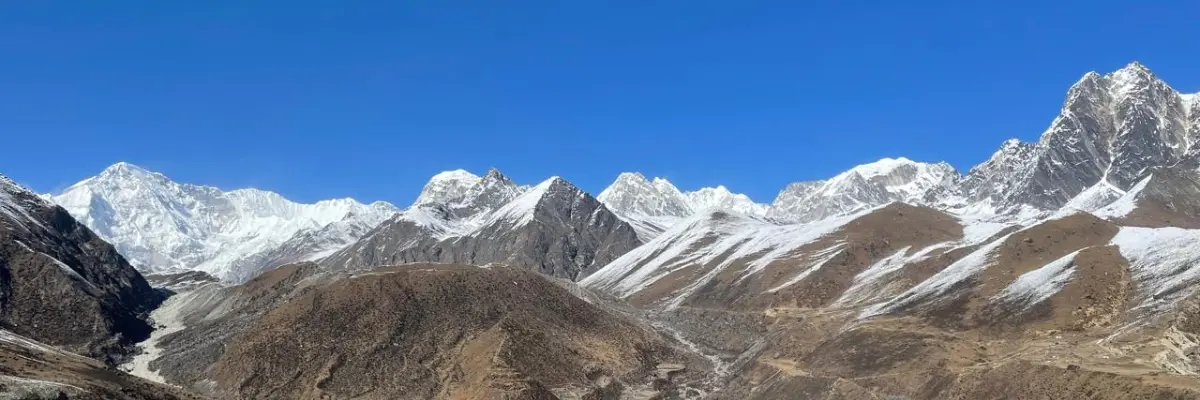
High above the Nepal-Tibet border in the Himalayas, Cho Oyu stands as the sixth-highest mountain on Earth at 8,188 meters, a breathtaking attraction attracting adventurers from around the world, yet often described as the “most accessible” of the fourteen 8,000ers. But one question that strikes every mountaineer’s mind is: what is the Cho Oyu death rate, and how safe is it compared to other Himalayan giants?
In this detailed guide, we break down the Cho Oyu death rate, what it means for climbers, and how this mountain compares with its fearsome Himalayan siblings.
Whether you’re an adventure traveler imagining your first Himalayan 8,000-m peak or a curious reader fascinated by mountaineering legends, you’ll find real statistics, historical context, and expert insight here.
Understanding Cho Oyu, Sixth-Highest Peak of the World
Located in the Mahalangur Himalaya range, Cho Oyu sits on the border between Nepal and Tibet. Known in Tibetan as “Turquoise Goddess,” this mountain is a landmark of Himalayan grandeur. Though just over 8,000 m, Cho Oyu has earned a reputation as one of the most accessible high-altitude challenges, but accessible doesn’t mean easy.
- Elevation: 8,188 m (26,864 ft)
- Location: Nepal-Tibet border
- Range: Mahalangur Himalaya
The point where geography and culture meet, Cho Oyu is also the second most climbed 8,000-meter peak in the world after Everest, thanks to its relatively moderate slopes and well-trodden routes on the Tibetan side.
Most Cho Oyu expedition attempts are made from the Tibetan (northwest ridge) side, which is relatively straight to base camp compared to other Himalayan giants.
Although Cho Oyu is often described as “non-technical,” it remains an extremely high-altitude mountain. Above 8,000 meters, in the Cho Oyu death zone, oxygen levels are insufficient to sustain human life for long periods. This poses a high risk of altitude sickness, high UV exposure, strong winds, and unpredictable weather.

Cho Oyu Climbing History
The first successful Cho Oyu ascent was made in 1954 by Austrian climbers Herbert Tichy, Joseph Jöchler, and Sherpa Pasang Dawa Lama. This ascent became significant for its relatively direct approach and absence of extreme technical obstacles compared to other unclimbed giants of that era.
After the first Cho Oyu summit, over the next decades, Cho Oyu gradually became known as a “training” 8,000-meter peak, often attempted before a Mount Everest expedition.
By the 1990s and early 2000s, commercial expeditions became standardized, fixed rope systems were installed seasonally, and high-altitude logistics improved dramatically. This made the Cho Oyu expedition even more popular.
These developments directly influenced the Cho Oyu death rate by year.
In the first decades, after 1954, there were a higher number of fatalities. At that time, weather forecasting was basic and supplemental oxygen systems were less reliable. Further, rescue operations were also limited. So, climbers often had to operate with minimal support.
However, the current Cho Oyu death rate is approximately 1.2% to 1.5% overall, with a 60-80% success rate.
With improved weather forecasts, mountaineers can estimate stable summit windows. Oxygen systems are more dependable. Communication between camps is constant. These advancements have steadily reduced the Cho Oyu mortality rate over time.
Cho Oyu Historical Death Rate vs Recent Patterns
If you look at the long history of Himalayan climbing, the death rate on Cho Oyu has decreased over time. Thanks to improvements in weather prediction, oxygen systems, and base camp logistics, the Cho Oyu death rate remains low, under 1.5%, with total climb counts exceeding 4,000.
Looking at Cho Oyu death rate by year, patterns show clear changes over time.
Earlier Decades (1950s-1980s)
- Fewer expeditions
- Limited weather forecasting
- Basic oxygen systems
- Less structured acclimatization
Fatalities during this era were often linked to storms, altitude sickness, or limited rescue capacity.
1990s-2010s
- Rise of commercial expeditions
- Improved fixed rope systems
- Better oxygen equipment
- More systematic acclimatization rotations
Around this time, the Cho Oyu mortality rate began stabilizing at a lower level compared to earlier periods.
2020s-2025
- Advanced satellite weather tracking
- Coordinated logistics
- Professional expedition management
Although deaths on Cho Oyu still occur, they are relatively infrequent compared to total summit numbers. This has created a broader global mountaineering trend.
What Is the Cho Oyu Death Rate Today?
Based on aggregated Himalayan climbing data up to 2025, Cho Oyu has recorded more than 4,000 successful summits and approximately 52 documented deaths.
To put that into context:
- Annapurna death rate historically has been 25-30% in recent decades.
- K2 has historically fluctuated between 23-25%.
- Though the Everest death rate has decreased recently, approximately 1-2%, Everest’s long-term fatality rate is higher than Cho Oyu’s.
The death rate on Cho Oyu is currently among the lowest of all 8,000-meter mountains. However, having a low fatality rate does not mean Cho Oyu is safe or can be underestimated in absolute terms. It means that compared to other extreme peaks, fewer climbers die per summit attempt.
When analyzing deaths on Cho Oyu, most incidents are due to altitude illness, exhaustion, or descent complications, not technical falls.
Why Cho Oyu Has a Lower Death Rate?
One reason that makes Cho Oyu fatality rate comparatively low is the nature of the standard route. The northwest ridge avoids major serac barriers and extreme vertical rocky sections. Avalanche exposure is present but generally lower than on peaks like Annapurna.
Other factors that keep Cho Oyu death rate low are:
Non-Technical Terrain
Unlike peaks with overhanging seracs or steep couloirs, Cho Oyu’s standard routes feature moderate slopes that demand less technical climbing skill. This lowers hazards such as difficult glacier navigation or risky technical ice walls.
Additionally, the summit plateau is broad and less exposed than the knife-edge ridges found on other peaks. There are fewer severe bottlenecks that trap climbers in the death zone for extended periods.
Predictable Route Structure
The climbing line is well established. Camps are typically set at consistent elevations, and fixed ropes are commonly installed in standard sections.
Fewer Winter Expeditions
Cho Oyu sees far fewer winter attempts than peaks like Everest or Manaslu. Winter ascents dramatically increase risk, so lower winter traffic helps keep the overall Cho Oyu fatality rate lower.
That being said, Cho Oyu’s peak climbing seasons, during spring and autumn, often offer larger climbing windows.
Tibet Route Logistics
Most summits occur from the Tibetan side, where base camp access is relatively straightforward compared to some Nepalese approaches. This logistical advantage allows for efficient supply routes and stronger support infrastructure.
Efficient Rescue and Logistics
On the Tibetan side, road access to base camp allows faster evacuation to lower elevations compared to remote glacier approaches elsewhere in the Himalayas.
What Makes Cho Oyu Different from Other 8,000ers?
When comparing the Cho Oyu fatality rate with other 8,000ers, several characteristics stand out:
- The slope angles on the standard Cho Oyu route are moderate rather than steep and sustained.
- Avalanche exposure is present but less severe than peaks like Annapurna.
- The summit plateau is broad instead of sharp, with exposed peaks.
- Cho Oyu has fewer technical bottlenecks, so the climbers do not have to wait in the queue, in the death zone, for an extended period of time.
- Access logistics from the Tibetan side allow relatively efficient evacuation.
These structural factors collectively explain the relatively low Cho Oyu death rate.
However, altitude remains the decisive element. Above 8,000 meters, the body deteriorates regardless of terrain.
The Hidden Risks Behind Cho Oyu’s “Safe” Label
Despite its reputation, no 8,000 m giant is without danger. Calling Cho Oyu “safe” can sometimes be misleading. Moreover, even a small mistake can be life-threatening in high-altitude mountaineering.
It’s vital to understand the hidden perils that even Cho Oyu climbers face:
- High-Altitude Black Zone: Above 8,000 m, oxygen levels are dangerously low, about one-third that of sea level. This is the notorious death zone.
- Avalanches and Icefall: While less frequent, avalanches and unstable snow can still cause fatalities.
- Altitude Illness: Acute Mountain Sickness (AMS), High Altitude Cerebral Edema (HACE), and High Altitude Pulmonary Edema (HAPE) are major dangers that can affect even experienced climbers.
- Crevasse Fields: Hidden glacier cracks may appear underfoot, leading to sudden falls.
- Weather and Wind: Jet stream winds can exceed 100 km/h. Rapid storms remain a serious risk factor.
- Acclimatization Failures: A significant number of deaths on Cho Oyu historically involved insufficient acclimatization or pushing for the summit despite physical decline.
- Severe exhaustion during descent: Climbers can lose footing or get exhausted on the way back.
These factors remind us that a low death rate doesn’t mean no danger; careful preparation and respect for the mountain remain essential.
How Does Human Factor Contribute to Cho Oyu Death?
The mountain’s reputation creates a subtle psychological risk.
As Cho Oyu is often described as the “easiest 8,000er”, climbers may underestimate it. However, this overconfidence eventually affects pacing, acclimatization, and turnaround decisions.
This can affect the success of the Cho Oyu summit. Human decisions also contribute to the overall Cho Oyu mortality rate rather than technical challenges.
At 8,000 meters, small mistakes pose a significant risk. A delayed descent, ignoring early symptoms of altitude sickness, or pushing beyond safe turnaround times can quickly turn critical.
The mountain itself is relatively forgiving compared to others. The altitude is not.
How Long Does It Take to Climb Cho Oyu?
A typical Cho Oyu expedition usually takes about 6-8 weeks, including trekking to its base camp, acclimatization, rotations up and down to higher camps, and a summit push. Where acclimatization and climbing alone can take about 3-4 weeks.
Time on the mountain itself can vary with weather, team fitness, and the summit attempts schedule. This relatively predictable timeline, compared to peaks with unpredictable icefall or frequent storms, helps climbers manage risk better, which in turn affects the overall Cho Oyu mortality rate.
Is Cho Oyu Easy?
One question frequently pops up on the internet, over several discussion sites, “Is Cho Oyu easy?”
Though it is an easy peak, with a broad top, it’s still a true Himalayan giant that demands respect and rigorous preparation. The relatively low Cho Oyu death rate reflects terrain and logistics, not reduced altitude danger.
The fact that its summit lies above 8,000 meters, in the death zone, the altitude risk remains identical to Everest, K2, or Annapurna. At this altitude:
- Oxygen saturation drops dramatically.
- Cognitive function declines.
- Muscular strength decreases rapidly.
- Recovery becomes nearly impossible without descent.
- No terrain feature can change these physiological realities.
In mountaineering, easy is relative. It might not require excellent technical climbing skills, but you’ll need to have decent stamina, advanced rock climbing, and good ice navigation skills. Also, altitude and weather are considerable problems.
Unprepared once will definitely wish they had prepared well.

Who Should Attempt Cho Oyu?
Cho Oyu is most suitable for:
- Climbers with prior experience above 6,500-7,000 meters
- Those who have an understanding of glacier navigation and fixed rope systems
- Adventurers seeking a first 8,000 m peak with a comparatively lower fatality rate
- Those ready for long expeditions with structured acclimatization
- Individuals with strong endurance and mental discipline
- Mountaineers preparing for Everest or other 8,000ers
It is not appropriate for someone whose highest experience is trekking peaks like Island Peak or Mera Peak. The difference between 6,000 meters and 8,000 meters is physiological, not just technical.
How Commercial Expeditions Influence the Cho Oyu Death Rate
One noticeable shift in the Cho Oyu death rate by year occurred with the growth of commercial high-altitude expeditions in the 1990s and 2000s.
Modern expeditions provide:
- Structured acclimatization plans
- Fixed ropes on key sections
- Coordinated summit windows
- Supplemental oxygen logistics
- Satellite weather forecasting
- Communication between camps
These systems reduce chaos and improve response times in emergencies.
While no commercial model can eliminate risk, professional organizations have clearly contributed to stabilizing the death rate on Cho Oyu over the past two decades.
Cho Oyu Bodies: A Difficult Reality
Like every other 8,000-meter mountain, there are Cho Oyu bodies that remain on the mountain. At such extreme altitude, recovery operations are logistically complex, dangerous, and often impossible without putting rescuers at serious risk.
That said, compared to Everest, the number is far lower due to the smaller overall traffic volume and lower fatality percentage. This is also because many incidents occur during descent rather than high-exposure sections.
Final Conclusion: How Safe is Cho Oyu?
The Cho Oyu death rate, estimated at around 1-1.5%, makes it one of the statistically safest 8,000-meter peaks. Cho Oyu has moderate terrain, well-managed modern expedition logistics, and decades of accumulated climbing experience. Climbers themselves have enhanced their climbing skills these days.
Decreased fatality rate does not mean reduced altitude-related dangers. There still persists risks of altitude sickness, fatigue, strenuous descent, crevasses, and avalanches.
Cho Oyu is still an 8,188-meter mountain in the death zone. For experienced climbers, it is a demanding but comparatively controlled exposure to extreme altitude.
On Cho Oyu, safety isn’t about the numbers alone; it’s about how wisely you climb above them.
Loading...
related post


Author

Samyog Shrestha is a travel enthusiast and an excellent content writer at Himalayan Masters, the face behind the amazing content who likes to learn from experience.


Leave Your Comment