




New Rules for Climbing Everest (2025 Update)
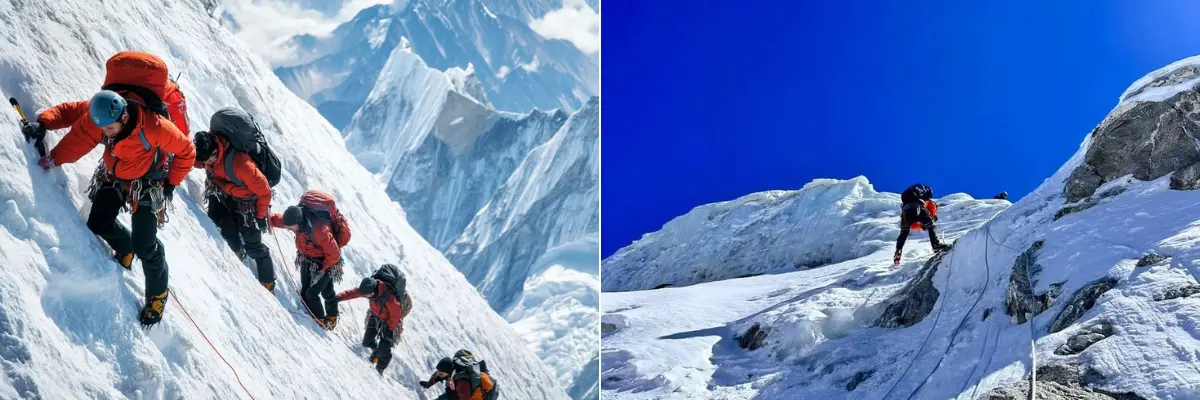
Climbing Everest is the ultimate goal for most mountaineers. It isn’t just about testing your strength or stamina but about understanding the mountain and living the Himalayan dream. It is about following a set of Everest climbing rules for a safe and successful summit.
If you are familiar with previous climbing rules for Mount Everest, you must know that there have been some updates as of 2025. A new set of rules has been formulated for safer climbing practices, protecting lives and preserving the environment.
The new Everest climbing rules are designed to prioritise the safety of the climbers, respect for the mountain, environmental conservation, and professional integrity.
Whether you’re a seasoned climber or a first-timer, following these rules is a must and could be crucial in making your Himalayan dream come true.

History of Everest Climbing Rules
Climbing Everest used to be a wild ambition in the past. The history of Everest expeditions dates back to the 1920s when British teams wanted to write their name on the world’s highest peak.
However, it was not until 1953 that Sir Edmund Hillary and Tenzing Norgay Sherpa made the first successful ascent of Everest. During that time, there were no climbing permits, no GPS, and no governmental rules.
However, that was a different time—a quieter mountain, fewer climbers, and simpler ethics. Now, a flux of adventurers from all around the world has made Everest crowded, commercialised, and potentially dangerous.
So, to limit the number of crowds, new climbing rules, requirements, and permits have been implemented. They’re not trying to stop people from chasing their dreams, but are trying to make sure those dreams don’t end in tragedy, and Everest trash does not pile up further.
Implementation of the First Everest Climbing Rules
The first formal Everest climbing rules were only introduced in the 1970s and 80s when climbing became commercialised. In the first phase of shaping the rules, it was limited only to permit applications and waste disposal guidelines.
But as Everest attracted international climbers each consecutive season, the need for a standardised system became apparent.
Fatalities, garbage accumulation, the Sherpa expedition, and overcrowding necessitated the Nepali Government to frame a new set of Everest expedition rules.
As of April 2025, in addition to climbing costs, fines, and basic permit control, an extensive regulatory framework.

New Everest Climbing Rules 2025
The newly implemented Everest Climbing Rules in 2025 were implemented with the aim of reducing casualties, safeguarding workers, and protecting the fragile Himalayan ecosystem. Here’s what’s been included in the new rulebook.
Increased Permit Fees: Permit costs rose by 36%, from $11,000 to $15,000 for spring climbs
Mandatory Guides: Solo climbs are banned; every two climbers must hire a Nepali guide
Ban on Solo Climbs: Alpine-style expeditions are now forbidden on Everest and other 8,000 m
Shortened Permit Validity: Season window reduced from 75 to 55 days
Environmental Conservation Measures:
- Biodegradable bags for human waste; strict garbage carry-back rules, including human waste. If not, you will be fined or blacklisted
- A restricted list of items is allowed on the mountain.
Enhanced Worker Protections:
- Higher wages: Liaison officers receive around NPR 1,600 per day, while Sherpas can cost anywhere between $ 1,500 and $ 3,000 based on their task. An experienced Nepali Sherpa guide can cost around $5,000-10,000 for the whole expedition.
- Insurance coverage raised to NPR 2 million for guides, NPR 1.5 million for base camp staff
Mandatory Tracking Devices: GPS trackers are required to monitor climber safety
Mandatory Death Repatriation Insurance: Minimum coverage NPR 5 million (~US$37k)
Prior Mountaineering Experience: Climbers must have summited at least one 7,000-meter (22,966 ft) peak
Ecology Fee: New garbage fund, $4,000 deposit refundable if waste is removed
Reduced Climbing Duration: Permit time is reduced, pushing climbers to ascend and descend quickly
Fixed Camp Protocol: All temporary structures removed post-expedition; toilet tents banned over crevasses
Puja Ceremony is Required: Before any climb, teams must perform a puja ceremony with their Sherpas, a beautiful nod to tradition and respect for the mountain’s spirit
Additional Everest Climbing Rules
Here are some additional climbing rules for Everest that every mountaineer must follow.
Respect Local Culture and Traditions: Puja ceremonies at Base Camp are now mandatory; the Rule of Respect is enforced.
Sherpa Hierarchy & Sherpa 8‑3 Rule: Senior Sherpas lead decision-making; local structures reinforced.
Rule of the Queue: Organised ascent lines are enforced to avoid bottlenecks near the summit.
RECCO Detectors & Helicopter Regulations: Rescue reflectors mandated; flight caps to minimise exposure.
Rule of Respect (Or Else): Violations can lead to fines, expulsions, or future bans.

Other Rules You Need to Know
Here are a few lesser-known but important details from the 2025 Everest rulebook:
- Sherpa Leadership is Formalised: The new “Sherpa 8-3 Rule” ensures that senior Sherpas lead every third high-altitude rotation.
- Queue Etiquette Matters: Skipping the summit line is now a punishable offence. Everyone waits their turn, with no exceptions.
- Helicopter Flights Are Limited: Joyrides and unauthorised cargo flights are banned above Camp II. The skies above Everest are now strictly for emergencies.
- Cultural Disrespect Can Cost You: Disrespecting Sherpa traditions, refusing puja ceremonies, or violating local customs can get you fined or banned.
What is the 2 PM Rule on Mount Everest?
Among all the updated rules, the 2 PM Rule is the most vital. According to this rule, all climbers must reach the Everest summit and begin their descent no later than 2 pm. It’s not just a suggestion; it might potentially be a life-saving rule.
This rule is formulated based on decades of data and tragic experiences that resulted in many deaths on Everest. Especially tragic events that occurred during descent when climbers were caught in bad weather after 2 pm.
Generally, by 2 pm, weather conditions above 8,000 meters (26,247 ft), notoriously known as the Death Zone, can become highly unstable. You don’t want to be caught up in some of the life-threatening issues like hypothermia, high winds, snow blindness, and exhaustion.
At such elevations and conditions, your body begins to give up and feel exhausted even while resting.
Not only that but after safe daylight hours, there are high chances of losing footholds. Due to the heat, ice starts melting and becomes soft, potentially increasing the chances of not having a good foot grip.
Not to forget the altitude you’re in. At such altitudes, it’s easy to feel difficulty breathing, which can result in altitude sickness and reduced alertness.
For these reasons, the 2 PM rule exists to ensure climbers have enough time to safely achieve their dream of reaching the highest point on earth and safely return to lower camps before nightfall.
It’s not absolute, but ignoring this timeline could not only cost you penalties but could also cost you your life.
Why is timing critical on Everest?
If you’ve climbed any mountain, you might have noticed guides constantly reminding and pushing you to stay on schedule. It’s not because they want to summit faster; it’s because the more time you spend or the higher you climb, the faster your body is likely to break down.
Above Camp IV on Everest, above 8000 meters, there is only 1/3 of breathable oxygen available. In such conditions, your muscles wither, your brain fogs, and even standing up feels like lifting weights underwater. So, it would be wise to stay over for an extended period of time.
In the mountains, especially in the Death Zone on Everest, time is life. Apart from low oxygen levels, high winds, sunburn, and the risk of ice falling are prominent.
Likewise, if you are too late to descend, you might have to descend in darkness. And that is one thing you don’t want to do. Walking in the dark poses risks of distracting from the path or falling into a crevasse.
That’s why following the Everest climbing rules, especially the 2 PM Rule, should be your top priority if you want to return alive. Let’s just not aim to reach the summit, but make sure you get down to tell the story.

Why were these laws introduced?
Due to the heartbreaking events in recent years, the government of Nepal felt a need to introduce reformed climbing rules for the Everest expedition. Some notable incidents are ‘Sleeping Beauty’ and ‘Green Boots’.
Recently, due to the increase in Everest’s popularity, both for the Everest Base Camp Trek and the expedition, it has faced huge crowds. Those attempting to summit face Everest Traffic Jams, particularly around Hillary Step.
This expedition has put pressure on Everest’s fragile ecosystem. In the 2023 season alone, 12 climbers lost their lives, and 5 went missing.
Overcrowding near the summit, unskilled climbers, and weak enforcement of safety measures are directly to be blamed for these incidents.
Additionally, Sherpas and local workers were not satisfied with the pay grade they were receiving, poor insurance, overwork, and a lack of safety equipment.
To address all these issues, it was time new Everest climbing rules were introduced. By introducing these rules, Nepal hopes to not only reduce the human cost but also promote sustainable tourism. It also ensures that Everest is not treated like a free-for-all or just a bucket list; it remains respected, safe, and achievable.
It’s about preserving Everest not only for climbers but for future generations of Sherpas, scientists, conservationists, and dreamers.
Penalties for Rule Violation
The 2025 Everest Expedition Laws aren’t just petty fines; the penalties for rule violations include heavy monetary fines and permanent climbing bans.
Climbers who ascend without a licensed guide, fail to carry tracking devices, leave trash, or ignore the 2 PM Rule may face fines, bans, and possible expulsion.
Expedition companies can lose their licenses, and permits can be revoked mid-season.
These consequences are enforced by liaison officers and supported by surveillance from Base Camp up to Camp IV.
Everest Climbing Rule Violations and Penalties
Some of the penalties are mentioned below.
- The fine for climbing without a permit is NPR 1,000,000 (approximately $ 7,500). Other consequences are a lifetime ban from mountaineering in Nepal, immediate arrest, and confiscation of all expedition gear.
- Ignoring the 2 PM Summit Rule can cost from NPR 100,000 to NPR 200,000 ($750-1500). Other consequences are a permit revoked for the remainder of the season and a name flagged for future restrictions.
- The penalty for summiting without a licensed guide is NPR 500,000 ($ 3,750) for both the climber and the company, and the company may lose its expedition license for one year.
- Climbing with a fake experience will result in permit cancellation, an NPR 300,000 ($2,250) fine, and blacklisting from future climbs for five years.
- Failing to use a GPS tracker or submit real-time location will cost you NPR 50,000 ($375), and you will not be eligible for emergency rescue services.
- Leaving trash or human waste on the mountain will cost you NPR 200,000 ($1500) per climber. Other consequences are an immediate expedition ban and blacklisting for the next climbing season.
- Lying about an Everest Summit, you will be penalised with an NPR 100,000 fine ($750), permit revocation, a lifetime ban from any Nepal government-sanctioned climbs, and global mountaineering reputation damage.
- Overstaying the 55-day permit limit will cost NPR 25,000 per extra day ($190/day) and delay permit approval for the next climb.
Other Additional Penalties
- Refusing to perform the Puja Ceremony is going to cost you NPR 25,000 ($190). It’s not a criminal offence, but climbers may not get support from local Sherpas and logistics crews.
- Flying helicopters above Camp II without emergency justification is going to cost NPR 500,000 ($3750) fine, and the pilot’s license may be suspended; the expedition could be halted.
- You are liable to pay NPR 50,000–100,000 ($375–$750) if you disrespect Sherpa customs or endangering porters will. Additionally, you will be blacklisted by the Trekking Agencies Association of Nepal (TAAN).
- You will receive a verbal warning for breaking queue etiquette at the summit ridge at first. If you repeat the offence for a second time, you will be fined NPR 50,000 ($375) and banned from climbing for the rest of the season.
Consequences for Expedition Operators
If an expedition company is found violating multiple rules, its license can be suspended for 1 to 5 years, and it will be fined up to NPR 2,000,000 ($15,000). Over that, they will lose the trust of the international climbing community.

Role of Liaison Officers
Liaison Officers now play a vital role in Everest operations. They are like traffic controllers on Everest. Usually, they are government-appointed officials from Nepal’s army, police and civil services.
They are tasked with ensuring compliance, inspecting permits, tracking climbers’ schedules, verifying insurance, and reporting incidents and operating rescues when needed.
Usually, they are stationed at various camps throughout the season and operate alongside expedition leaders and sherpas.
Conclusion
Climbing Everest has never been easy; now, it’s even more regulated than ever. They are there to stop you from the Everest expedition, but they are necessary reforms from years of mishappening and overcrowding to preserve this pristine ecosystem.
In the end, standing on top of the world isn’t just about conquering a peak; it’s about doing it the right way with honour and respect.
By tightening eligibility, enforcing safety, and honouring cultural heritage, the Nepal government aims to ensure mountaineers’ safety, along with respect for the mountain.
These raised costs might be too much for many, but they also raise the bar for what it means to stand on top of the world.
Loading...
related post


Author

Samyog Shrestha is a travel enthusiast and an excellent content writer at Himalayan Masters, the face behind the amazing content who likes to learn from experience.


Leave Your Comment