




Top 12 Reasons Why are Bodies Left on Mount Everest
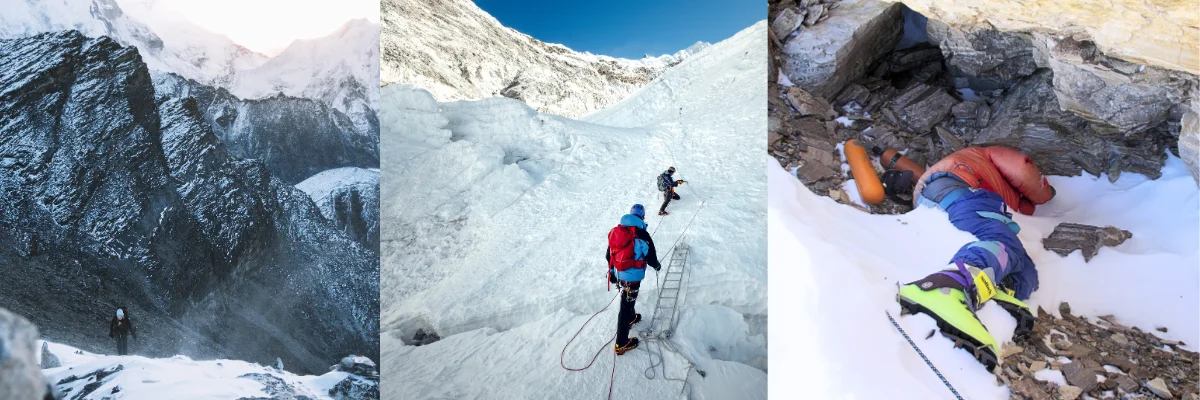
Every year, climbers from all over the world travel to Mount Everest, hoping to stand on the highest point on Earth.
For many people, reaching the Mount Everest summit (8,848.86 meters/29,032 feet) is a once in a lifetime achievement. But even with its beauty and fame, Everest is still one of the harshest places on Earth.
The mountain’s extreme altitude, freezing temperatures, unpredictable weather, and thin air have claimed the lives of over 300 climbers since expeditions began in 1921. Today, more than 200 bodies remain on Mount Everest, making it the world’s highest graveyard.
Many of these climbers still rest where they lost their lives, while others lie hidden beneath snow and glaciers. During summit attempts, climbers on both the south and north routes can still see some of these bodies, a few of which have become well-known landmarks because of their brightly colored down suits, helmets, or distinctive boots.
Although these sights can shock first-time climbers, they also serve as powerful reminders of Everest’s unforgiving environment and the risks that come with climbing the world’s highest peak.
This often raises an important question: Why are bodies left on Mount Everest instead of being brought home? Unlike most mountain rescues, recovering bodies from Mount Everest is one of the most dangerous and technically demanding operations in high-altitude mountaineering.
Rescue teams must battle the extreme conditions of the Death Zone, unstable terrain, severe weather, and dangerously low oxygen levels, often putting their own lives at risk. In many situations, attempting a recovery can become more dangerous than leaving the body where it rests.
The challenges, however, go far beyond the mountain itself. High recovery costs, limited weather windows, complex logistics, and the wishes of some climbers and their families also influence whether a recovery takes place.
In this blog, we’ll look at the reasons why are bodies left on Mount Everest. This will help explain the realities, risks, and tough choices involved in recovering bodies from the world’s tallest mountain.
The Death Zone Makes Body Recovery Extremely Dangerous
Above 8,000 meters (26,247 feet), climbers enter what mountaineers call the Death Zone. Here, the air has only about one-third of the oxygen found at sea level, so even simple tasks become exhausting.
Every step takes a lot of effort, and the body starts to weaken because it cannot get enough oxygen. This puts climbers at a much higher risk of altitude sickness, confusion, frostbite, and exhaustion.
In these conditions, survival is the main concern. If someone dies in the Death Zone, rescuers would have to face the same deadly environment to recover the body.
Spending more time at such high altitude greatly increases the risk of getting very sick or dying. Because of this, teams often decide to leave the body where it is instead of risking more lives. The tough conditions in the Death Zone make body recovery one of the most dangerous jobs on Mount Everest.
Body Recovery on Mount Everest Can Put More Lives at Risk
It takes more than one person to recover a body from Mount Everest. Usually, a team of skilled Sherpas, guides, and high-altitude climbers must work together to bring a single body down the mountain.
But every member of the team faces the same dangers that caused the climber’s death in the first place. For example, rescuers have to cross steep ice slopes, narrow ridges, crevasses, and unstable snow while carrying heavy gear and using up valuable oxygen.
They often spend extra hours in the Death Zone, where staying too long can be deadly. A sudden storm, avalanche, or fall can turn a recovery mission into another tragedy.
Because of these risks, expedition leaders think carefully before allowing any recovery. Often, they decide that risking several lives to recover one body is just too dangerous, which is a main reason many climbers remain on Everest.

Freezing Temperatures Make Bodies Extremely Difficult to Recover
Many people think rescuers can just carry a body down the mountain, but the extreme cold makes this nearly impossible. Temperatures on Everest often stay far below freezing, so bodies freeze solid quickly. Over time, snow and ice can partly bury the body or freeze it to the ground.
Climbers also wear heavy down suits, insulated boots, harnesses, crampons, and carry oxygen tanks and other gear. All this equipment can make a frozen body weigh more than 100 kilograms (220 pounds).
Unlike a living climber who can help during a descent, a frozen body cannot move and must be dragged or carefully moved across steep, icy slopes. Because of this, recovery teams need great strength, special equipment, and good conditions to move the body safely.
These challenges make body retrieval much harder than most people think.
Everest’s Rugged Terrain Makes Body Recovery Nearly Impossible
Mount Everest’s terrain is another big challenge for body recovery. The mountain has steep rock faces, narrow ridges, tall ice walls, deep crevasses, and unstable snowfields. Many climbing routes use fixed ropes, ladders, and technical climbing methods, which leave little space for error or for moving a heavy body safely.

Going down the mountain is often more dangerous than climbing up. Rescuers have to keep their balance while crossing exposed areas where even a small mistake can be deadly.
Carrying or dragging a body through these places takes constant teamwork and slows the group down a lot. This makes recovery missions very hard and dangerous, especially at high altitudes where every move takes more effort.
Even experienced climbers can struggle in these conditions, which is why Everest’s rough terrain is one of the biggest obstacles to recovering bodies from the mountain.
Limited Helicopter Access Prevents Many Body Recoveries
People often ask why helicopters can’t just pick up bodies from Mount Everest. Although helicopters have rescued climbers at lower heights, they are not safe to use in the mountain’s highest areas.
The higher you go, the thinner the air gets, which means helicopter blades can’t create enough lift. On top of that, strong winds, sudden weather changes, and steep slopes make flying even harder.

Most bodies are found in the Death Zone, which is near or above 8,000 meters (26,247 feet). Helicopters can barely operate at these heights. Even if one could get there, there usually isn’t a safe spot to land or stay in the air long enough to recover someone.
Because of this, recovery teams have to go on foot. They depend on skilled Sherpas and climbers to bring the body down. Without helicopter help, recovering bodies is much more dangerous, takes longer, and is physically exhausting.
High Recovery Costs Prevent Many Bodies from Being Brought Home
Getting a body off Mount Everest is both risky and very expensive. One recovery mission can cost tens of thousands of dollars, depending on where the body is and how hard the job is. The price covers permits, planning, oxygen tanks, special climbing gear, insurance, transport, and pay for the skilled Sherpas and guides who help.
Recovery missions also require permits and coordination with authorities from both Nepal and China. For the Nepal side, the Nepal Department of Tourism oversees mountaineering permits and regulates climbing activities on Mount Everest, making official approval an important part of any recovery operation. Depending on the nature of the mission, recovery teams may also need to pay permit and administrative processing fees, adding thousands of dollars to the overall cost alongside helicopter operations, high-altitude Sherpa support, specialized equipment, and logistics.
Recovery teams often spend days on the mountain, which means they need to plan carefully and bring extra supplies. If the weather suddenly changes, they might have to stop and try again later, which makes it even more expensive.
Sadly, not all families or expedition groups can pay for this. Some climbers also do not have insurance that covers body recovery at high altitudes. Because of these money issues, many bodies stay on Everest long after the climbing seasons are over.
Unpredictable Weather Leaves Very Little Time for Recovery Missions
Mount Everest’s weather can change within minutes, turning clear skies into life-threatening storms. During much of the year, powerful jet stream winds sweep across the summit, often exceeding speeds that make climbing impossible.
Heavy snowfall, whiteouts, blizzards, and sudden drops in temperature further increase the danger for everyone in the mountains.

For this reason, climbers usually attempt the summit during short weather windows in spring and, less commonly, in autumn. However, these brief periods are the only practical opportunities for body recovery missions.
Even then, expedition teams must carefully monitor forecasts and make quick decisions. If conditions deteriorate, they immediately abandon the mission to protect the recovery team.
Consequently, suitable weather for retrieving a body is rare, and many planned operations never take place. The mountains’ unpredictable climate continues to make body recovery one of the most challenging tasks in high-altitude mountaineering.
Some Families Choose to Leave Their Loved Ones on Mount Everest
Not everybody remains on Mount Everest because recovery is impossible. Some climbers have expressed a wish to remain on the mountain if they die during an expedition. Others see Everest as their final resting place because they spent years trying to reach its summit. For some mountaineers, reaching the top of the world is a lifelong dream, and they believe there is no more fitting place to rest than the mountain they dedicated their lives to climbing.
Similarly, some families choose not to request a recovery. They know the risks and do not want rescuers to put their lives in danger to bring their loved one home.
Others understand the emotional and financial difficulties of such a mission and decide to remember the climber where they made their final ascent. Each family’s decision is shaped by personal beliefs, cultural traditions, and individual circumstances.
So, while many people think all families want a recovery, the truth is more complicated. In some cases, leaving the climber on Everest is a conscious and deeply personal choice, not just a result of logistical problems.
Snow and Glaciers Can Hide Bodies for Years or Even Decades
Mount Everest is always changing. Strong winds blow snow across the slopes, and glaciers slowly move beneath the surface. Because of this, a body that can be seen one season might be covered the next. Sometimes, snow and ice keep a climber preserved for years until melting or moving glaciers show them again.

These natural changes make recovery harder. Rescue teams often struggle to find a climber’s exact location, especially if snow or ice has altered the area. Recovering buried bodies takes more time and special tools to do safely.
Even skilled climbers can struggle in these unpredictable conditions. Because Everest keeps changing, many recovery attempts fail, and some climbers stay hidden for decades before being found.
Complex Planning and Logistics Delay Body Recovery Efforts
Recovering a body from Mount Everest is much more complicated than just sending a team up the mountain. Organizers have to plan every step, including getting permits, finding skilled people, and preparing oxygen, climbing gear, and emergency help.
Because these missions happen at very high altitudes, even small mistakes can be dangerous. Organizers also have to work with local officials, weather experts, expedition companies, and high-altitude Sherpas to pick the safest time for the mission.
They need backup plans in case the weather changes suddenly or someone gets sick. Unlike a regular climb, a recovery mission means moving a heavy body over dangerous ground while keeping everyone safe. These tough logistics often delay or stop recovery efforts, especially when mountain conditions are bad.
Living Climbers Always Take Priority Over Body Recovery
During climbing season on Mount Everest, teams focus on protecting and rescuing climbers who are still alive. Guides, Sherpas, oxygen, ropes, and emergency supplies are all limited, especially in the Death Zone above 8,000 meters (26,247 feet). If someone gets sick, injured, or stranded, all available resources go toward saving that person.
Recovering a body requires many of the same personnel and equipment as rescues. One recovery mission might need several experienced Sherpas, extra oxygen, special gear, and many more hours at high altitude. Using these resources for body recovery can make it harder for the team to help climbers who are still alive in an emergency.
Because of this, expedition leaders think carefully before allowing a recovery mission. If another climber needs help or the weather gets worse, recovery efforts are often delayed or cancelled. Even after the season ends, planning a new trip just to recover a body takes a lot of time, money, and people.
This is why living climbers always come first on Mount Everest. Families understandably want to bring their loved ones home, but teams have to make tough choices based on safety and limited resources. Because of this, many bodies remain on the mountain, since rescuing the living always takes priority.
Human Physical Limits Make Body Recovery Even More Challenging
At very high heights, the human body gets much less oxygen and loses strength quickly. Even simple tasks like clipping a carabiner, fixing an oxygen mask, or walking a few steps take a lot of effort. As climbers get more tired, they move more slowly and use energy much faster.

Recovering a body in these conditions is extremely hard. A frozen body can weigh over 100 kg (220 pounds), and dragging it over steep snow and rocks takes a huge amount of strength. Even the best Sherpas and mountaineers have to stop often to rest and save energy.
Every extra minute at high altitude also raises the risk of altitude sickness, frostbite, and exhaustion. Because of these limits, recovering bodies is a major challenge, even for top climbers.
Conclusion
The question “Why are bodies left on Mount Everest?” has no single answer. Instead, it reflects the harsh reality of climbing the world’s highest mountain.
From the extreme conditions of the Death Zone and Everest’s rugged terrain to freezing temperatures, unpredictable weather, high recovery costs, and complex logistics, every body recovery presents enormous challenges.
In many cases, rescue teams must choose between attempting a recovery and protecting the lives of those still on the mountain. Today, over 200 bodies are still on Mount Everest. They are strong reminders of the dangers of climbing at such high altitudes.
Some bodies can be seen along the main climbing paths, while others are hidden under snow and glaciers, preserved there by the cold for many years or even decades.
These climbers are not forgotten. They stand for the tough choices that families, expedition teams, and Sherpas face when trying to bring them home.
Understanding why are bodies left on Mount Everest offers a deeper appreciation of the mountain itself. Everest continues to inspire thousands of climbers every year, but it also demands careful preparation, respect for nature, and an understanding of its limits.
Whether you want to trek to Everest Base Camp, learn about the mountain’s history, or are just curious about why bodies remain there, one thing is certain: the mountain always decides in the end.
Loading...
related post


Author

Kadambini Thapaliya is a content writer and researcher with a passion for storytelling, culture, heritage, and travel. She creates engaging, well-researched content that helps readers discover unique places, traditions, and experiences. Through her writing, she aims to make information accessible, meaningful, and enjoyable for diverse audiences.


Leave Your Comment