




Top Things That Happened in Everest Summit 2026 Spring
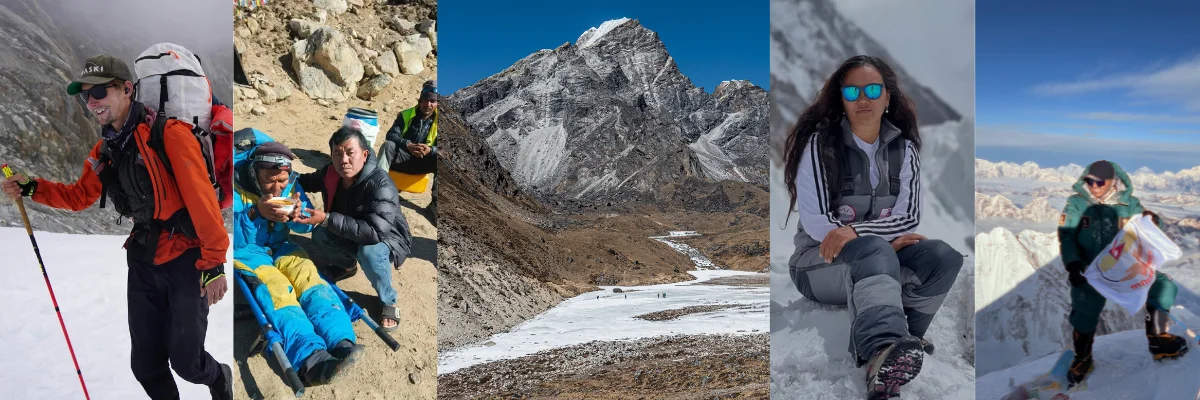
The 2026 Mount Everest summit season has officially come to an end. The final summit window closed in late May, and on May 29th, the Icefall Doctors removed the ropes and ladders from the Khumbu Icefall, officially shutting the mountain for another year. This season turned out completely different; strange, record-breaking, tragic, and at times almost unbelievable.
Adding to the chaos, Tibet’s side of Everest was closed this season without any official explanation from Chinese authorities. Every team that would normally have climbed from the north was rerouted to Nepal, pushing the south side to its busiest season ever with nearly 500 permits issued, more than any year in history.
Every year, mountaineers travel from every corner of the world to attempt this climb. Some reach the summit. Some are forced to turn back. And some never come home. It is no secret that Everest is a graveyard for dreamers who gave everything to stand on its summit. The mountain does not care about your preparation, the money you have spent, your experience, or your ambition. It has taken seasoned climbers and experienced Sherpas alike, without hesitation.
Yet people keep coming. Every year, someone pushes the limit further than before. This year was absolutely no different either. The 2026 season was packed with more records, achievements, history, and controversy than most seasons combined. Let’s get into all of it.

Everest 2026: A Season of Triple Records
The 2026 spring season did not just break records; it broke three of them at once. Nepal issued 495 climbing permits for Everest this season alone.
That is the highest number ever issued since Hillary and Tenzing first set foot on that summit in 1953. Climbers poured in from 55 different countries. China sent the most, with 109 climbers; the United States followed with 77; and India came in third with 61.
By May 21st, Nepal had collected over Rs 1.24 billion in royalty fees across 30 peaks. Everest alone brought in Rs 1.07 billion of that. Every foreign climber pays $15,000 just for the permit, and that covers nothing else. No logistics, no insurance, no expedition costs. For climbers going the premium route with helicopters and high-end services, the total bill can climb up to Rs 20 million.
Then came May 20th. A total of 274 climbers reached the Everest summit in a single day, all from the Nepal side, through 18 expedition companies on the southern route. The previous Nepal-side record was 223, set on May 22, 2019. To put that into perspective, in 2019, Tibet and Nepal combined hit 354 in a single day. This year, Nepal alone nearly matched that combined number without any figures from the Tibet side even factored in.
What makes this even harder to wrap your head around is the timing. The season started nearly two weeks late after a massive serac collapse blocked the Khumbu Icefall completely. The Icefall Doctors only reopened the route on April 28th. Sherpa teams finished fixing ropes to the summit on May 13th. That means 274 people stood on the roof of the world just nine days after the full route opened.
The Fireworks That Shut Down the North Side
The story of how Tibet’s side of Everest closed for the 2026 season does not begin on the mountain. It begins with a fireworks show.
In September 2025, Canadian outdoor brand Arc’teryx partnered with Chinese artist Cai Guo-Qiang for a pyrotechnic display called “The Rising Dragon”.
The show was staged at an altitude of around 5,000 meters in Shigatse, Tibet, at the foot of the Himalayas. Coloured fireworks exploded along a mountain ridge in three dramatic acts.
Videos went up on social media and came down within hours as the backlash arrived almost instantly. Environmental issues flooded Chinese social platforms.
Local authorities in Shigatse launched a formal investigation. Followed by the public apology from both. However, the damage was already done.
By early 2026, the China-Tibet Mountaineering Association confirmed the north side of Everest would be closed to all foreign expeditions for the spring season. No detailed explanation was given.
Every team that had planned to climb via the north route was redirected to Nepal. That shift added directly to an already record-breaking permit count on the southern side. This was one of the least expected reasons for the crowds that made the 2026 season so chaotic.
The Sherpa Who Refused to Die
If there is one story from this season that will be remembered, it is this one. Hillary Dawa Sherpa, a 52-year-old mountain guide, spent six days completely alone on Everest with no food, no water, and no supplemental oxygen and made it back alive.

The King and Queen of Everest
While the world celebrated record summit numbers this season, two Nepali climbers quietly made history in a way that puts everyone else into perspective. Kami Rita Sherpa and Lhakpa Sherpa, both breaking their own records on the same mountain, in the same season.
Kami Rita Sherpa, 56, reached the Everest summit for the 32nd time this year. Not the 32nd attempt, 32nd successful summit. He first climbed it in 1994 and has returned almost every year since, sometimes twice in a single season. When asked about his record after a previous climb, he simply said, “Just working.” That says everything about the man.

Lhakpa Sherpa, 52, stood on top for the 11th time, extending her own record as the woman with the most Everest summits in history. She first summited in 2000, becoming the first Nepali woman to successfully climb and descend the peak. Both of them were born in the same Solukhumbu region where Everest sits. For them, this mountain is not a bucket list but a lifetime of work, dedication, and an unmatched relationship with the world’s highest peak. While thousands of climbers spend years preparing for a single attempt, these two simply keep showing up and keep reaching the top.
The Delay Nobody Saw Coming
Before a single climber could attempt the summit this season, the mountain had already made its presence known. A massive serac, a large block of glacial ice, collapsed into the Khumbu Icefall at the very start of the season, blocking the only route to the top and bringing everything to a standstill.
For weeks, hundreds of climbers and Sherpas sat waiting at Everest Base Camp with nowhere to go. The Icefall Doctors used drones, 3D imagery, and every tool available to assess the situation and find a safe path through. The route only reopened on April 28th, nearly two weeks behind schedule.
This is not the first time a serac has caused chaos on this mountain. In 2014, a serac collapse triggered an avalanche in the same icefall, killing sixteen Sherpas in what was then the deadliest single accident in Everest history. The mountain has a long memory for these things, and everyone at Base Camp knew it.
What made this delay particularly concerning was the math. Nearly 500 climbers were permitted for the season. Every day spent waiting meant the summit window got shorter. When the route finally opened, hundreds of people rushed toward the same narrow weather window, which is exactly how the dangerous queuing situations that have plagued Everest in recent years came to be. The serac delay did not just cost time. It created the foundation for everything that followed.
Tyler Andrews Breaks Everest Speed Record
While most climbers spend weeks pushing toward the summit, Tyler Andrews did it in under ten hours. The American endurance athlete climbed from Base Camp to the top of Everest in just 9 hours and 55 minutes on May 27-28, setting a new Fastest Known Time for an oxygen-assisted ascent. The previous record of 10 hours and 56 minutes had stood since 2003, set by Lakpa Gelu Sherpa.

The climb was part of a larger initiative called Project Himalaya: Run Everest, a fundraising effort for youth athletic programs in Nepal and Ecuador through his Chaski Foundation.
He dedicated the record to Greg Krupa, a fellow runner and foundation supporter who passed away in April 2026. A documentary on the full journey is also in development.
Andrews is no stranger to speed records; he holds over 100 globally, including marks on Manaslu, Kilimanjaro, and Aconcagua. But this one, on the world’s highest mountain, on his sixth try, stands apart from all of them.
Mount Everest Deaths Record in 2026
Every headline this season led with records, be it permits, summits, or revenue. However, five people died on Everest this spring, and their stories deserve the same space as the statistics.
The first to go was Lakpa Dende Sherpa, 52, a climbing guide who died on May 3rd while trekking to Base Camp. The season had not even properly begun. He never made it to the mountain.
On May 10th, Bijaya Ghimire Bishwakarma, 35, died while ascending through the Khumbu Icefall. He was a high-altitude worker with TAG Nepal and had made history as the first Nepali Dalit climber to summit Everest. A day after that, on May 11th, Phura Gyaljen Sherpa, just 20 years old, slipped and fell on the Lhotse Face at around 7,000 meters, just below Camp 3. He was also a high-altitude worker.
Then on May 21st, two client climbers from India, died on descent after successfully reaching the summit. Arun Kumar Tiwari died near the Hillary Step. Sandeep Are died shortly after summiting. Both deaths were confirmed as illness, not falls.
Everest Finally Gets Its Own Rangers
Everest has a garbage problem that has been growing for decades. Every season, hundreds of climbers pass through its camps, leaving behind oxygen cylinders, tents, food packaging, gas canisters, and human waste. Much of it stays frozen in the upper mountain for years before reappearing as glaciers melt. This spring, Nepal took its first real step toward addressing it.
The Sagarmatha Pollution Control Committee (SPCC) introduced Everest’s first-ever mountain ranger program this season. Ngima Wangchu Sherpa, a 53-year-old four-time Everest summiteer, was stationed at Camp II at around 6,400 meters, not to guide climbers up, but to watch what they brought back down.
Every climber and high-altitude worker was required to return at least two kilograms of garbage from above Camp II before descending. Rangers weighed the waste, issued a clearance chit, and arranged for it to be transported back to Base Camp, partly by drone. This season alone, the SPCC recovered 1.22 tonnes of non-recyclable waste from Camp III and the South Col, along with 210 empty gas canisters and 1.76 tonnes of human-waste bags.
The numbers put the scale of the problem into perspective. In 2024, the SPCC collected 85 tonnes of waste in a single season. In 2025, that number rose to 110 tonnes.
The program started small with just two rangers this year. The plan is to expand to seven or eight next season, with cleanup efforts pushed higher up toward Camp IV. It is a modest beginning for a problem that has been building for 70 years. But it is a beginning.
From Parliament to the Summit
Most climbers spend weeks at Base Camp acclimatizing before attempting the summit. Mingma Gyabu Sherpa did it in eight days. On May 27th, the Nepali lawmaker and legendary mountaineer stood on top of Everest at 5:40 AM, becoming the first sitting Member of Parliament in history to summit the world’s highest peak. He carried both Nepal’s national flag and the flag of the federal parliament to the top.

But Mingma’s story is not just about this climb. It is about where he started. In 2007, stranded in Kathmandu by political unrest as a student, he began working as a porter carrying trekking loads. Two years later, as a kitchen helper at Manaslu Base Camp, he decided he wanted to climb. He went on to become the youngest person to summit all 14 eight-thousanders, a record he held until 2024, and has since completed 35 ascents of 8,000-meter peaks, including nine summits of Everest.
He entered parliament through Nepal’s proportional representation system, and climbed Everest just weeks after taking office. Before descending, he had also planned to inaugurate a newly built porter shelter at Lobuche, an accommodation for the porters who carry the loads that make every Everest expedition possible.
Everest Summiters Summit 2026
The season did not end on the mountain. It ended in Kathmandu, with a celebration.
The second edition of the Everest Summiteers Summit 2026 brought 176 climbers from 26 countries together in the capital. Organized by Everest Alliance Nepal in collaboration with Nepal’s Ministry of Culture, Tourism and Civil Aviation, the event honored each climber with special medals and certificates. Nepal’s President Ramchandra Poudel attended the ceremony and met the climbers over breakfast earlier that morning.
Among those honored were Kami Rita Sherpa, fresh off his record 32nd summit, and Lhakpa Sherpa, who had just extended her own record as the woman with the most Everest summits in history. They stood in the same room as first-time summiteers from countries across the world, each person in that hall having reached the summit through entirely different journeys.
Loading...
related post


Author

Kadambini Thapaliya is a content writer and researcher with a passion for storytelling, culture, heritage, and travel. She creates engaging, well-researched content that helps readers discover unique places, traditions, and experiences. Through her writing, she aims to make information accessible, meaningful, and enjoyable for diverse audiences.


Leave Your Comment