




How Many People Have Summited Annapurna Since 1950?
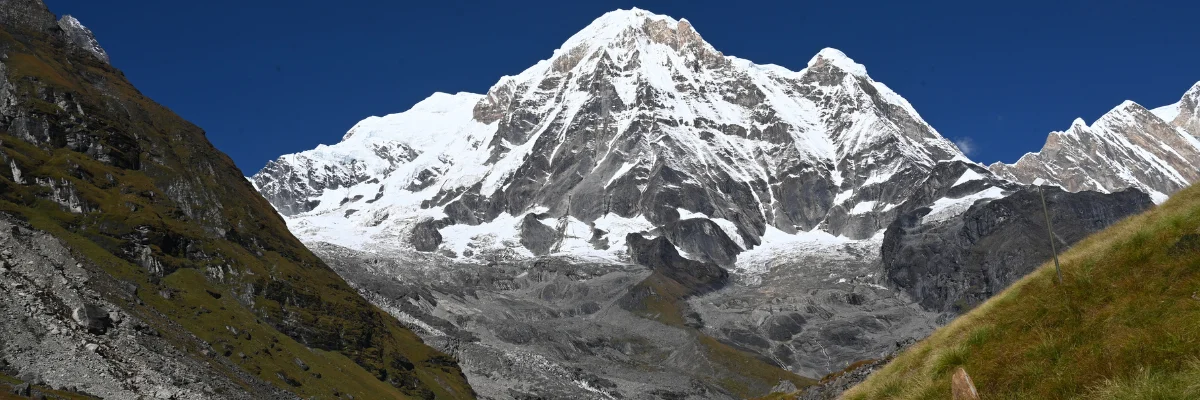
Annapurna I (8,091 m/26,545 ft) is known as one of the toughest 8,000 meter peaks to climb. Its steep slopes, frequent avalanches, and unpredictable weather have earned it a reputation as one of the deadliest eight-thousanders.
The number of people who reach the summit highlights both their achievement and the mountain’s difficulty.
Nepal’s Department of Tourism reports that only 572 climbers reached the summit between 1950 and June 2026. That covers 76 years of climbing history. The first successful ascent was made on June 3, 1950, by Maurice Herzog and Louis Lachenal during the French Annapurna Expedition. Annapurna I was the first 8,000-meter peak ever climbed.
For many years, only a few people made it to the top because Annapurna’s routes are technical, the snow is unstable, and avalanches are unpredictable. Even experienced climbers often picked other Himalayan peaks since Annapurna was more dangerous.
Better logistics, accurate weather forecasts, experienced route-fixing teams, and stronger rescue support have made climbing much safer.
As a result, climbing permits and successful summits reached a record high in 2023, followed by new records in 2025 and 2026.
Even though more climbers now reach the top each year and the fatality rate has gone down, Annapurna I remains one of the world’s toughest mountains.
If you want to experience the mountain without climbing to the top, the Annapurna Base Camp Trek is a great way to reach its base.
In this article, you’ll find out how many people have summited Annapurna in the past 76 years, see the numbers for each year, read about the history of expeditions and climbing records, and learn what makes this peak one of the biggest challenges in the Himalayas.

Annapurna Summit Statistics at a Glance
Although Annapurna I receives the most attention, the Annapurna massif includes several challenging peaks. The table below compares the key climbing statistics for Annapurna I, II, III, and IV.
|
Metric
|
Annapurna I
|
Annapurna II
|
Annapurna III
|
Annapurna IV
|
| Total summits (2026) | 572 | 16 | 34 | 126 |
| Total deaths | 75 | 6 | 9 | 5 |
| Fatality rate | 13.11% | 37.5% | 26.47% | 3.97% |
| Success rate | 40-45% | 25-30% | Under 15% | 50-55% |
| First ascent | 1950 | 1960 | 1961 | 1955 |
NOTE: Data taken from the Himalayan Database, Nepal Department of Tourism, and Guinness World Records.
How Many People Have Summited Annapurna in 76 Years?
Since the first successful ascent of Annapurna I on June 3, 1950, very few climbers reached the summit for several decades.
Frequent avalanches, steep ice slopes, and unpredictable weather made the mountain one of the hardest and most dangerous 8,000-meter peaks to climb.
However, improvements in climbing equipment, weather forecasting, route fixing, and expedition support gradually increased the number of successful ascents. As of June 2026, 572 climbers have successfully reached the summit of Annapurna I, according to Nepal’s Department of Tourism.
The number of successful ascents has grown noticeably in recent years. By June 2023, 488 climbers had stood on the summit of Annapurna I. During the spring seasons of 2025 and 2026, another 84 climbers reached the top, raising the total to 572. Compared to previous decades, more summit successes have been recorded since the 2010s.
Many reasons have caused this increase. Expedition teams now use accurate weather forecasts, better communication tools, fixed ropes set by skilled Sherpas, and improved high-altitude gear. Better helicopter support and rescue services also make emergency help more effective.
Climbing permits have increased as these improvements have happened. In spring 2025, Nepal issued about 66 permits for Annapurna I, compared to around 25 in 2022. Despite more successful ascents, Annapurna still has one of the lowest success rates and highest fatality ratios among 8,000-meter peaks.
History of Annapurna Summits
Unlike Mount Everest, Annapurna was mostly ignored by early explorers. The Nepal government did not allow foreign visitors until the early 1950s. British surveyors mapped many Himalayan peaks from India and Tibet, but they did not explore Annapurna closely. Most information about the mountain came from distant observations instead of direct surveys.
When Nepal opened to foreign expeditions in 1949, a French climbing team was the first to explore the Annapurna region in an organized way. Their scouting work made the historic first ascent possible the next year.
First Recorded Attempt and First Ascent of Annapurna I
The first recorded attempt to climb Annapurna I was made by the 1950 French Himalayan Expedition. The team originally planned to climb Dhaulagiri I, but after spending weeks exploring the area, they found the approaches too difficult with the maps available at the time. They then turned their attention to Annapurna I, believing a possible route existed from the north.
Without previous climbing reports, satellite images, aerial photographs, or modern navigation equipment, the expedition had to find its own way through glaciers and steep snow. After establishing high camps and cutting steps into the ice, Maurice Herzog and Louis Lachenal reached the summit on June 3, 1950, becoming the first people in history to stand on an 8,000-meter peak.
Although they achieved a historic first ascent, the descent proved even more dangerous. Severe storms, deep snow, and extreme cold caused serious frostbite, leaving Herzog with the loss of most of his fingers and toes, while Lachenal also suffered permanent injuries. Their successful ascent and remarkable survival remain one of the greatest achievements in Himalayan mountaineering.
Why Annapurna Became the First 8,000 Meter Peak to Be Summited
Many people assume Mount Everest was the first 8,000-meter peak climbed, as it is the tallest mountain. However, political barriers made Everest difficult to access, and the southern route in Nepal had not yet been explored.
The French team picked Annapurna since Nepal had only recently opened its borders to foreign climbers. Although Annapurna is lower than Everest at 8,091 meters, it presented unexpected technical challenges. Their achievement showed that determination, careful planning, and teamwork could help climbers face the dangers of high-altitude expeditions.
Members of the 1950 French Annapurna Expedition
The 1950 French Annapurna Expedition is regarded as one of the greatest achievements in Himalayan mountaineering. Although Maurice Herzog and Louis Lachenal reached the summit, the success was the result of a collective team effort involving experienced climbers, support staff, and an expedition doctor.
The expedition also relied on a team of seven Sherpas, led by Sirdar Ang Tharkey, whose knowledge, strength, and support were essential in carrying supplies, establishing camps, and helping the climbers navigate the challenging terrain. Together, they surveyed an unknown mountain, established the climbing route, and completed the first successful ascent of an 8,000-meter peak.
|
Member
|
Role
|
| Maurice Herzog | Expedition leader and summit climber |
| Louis Lachenal | Summit climber |
| Lionel Terray | Climber |
| Gaston Rébuffat | Climber |
| Jean Couzy | Climber |
| Marcel Schatz | Climber |
| Marcel Ichac | Expedition photographer and filmmaker |
| Francis de Noyelle | Climber |
| Dr. Jacques Oudot | Expedition doctor |
| Sirdar Ang Tharkey and Team | Led logistics, carried supplies, established camps, and supported the expedition |
Summit History Through the Decades
The history of Annapurna I summits reflects how mountaineering in the Himalayas has evolved over time.
During the early decades, very few climbers reached the summit because expeditions relied on basic equipment, limited route knowledge, and uncertain weather forecasts.
As climbing technology improved and communication, logistics, and safety measures advanced in the late twentieth century, successful ascents gradually became more common.
In the 21st century, guided trips, experienced Sherpa support, satellite weather forecasts, and better rescue options have led to more summit successes. Most of Annapurna’s recorded summits have happened in the last twenty years, with especially good seasons recently.

How Annapurna Expeditions Have Evolved
Early Annapurna expeditions were real explorations. Climbers used paper maps, manual navigation, limited weather information, and heavy equipment. Teams spent weeks searching for possible routes before setting up camps on the mountain. Rescue options were almost nonexistent, so emergencies often depended entirely on fellow climbers.
Modern expeditions are very different. Climbers now spend months preparing before attempting Annapurna I.
Most follow structured training programs that include strength and endurance exercises, long-distance hiking, high-altitude practice climbs, and mountaineering skills like using crampons, ice axes, and fixed ropes.
Many also climb smaller peaks or train in simulated high-altitude environments to get ready for extreme conditions.
With high-resolution weather forecasts, satellite communication, lighter climbing gear, fixed ropes installed by experienced Sherpa teams, bottled oxygen, and helicopter evacuations, climbing has become much safer and more successful.
Although Annapurna I is still one of the world’s most dangerous mountains, better preparation, modern technology, and stronger expedition support have helped increase summit success and reduce the fatality rate.
Top Records on Annapurna I
Over the years, Annapurna I has been the site of some of the most memorable achievements in Himalayan mountaineering. It was the first 8,000 meter peak ever climbed and has since witnessed historic firsts, remarkable solo ascents, and groundbreaking women’s expeditions. These accomplishments have helped shape the mountain’s enduring legacy.
|
Record
|
Climber/Expedition
|
Year
|
Achievement
|
| First successful ascent | Maurice Herzog & Louis Lachenal | 1950 |
Completed the first successful ascent of Annapurna I and became the first person to stand on the summit of any 8,000-meter mountain.
|
| First woman to summit |
Vera Komarkova & Irene Miller
|
1978 |
Became the first women to successfully climb Annapurna I during the American Women’s Himalayan Expedition.
|
| First successful women’s expedition | American Women’s Himalayan Expedition | 1978 |
Proved that an all-women team could successfully organize and complete a major Himalayan expedition.
|
| First Nepali women to summit | Six-member Nepali women’s team | 2021 |
Marked the first successful ascent of Annapurna I by female citizens of Nepal.
|
| First winter ascent | Jerzy Kukuczka & Artur Hajzer | 1987 |
Reached the summit during winter, completing one of the mountain’s most demanding climbs.
|
| Legendary solo ascent and fastest ascent | Ueli Steck | 2013 |
Climbed the South Face alone and returned to base camp in about 28 hours, one of the greatest solo achievements in alpine climbing.
|
Notable Climbers Who Summited Annapurna
Annapurna I has a unique place in mountaineering history. As the first 8,000 meter peak ever climbed, it has drawn some of the world’s top alpinists. For many, reaching the top was more than a successful ascent; it was a defining moment that pushed the boundaries of high-altitude mountaineering.
The First Successful Ascent
On June 3, 1950, Maurice Herzog and Louis Lachenal became the first people to summit Annapurna I. Climbing without supplemental oxygen, they also made history by completing the world’s first successful ascent of an 8,000-meter mountain. Their achievement came three years before Mount Everest was first climbed and four years before the first successful ascent of K2.

Their success came at a huge personal cost. During the descent, the team faced severe storms and extreme frostbite. Herzog lost his gloves, and Lachenal lost his boots. Both suffered serious tissue damage, and expedition doctor Jacques Oudot later performed emergency amputations. Their climb showed that the world’s highest mountains could be climbed but also revealed the great risks of Himalayan mountaineering.
Ueli Steck: The 28-Hour Solo South Face Ascent
In October 2013, Swiss climber Ueli Steck completed one of the greatest solo climbs in alpine history by ascending Annapurna I’s South Face alone. The South Face had challenged elite climbers for decades because of its steep rock, unstable ice, and constant avalanche danger.

Steck climbed mostly at night to avoid falling rocks and serac collapse. Carrying only minimal gear, he finished the ascent and returned to base camp in about 28 hours. His climb is still considered one of the most celebrated examples of modern alpine-style mountaineering, showing outstanding endurance, skill, and decision-making.
The 1978 American Women’s Expedition
In 1978, Arlene Blum led the American Women’s Himalayan Expedition to Annapurna I, challenging the male-dominated climbing culture of the time. The team raised its own funding through public campaigns, including the well-known slogan, “A Woman’s Place is on Top.”

The expedition was also marked by tragedy. Two climbers, Vera Watson and Alison Chadwick-Onyszkiewicz, lost their lives during a later summit attempt. In spite of these losses, the expedition remains one of the most influential moments in the history of women’s mountaineering.
The 2021 Nepali Women’s Historic Ascent
On April 16, 2021, six Nepali women made history by becoming the first female citizens of Nepal to summit Annapurna I. The team consisted of Purnima Shrestha, Pasang Lhamu Sherpa Akita, Dawa Yangzum Sherpa, Maya Sherpa, Sharmila Tamang, and Dabuti Sherpa.
Their ascent broke long-standing barriers for women in Nepal’s mountaineering community. It showcased the skill and leadership of Nepali women on high-altitude expeditions and inspired more women to pursue careers as climbers, guides, and expedition leaders.
What Makes Annapurna So Difficult to Summit?
Annapurna I is considered one of the deadliest mountains in the Himalayas. Even though it is lower than Mount Everest, its steep terrain, unstable snow, technical climbing, and unpredictable weather make it one of the most dangerous places to climb in the world.
Unpredictable Weather
Moist air from surrounding valleys often brings sudden snowstorms, strong winds, and rapidly changing weather to Annapurna. Unlike peaks with more predictable weather, Annapurna can have severe storms with little warning. Strong winds, heavy snow, and poor visibility often delay summit attempts and increase climbing risks.
Avalanche Risk
Avalanches are the biggest danger on Annapurna I. Heavy snowfall builds up on the mountain’s steep slopes and beneath unstable ice formations, making large avalanches possible at any time. Even experienced climbers can be caught off guard when conditions suddenly change.
The section between Camp II and Camp III is particularly dangerous. Climbers must pass directly beneath towering ice cliffs where collapsing seracs regularly trigger destructive avalanches across the standard climbing route.
Technical Route
The standard route requires climbers to cross glaciers, climb steep ice walls, walk along exposed ridges, move through mixed rock and ice, cross deep crevasses, and pass through narrow summit gullies.
Beyond Camp III and Camp IV, climbers face long stretches of hard blue ice that require precise footwork and careful rope work. Every part of the climb demands advanced technical skills and constant focus.
High Altitude
At over 8,000 meters, Annapurna enters the death zone, where oxygen levels are only about one-third of those at sea level.
Even with extra oxygen, climbers still risk altitude sickness, high-altitude pulmonary edema (HAPE), and high-altitude cerebral edema (HACE). Physical performance drops quickly, making every step harder and increasing the chance of mistakes.
Mental Challenges
Annapurna’s reputation adds one more layer of difficulty. For many years, the mountain had one of the highest fatality-to-summit ratios among all 8,000-meter peaks.
Climbers must always watch for avalanche danger, changing weather, fatigue, and route safety in an environment where small mistakes can be deadly. Staying focused and making good decisions under extreme stress are key to reaching the summit safely.
Why Climbers Still Attempt Annapurna?
Many experienced climbers still consider Annapurna I to be a mountain of great risk. Since it is one of the 14 eight-thousanders in the world, climbing it to the summit is seen as a significant accomplishment in the field of mountaineering.
While more commercially oriented mountains do not require such a high level of technical ability, careful planning, physical endurance, and sound judgment under difficult conditions, climbing Annapurna presents many mountaineers with a challenge, an adventure, and the opportunity to test their capabilities, which is why it is one of the most rewarding accomplishments in the Himalayas.
Notable Rescue Stories on Annapurna I
Climbing Annapurna is extremely risky, and several rescue missions on the mountain have made headlines over the years. These stories show both the dangers of the mountain and the bravery of the rescuers who risked their own lives to help others.
Anurag Maloo: The 72-Hour Crevasse Miracle
In April 2023, Indian mountaineer Anurag Maloo fell nearly 300 meters into a crevasse between Camp II and Camp III at an altitude of about 5,800 meters. He survived there for three days without food, water, or supplemental oxygen.
A rescue team led by Polish climbers Adam Bielecki and Mariusz Hatala eventually found him deep inside the crevasse. They climbed down using ropes and brought him to safety. Maloo was then flown by helicopter to a hospital in Kathmandu. His rescue is considered one of the most remarkable survival stories on Annapurna.
Iñaki Ochoa de Olza: An International Rescue Effort
Spanish climber Iñaki Ochoa de Olza became critically ill at Camp IV during a 2008 expedition after developing severe cerebral and pulmonary edema.
Elite climbers from several countries joined an extraordinary international rescue effort. Despite their determination and the assistance of Ueli Steck, Ochoa de Olza died before rescuers could bring him to a lower altitude where helicopter evacuation was possible.
Baljeet Kaur: Survival Above the Death Zone
During the 2023 climbing season, Indian mountaineer Baljeet Kaur disappeared while descending from the summit without supplemental oxygen. Initial reports suggested she had died.
However, after surviving an entire night above 7,300 meters, she managed to send a distress signal the following morning. Rescue teams located her and carried out a successful helicopter evacuation, changing what was believed to be a tragedy into an incredible survival story.
Chin Wui Kin: Fighting Against Time
Malaysian climber Dr. Chin Wui Kin became stranded at approximately 7,500 meters after exhausting his oxygen supply during his descent in 2019.
Sherpas climbed back up the mountain to help him, and a helicopter evacuated him after he survived more than forty hours at extreme altitude. Although the rescue worked, he later died from complications caused by severe frostbite and long exposure.
How Annapurna Compares to Other 8,000-Meter Peaks?
Every 8,000-meter mountain has its own challenges. Mount Everest attracts the most climbers because of its commercial infrastructure, while peaks like K2, Dhaulagiri I, and Kanchenjunga are known for tough climbing and serious dangers. Annapurna I stands out because it combines avalanche risk, technical terrain, and a high fatality rate. The comparison below shows how these famous mountains differ in elevation, summit numbers, fatalities, success rates, and climbing difficulty.
|
Metric
|
Annapurna I
|
Everest
|
K2
|
Kangchenjunga
|
Dhaulagiri I
|
| Elevation | 8,091 m (26,545 ft) | 8,848.86 m (29,032 ft) | 8,611 m (28,251 ft) | 8,586 m (28,169 ft) | 8,167 m (26,795 ft) |
| Country | Nepal | Nepal/China | Pakistan/China | Nepal/India | Nepal |
| First Ascent | 1950 | 1953 | 1954 | 1955 | 1960 |
| Total Successful Summits (Approx.) | 572 | 13,752 | 964 | 550-600 | 450-500 |
| Total Recorded Deaths | 75 | 344 | 92 | 55-60 | 75-80 |
| Fatality-to-Summit Ratio | 13.11% | 2.50% | 9.54% | ~10% | ~16% |
| Estimated Success Rate | 40-45% | 60-70% | 45-50% | 40-45% | 35-40% |
| Primary Difficulty | Avalanches, technical terrain, unstable glaciers | Extreme altitude, overcrowding, weather | Steep rock and ice climbing | Avalanches, remoteness, weather | Avalanches, exposed ridges |
| Technical Difficulty | Very High | Moderate-High | Extremely High | High | High |
| Objective Danger | Extremely High | Moderate | Very High | High | High |
| Commercial Expeditions | Limited | Extensive | Limited | Limited | Limited |
Best Time to Climb or Trek Annapurna
The best time to visit the Annapurna region depends on whether you want to climb Annapurna I or do one of its famous treks. Spring and autumn have the most stable weather, while winter and monsoon are better for experienced trekkers or special goals.
|
Season
|
Conditions
|
Best For
|
|
Spring (March-May)
|
Stable weather, moderate temperatures, blooming rhododendrons, clear mornings | Annapurna expeditions, Annapurna Base Camp Trek, Annapurna Circuit Trek |
|
Autumn (September-November)
|
Dry air, excellent visibility, stable weather after monsoon | Trekking, photography, mountain views |
|
Winter (December-February)
|
Cold temperatures, heavy snowfall, fewer crowds | Experienced trekkers with winter equipment |
|
Monsoon (June-August)
|
Heavy rainfall, muddy trails, landslides, cloudy skies | Rain-shadow areas such as Upper Mustang |
Note:
Spring is the best season for Annapurna I expeditions because it offers the most reliable summit windows. Autumn is usually the best time for trekking, with dry trails, comfortable temperatures, and clear mountain views.
Annapurna Base Camp Trek as an Alternative
Reaching the summit of Annapurna I is a goal for only the most experienced mountaineers. However, the Annapurna Base Camp Trek allows thousands of trekkers each year to experience the mountain without the technical challenges of high-altitude climbing.

The trek leads through traditional Gurung and Magar villages, rhododendron forests, alpine landscapes, and glacier valleys before arriving at Annapurna Base Camp at approximately 4,130 meters. From the base camp, trekkers enjoy panoramic views of Annapurna I, Annapurna South, Hiunchuli, Machhapuchhre, and other adjacent peaks.
Unlike a summit expedition, the trek does not require technical climbing skills, ropes, or mountaineering equipment. It is suitable for hikers with a reasonable level of fitness and is one of Nepal’s most rewarding trekking experiences.
Fascinating Facts About Annapurna
|
Fact
|
Details
|
| First 8,000-meter peak climbed | Annapurna I became the first mountain above 8,000 meters to be successfully summited in 1950. |
| World’s tenth-highest mountain | Annapurna I stands at 8,091 meters (26,545 feet). |
| Part of a larger massif | The Annapurna Massif includes Annapurna I, II, III, IV, Annapurna South, Annapurna Fang, and several other peaks. |
| Located inside a protected area | The mountain lies within the Annapurna Conservation Area, Nepal’s largest protected area. |
| Known for avalanches | Most fatalities on Annapurna I result from avalanches rather than falls. |
| Rare summit | Only 572 climbers had reached the summit by June 2026. |
| World-famous trekking region | Millions of visitors know Annapurna through the Annapurna Base Camp and Annapurna Circuit treks rather than summit expeditions. |
As of June 2026, 572 climbers had reached the summit of Annapurna I, making it one of the least-climbed and most respected of the world’s fourteen 8,000-meter peaks.
Even though better weather forecasts, climbing gear, logistics, and rescue have made summiting safer and lowered the fatality rate, Annapurna is still one of the most dangerous mountains on Earth because of its steep terrain, technical climbing, and constant avalanche risk.
For elite mountaineers, reaching the summit of Annapurna I is one of the greatest achievements in high-altitude climbing. For everyone else, the Annapurna Base Camp Trek is a chance to experience the beauty of the Annapurna Massif without the extreme risks of a summit climb.
Whether seen from the summit or from its famous trekking trails, Annapurna continues to inspire climbers and trekkers from around the world with its beauty, history, and lasting mountaineering legacy.
Loading...
related post


Author

Kadambini Thapaliya is a content writer and researcher with a passion for storytelling, culture, heritage, and travel. She creates engaging, well-researched content that helps readers discover unique places, traditions, and experiences. Through her writing, she aims to make information accessible, meaningful, and enjoyable for diverse audiences.


Leave Your Comment