




Annapurna North Face vs South Face
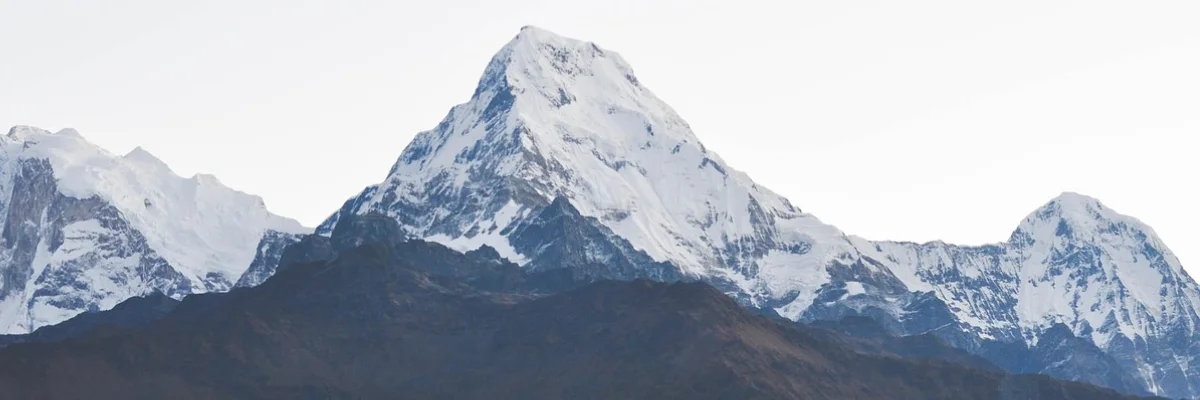
Have you ever thought about why Annapurna is the deadliest mountain in the world? Annapurna I, at 8,091m (26545.28 ft), is not only a high mountain but also a dangerous one.
It is one of the deadliest 8,000-meter mountains, and the death rate among climbers who reach the top is approximately 32%. Unpredictable weather, frequent avalanches, and rockfalls make every ascent a serious test of talent, strength, and fortune.
There are two major faces of Annapurna. The North Face is isolated, rugged, and technical. South Face is more available but requires demand. Both sides indicate various sections, campsites, weather, and avalanche risks.
Whether you are a professional climber or a brave trekker, you need to be well informed about the differences between the North Face and the South Face before you plan.
Routes, camps, technical difficulty, risks, previous expeditions, permits, costs, ideal seasons to visit, etc., are covered in this guide.
Where are Annapurna North Face and South Face located?
The North and South Faces lie at different sides of the Annapurna massif; these geographical positions are on the same peak, yet they cover different areas.
The North Face is in the Mustang region of Nepal, in the north rain shadow of the Himalayas, which is dry and remote. It is desert-like in that there are rocky valleys and hills. It is costly to get a special permit.
The South Face is in the Kaski and Myagdi districts of Pokhara. It receives a higher amount of rainfall, has green forests, rivers, and villages, and is a region of popular trekking in Annapurna, which also comprises the Base Camp and Annapurna Circuit trails.

The two faces offer quite different environments due to the settings. The North Face is isolated and rough, whereas the south face is lively and scenic and has more than enough trekking facilities.
Historical Expeditions and First Ascents
Annapurna has the most dramatic history, which involves Himalayan mountaineering. On 3 June 1950, French climbers Maurice Herzog and Louis Lachenal made the world-famous ascent of the mountain Annapurna I via North Face without the help of supplemental oxygen. It was the first attempt when any peak of 8,000 meters was ever ascended.
South Face was soon to be a legendary side. Chris Bonington led a British expedition that made the climb of the South Face on the 27th of May 1970. It was an extraordinary effort by Don Whillans and Dougal Haston to the top. Unfortunately, one of the team members, Ian Clough, was found dead on the way down by an ice block.
How to Reach the Annapurna North vs South Face?
Going to the North Face is more difficult and limited. It lies in the Upper Mustang. The famous route is Kathmandu-Pokhara and then to Jomsom, either by air or by road.
An Upper Mustang Permit costs $100 per day, and the roads are not paved and have little to offer. Hence, the North Face is less congested and highly isolated.
It is easier to reach the South Face. Pokhara can be reached by car or airplane starting from Kathmandu. There are several famous hiking trails up to the South Face, like the Annapurna Base Camp Trek and Ghorepani Poon Hill Trek.
There are improved roads, numerous trekking agencies, lodges, and guides. Most routes do not have a special permit.
Difference in Height and Mountain Structure
The central peak of the Annapurna range, which is known as Annapurna I, the highest peak with a height of 8,091 m (26545.28 ft) and is the 10th-tallest peak on the world. The North and South Faces are of the same mountain, but there is a great difference in structure.
The North Face is sharp, and the surface is dry, and is commanded by rocks, ice, and snow. It has steep slopes that are bare. It also has fewer glaciers than the south side because the rain shadow ensures that snowfall and rainfall are not high. Certain rock formations are not stable, and this increases the risk among the climbers.
The Annapurna South face is bigger and more complicated. It has massive glaciers, snowfields, and ice walls. It has broad slopes, and the area of the base is forested with alpine meadows sprinkled over it.
The South Face also connects with the adjoining peaks like the Annapurna South, the Hiunchuli, and Machhapuchhare, and this lets the mountain to have a more picturesque and diversified formation.
Annapurna North Face Climbing Routes
Annapurna North Face is one of the most difficult climbs in the world. The usual route used by most climbers is Northwest Ridge, not an easy one. The slope is sharp, icy, and naked in nature, and serious footsteps and careful thought are mandatory.
Climbers start at Annapurna Base Camp on the North side at approximately 4,100 m (13451.44 ft). The climbers can have a real picture of the size of the mountain. The camp’s base is located on the area between the glaciers and the rocky hills.
Climbers start in stages out of base camp. Camp I is approximately 5,100 m (16732.28 ft), and the land is a challenge, a combination of snow, ice, and rock.
Rotating cyclically between the base camp and Camp I is a typical habit of climbers, which is meant to acclimatize them prior to higher altitudes.

Camp II is around 5,600 m (18372.7 ft), where slopes become more acute and exposed. Fixed ropes assist climbers in traversing dangerous areas, although avalanches are very dangerous in the aftermath of new snow.
The views change drastically by 6,400 m (20997.38 ft) Camp III, where vast snow, spurs of ice, and steep ridges reign. Care is needed at each stage, and exhaustion starts to creep in.
The final place before the summit is Camp IV, which is at an elevation of approximately 7,300 m (23950.13 ft). It falls in the death zone where there is a scarcity of oxygen, and the weather may change rapidly.
Out of Camp IV, it is the last push spent by climbers who wake up early in the midnight, climbing steep snow slopes, and open ridges to reach the peak in 7-10 hours.
Annapurna South Face Climbing Routes
The South Face of Annapurna is beautiful and unforgiving at the same time. The most popular way to begin climbing is through the traditional trek of Annapurna Base Camp, which is a trail that passes through forests, rivers, and small villages within the Himalayas.
Passing Ghorepani, Chhomrong, and Bamboo, you gradually get used to high-altitude conditions, experiencing one of the most spectacular mountain-like views.
Climbers have the option to follow a route over the south face or a route over the southwest. Each of the routes has glaciers, icy slopes, rugged snowfields, and as you ascend, the terrain changes from soft edges of glaciers to sharp, chilly walls.
The camps are spaced in such a way that they allow the climbers for a certain period in which to acclimatize at higher altitudes. At the edge of the glacier is the camp that is known as Camp I, which is found at about 5,100 m (16732.28 ft).
Climbers establish camp during the first night and take pleasure in the first face-to-face shot of the towering South Face.
At approximately 5,900 m (19356.96 ft), the elevation of Camp II, the climb becomes more serious. Slender contours, snow-covered ridges, and unmovable ropes require each step. Fresh snowfall may be followed by avalanches, and thus, time and close monitoring are necessary.
The last camp before the summit is Camp 3, which is at an elevation of about 6,800 m (22309.71 ft). The summit begins early in the morning, where climbers go through rigid ridges, frozen walls, and high altitudes death zones.
North Face vs South Face Technical Difficulty
According to the climbers, the North Face of Annapurna is not a place for lighthearted people. It is steep, rugged, exposed, and sharp slopes, falling loose rocks, and hard ice walls characterize it.
The high winds, impulsive storms, and nearly no chance of rescue suggests that you should have all equipment with you and have no other choice but to be completely dependent on your team.
The avalanches occur unexpectedly; hence it is a pure adventure for the professional mountaineers.

The South Face, though still hard, is approachable. It’s immense, with lower vertical slopes, glaciers, snowfields, and ice walls slightly inclined. It is not so difficult to reach base camp, helped by lodges, guides, and mind maps.
Though it is not completely safe like the North Face because avalanches may occur, it is less risky due to careful planning and experience.
Avalanche and Rockfall Risks
The Annapurna North Face has a bad reputation for being unpredictable. Avalanches tend to strike the higher parts, particularly in areas where ice has sharp walls and ridges.
Lower rocky deep wells are all hazardous, and the stones come down very easily, at least in the warmer season when the sun softens the ice.
There also exist crevasses covered with thin layers of snow; they make the situation even more risky, and one does not need to notice them take the wrong step, which will result in a major incident.
The South Face, a little less dangerous, is not deprived of its high-risk zones. Ice cliffs that are located above the Annapurna Base Camp and the higher slopes towards the South-West Ridge are likely to suffer avalanches following a great deal of snowfall.
The main occurrence of rockfall is in and around moraine areas and narrow glacier passages. Timing and observation are significant on either side. Most climbers are interested in the pre-monsoon (March).
Death Rate of Each Route
Annapurna I has one of the huge reputation for its deadliest summit in the world. More than 75 climbers including climbers, sherpas, guides and porters have died while summiting the notorious peak of the world.
While looking at the death rates of the each face, North Face of Annapurna I has the more deaths than the South Face even though both are risky. The death rate of North Face of Annapurna I is 32% while the South Face death rate is around 25%.
Weather Differences
The Annapurna weather can stop or destroy any expedition on the mountain, and the North and South Faces are very different.
The North Face lies in the rain shadow of the Himalayas, and as such, it is drier. Summers are chilly and comparatively clear. Whereas winters are cold and snowy at extreme levels.
The winds are stronger than on the South Face and at times attain hurricane levels. Temperatures change radically during the daytime.

Sunny mornings can be succeeded by below-freezing afternoons, and there is little nature available to shelter the people (due to barren land).
South Face is more humid, and it receives more rainfall because it is nearer to the south and valleys in and around Pokhara. The monsoon clouds strike the slopes intensively during June to September. This causes the trails to be slippery, causing landslides and avalanches.
The safest seasons are pre-monsoon (March -May) and post-monsoon (September-November) when there are stable snow and clear weather.
Quick Comparison Between North Face vs South Face
We have made a quick comparison table for North Face vs South Face which makes you all easier to learn the brief details.
| Feature | North Face | South Face |
| Starting Point | Northern side (Upper Mustang, remote, special permit) | Southern side via Annapurna Base Camp trek (Pokhara/Nayapul) |
| Routes | Northwest Ridge | South Face Direct & South-West Ridge |
| High Camps | 4 (Camp I–IV) | 3 (Camp I–III) |
| Difficulty | Extremely technical, steep ice and rock | Challenging but more accessible; glaciers and snow slopes |
| Avalanche / Rockfall Risk | Very high, especially on ridges and gullies | High on glaciers and steep slopes, but less exposed |
| Weather | Harsh winds, cold, sudden storms | Moderate winds, rain in monsoon; best pre/post-monsoon |
| Facilities | Remote; no lodges; guide/porter required | Trekking lodges en route; guide recommended |
| Fatality Risk | Very high (32%) | Lower than North Face but still risky |
| Best For | Expert mountaineers seeking extreme adventure | Trekkers/climbers seeking scenic adventure with some support |
Which one to choose: North Face or South Face?
The decision of which side of Annapurna you want to climb (North Face vs South Face) is a question of what kind of adventure you desire.
The North Face is more for the real adventurers. It is far, rocky, and less used, which gives a sense of the real Himalayan nature. Extreme winds, steep slopes, and unpredictable avalanches are among the hazards climbers face here.
The South Face, however, is more accessible and scenic. It is a mixture of trekking, climbing, and with facilities, lodges, and guides. The inclinations are a little bit easier, and the paths are well-traced.
It will allow you to have forests, rivers, alpine meadows, and beautiful glaciers. South Face can be for the individuals seeking a moderate amount of adventure, security, and stunning views.
Loading...
related post


Author

Swostika is a content writer at Himalayan Masters as well as a travel enthusiast. She loves to travel and learn about different cultures and people. With a love for writing, traveling, and embracing diverse cultures, she is on a journey to explore and inspire through words.


Leave Your Comment