




Annapurna Massif (Mountain Range) | Top Things to Know
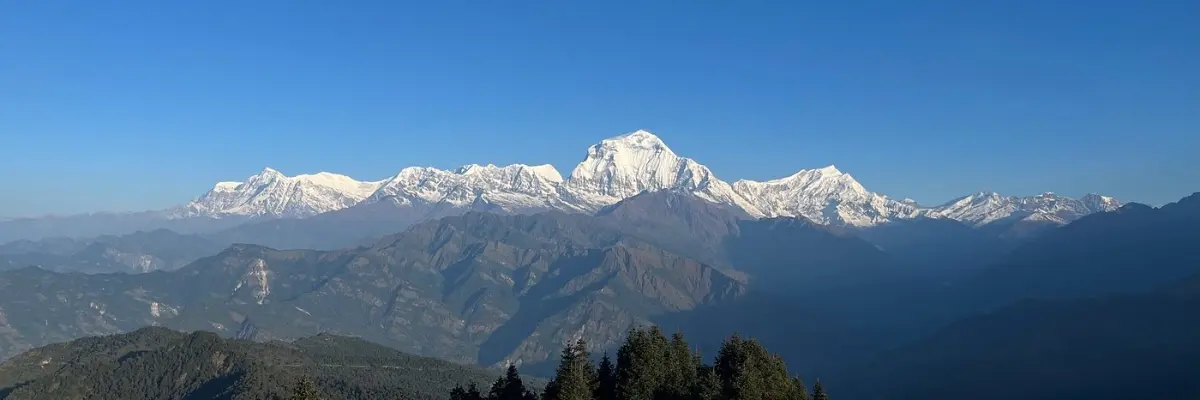
Nepal is synonymous with the spectacular mountain ranges, one being the alluring Annapurna massif. While classic treks have been drawing crowds, Annapurna massif’s lesser-known trails present themselves with solitude, cultural immersion, and diverse landscapes.
Nepal, over the past century, has gained a reputation as a premier trekking destination. The Annapurna massif is a perfect blend of Himalayan adventure, a towering ice giant, rich cultural significance, and tales of adventure and the Annapurna massif climb.
Meaning “full of food”, the name “Annapurna” is derived from Sanskrit. Its name is associated with the Hindu goddess of food and nourishment, who is believed to reside on the mountain.
All the allure of the Annapurna Mountain range makes it a must-visit destination in Nepal, for both trekkers and climbers. It’s not just a collection of peaks; it’s a part of Himalayan grandeur and a reminder for us to take time to breathe, self-realize, and connect with nature.
Brief Overview of the Annapurna Massif
The Annapurna massif is a stunning mountain range in north-central Nepal. It’s a dramatic mountain range with over 30 peaks above 6,000 meters (19,685 ft). Among all these peaks, 13 are above 7,000 meters (22,966 ft) and one is above 8,000 meters (26,247 ft).
The highest peak in this mountain range, and the 10th highest mountain in the world, is the majestic Annapurna I (8,091 m/26,545 ft).
What’s more interesting is that all these peaks lie within a span of 55 km (34 miles). Furthermore, the entire massif and its surrounding area are protected within the Annapurna Conservation Area.
Annapurna Conservation Area is the largest protected area in Nepal with an area of 7,629 sq.km. (2,948 sq mi). It is home to rich flora and fauna, rich culture, and vibrant local communities.
The Annapurna massif has gained quite a fame among trekkers and climbers for its legendary and perilous Alpine landscapes.
It also has a wide range of trekking options. From the short Mardi Himal Trek to the long Annapurna Circuit Trek and more commercial Annapurna Base Camp Trek, to the restricted Nar Phu Valley Trek, it offers a diverse range of trekking options.

Geographical Location of Annapurna Massif
The Annapurna massif lies in the Gandaki Province of Nepal, covering the districts of Myagdi, Kaski, Lamjung, and Manang. To be precise, its centre lies around 28.5961° N latitude and 83.8203° E longitude.
It is bounded by the Kali Gandaki Gorge to the west, the deepest gorge in the world, and the Marsyangdi River Valley in the north and east. While to its south lies the beautiful lake city of Pokhara.
Furthermore, towards the northern and eastern parts of the massif opens up to the unique and arid regions of Manang and Mustang. This region is especially known for its ancient Tibetan culture.
Whereas, on the western side, it offers a livelier high-altitude basin, popularly known as the “Annapurna Sanctuary”. It’s a natural amphitheater of towering peaks and rich biodiversity, a perfect destination for adventure trekkers and nature enthusiasts.
Historical Significance
The Annapurna massif is a collection of several historic climbs and centuries-old culture.
In fact, the most interesting and historic event is the first eight-thousanders to be summited. Two of the French mountain climbers, Maurice Herzog and Louis Lachenal, reached the top of Annapurna I on June 3, 1950.
What’s more iconic about the 1950 ascent is that they achieved this feat all without the support of bottled oxygen. Herzog documented this history in his best-selling book, “Annapurna: First Conquest of an 8000-meter Peak”.
It became a milestone in mountaineering history, which secured the massif’s legendary status. This opened an era in mountaineering and a wide range of mountaineering options in Nepal.
Over the decades, Annapurna I, to be specific, has claimed the lives of several climbers and trekkers. Due to its technical wall, the south face of Annapurna I (about 3,000 m/9,800 ft high), and high fatality rate, mountaineers consider Annapurna a deadly mountain to overcome.
By 2024, the death rate of Annapurna has reached 38%, making it deadlier than Everest or K2.
Likewise, one of the most tragic incidents associated with the Annapurna massif is the devastating 2014 snowstorm. The storm struck trekkers in Manang and Mustang, withholding nearly 1.8 m of snow in 12 hours and claiming 43 lives.
It was one of the most saddening and harrowing reminders of nature’s unpredictability.
Major Peaks in the Annapurna Massif
The Annapurna massif is a group of staggering mountain peaks, each with its own personality. Lined up against the sky, it’s a sight you’ll never forget.
So, let’s list out some of the major peaks in the Annapurna Massif. At the top of the table is Annapurna I, the 10th-highest mountain in the world, and 1st the Annapurna Mountain range highest point.
| SN | Peak Name | Height (meters) | Height (feet) | Major Highlights |
| 1 | Annapurna I | 8,091 m | 26,545 ft | The first 8,000er ever climbed, but also known as one of the deadliest mountains in the Himalayas. |
| 2 | Annapurna II | 7,937 m | 26,040 ft | 2nd highest mountain in the range, located at the eastern end of the range. |
| 3 | Annapurna III | 7,555 m | 24,787 ft | Stunning, snow-draped peak that watches over everyone trekking into the Annapurna Sanctuary. |
| 4 | Annapurna IV | 7,525 m | 24,688 ft | A peculiar peak with its jagged rock spires and gleaming glaciers. It looks like it’s piercing the sky. |
| 5 | Gangapurna | 7,455 m | 24,459 ft | Pyramid-shaped, striking mountain that’s a constant, beautiful companion on the way to Annapurna Base Camp. |
| 6 | Annapurna South | 7,219 m | 23,684 ft | This peak acts as a mighty gateway to the incredible Annapurna Sanctuary. |
| 7 | Machhapuchhre | 6,993 m | 22,943 ft | The famous “Fishtail Mountain.” It’s considered sacred, so it’s beautifully, and still unclimbed. |
| 8 | Hiunchuli | 6,441 m | 21,132 ft | Think of this peak as the guardian standing at the entrance of the Sanctuary, right next to Annapurna South. |
Treks and their Highlights in the Annapurna Massif
Trekking around the Annapurna Massif is a journey through diverse natural beauty, gorges, dense forests, picturesque villages, and their culture. The Annapurna region is especially known for its variety.
You can choose a trek that fits your physical condition, spare days, and budget. A walk through lush, green forests, interaction with the local people, or learning a few Nepali phrases, you have lots of choices.
Here are a few of the most popular treks around the Annapurna massif.
Annapurna Circuit Trek
The Annapurna Circuit Trek is one of the most wholesome treks in the Annapurna region. It’s a 2-3 week journey that circumnavigates the Annapurna massif.
During this trek, you will start from low, subtropical villages and all the way to the top of Thorong La Pass (5,416 m/17,769 ft), the highest point of the trek.
Furthermore, trekkers can explore the desert-like landscapes around the Manang Valley before crossing the Thorong La. This change in terrain and scenery captivates the visitors from all around the globe.

Then, just at the bottom of Thorong La, you can visit the sacred temple for Hindus and Buddhists, Muktinath.
In addition, if you have time and your body allows, adding a trek to the turquoise blue lake, just below Annapurna, to the Tilicho Lake is a good choice.
Annapurna Base Camp (ABC) Trek
Another classic, popular trekking option is the ABC Trek. This trek leads the trekkers right at the base of Annapurna I. From the base camp, you can either return or venture into another level of adventure, the Annapurna expedition.
A 2-week-long trek, this trek presents itself with some of the best mountain views and authentic Gurung tradition.
Ghorepani Poon Hill Trek
It is one of the most beautiful and possibly easiest treks in the Annapurna region. The most alluring feature of the Ghorepani Poon Hill Trek is the lush, vibrant rhododendron forest, particularly during spring. It is the largest rhododendron forest in the world.
Additionally, the 360° panoramic view of the mountains from Poon Hill is just unmatchable. Likewise, the sunrise view from the top of Poon Hill is something that is going to be imprinted in your memory for a lifetime.
Also, you get to visit the authentic, traditional Ghandruk Village on the way, and get to sleep and eat with one of the local Gurung families.

Mardi Himal Trek
If you are looking for one of the best, least visited, off-the-beaten-path around the Annapurna massif. The route passes through beautiful rhododendron forests to the base of Mardi Himal.
From the base, you can enjoy the up-close view of Machhapuchhre and Annapurna South.
Nar Phu Valley Trek
This is a one-of-a-kind trek in the highlands of Annapurna. The trek takes trekkers up to Nar and Phu Village, a restricted region. So, you will need to obtain a special Restricted Area Permit (RAP) if you are planning to visit these villages
During the trek, you can explore untouched, ancient Tibetan culture in Nar and Phu Villages. Furthermore, trekkers are rewarded with stunning views of Annapurna I, II, III, and IV, as well as Tilicho Peak.
Upper Mustang Trek
Apart from the ABC and Annapurna Circuit Trek, the Upper Mustang Trek is another popular trek that takes trekkers up to the “Forbidden Kingdom of Nepal”, Lo Manthang.
Trekkers will be amazed to see caves carved into the walls, the ancient Kingdom of Mustang, historic monasteries, red cliffs, and more.
Although challenging, the afternoon high winds and desert-like landscapes are a major attraction during this trek.
Weather/Climate and Best Time to Visit
The weather around the Annapurna massif is drastically affected by season and its altitude zones.
The lower regions are somewhat warmer, with green forests and relatively warm temperatures. Whereas, the mid sections of the region, between 2,500 and 4,000 meters (8,202 and 13,123 ft), change drastically.
The air becomes crisp and cold, rhododendrons bloom in spring, filled with lively mountain wildlife, and the landscapes transform into alpine.
In contrast, high elevations (above 4,000 m) are extremely cold, with snow cover and an unpredictable climate. Through the landscape is rugged and raw, but it is incredibly beautiful.

So, if you are planning to visit around the Annapurna massif, choosing your visit during a suitable season is crucial.
The most favorable trekking seasons are spring (March to May) and autumn (September to November). During these seasons, the weather is clear and stable, offering some of the best views of the peaks in the massif.
Although winter (December-February) brings cold and snow, lower trails are still manageable. However, we do not recommend monsoon (June-August) trekking due to the risk of landslides, leeches, and frequent heavy rainfall, making the trail slippery.
Unique Natural and Cultural Features
The Annapurna massif is an amphitheater of diverse biodiversity and rich culture. Within an interval of 1-2 weeks, tourists can witness the world’s deepest point and one of the highest points on the planet.
From dense subtropical forests and river basins of Nepal to alpine, rugged, and snow-covered Himalayan giants, travellers get to explore everything.
As diverse and beautiful as the region is, it holds significant cultural significance. Local communities like the Gurung, Magar, Thakali, Limbu, and other Tibetan-influenced Buddhist groups make you feel like you are home.
They welcome you with a smiling face and a warm “Namaste”. Apart from appreciating the people, village, and mountain, local, traditional Nepali cuisine equally deserves your appreciation.
The vibrant customs, festivals, and hospitality make trekking livelier and more memorable. This journey around the Annapurna Mountain range becomes more than a walk through a Himalayan giant, but through cultures.

Interesting Facts and Trivia
The Annapurna Mountain range is full of amazing stories and mind-blowing facts. Here are some interesting facts about the Annapurna massif.
- Machhapuchhre remains unclimbed out of reverence for its sacred status.
- Annapurna I was the first 8,000er summit—achieved in 1950.
- Historically high fatality rate, over 30%, makes it one of the deadliest peaks.
- The massif is bordered by deep gorges and lush valleys, offering dramatic contrasts.
- Local biodiversity includes snow leopards, Himalayan monals, and a rich variation in flora.
- The rock at the Annapurna massif summit is limestone, meaning that millions of years ago, the highest point of the massif used to be at the bottom of an ocean.
- Suspension bridges connect remote communities and add an adrenaline twist to treks.
- The region’s villages perched on terraced hills offer warm cultural engagement.
Loading...
related post


Author

Samyog Shrestha is a travel enthusiast and an excellent content writer at Himalayan Masters, the face behind the amazing content who likes to learn from experience.


Leave Your Comment