




Annapurna Avalanche History, Risk Zones and Safety Tips
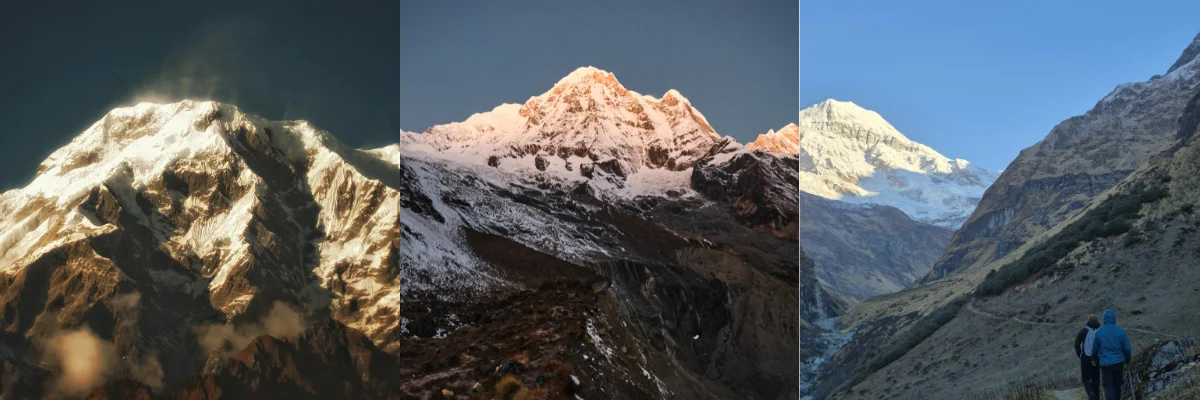
The Annapurna region in Nepal is a paradise for trekkers and mountaineers. Mountainous landscapes, serene valleys, and breathtaking scenes are among the attractions that draw adventurers worldwide.
There is a danger beneath this beauty, in the form of avalanches. Snow and icefall every year over sharp slopes, showing the power and inexplicability of nature. There is a history of unpredictable, life-threatening avalanches in the area.
We will discuss the causes of vulnerability of the area, key accidents, riskiest areas, and present safety tips as expressed by the local specialists.
You will be in a better position to have fun during the trek and be humble in the mountains.
Annapurna Avalanche: What Makes This Region Vulnerable?
An avalanche refers to the instant movement of snow, ice, and sometimes even rocks along a slope. Trekkers should be aware that it might not be as safe as it might seem to be, in case the snow layers are not solid.
Avalanches may form within minutes, and it is difficult to respond. Being aware of any possible avalanche disaster is crucial to any person visiting Annapurna.
The Annapurna Massif was one of the highly avalanche-prone regions in the world. It has steep slopes, deep snowfall in the winter seasons, and extreme weather that favors snow slides.
The valleys are narrow, and riverbeds are glacier-fed, which makes some of the trekking paths more hazardous than others.
The area has gained a reputation among the mountaineers, as well as the trekkers. Due to sudden and unpredictable avalanches that occur in the region over the years.

There are Sherpas and guides of Nepal, who are locals and who are essential in ensuring the safety of the trekkers.
The experience they have acquired over the years helps them to read what the snow can tell them. They watch the way the layers lie down, and see whether there are any cracks, watch the wind, and see how the temperatures change.
They also survey terrain and slopes that are highly likely to have slides and select less risky routes. This is the traditional knowledge along with modern trekking skills. They are very essential in mitigating the element of risk within the avalanche-prone regions.
Avalanche History of Annapurna
Avalanches have a long and serious history in the Annapurna region. Its sharp topography, heavy snow, and unsteady glaciers have caused it to be one of the most hazardous places in the Himalayas.
This is the place where many trekkers, climbers, and Sherpas have died over the decades. The analysis of past disasters helps the trekkers to know the risks and to be on safe journeys.
Over 100 of people have died due to avalanche in Annapurna Region of Nepal.
A timeline for large avalanches that have taken place in the Annapurna area is given below
Annapurna Avalanche Disasters Before 1940 (Early Mountaineering Era)
Prior to 1940, Annapurna was already being reputed to be one of the most prone to avalanches out there on earth. Scientists and climbers who came there early noted that on its south and north sides, massive snow slides frequently took place.
Some of the climbs were unsuccessful due to avalanches. These incidents contributed to Annapurna being known as a very dangerous summit.
Even now, the fatality rate is one of the highest among the 8,000-meter mountains, and it is mainly a result of avalanches and serac collapses.
March 25, 2001- Deurali Avalanche on the Annapurna Base Camp Route
On 25 March 2001, there was a tragic trekking-related avalanche between the Hinku Cave and Deurali, a small valley in the Annapurna base camp (ABC) route.
There was a huge avalanche that caused the trail to cover a number of trekkers. Four Australian trekkers, including a little child, were killed, and a number were also injured.

It was made clear that avalanches can endanger not only the climbers but also ordinary trekkers walking on common trails.
October 2014- The Annapurna Snowstorm Avalanche Disaster
One of the worst trekking catastrophes was seen in Nepal in October 2014. The remains of Cyclone Hudhud caused a strong snowstorm, which received up to 1.8 meters of snow in the Annapurna and Dhaulagiri areas in a short period of 12 hours.
The snowfall was enormous, causing a series of avalanches, including the involvement of hundreds of trekkers who were trapped.
Trekkers were taken on the circuits of the Annapurna and Thorong La pass and the surroundings.

There were broken lines of communication and rescue helicopters that could not operate in unfavorable weather. High passes and villages became stranded with hundreds of people.
More than 16 people were fatally injured, and more than 43 people died. More than 400 trekkers were rescued from the region.
The incident is held as the most catastrophic trekking catastrophe of Nepal and led to significant reforms in the security and weather conditions of trekking.
January 2020- Deurali Avalanche around Annapurna Base Camp
Another fatal avalanche happened on the same unsafe route between the Hinku Cave and Deurali in January 2020.
The snowfall that occurred over multiple days destabilized the slopes, and suddenly an avalanche swept the trekkers and the guides. Four trekkers of South Korea and three Nepali guides were dead, and some others were rescued following a rigorous search mission.
The rescue teams were confronted with heavy snow, misery, and elevation. It was once again confirmed that the Deurali area is the most hazardous avalanche point along the ABC trail.
Climbing Route Sherpa Avalanche Incidents (Multiple Years) of Annapurna I
About 75 people have died on Annapurna I, with avalanches being one of the leading causes. Avalanches frequently occur on the Annapurna I expedition route, particularly on the north face and in the high camps.
Avalanche-prone slopes are common among Sherpas fixing ropes and climbers who are transiting between camps. In the past years, a few Sherpas and climbers have been killed in avalanches on expeditions.
The Annapurna I is one of the most fatal 8,000-meter mountains, and avalanches are one of the primary causes of death at Annapurna.
Machhapuchhrae Base Camp and ABC Surrounding Avalanche Incidents
Avalanches are also common in the areas around Machhapuchhare Base Camp (MBC) and Annapurna Base Camp (ABC), particularly during late winter and the first period of spring.
The snow can also come down on the hills around to block the trails, destroying teahouses, resulting in trekkers spending days in lodges.

These avalanches, although many of them did not die still have led to injuries, route closures, and emergency evacuations, and this shows that the ABC region is not completely safe from the avalanche.
High-Risk Avalanche Zones in the Annapurna Region Trek
There are various locations within the Annapurna region with a high probability of avalanches. These areas are influenced by steep terrain, deep valleys, large amounts of snowfall, and glacial movement.
Trekkers ought to be aware of these dangerous areas before they set out on an expedition, particularly during winter and early spring.
Deurali- Machhapuchhare Base Camp (MBC)
The Machhapuchhare Base Camp avalanche is regarded to be the most volatile avalanche passage during the Annapurna Base Camp Trek. The path crosses a deep valley that is lined by steep snowy slopes on either side.
New snow welcomes the avalanches and slides, which unleash the snow above and slide down the trekking route. A number of fatal accidents, such as the 2001 and 2020 avalanches, occurred in this very part.
Hinku Cave Section
Hinku Cave is another risk zone between the Himalaya and Deurali. The valley form concentrates the snow and debris directly on the trail.
Avalanches caused by higher snow levels or quick alteration of temperature have the capacity to travel the trekking path within seconds.
MBC-Annapurna Base Camp (Late Winter Risk -Between)
This is usually safe during the periods of peak trekking activities, especially in Machhapuchhare Base Camp and Annapurna Base Camp. During late winter and early spring, it is quite risky.
The accumulation of snow on neighboring ridges is great, and warm weather in the afternoon may result in snow slides. Small avalanches frequently rock on the side slopes, and large avalanches may take place following a heavy downfall of snow.
Exposed Slope on Avalanche Above the Modi Khola Valley
Annapurna trek passes through the Modi Khola valley. Numerous trekking trails are along this river. Vertical slopes on the valley side accumulate snow, and during the instances where there is unstable snow cover, avalanches may drift downwards to the valley bottom.
The avalanches may cause obstructions in trails, destruction of lodges, or even days without trekking routes.
Mardi Himal Avalanche Pockets
In the Mardi Himal Trek, fewer people are witnessed; the trek boasts a few avalanche risks areas, particularly amongst the High Camp and Upper Viewpoint. The trails (narrow ridges) and hilly sides make these places dangerous in cases of snowfalls.
Avalanches in this case tend to be smaller in size but dangerous to the trekkers on exposed ridges.
Khopra Ridge Snow Falling Areas
The Khopra Ridge Trek is done across open ridges where snow may also build immensely. The slope weakens when there is snow accumulated on one side of the ridge by high winds.

The avalanches may be observed on the slopes that are in the lee, particularly when freshly covered. This is an underestimated route among the trekkers, and conditions in winter are serious.
Mustang, Rare Avalanche Zones (Above)
Mustang is seldom dry and arid; hence avalanches are rare. But during high passes and winter seasons, snowfall may occur on steep slopes.
It can also cause short periods of snowstorms, which add up to minor avalanches, particularly on the north side. Such incidents are not common, yet they can happen.
Peak of Dhampus and Tent Peak Climbing Route
Tent Peak and Dhampus Peak are other famous trekking peaks around Annapurna. The climbing paths are also through snowfields and steep passes, where the occurrence of avalanches might happen, particularly after a fresh snowfall.
Safety Advice by Experts on Trekkers in the Avalanche Zones
Hiking where avalanches are likely to occur within the area of the Annapurna region needs preparation, consciousness, and equipment. Even though avalanches are not always foreseeable, they can be significantly reduced with proper equipment.
Gear Tips
In order to stay careful from avalanche you need some extra gear tips which could at least protect you if you get into such case.
- Although avalanche gears are not commonly used in Nepal Treks, this should be greatly considered in winter and early spring treks since the rescue teams can locate buried trekkers within a short time.
- Satellite trackers enable trekkers to make distress signals even in remote regions where the mobile signal cannot be made efficient, and emergency rescue will be quicker and more effective.
- The use of crampons, gaiters, and trekking poles enhances the snowy trail grip and keeps the balance when walking across unstable or icy surfaces.
- Layering the body properly makes the body warm, and it also acts as a deterrent to hypothermia, especially when a person is covered with snow or faces extreme cold.
Behavioral Tips
There are always something that might trigger avalanche which might even depend on our behavior so we always need to follow some tips:
- Do not pause or have long breaks in the passage of avalanches. When in a narrow valley, such as Deurali, the snow slides may reach the abyss within half a minute.
- Stay away from snow-covered steep slopes, as even slight disturbance would cause a snow slide in the unstable conditions.
- Avoid walking over the high-risk area of avalanches in large groups to minimize those affected in case of any slide and to ensure the group can be handled more easily by guides.
- You should also make it a point to follow the instructions of your guide; local guides know about how snow acts, the dangers of various terrain, and when it is best to cross the dangerous places.
- During summer, you should not walk at the end of the afternoon since the high temperatures may cause the snow to weaken and avalanches to occur; early mornings are generally better than that.
- If you catch an avalanche unexpectedly, do not panic; move to the side immediately, drop heavy gear, and cover your face and chest in case you are buried and need to breathe.
Local Nepali Guides’ Tips for Minimizing Risks of Avalanche
The local Nepali guides help in ensuring the safety of the trekkers in the avalanche-prone zones. Most of the guides have been raised in the mountains, with many years of experience traversing the Annapurna region in various seasons.
They know the behavior of snow on certain slopes and dangerous places after the snow has freshly fallen.
Guides observe trends in seasons. They understand when to be careful because of heavy snowfall, when the temperature of the air changes, and how the weather variations influence the stability of the snow.
The experienced guides also know the ground quite well. They are aware of the starting places of avalanches, as well as common slope areas that send the snow down. According to this, they select safer paths, time ways, and evade risky places at risky times.
They exchange news on snowfalls, snow-blocked routes, and avalanches. The effect of this real-time communication is that groups are not in dangerous zones.
When going on a winter or off-season hike, it is particularly worth hiring a licensed Nepali guide. Certified guides are trained in matters of mountain safety, first aid, and rescue procedures.
Loading...
related post


Author

Swostika is a content writer at Himalayan Masters as well as a travel enthusiast. She loves to travel and learn about different cultures and people. With a love for writing, traveling, and embracing diverse cultures, she is on a journey to explore and inspire through words.


Leave Your Comment