




Kagbeni: Top Things About Ancient Village of Mustang
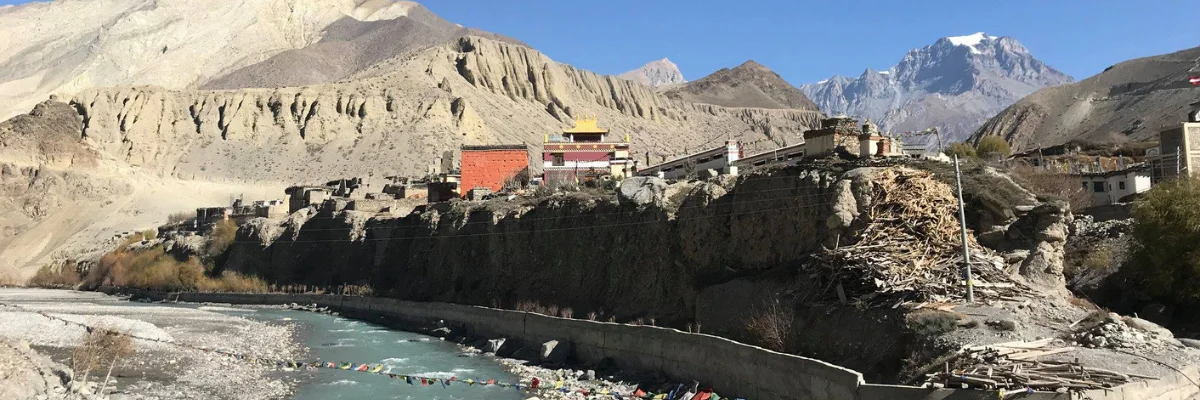
Kagbeni is one of those villages in Mustang that still feels untouched by time. Hidden between the swept cliffs of Mustang and the deep gorge of the Kali Gandaki River lies Kagbeni.
Kagbeni has ancient mud-brick houses, fluttering prayer flags, and the smell of the mountain air has magic. It will instantly put the travelers in touch with the old Himalayan soul of Nepal.
This pretty village is the entrance to Upper Mustang, where desert-like scenery is intersected by snow-covered mountains, and centuries-old traditions still run through every street.
Kagbeni Location
Kagbeni is a small village in the lower Mustang district in the Gandaki province of Nepal. It is in the north of Jomsom, on the road that heads to the closed area of Upper Mustang.
It is a beautiful village at an elevation of approximately 2800 meters (9,186 feet) above sea level.
Kagbeni is located on the banks of the river Kali Gandaki that cuts its course through the arid valley of Mustang. The landscape has exclusive features of rocky, sandy hills, and green areas of agricultural land.

The coordinates of Kagbeni are 28°49N latitude and 83°45E longitude. It indicates its location at the centre of the Himalayas.
The village also links the Annapurna region with the Upper Mustang Trek. It makes it a significant destination among the trekkers and travelers visiting this region of Nepal.
It is nearer to areas such as Jomsom, Muktinath, and Lo Manthang. Kabgeni also provides a superb scenery of the Nilgiri and Dhaulagiri mountain ranges.
Height, Weather, and Temperatures
Kagbeni always experiences a cool and dry mountain climate all year round.
During spring (March-May), days are warm and bright; the temperature of Kagbeni is between 10°C and 18°C, which is ideal for trekking and touring.
It receives very minimal rainfall during the summer and monsoon months: June to August. As the mountains in the environment block the rain rays, causing the rain shadow effect.
The weather is sunny and dry with temperatures of between 15°C and 20°C, and the trails are open but dusty.
Autumn (September to November) has cool temperatures and clear skies, with average daytime temperatures between 12°C and 18°C and lower nighttime temperatures; it is also a good season to travel.
During the winter (December to February) season, Kagbeni is chilly and windy with a day temperature range of 0°C to 8°C and temperatures below 0°C at night.
A very special mountain view is seen on bright sunny days, with stars shining upon the mountain despite the cold.
Cultural and Historical Importance
Kagbeni has always been not only a place to visit but also has a significant place in the history and culture of Mustang.
It was a trading point and administrative center of the village. The place used to be a tax collection point and a control point to move into Upper Mustang.
Kagbeni has a distinctive place in the history of the region. In the center of the village is Kag Chode Thupten Samphel Ling Monastery, constructed during the 15th century.
It still follows the Sakyapa Buddhist tradition, and visitors can see the monks chanting their daily rituals and prayers. One can gain an idea of the spiritual practices that have been traditions in Mustang.
You can see Tibetan culture style streets surrounded by mud-brick houses and hanging prayer flags. Every turn has a story of historic houses to tiny shrines hidden in side streets, and it gives a person a feeling of past life.
People and Lifestyle of Kagbeni
The people of Kagbeni live a simple but hard yet exciting life. Most families are dependent on agriculture, where they cultivate varieties of barley, buckwheat, and potato crops on small terraces hewn out of the hills.
Along with agriculture, most families have animals like goats, yaks, and cows, which give them milk, butter, and meat to use day to day.
The people of Kagbeni have also, over the years, adjusted towards tourism. Guesthouses, small lodges, and tea shops are run by several families to which trekkers walk in the village.
These are small yet cozy, and the guests have an opportunity to feel the local lifestyle. The village streets are silent and at the same time full of people in the mornings; locals perform their daily routine, work in their fields, or guide tourists along the thin alleys.
Life is simplified in this place; the traditions, festivals, and the Buddhist culture form a significant part of everyday life.
The people of Kagbeni have modernity and still follow their culture. As a visitor, one can have a preview of life that was deeply rooted in this land, river, and mountain that surrounded Kagbeni.
History of Kagbeni
The history of Kagbeni dates back several centuries. This is due to the ideal location it has as the place of crossing of the Kali Gandaki River and the smaller tributary.
Kagbeni’s name is based on the terms “Ka,” which means Kali, “Ga” means Gandaki, and “Beni” means the confluence of rivers.
The village used to be an entry point for traders and other people traveling to Upper Mustang, where taxes were paid, and people were closely watched.
Kagbeni is an important trading and cultural center as well, since it’s an important case-stop on the ancient salt trade path linking Tibet and Nepal.

The Kagbeni evolved into a cultural and spiritual hub over time, and monasteries were built, including the Kag Chode Thupten Samphel Ling Monastery in the 15th century.
Its old, rich history is indicated by the architecture of mud-brick houses, narrow streets, and prayer flags, which are saving the Tibetan legacy of the village.
Things to Do in Kagbeni
Kagbeni is a small location, but it is full of experiences that make it a memorable experience in Mustang. It is possible to do the best things here, which include:
Kag Chode Thupten Samphel Ling Monastery:
Visit a 15th-century monastery, ancient manuscripts, statues, Thangka paintings, and experience the spiritual energy.
Exploration of Old Town:
Discovery of the old town, where you can explore the Tibetan architecture, narrow alleys of the old town, along with the mud-brick houses.
Gorge of Kali Gandaki River:
Walk along riverbanks or just admire the dramatic effects of the river cutting its way through deep cliffs of the Himalayas.
Sightseeing of Nilgiri and Dhaulagiri:
You can get spectacular views of these grand mountains from different perspectives around the village.
Entry to Upper Mustang:
Visit the old passport office where visitors used to request entry into the restricted Upper Mustang area.
Local Apple Orchards and Thakali Foods:
Taste fresh apples and the traditional Thakali food in several housing units and restaurants.
Fossil Hunt (Shaligrams):
Find Shaligram fossils on the river, which is sacred in Hindu culture.
Hiking to Tiri Village:
This hiking trip involves a trip to the nearby village of Tiri Village to see the beautiful landscapes, the country houses, and the serene walking paths.
Old Fort Ruins:
Look at the ruins of Kag Ghar (old palace of Kagbeni) and the neighboring Devthen Chhorten, which one can see in a glimpse of the historic past of the village.
Tharwa Chyoling Nunnery:
This is a lovely nunnery to visit and learn more about local life and traditions of Buddhism.
Cave of Meditation hidden to Tiri:
This is a peaceful meditation cave located in a quiet area, Kag Chode monastic, and good for reflection.
Photography and Viewpoints at the Sunset:
View the amazing sunset over the village, river gorge, and the mountain ranges around the village.
Other Special Stations:
Small chapels, prayer wheels in lanes, old stone bridges, and so on will make the Kagbeni visit a discovery trip and the true Himalayan style.
How to Reach Kagbeni?
Kagbeni is an adventure, and there is a variety of choices based on the route taken and time. The village is accessible by air, road, and walking trails, and it is visited by people who are travelling in the Mustang.
By Flight
The closest airport is the Jomsom Airport, which connects Kagbeni with Pokhara and other main airports. It takes around 25 minutes to get to Pokhara from Jomsom with an amazing aerial view of the Dhaulagiri and Annapurna ranges.
By Road
Kagbeni is also accessible by jeep or bus via the Upper Mustang road system. The approximate distance of major points is:

- Pokhara to Kagbeni distance: 161 km (100 miles) by road, approximately 8-10 hours.
- Jomsom to Kagbeni distance: 10.7 km (6.6 miles), approximately 20-35 min.
- Kagbeni to Muktinath distance: 34 km (21 miles) or approximately 45 min.
- Kagbeni to Mustang distance: 41.6 km (25.8 miles), approximately 2 hours.
- Korola Border (Tibetan border) to Kagbeni distance: 106 km (65 miles), approximately, 4-5 hours.
- Chhusang to Kagbeni distance: 20.1 km (12.4 miles), approximately 1 hour.
- Chele to Kagbeni distance: 17.3 km (10.4 miles), approximately 40 min.
- Marpha to Kagbeni distance: 11 km (6.8 miles), 30 min.
- Ghasa to Kagbeni distance: 43.3 km (26.8 miles), 1 hours 30 min.
- Kusma to Kagbeni distance: 107.8 km (67 miles), approximately 4 hours.
- Lo Manthang to Kagbeni distance: 61 km (37.9 miles), approximately 5 hours.
- Kathmandu to Kagbeni distance: 363 km (225.5 miles) and takes around 11 hours by Bus.
By Trek
A popular trekker destination on the Upper Mustang trail is Kagbeni. Jomsom or Muktinath tracks go over Kagbeni. People can enjoy its paved road of stone, typical architecture, and local tradition.
Kabgeni is a kind of final destination for those doing the Upper Mustang Region trek.
Best Time to Visit Kagbeni
The best seasons to visit Kagbeni are spring (March to May) as well as autumn (September to November).
The weather is good in these months, and the skies are clear, and one can see the Nilgiri and Dhauligiri views, which are breathtaking.
It is spring and the valleys are green, and with autumn it is cool and the mountain views are clear as crystal.

Summer is hot and dry, yet dusty, and in winter it is very cold and windy with freezing nights, but sunny days give an illusion of peace and silence.
In general, the seasons of spring and fall are the most comfortable and fulfilling in terms of exploration of Kagbeni and its environs.
Festivals in Kagbeni
Kagbeni is a small village; however, it is a culturally rich village in terms of traditions and festivals.
The inhabitants commemorate their occasions with vivid rites, songs, and dances of Tibetan and Buddhist traditions of the land.
Most festivals are associated with agriculture, religion, or the changing seasons, and attending them gives one a special insight into local life.
Tiji Festival (May)
Tiji is a three-day festival, which glorifies overcoming evil through good. The locals wear traditional wear, masked dances, and congregate at monasteries to perform rituals.
It is very crucial among the festivals in Mustang that help in drawing both the locals and the tourists who intend to see the colorful rites.
Yartung Festival (August)
A mainly horse-racing festival, Yartung is held in August. Communities and those surrounding the village are united to watch races, to enjoy traditional dances, and to listen to music performances.
The festival takes about a few days and is a spirited festival of community spirit, competency, and customs.
Losar (Tibetan New Year)
The purpose of the Losar is to celebrate the Tibetan New Year, normally in February or March. The next morning, monks conduct special prayers in churches, homes are adorned, and local people make traditional cuisine.
The festival takes a few days and is commemorated with joy, blessings, and cultural rituals, which symbolize new beginnings.
Chhewar Festival
Other smaller monasteries at Kagbeni have prayer and masked dance rituals once a year, typically two days long. These celebrations praise local gods and the use of monks who perform cleansing rituals to safeguard people, as well as add blessings to the community.
Harvest Celebrations
Once the barley and buckwheat crops are harvested, the communities tend to organize feasts. They are not formal and are full of spirit, as they appreciate the gods with the occurrence of a good season and the connection between relatives and friends.
Other Local Celebrations
New births, marriages, and seasonal prayers are rituals that are found in Kagbeni occasionally. They are smaller in size, but they give insight into the daily spiritual and cultural life of the village.
Accommodation and Facilities
Kagbeni has simple but decent places for accommodation. Most guesthouses and lodges are family-run and offer traditional mud-brick houses restored with modern accommodation.
The rooms are basic, clean, and humble, and furnished with wood. The indigenous furnishings remind one of the real village life. There are even lodges with hot showers and warm bedding, which is a welcome thing after a strenuous walk.
There is reliability of power, but power outages occur occasionally. Numerous guesthouses contain Wi-Fi.
Kagbeni has a village check post, a few small stores where the necessities can be purchased, and a village school where the village children attend.
What to Eat in Kagbeni
Kagbeni has pure Mustang and Thakali food, which is perfect in situations when a traveler wants to savor local dishes. The cuisine is basic, rustic, and prepared using local produce.
Kagbeni Thakali set meals (dal-lentil soup, rice, vegetables of the season, pickles, and meat curries) are the most usual ones.
The most popular ones are yak and goat meat, which have a dense, savory taste and are typical of the region. Local milk tea (po cha) and fresh butter tea keep the visitors warm in the cold mountain air.
Apple orchards provide mushy apples and apple foods like pies or dried apples during the season of apples. This is also a treat to the trekkers.
Tsampa is also another staple food. It is made of roasted barley flour with butter and tea, and the practice rejuvenates long hikes.
The local people of the region prepare the fresh dish. You can try dumplings (momo), fried bread, which is often topped with butter or jam.
The tiny tea shops, as well as guesthouses, allow guests to have these meals. One can chat with locals and make each food bite a gust of culture, tradition, and hospitality.
Religious and Spiritual Sites in Kagbeni
Kagbeni is a picturesque village on the trail to Upper Mustang and a religious centre of both Hindus and Buddhists. There are old monasteries, sacred temples, meditation caves, and holy ponds, where one can worship and have a look.
One of the best sites is the Kag Chode Thupten Samphel Ling Monastery. It contains prehistoric manuscripts, statues, and colorful Thangka paintings, and remains faithful to Sakyapa Buddhism.
Here, monks carry out their rituals daily, giving visitors a chance to see the strong spiritual traditions in the village at a closer distance.
The Kagbeni Dham is a place of Hindu worship too. It is at the junction of the Kali Gandaki and Muktinath rivers. It is believed to have some miracle associated with it. During festivals such as Chaitra Dashain Aunsi and Bada Dashain Aunsi, devotees come to the place to go and pray and perform rites.
Beyond this village in the hillsides, a few caves of meditation and silent moments of prayer are hidden, which can help to get away to tranquility behind the village.
Loading...
related post


Author

Swostika is a content writer at Himalayan Masters as well as a travel enthusiast. She loves to travel and learn about different cultures and people. With a love for writing, traveling, and embracing diverse cultures, she is on a journey to explore and inspire through words.


Leave Your Comment