




Temple Trekking in Nepal | Top Places and Best Guide
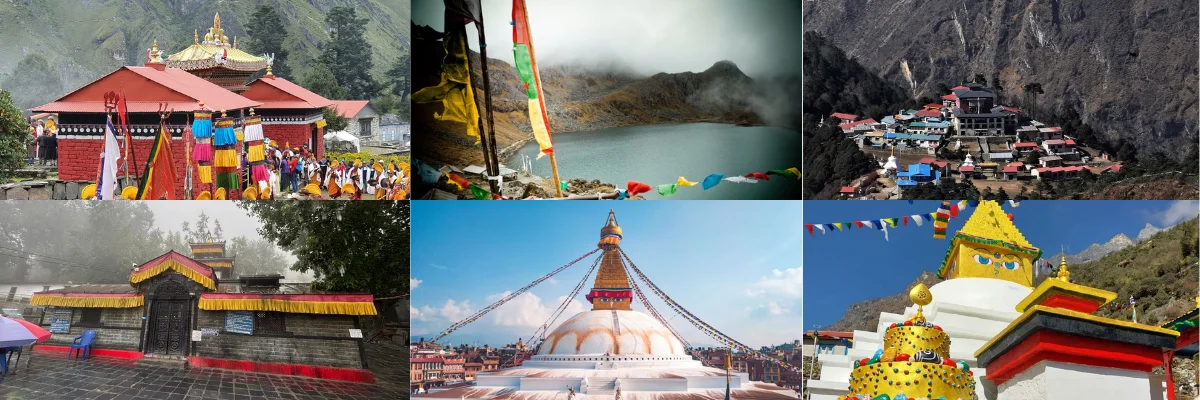
Most people go to the Himalayas just to escape their busy lives for a bit. They usually do one of the popular treks or spend a few days in Kathmandu, but they end up missing the real Nepal. They miss the places where the locals are genuinely warm, and life still feels authentic and untouched. That’s why temple trekking has been getting more popular lately.
On these trails, you’re not just walking for the views. You’re following ancient paths that traders and pilgrims have used for hundreds of years. You pass through villages where Hinduism and Buddhism have lived side by side for centuries, not just tolerating each other but actually sharing the same spaces and festivals. There’s something special about that harmony.
What makes these temples different from old ruins is that they’re still very much alive. You’ll hear monks chanting in the early morning, see local women spinning prayer wheels as they walk by, and watch kids playing around monastery steps while their grandparents light butter lamps. It’s not about forcing yourself into heavy religious rituals, it’s more about quietly observing and feeling the rhythm of a living culture.
The best part is how the trekking feels meaningful. As you walk through quiet rhododendron forests and remote mountain villages, far from traffic, phone signals, and crowds, something in you starts to settle. Whether you’re pushing yourself on a tough high-altitude route or just taking it slow on a gentle hillside trail, these sacred paths give your journey a deeper purpose.
In the end, it’s the kind of experience that stays with you long after you’ve returned home.

Top Temple Trekking Routes in Nepal
When you step onto a sacred trail in Nepal, you quickly realize that the geography is just as powerful as the spirituality. The high mountain walls and deep valleys do not just frame these holy sites; they have actively protected them from the outside world for centuries. Let us look at the most famous routes where nature and deep devotion come together.
Gosaikunda Lake Trek
Located in the Langtang region of Nepal, this lake is located at an elevation of 4,380 meters (14,370 ft). It is believed that lord Shiva created the lake by striking a glacier with his trident. Gosaikunda Lake trek is a 6-8-day trek.
Hindus and Buddhists visit during Janai Purnima, a major festival in August. The trek starts from Dhunche or Sybrubesi (the starting point of the Langtang Valley Trek), passing through rhododendron forests, Tamang villages, and yak pastures.

The lake area is surrounded by mountains and greenery and is said to have spiritual energy. It is a moderately difficult trek that offers mountain views, cultural immersion, and a direct connection to Himalayan faith and nature.
Muktinath Temple Trek
Muktinath temple is located at an elevation of 3760 meters (123367 ft) in the Mustang district of Nepal. It is a major pilgrimage site for both Hindus and Buddhists.
Known for its 108 waterspouts and eternal flame, this temple symbolizes liberation. From Jomsom, which is the starting point after a flight to Pokhara. It goes through arid scapes, Thakali villages, and apple orchards.

The route is in the rain shadow of the Annapurna, which makes it suitable even in the monsoon. Muktinath is a location that you come across while on the famous Annapurna Circuit and Muktinath temple trek is 7-10 days in duration.
This trek combines spiritual purpose with scenic beauty, ancient culture, and a taste of trans-Himalayan desert terrain.
Pathibhara Devi Temple Trek
Pathibhara Devi Temple is situated at 3794 meters (12447 ft) in Taplejung district of Nepal. It is a very sacred site for Hindu pilgrims who mostly come from eastern Nepal and India. It is a 3-5 days trek and usually Hindus visit the most.
The goddess is thought to fulfill devotees’ wishes. The trek starts from Suketar, which goes through dense forests and Limbu villages. It is a short but steep trail, best visited in spring or autumn.
On clear days, trekkers are awarded with spectacular views of Mt. Kanchenjunga and the nearby ranges. This is a less crowded route, which is very spiritual. You get to experience local culture, traditional hospitality, and a very calm setting for prayer and reflection.
Tengboche Monastery Trek
Tengboche Monastery is the spiritual core of the Everest region. At 3860 meters (12664 ft), it offers Panoramic views of Everest, Ama Dablam, and Lhotse.
The trek starts from Lukla, and we follow the classic Everest route, which takes us through Namche Bazaar. Tengboche also host the Mani Rimdu Festival, attracting monks and Sherpas for three days of masked dances and blessings. It is 9-12 days trek.

The monastery is an active center of Tibetan Buddhism. This is a moderate trek that gives high-altitude adventure with spiritual depth, Sherpa culture, and the unmatched beauty of the Khumbu Himalayas.
Swargadwari Temple Trek
Swarga Dwar, which means “Gate to Heaven, is in Pyuthan district at an altitude of 2100 meters (6889 ft). It is a large Hindu pilgrimage site, dedicated to Guru Maharaaj Narayan Khatri. Swargadwari temple trek is 3-6 days trek.
The temple is associated with the Mahabharata, which tells of the Pandavas’ ascent to heaven. The trek, which begins at Bhingri or Ghorahi and takes 1 to 2 days, passes through terraced fields, pine forests, and Magar villages.
Pilgrims visit year-round, especially in the months of Baishakh and Kartik. Pilgrims visit year-round, especially during Baishakh and Kartik.
The site offers a peaceful retreat, religious rituals, and panoramic views of midwestern hills. Accommodation is very basic, usually in dharmashalas or basic guest houses.
Dolakha Bhimsen Temple Trek
Dolakha Bhimsen Temple is in the town of Dolakha, Nepal, which is a 4-to 5-hour drive from Kathmandu and 2-3 days trek. Dedicated to Bhimsen, a powerful figure from the Mahabharata, this temple is revered for its strong local significance.
It’s believed the statue “sweats” as a sign of national unrest or change. The short walk from Charikot to the temple also presents you with the beauty of the Gaurishankar Himal.
This trek is more of a cultural walk than a wilderness hike, giving insight into local Newar and Tamang traditions. Many pilgrims visit this site during the major Hindu festivals like Dashain and Tihar.
Kalinchowk Bhagwati Trek
Kalinchowk Bhagwati Temple is located at an elevation of 3842 meters (12604 ft) in Dolakha, which is a popular site for pilgrimage and snow adventure. Devotees and tourists flock here during Janai Purnima and Dashain. Kalinchowk bhagwati temple trek is 2-4 days trek.
The trek usually starts from Kuri village, reached by jeep from Charikot. From there, a short walk brings you to the temple at the top of the hill, which also offers great views of Gaurishankar, Jugal, and Langtang ranges.
In winter, the area turns into a winter wonderland, which is great for snow play and photography. The temple, the flag, and the snow create a perfect blend of spiritual and natural beauty.
Tengboche to Pangboche to Thame Gompa Trek Route
This sacred path connects three main monasteries in the Everest region: Tengboche, Pangboche, and Thame Gompa. We start at Tengboche and then head to Pangboche (3,985m), which houses the oldest monastery in the Khumbu region.
From there, the trail goes to Thame, a remote Sherpa village which has a historic monastery for spiritual retreats. The circuit is a getaway from the busy Everest Base Camp route. It is a 10-12 days trek.
As you travel, you will see prayer flags, mani stones, spinning wheels, chanting monks, and grand peaks. It is a path of spiritual peace, Sherpa friendliness, and rich Himalayan history.
Short & Accessible Trails (Near Kathmandu & Pokhara)
You don’t need to trek for weeks in the high mountains to experience temple trekking in Nepal. Some of the most rewarding spiritual hikes are actually just a short drive or day trip from Kathmandu and Pokhara.
Near Kathmandu, Namo Buddha is one of the favorites. According to legend, this is where a young prince sacrificed himself to feed a starving tigress and her cubs. The trail takes you through quiet villages, terraced fields, and pine forests before reaching the peaceful monastery on the hilltop. It’s especially nice in the early morning when you can hear the monks chanting.
Other good options nearby include Champadevi, which offers great panoramic views over the Kathmandu Valley, and Bagdwar inside Shivapuri Nagarjun National Park. The walk to Bagdwar goes through thick forest and ends at the sacred source of the Bagmati River, a really important site for many Nepalis.
In Pokhara, the hike up to the World Peace Pagoda is very popular. It’s a fairly easy climb with beautiful views of Phewa Lake that keep getting better as you go up. Many people move on from there to Pumdikot to see the giant Shiva statue and sweeping views of the Annapurna mountains. On a clear day, the scenery is absolutely worth it.
These shorter trails may not be as challenging as the big Himalayan treks, but they still give you a wonderful taste of Nepal’s spiritual side, local culture, and natural beauty. They’re a perfect starting point if you want something more authentic than the usual tourist spots.
Best Time for Temple Trekking in Nepal
The best time to go for a temple trek in Nepal is during the spring (March to May) and autumn (September to November), which also happens to be the best weather for walking and sightseeing.
In spring, you will see blooming rhododendrons and very green scenery, which really enhances the temple settings in the hills and valleys.
Autumn comes after the monsoon with fresh air and great visibility, which is ideal for seeing the mountains that surround the hilltop temples like Swayambhunath or Panauti.
Also, during this time, major festivals like Dashain, Tihar, and Indra Jatra take place, which adds to the cultural richness.
Winter (December to February) is cold but bearable for lower altitude treks, but high altitude temple treks like Muktinath and Tengboche monastery are hard. Monsoon (June to August) is best avoided as the trails become very slippery, and travel is disrupted by landslides and floods.
Cultural Etiquette & Tips for Temple Trekkers
Most of the temples and monasteries you’ll visit on these trails are active places of worship, not just tourist attractions. Showing a bit of respect makes a big difference for both the locals and for your own experience.
Dress modestly. Wear clothes that cover your shoulders and knees, and avoid overly revealing outfits when visiting religious sites.
Walk clockwise around stupas, shrines, prayer wheels, and mani walls. Locals follow this tradition as a sign of respect, and visitors should do the same.
Take off your shoes and socks before entering temples, monasteries, or prayer halls. Some Hindu temples may also ask you to leave leather items outside.
Ask before taking photos of people. Many pilgrims and worshipers prefer privacy during prayers and rituals.
Check the rules before photographing inside temples or monasteries. Some places allow photography, while others strictly prohibit it.
Keep your voice low around prayer areas. Many people visit these sites for worship, meditation, or quiet reflection.
Avoid touching religious objects unless someone invites you to do so.
Respect local ceremonies if you come across one. Watch quietly from a distance rather than interrupting or walking through the gathering.
Carry your litter back with you and help keep these sacred places clean.
Follow any instructions given by monks, priests, or local caretakers. They know the customs of the site best.
Practical Tips for Planning Your Temple Trek
A bit of planning goes a long way when doing temple treks in Nepal. Here are some practical things to keep in mind so your trip is smoother and more enjoyable.
Choose the Right Season
- Autumn (September to November) is probably the most popular time for clear skies, dry trails, and great mountain views. Plus, you might catch lively festivals like Dashain and Tihar in the villages.
- Spring (March to May) is also excellent, with warmer weather and beautiful rhododendron forests in full bloom. Buddha Jayanti is a special time to be around the monasteries.
- Monsoon (June to August) brings lush green scenery and fewer crowds, and you can join unique festivals like Janai Purnima at Gosainkunda. Just be ready for rain, muddy paths, and leeches in some areas.
Prepare for the Physical Challenge
Don’t underestimate these treks just because they’re spiritual. Many trails have steep stone staircases, uneven paths, and long uphill sections.
- Start building your fitness a few weeks in advance with regular walking, hiking, or stair climbing.
- Simple exercises like squats and lunges will help strengthen your legs.
- Even on shorter day hikes, you’ll feel much better if you’ve trained a little.
Pack Smart
- Comfortable hiking shoes with good grip are important.
- Always carry enough water and some snacks, especially on day trips.
- Bring a rain jacket (particularly important in spring and monsoon).
- Pack layers — mountain weather can change fast.
- Carry some cash, since many small villages don’t have ATMs or card payments.
Temple trekking in Nepal is going beyond the usual mountain hikes.
It lets you walk ancient paths, visit living temples and monasteries, and get a real sense of the country’s culture and Traditions. Whether you choose a short trail near Kathmandu or a longer route in the Himalayas, these journeys stay with you long after you finish. Simple, meaningful, and well worth doing.
Loading...
related post


Author

Bryan BK is a storyteller at heart and an adventurer by soul. As a passionate writer and traveler, he finds inspiration in the places he visits and the people he meets. Through his words, he brings destinations to life, sharing experiences that inspire others to explore, dream, and discover.


Leave Your Comment