




Phortse, Nepal – A Significant Sherpa Village of Khumbu
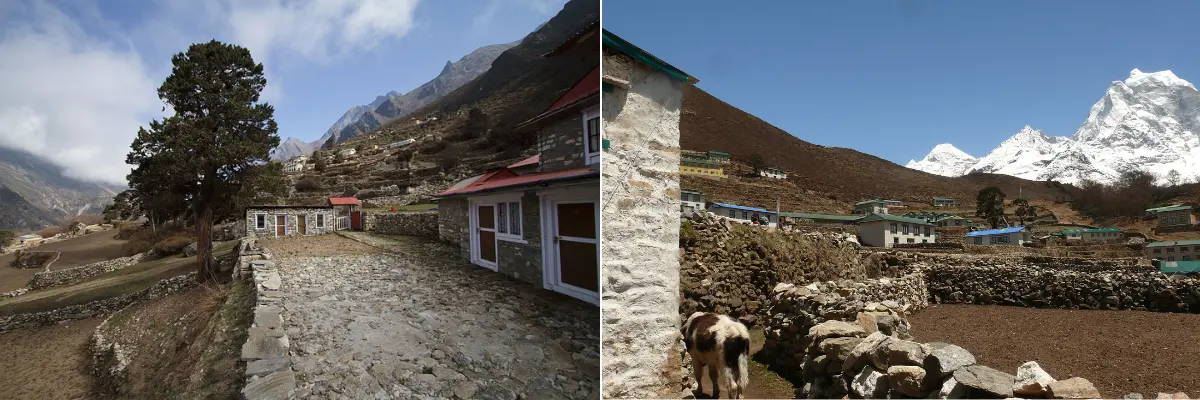
In the highlands of the Khumbu region, a little away from the hustle of the classic Everest Base Camp trail, lies Phortse. It is a serene Sherpa village famous for some of the most renowned mountaineers.
Situated far from the crowded trails, Phortse receives hundreds of trekkers and climbers each year heading towards Mount Everest. Perched above the Dudh Koshi and Imja Khola rivers, the village offers a peaceful atmosphere and panoramic mountain views.
The village is known for its generations of legendary climbers, some of the most experienced Everest guides, and Sherpa culture.
Unlike the busy towns like Lukla and Namche Bazaar, Phortse is a peaceful alternative route, offering a chance to explore authentic Sherpa traditions, Buddhist heritage, and mountain life.
Surrounded by stunning views of Ama Dablam, Thamserku, and Kangtega, Phortse feels both remote yet deeply welcoming. It is a usual stop for climbers aiming to scale the world’s tallest mountain, Mount Everest (8,848.86 m/29,032 ft).
Phortse is a perfect stop for those seeking cultural experience, a tranquil environment, and a closer connection to the Himalayas.

Why Phortse is Special?
Phortse, also pronounced Phorche, is known for its true essence of Sherpa culture, far from the crowded main trail. It is also home to some of the world’s most accomplished mountaineers. With its peaceful setting, traditional stone homes, and panoramic views of iconic Himalaya peaks, Phortse is a beautiful village of Everest climbers.
The village offers a rare balance of adventure, authenticity, and cultural depth that only a few villages in the Everest region can match.
Here, children grow with the mountains as their guardian angel as well as playground. Additionally, the Khumbu Climbing Center (KCC) provides technical climbing training to local Sherpas as well as foreigners.
Likewise, the Sherpa culture is one of the most beautiful highlights of Phortse. The mani walls, prayer flags, and daily rhythms shape the life of residents of Phortse, both farming and mountain life.
Not to forget the awe-inspiring landscapes. Phortse offers a perfect location to witness some of the best views of steep valley walls, terraced fields, and dramatic peaks such as Ama Dablam, Taboche, and Kangtega. It’s perfect for amazing sunrise and sunset views.
Location and Altitude of Phortse
Phortse is situated in the Solukhumbu District of Nepal, within the Sagarmatha National Park. The coordinates for Phortse village are approximately 27.842°N, 86.740°E. It lies at an elevation of 3,810 meters (12,500 ft) above sea level, while some upper sections reach 3,900 meters (12,795 ft).
The village separates two valleys; Dudh Koshi Valley and Imja Khola Valley, giving it uninterrupted views of the Khumbu region. Its position makes it both a peaceful cultural village and an excellent acclimatization stop for trekkers heading towards Everest Base Camp (EBC), Gokyo Lakes, or the Three Passes.
Culture and Lifestyle of Phortse’s People
In Phorche, Sherpa culture isn’t just a showpiece; it’s lived in daily life. Life around here revolves around agriculture, community, and mountain tradition.
Locals wake early, do their daily chores like milking yaks, fetching water, preparing food for cattle, a family member, go to the field and do farming, and so on. It’s how their daily life looks.
These terraced fields of potatoes, barley, and other seasonal crops, while yaks and dzomos graze on alpine pasture, reflect the tradition of Phortse village.

Women usually engage in farming and household work, while men often work as climbers, guides, or in a support group. Some even help in laying ropes before the climbing season starts, as an Icefall Doctor.
The Phortse Thakri Chholing Gomba (monastery) adds spiritual depth to village life. People gather here, perform pujas, and preserve and promote centuries-old traditions. The monastery becomes vibrant during festivals like Mani Rimdu and Lhosar.
Trekking Routes That Pass Through Phortse Village
Phortse is a popular rest spot for trekkers heading towards Everest or Gokyo Lake as an acclimatization point. While only a few trek operators choose to trek via Phortse, it is a must-include village in your Everest Trekking routes.
The village connects several major trekking trails. It is a short detour for a richer cultural experience.

Some of the trekking routes that pass through Phortse are:
Everest Base Camp via Phortse
Many prefer this option instead of the classic Tengboche trail. From Namche Bazaar, the path continues along the cliffsides, with a view of Imja Khola Valley. Then, instead of heading towards Tengboche Monastery in Tengboche, from Sanasa, the route detours towards Phortse village.
It’s quieter, more scenic, and a genuine sense of Sherpa life. After spending a night in Phoche, you can join the main EBC trail at Pangboche and continue toward Dingboche, Lobuche, and Gorakshep.
Gokyo Lake Trek via Phortse Thanga
For those heading towards the Gokyo Valley, Phorche is an extra overnight stop. The trail descends to Phortse Thanga and begins climbing through birch and rhododendron forests towards Dole, Machhermo, and eventually the turquoise Gokyo Lakes.
This route is known for its quietness, birdwatching, and stunning views of Cho Oyu.
Everest Three Passes Trek
For trekkers looking to complete the Everest Three Passes, Phorche offers a peaceful break before crossing some of the world’s highest mountain passes.
Trekkers can follow the same route as EBC via Phortse, and then continue the standard Everest Three Passes Trek route.
EBC with Gokyo via Cho La Pass
Trekkers seeking adventures of both EBC and Gokyo in a single itinerary often choose to include Phorche either on the ascent or descent.
This makes it an ideal acclimatization and cultural stop between two of the Khumbu’s most iconic trekking regions.
Ama Dablam Base Camp
Phorche is a common overnight stop for trekkers heading to Ama Dablam Base Camp. Since the village lies close to Pangboche, the starting point for the Ama Dablam Base Camp hike.
The trail offers breathtaking views of Ama Dablam’s southwest face.

Top Things to See and Do in Phortse
When you arrive in Phortse, there are several things that you can do here.
Khumbu Climbing Center Phortse Nepal
Visit this training center to learn how local Sherpas train for a Himalayan expedition. You can get some training, too.
Phortse Monastery (Thakri Chholing)
It’s the heart of the village; a quiet, spiritual place ideal for meditation and observing local Buddhist rituals.
Viewpoints Above the Village
Short hikes above ridges of Phorche open to panoramic mountain views. These vantage points are especially magical at sunrise or sunset.
Village Walks and Terrace Fields
Explore stone paths, terrace fields, and traditional stone-made houses for an authentic feel of Sherpa life.
Wildlife Spotting
Himalayan Tahr and other alpine animals are often seen near cliffs around Phortse.
Cultural Conversations
Many locals’ families are tied to climbing or supported expeditions on Everest. So, there’s a high chance you will hear stories of adventures, Everest summits, guiding careers, and Sherpa traditions.
Accommodation in Phortse
Accommodation in Phortse is simple, warm, and deeply rooted in Sherpa hospitality. Unlike the commercial teahouses or lodges in Namche Bazaar or Tengboche, the teahouses here feel more personal.
The teahouses are usually family-run, who have lived here for generations. Most lodges are traditional stone houses with wooden interiors, cozy dining rooms, and big windows staring at Ama Dablam and the surrounding valleys.
In the evenings, trekkers gather around fire, usually yak-dung or wood-fired stoves, sharing meals and stories. Rooms are usually basic but clean, equipped with wooden beds, thick blankets, and most with an attached bathroom. However, you must check its availability, especially during peak season.
Electricity, Wi-Fi, and hot showers are available in some lodges but may be limited due to altitude and weather conditions.
Usually, the owner of the teahouse prepares meals, using local spices and freshly grown ingredients like potatoes, greens, and grains. The most common and fulfilling meal is Dal Bhat. Meanwhile, Sherpa stew, vegetable soups, fried rice, and Mo: Mo for lunch and dinner, and Tibetan bread, porridge, chapati, and pancakes are famous for breakfast.
Phortse is more than just a night’s stay; it’s an intimate experience of Sherpa culture.
Phortse Weather and Best Time to Visit
The Phortse weather is typical of high Himalayan villages, alpine, variable, and influenced by altitude and seasonal patterns.
The weather during spring (March to May) is usually characterized by clear skies, mild temperatures (daytime temperature ranging around 10–15°C), and the rhododendron bloom.
Likewise, autumn (September to November) is equally beautiful, offering crisp, dry air and some stunning views. These months, spring and autumn, are the best time to visit Phortse.
Meanwhile, winter (December to February) is very cold around Phortse, with nights often dropping below freezing and occasional snowfalls. Though winter trekking becomes quite challenging due to icy trails and limited daylight, this season offers some great mountain views.
Summer (June to August), in contrast, brings heavy rainfall, slippery trails, and reduced visibility. So, we don’t generally recommend this season for trekking.
Note: The weather in Phortse can change quickly, with clear mornings suddenly changing to cloudy or light snow in the afternoon. Proper layering, sun protection, and warm clothing are essential year-round.
Distance and Trail Connecting to Phortse
As the village sits at the crossroads between the EBC and Gokyo Valley route, it’s a common point among trekkers. Here are the key trekking distances and estimated times between Phortse and nearby villages.
- Gokyo to Phortse distance: Approximately 10-12 km, taking 6-7 hours downhill via Machhermo and Dole.
- Phortse to Machhermo distance: Roughly 7-8 km, usually 5-6 hours, passing through Dole and Luza with gradual high-altitude climbs.
- Phortse to Dole distance: Around 6 km, taking 3-4 hours on a steady ascent toward the Gokyo Valley.
- Namche Bazaar to Phortse distance: About 8-9 km, taking 4-5 hours along a beautiful cliffside route with excellent valley views.
- Phortse to Pangboche distance: Close to 3-4 km, roughly 1.5-2 hours on an easy, scenic trail.
- Phortse to Dingboche distance: Approximately 11-12 km, completed in 5-6 hours via Pangboche and Somare.
- Khumjung to Phortse distance: Around 5-6 km, taking 2-3 hours, following a peaceful local trail used mostly by Sherpa residents.

Safety and Practical Notes
Here are some safety and practical notes you can follow to ensure a safe and memorable journey.
- The village lies above 3,800 meters, which is a significant elevation. So, proper rest days and acclimatization are required before and after Phorche to avoid the risk of altitude sickness.
- Usually, trekkers choose to trek via Phorche instead of Tengboche. It is quieter and more immersive compared to a busy commercial route.
- Smart packing is crucial. Layer packing according to the season you are visiting Phorche and the other Everest region ensures safety and a warm travel experience.
- Respect local tradition. Do not make noise around the monastery, and always ask permission before entering homes.
- Generally, wildlife attacks are rare; however, you need to be cautious. You might be able to see wildlife roaming near the ridges of Phorche. Watch them from a distance and appreciate their presence.
- Trails around Phorche can be narrow and exposed. So, we recommend using trekking poles, going with an experienced guide, and avoiding risky hikes in bad weather.
Why Phortse Deserves a Spot on Your Everest Itinerary
Its location, culture, and long history in mountaineering make Phortse a must-include spot on your Everest itinerary. Far from the crowds, the village offers warm hospitality and an opportunity to experience authentic Sherpa culture.
Phortse is a perfect balance of ancient culture and modern mountaineering, known as the home of several renowned climbers.
Whether you’re trekking toward Everest Base Camp, crossing the Three Passes, or heading to Gokyo, Phortse adds richness to your journey, the kind that stays with you long after you’ve returned home.
The real beauty of Phortse lies not only in its scenery but also in its people, warm, humble, and legendary. A night here feels like stepping into the heart of the Khumbu. Every fluttering prayer flag, gentle breeze, and sunrise and sunset tell a story; the story of a village shaped by mountains.
Loading...
related post


Author

Samyog Shrestha is a travel enthusiast and an excellent content writer at Himalayan Masters, the face behind the amazing content who likes to learn from experience.


Leave Your Comment