




Sikles: All About the Beautiful Gurung Village
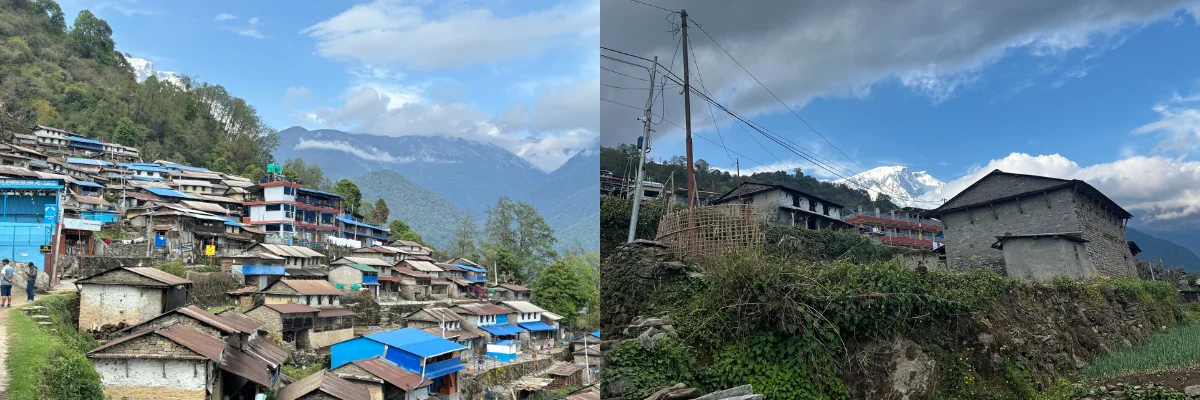
One of the oldest and most beautiful Gurung villages in the Kaski District is Sikles Village. It is placed on a small hill, which consists of lines of stone buildings, and symmetrically roofed. They appear tilled-in fields.
Although Sikles is not far from Pokhara, it has managed to maintain its traditional way of life, generous hospitality, and ancient culture.
The village is peaceful with mountain scenery and has fresh air. It gives a close glimpse of the routines of the Gurung community. It is an excellent tourist destination for nature and culture lovers.
Behind the Name ‘Sikles’
Have you ever thought about how the Sikles got his name? It isn’t a Nepali word. The visitors in the past realized that they could not find locals who were often ill, even in hilly areas with simple ways of life.
They named the village Sick-less, and with time it became Sik-les. The name is nowadays a symbol of good health for the villagers, as well as the image of the village as a relaxing and healthy place to visit.
Some people say Sikles is a Gurung word, where Sik means Bee and Le means Hive so, basically it means Big Beehive.
Others say that the original name of Sikles was ‘Chilli-Nasa’, where Chilli means Swallow Bird and Nasaa means bird.
Where is Sikles Village?
Sikles is a lovely Gurung village located in the Kaski district of Nepal. It is in the northeast of Pokhara. Its altitude is approximately 1980 meters (6496 ft) above sea level. Its coordinates are 28.3183° N, 84.1450° E.
Sikles is about a 42km drive from Pokhara, and it takes 4 to 5 hours to get there, depending on road conditions.

Most of the visitors come to Pokhara by jeep or bike, whereas others like the trekking paths, which take them through villages and rhododendron forests.
History and Background of Sikles
Sikles is well known for a long and proud history that dates to many generations of the Gurung people. It has been said to be one of the oldest and biggest Gurung settlements in Nepal.
Gurung families migrated centuries back. They selected this place because it has fertile land, good sources of fresh water, and a good natural environment. The village has developed into a tight-knit community and has its own identity.
Sikles was also a significant contributor to traditional agriculture and the herding of animals in the past. Most houses are made using rock and timber. The village lived a simple life that was founded on farming, weaving, and keeping animals.
Even now, you can find these slate roof houses, with which the community so appropriately maintained its past.
Gurung practices, traditions, and language are still practiced every day. The village is a living museum of Gurung culture because the village holds festivals, dances, and rituals throughout the year.
Sikles has benefited from the efforts of many young men in the British and Indian Gurkha forces who have contributed in the past. Their courage and discipline made the village proud of them.
Sikles is gradually becoming a tourism destination, particularly to the trekkers and scientists who seek to enjoy the natural local culture in a serene and quiet location.
The Annapurna Conservation Area Project (ACAP) is also the project that favors sustainable tourism and safeguards the environment surrounding the village.
How far is Sikles from Pokhara?
Sikles Village is located 42 km south of Pokhara city. Typically, it takes 4 to 5 hours to reach the destination, depending on road conditions and weather.

Starting in Pokhara, the tourists go through forest-filled hilly roads and small villages. The trail is a combination of both paved and off-road, thus prone to being rough, both in the rainy season and on dry days.
The easiest and fastest way is by jeep or personal car, which most people use. When you are on a tight budget, you may take the local buses or shared jeeps, which have minimal schedules and might take longer.
Even some adventurers will choose motorbikes. As they are more flexible and will give the ability to make stops and take in the beautiful scenic views on the way.
From Kathmandu or other far-flung cities, people would normally take a bus or a flight to Pokhara and proceed to Sikles via jeep, bus, or motorbike.
Best Time to Visit Sikles
You can visit Sikles all year. But spring (March -May) and autumn (September -November) are the best seasons to visit Sikles.
The weather during these months is favorable, the sky is clear, and the mountain views are at their best.
The seasons of spring have the blooming rhododendrons and green terraces, with autumn having cool air and colorful scenes following the monsoon.

The monsoon is during summer (June through August); therefore, there might be heavy rains, and hence, the roads and trekking trails may be slick and muddy, respectively.
Winter (December-February) is cold with some snowfall occasionally, and at the elevation, it has a very quiet setting and a peaceful environment.
Things to Do in Sikles Village
Sikles gives numerous opportunities to tourists who are fond of culture, nature, and village life.
- One of the things to do is wear traditional Gurung clothing.
- Most homestays and other local families also allow tourists to wear their ethnic attire, take pictures, and even participate in traditional dances.
- It is an amusing experience to be part of the people and to understand Gurung culture in the most personal manner.
- Another thing that is worth trying is visiting the local museum showing the Gurung history, tools, clothing, and artifacts. It is a little yet intriguing museum that gives an understanding of the life and history of the village.
- Along with culture, there are numerous nature walks and short walks in the village. Search through the terraced fields, rhododendron forests, streams, or even watch the mountains in peace.
- The other activities involve assistance in basic farming activities, trying local foods such as dal, bhat, and Tongba, among others, and discussing with the inhabitants of the village their daily lives.
- This will help photographers have numerous ideal areas for getting the shots of the village, mountains, and the old houses, particularly when it is about sunset and sunrise.
- If you picture cultural experiences, walks among people in nature, or rather do not participate in any activities, you are going to find everything in Sikles, which is to suit any kind of traveler.
Sikles Village Culture and Traditions
The settlement of Sikles is one of the biggest Gurung settlements in Nepal. Sikles village has approximately 700 traditional Gurung houses.
As we pass through the village, one can instantly see the integration of nature and society. The hillsides are covered with terraced lands. Houses are connected by small stone walkways. The village is surrounded by forests and mountainous scenery.
Most houses in Sikles are the conventional Gurung houses, constructed of stone and wood, with slated roofs to withstand the impact of cold winters and powerful monsoon rains.

Families spend a lot of time together on the little arm in front of the houses, and the inside of the houses is plain, with a fire in the middle used to cook and keep warm. Livestock, including goats, cows, and chickens, is kept in many homes and plays a major role in day-to-day life.

Sikles culture is very rich and lively. Gurung people have their language, the traditions Buddhism, and the traditions that are also inherited by the generations.
The villagers preserve their culture by wearing ethnic costumes, dancing Ghatu and Rodhi, eating, and telling stories during festivals.
Sikles is a community-based place. Individuals are also hospitable. Visitors get to be invited to their homes to experience Gurung hospitality with their own hands.
The old-time crafts, such as weaving, production of local alcoholic beverages (such as Tongba), and agriculture, are still prevalent.
The Gurung people of Sikles have preserved a strong sense of identity and, therefore, are a living specimen of the Nepalese culture.
Sikles Village Main Attractions
Sikles is a village and a cultural and natural treasure. The village has a lot of attractions, such as the stunning mountain scenes.
The ancient Gurung houses are worth exploring and can amaze anyone who intends to explore the Nepalese culture, as well as the nature of Nepal.
Traditional Gurung Houses
These houses are made of stone and wood and have slate roofs to resist the cold weather in the mountains.
As you walk across the village, you will find that the families are busy keeping the livestock and working on the terraced lands as soon as they come out of their houses. Going to these houses gives one an idea of how simple and beautiful the Gurung people live.

Village Viewpoint
To see Sikles at its finest, go from the point of view of the village, just a little above the main village. You can see the whole village, spread across the hills, the terraced fields, and the woods.
It is also an ideal place to capture images or simply enjoy the landscape. On clear days since it also covers the Annapurna area, Lamjung Himal, and Manaslu. The sunset and sunrise are particularly miraculous here.
Sikles View Tower
Sikles View Tower presents the best views of the village. At the very top, you can see the whole settlement of Gurung in green, diverted farms, and the Lamjung mountain range in the background. It is a serene place to take pictures and have moments of silence.
Sikles Eco Musuem
Sikles Eco Museum captures the history and the lifestyle of the Gurung people. Internally, there are ancient tools, traditional clothes, and ancient photos. The culture, conservation, and village life are also depicted in the museum that respects Dr. Chandra Gurung and other conservationists.
Maudi Kyufi Temple
Maudi Kyufi temple is a holy Shiva shrine for residents. Each year on the Maghe Sankranti, people converge to do prayers and rituals. There is a spout of water nearby, which only flows at that time; the locals think the water absolves sins.
Mad Honey Hunting
Mad Honey hunting by the wild is an uncommon practice along the borders of Sikles, particularly in the area of Khilang. Gurung honey hunters take the honey from giant bee hives on cliffs, extracting nectar on rhododendron flowers, a peculiar sweetness prevalent in the area.
Rishing Dadha
The Rishing Dadha perspective is some two hours away, Sikles, and a hiking place is a scenic one. Annapurna II and Annapurna IV are seen there. During specific seasons, one can see avalanches, and the road traverses waterfalls and forests.
Local Handcrafts
Local handcrafted artworks employ natural substances. Men in Sikles make products like Bhangra, the popular pole used to ferry goods with the allopal fibers, woolen blankets, baskets, and floor mats. These trades depict the laborious village existence.
Terraced Fields and Farming Activities
The Sikles terraced field is not merely picturesque. It demonstrates how the Gurung people practiced farming.
Green rice paddies or mustard fields, or colorful vegetables, who knows, that is what you will see according to the season.
The strolls through these terraces are quiet, and people often pause to converse with farmers or even take up simple farm jobs.
Mountain Views
Along with the main village perspective, it has smaller hiking points around Sikles. It allows you to get closer opinions of separate sleeping mountains.
It is also possible to see different sides of Lamjung Himal, Himalchuli, Fishtail (Macchapucchre), and Annapurna South. These areas are less noisy. They are ideal when taking pictures or just having a good time in the calming mountain scenery.
Kapuche Lake
Approximately 1 day trek east, Sikles is the Kapuche Lake, which is a small lake of tranquil water bordered by forest. It is not so busy, and it is good to have a picnic, meditation, or reflection. It is a popular thing on the Sikles itinerary of many trekkers due to the addition of a natural and peaceful touch to the village.
Engage in cultures and Everyday Life
Sikles perhaps have one of the most fascinating attractions: the people and the culture. Local inhabitants will be able to communicate with you, cook together, and attend minor rituals.
You can even be a witness to traditional dances if you visit during the festival period. To move around the village streets, participate in the everyday life of locals. You can be a guest in homestays is an experience you will not have when walking around tourist places.

View of Mountains from Sikles Village
Sikles is ideally placed to provide a spectacular view of some of the well-known mountains in Nepal.
The village and the hills around it provide a glimpse of various mountains in the far-off. Among these, the closer ones include the Annapurna, the Lamjung Himal, the Manaslu, and minor peaks associated with Himalchuli, Gangapurna, and Macchapuchre (Fishtail).
Sunrise and sunset are also particularly magical moments to be there, with the Himalayan skyline being shot with golden and pink hues.
The trails and terraces within the village are the best locations to have a mountain view in Sikles village. Numerous trekkers and visitors go up a little higher than the main settlement. One can see the whole of the Annapurna and Manaslu ranges together.

The northwest of Sikles has continuous panoramic views of Lamjung Himal. The south and southwest slopes give the best view of Annapurna South and Fisktail Peak.
The mountain views that one can enjoy even in the homestay courtyards are also breathtaking. Every minute in Sikles is a feast for nature and photography enthusiasts.
Experience of Homestay in Sikles Village
One of the best experiences in the village is staying in a homestay and experiencing the essence of the village. Most homestays are traditional Gurung houses that consist of stone and wood, have small rooms, and a small courtyard.
You are more than a visitor when you stay here. You will be a part of the family and spend some days together. One can assist in minor daily chores, talk with the hosts, and even participate in their cooking or farming, if you feel like doing it.
Food is also typically fresh and made in-house, such as local foods such as dal, bhat, vegetable curries, and traditional Tongba (millet drink). During the evenings, families tend to get together and tell stories, sing, or play local music.

It is also possible to do short walks around the village, visit the terraced fields, meet the locals, and have beautiful views of the mountains just outside of your homestay.
Local Gurung Foods
The food at Sikles Village is simple, fresh, and flavorful. Most of the homes provide traditional Gurung meals, which are created using local foodstuffs.
An average meal has dal (lentils), bhat (rice), tarkari (vegetable curry), and occasionally gundruk (fermented leafy greens).

The Tongba, a beer-like beverage prepared out of fermented millet, is a well-known local beverage best used in the mornings when the hills are the only problem.
People may also taste sel roti (a homemade rice-flour doughnut) and fresh dairy products from local cows and goats. Eating with a family locally is not only about eating some food, but a way to get in touch with the village culture and the warmth.
Festivals in Sikles
The Sikles village is an energetic one that adapts to the rich heritage of the Gurung people. The highest festival is the Gurung New Year (Lhosar), which is celebrated with colorful dresses, traditional dances such as Ghatu and Rodhi, as well as communal feasts.
Practices like other festivals, like Chhewar (ritual ceremonies), and Dashain are occasions of prayer, offerings, and meetings, where everybody is present. These periods are characterized by music, laughter, and cultural exhibits in the village.
By visiting Sikles at a festival, a tourist will have a unique opportunity to see genuine Gurung culture and take part in its festivities.
Flora and Fauna around Sikles
Sikles is a place that puts the forest, terraced and rolling hills. This makes it a paradise for lovers of nature. The forest is covered with rhododendron trees, oak, pine, and other trees, which blossom during spring.
Birdwatchers can see such species as the Himalayan monal, Kalij, and other native birds. Small mammals found in the hills include Barking deer, wild boar, and, in some cases, Himalayan langurs.
Strolling within Sikles further provides you with opportunities to view colored butterflies, wildflowers, and water courses swarming with freshwater animals.
Treks from Sikles Village
Not only is Sikles a cultural village, but it is the beginning point of some beautiful trek. It is best for those who are in love with nature, love taking pictures, and are just interested in giving Nepal’s countryside a bit of a look-see.
Sikles to Kori Trek
Kori trek is a very short and accessible trail and an ideal adventure to take in half a day. It is about 21 km. The route is through greenery and terraced lands with a few Gurung villages.
On the route, you will watch Annapurna South and its other range without any disturbances. You can mingle with local people, and enjoy the cultural village life. The hike is recommended for first-time hikers or people out on a personal slow stroll.
Sikles to Kapuche Lake Trek
The Kapuche Lake trail is a little further in distance. It takes approximately one day to hike. You can reach the low-altitude glacial lake and enjoy panoramic views of Fishtail (Macchapuchre), Annapurna South, and Lamjung Himal. The path is quiet and less busy, making it ideal for meditating, taking pictures, or having a solitary picnic.

Several trekkers complement this trek with a homestay in Sikles to have a complete adventure of culture and nature.
Conclusion: Why You Should Visit Sikles Village?
One must visit Sikles village if they are fond of culture and mountain views. It is a perfect destination for one seeking peace.
The culture, local foods, houses, and dresses will amaze you in their own way. So, if you are around Pokhara and thinking of exploring a culturally rich town, then Sikles must be on your bucket list.
Loading...
related post


Author

Swostika is a content writer at Himalayan Masters as well as a travel enthusiast. She loves to travel and learn about different cultures and people. With a love for writing, traveling, and embracing diverse cultures, she is on a journey to explore and inspire through words.


Leave Your Comment