




Suspension Bridges in Nepal: Linking Hills and Lives
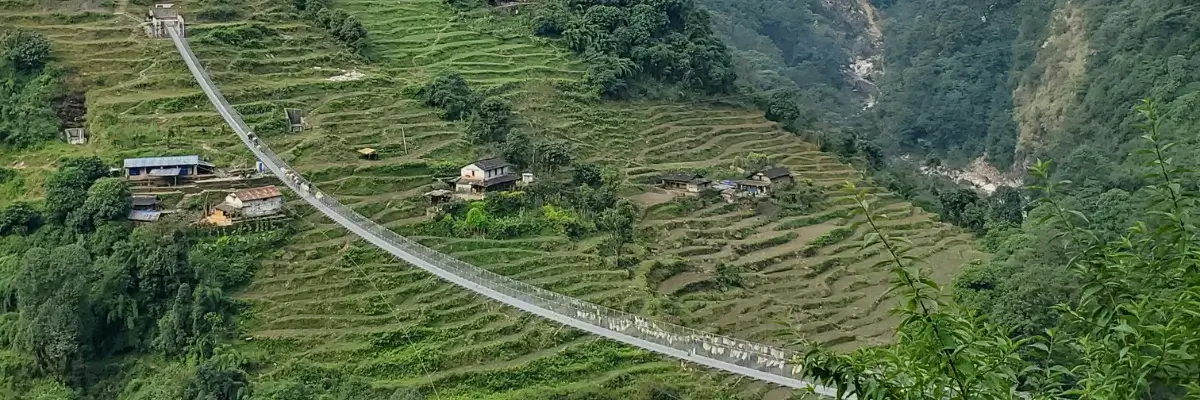
Nepal is a destination beyond the scope of a typical trek; it is a place where you will find dramatic landscapes that meet incredible trails. In each of its mountains, there is a story of adventure, culture, and connection. Suspension bridges of Nepal are not just a normal bridge they connect villages, people and cultures together.
Among these is the suspension bridge, which, beyond serving as a route through roaring rivers and into deep valleys, also connects hills, villages, and people.
For travelers, this includes great views; for residents, it includes access to schools, markets, and daily functions. These bridges are functional and beautiful in their dual nature.
What Are Suspension Bridges?
Suspension bridges are lightweight but very strong, spanning over rivers, valleys, and gorges.
They are on steel cables or ropes between two points, usually high cliffs or rocks. The walkway is attached to these cables, which in turn create a safe passage.
In Nepal, we observe that most suspension bridges are constructed from steel cables, wood planks, and modern alloys. The steel cables, a key element, provide the strength and flexibility that, in turn, allow the bridge to swing with the weight put upon it without breaking.
For the walking surface, we use modern alloys and metal mesh, which also provide safety and durability.
The basic principle behind suspension bridges is simple yet brilliant. We know that the weight of people and traffic is transferred to the cables. In turn, the cables report to strong anchor points on either side.
The bridge’s flexibility and cable tension, which allow for a little give, prevent collapse. This is what makes them the best solution for Nepal’s rough terrain and fast-flowing rivers.
Evolution of Suspension Bridge Over Time
Long ago in Nepal, people used wood, bamboo, and rope for the bridges they did have. They were unsafe and did not last, which was particularly true during the monsoon. Over time, technology brought better materials.
Today in Nepal, we see suspension bridges made of galvanized steel cables, metal railings, and with very secure foundations.

This development has resulted in bridges that are larger in scale, more secure, and highly reliable. In Nepal, we see modern bridges that span over 300 meters, which also become icons of trekking routes.
Role of Suspension Bridges in Trekking Infrastructure Systems
Suspension bridges are a solution for remote villages that are far out of reach due to large rivers with fast-flowing water or deep valleys.
In many of Nepal’s mountain districts, these bridges are the only reliable access that local people have to schools, markets, and health posts.
For travelers, who are what trekkers are, they serve as gateways that connect one trail to another, thus making the journey smoother and more exciting.
These bridges also feature year-round access in Nepal’s challenging terrain. During the monsoon, which is a very rainy season here, rivers rise in level, and trails experience significant erosion. However, it is precisely during this time that suspension bridges stand out as very useful and functional.
They have created a safe passage in the face of adverse environmental conditions, and as a result, activity in the mountains remains continuous.
By connecting remote terrains, suspension bridges also provide shorter and more accessible trekking routes. In the absence of them which travelers do that for which they have to spend hours descending steep slopes and then climbing back up the other side.
With our bridges in place, what was once a long detour is now a matter of just a few minutes. This also saves energy and allows travelers to have a more comfortable journey.
Safety is a large issue. Passage through rivers without bridges is risky during times of flood or snowmelt.
Suspension bridges ensure that this does not happen for travelers and inhabitants. We have strong cables, sturdy planks, and railings, which guarantee safe passage at all times of the year.
Aesthetic and Emotional Appeal of Suspension Bridges
Crossing a suspension bridge in Nepal is more of a journey that you take, rather than just a task; it is a sensory experience for the soul.
As soon as you set foot on the bridge, it begins to gently rock back and forth, which is a reminder that you are high above the rushing rivers and deep valleys.
The movement is thrilling at times, even a little nerve-racking, but it soon turns into a wonder.
These bridges are constructed in some of the most stunning locations in the Himalayas. From them, you look out at snowcapped peaks which rise above green hills, waterfalls which cascade into rivers, and villages which are nestled into the slopes.

The steel and wooden elements of the bridge fit in perfectly with their natural setting; at times, it is as if the bridge is part of the landscape.
Emotionally, these bridges are very important. For local people, they are what bring families and communities together.
For travelers, who are, for many, the mountains are a stage of great achievement; each pass is a small triumph in the great journey up and over.
As you walk, you hear the echo of your footsteps on the planks, the wind plays across your face, and what meets you is an unbroken view that leaves you in awe; these are the memories that stay long after the trek is over.
The Most famous suspension bridges of Nepal
There are more than a thousand suspension bridges in Nepal. But we have made a list of some of the best suspension bridges in Nepal.
Gandaki Golden Bridge
The Gandaki Gold Bridge situated between Kusma and Baglung extends for 567 meters (1,860 feet) above the Kali Gandaki River.
In 2020, the bridge opened, which at the time was the world’s longest single-span pedestrian suspension bridge. It offers tourists and trekkers panoramic views of the gorge below and serves as a vital link for local communities.
Its steel cables and strong planks, which in turn make it safe and very scenic, are a testament to its safety within the setting of the Himalayan landscape.
Dodhara Chandani Bridge
In Kanchanpur District, spanning the Mahakali River, the Dodhara Chandani Bridge is also the longest multi-span pedestrian suspension bridge in Nepal, measuring 1,452.96 meters (4,764 feet).
It connects the villages of Dodhara and Chandani, thereby providing its residents with access to essential services and facilitating trade and travel.
The bridge is a feat of engineering that serves its purpose very well and is a point of interest for visitors, who are impressed by its size and the natural setting in which it is situated.
Jhinu Danda Suspension Bridge
In Kaski District, near Jhinu Danda, the Jhinu Danda Suspension Bridge spans 287 meters and rises 135 meters above the river.
Passersby in the Annapurna area enjoy wonderful views from this bridge.

Its height and length present an exciting element to the experience, while its structure provides for the safety of both local and adventure travelers who venture into the area.
Kushma Bungy Footbridge
In Parbat District, the Kushma Bungy Footbridge is 490 meters in length and is also known for its bungee jump platform.
For adventurers, there is, of course, that which draws them in, but the bridge also serves local communities, connecting them with much-needed access across the deep gorge.
It’s a mix of excitement, utility, and scenic views, which also sets it apart as one of Nepal’s most unusual suspension bridges.
Edmund Hillary Bridge
Named after Sir Edmund Hillary, the Hillary Bridge, which is in the Solu-Khumbu District near Namche Bazaar, pays tribute to the great mountaineer’s contributions to Nepal.
It is a major component of the Everest trek, which ensures the safe crossing of rivers and gorges for trekkers and residents.
The length of Edmund Hilllary Bridge is 60 meters and located at the height of 135 meters.

This bridge is a symbol of bravery, adventure, and the unbroken spirit of Nepal’s mountain people.
Safety, Engineering & Maintenance
In Nepal, what you see of suspension bridges is more than just beauty; they are essential for trekkers and local communities. Safety, smart design, and regular maintenance are what keep them strong and reliable.
Engineering Excellence
Nepal’s bridge builders designed for rough mountain terrain, swift-flowing rivers, and strong winds. Steel cables, wooden planks, and modern alloys are used to create a balance of strength and flexibility.
Careful planning of the structure enables the bridges to bear heavy loads and remain stable in adverse weather conditions.
Safety Protocols
Safety is at the core of what we do. Bridges are checked off regularly for wear and tear. During peak trekking seasons and festivals, we implement weight limits and crowd control measures, which in turn keep everyone safe.
Handrails, sturdy planks, and cables provide comfort to locals and visitors.
Maintenance Challenges
In many remote areas, suspension bridge maintenance is a significant issue. Some older bridges require repair, and we also see that resource limitations play a significant role in determining which repairs are not completed.
Local communities also play a crucial role in maintaining these bridges. We see that they are also very much involved in the care and repair, which in turn extends the life of these basic elements.
Technological Innovations
Nowadays, we see which tools and methods are at play to make maintenance easier. Sensors and monitoring systems are installed to detect the early signs of damage, which in turn allows for repairs before issues escalate into larger problems.
What we also see is that these innovations play a role in keeping suspension bridges safe, sturdy, and reliable for years to come.
To help you prepare for your experience, here are tips and recommendations for crossing suspension bridges in Nepal.
Crossing that suspension bridge in Nepal is an adventure, but it is also a time for care and awareness.
Safety Tips While Crossing
Here are some key tips and info to help you do it safely.
- Always keep a firm grip on the side cables in case the bridge sways.
- Avoid sudden movements, such as jumping or running, on the bridge.
- Be careful with weights; don’t overcrowd the bridge.
- At a time when the bridge is narrow or old.
- Pay note to local guides’ instructions, which also apply to the recently built or repaired bridges.
What to Expect
- Bridges range in size from small wood planks to large steel cable structures. Some are over centuries old, while others are recent or were reinforced after the 2015 earthquake.
- On today’s popular trekking routes, you will come across ancient suspension bridges of the past, as well as some built in the 2025s, which are present.
- Not all trekking routes do, however; there are multiple large trail systems, such as those in the Everest, Annapurna, Langtang, and Manaslu areas, which in fact have many.
- Some bridges are designed to accommodate light motor vehicles or animals, but this is determined by local laws. Check before crossing.
- Bridges are open for use throughout most seasons; however, in the case of heavy monsoon rains and floods, access may be interrupted.
Tips for Trekkers
- For the most up-to-date information on bridge conditions, please check in with your guide.
- Look out for Instagram Reels and YouTube Shorts, which may contain real experience stories.
- Enjoy the scenery; these bridges are also practical and are some of the best spots for photos on Nepal’s trails.
- Always check the weather forecast as well since some of the places have risky spots.
Loading...
related post


Author

Swostika is a content writer at Himalayan Masters as well as a travel enthusiast. She loves to travel and learn about different cultures and people. With a love for writing, traveling, and embracing diverse cultures, she is on a journey to explore and inspire through words.


Leave Your Comment