




6 Best 7000M Peaks in Nepal to Prepare for Everest Ascent
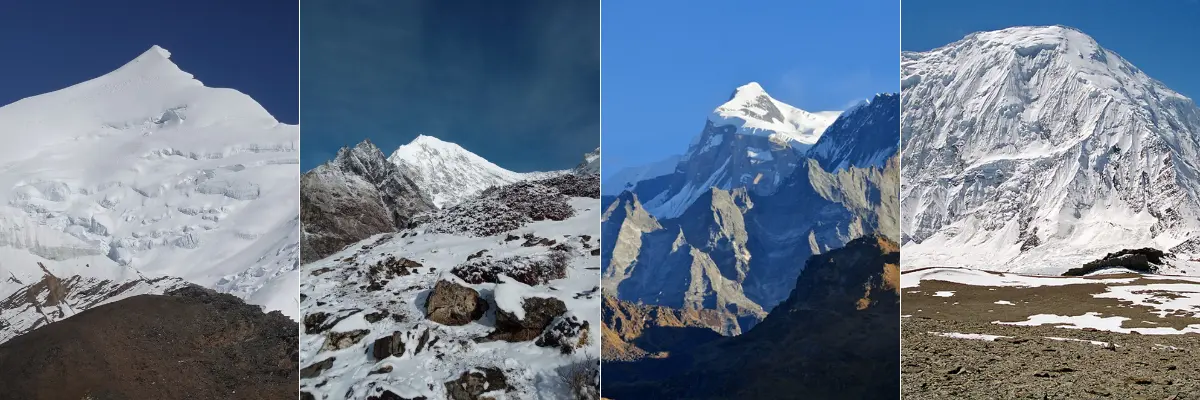
If your aim is to scale the mighty Everest, having climbed at least one of the 7000m peaks in Nepal isn’t just a recommendation, it’s a rule. As of 2025, the government of Nepal has made it compulsory that the mountaineer should summit a 7000 meter peak.
But how many 7000 meter peaks in the world exist? There are more than 170 known 7000-meter peaks globally, and Nepal has 72 of them, including fourteen 8000 meter peaks.
With 72 of the peaks between 7000-8000 meters (about 23,000-26,000ft), the Nepalese Himalayas have been the ultimate training ground for those looking to climb Everest.
These mountains offer the perfect blend of challenge and training to prepare for Everest. For those looking to experience a glimpse of what it feels like to climb Everest, these 7000ers prepare them.
They offer a high-altitude expedition experience, along with all the bizarre and beautiful sights, and a feeling of achievement in itself.
Why are the new rules for climbing Everest being implemented?
This move has been made based on previous mishaps that occurred in the mountaineering sector. With the new rules, the Nepalese government aims to make mountaineering more formal and safer.
Furthermore, this rule ensures that every prospective Everest climber is fully prepared for all the extreme challenges of the world’s highest mountain.
Not only that, but with new regulations, the Nepal government aims to limit the number of mountaineers while preserving the beauty of magnificent Everest, and keeping it clean. Everest trash is a big concern. So, these rules aim to address this issue too.
Because of these new Everest climbing rules, this has brought nothing but increased respect for Everest in the mountaineering community.
No Everest Without a 7000er
Climbing Mount Everest (8848.86m/29,032ft) isn’t just a dream for many; it’s an achievement achieved through proper preparation, practice, and patience.
However, due to growing concerns over inexperienced climbers attempting the perilous ascent and causing traffic congestion around Hillary Step, overcrowding, and tragic accidents, the Nepalese government took action. It made it compulsory to have summited one of the 7000m peaks in Nepal before granting an Everest climbing permit.
Previously, climbing Everest was often a matter of being able to afford the fee. This created a misconception that the Sherpa would drag them to the summit. Due to this, even the climber with no prior high-altitude mountaineering experience attempted the climb.
So, no Everest without a 7000er experience seems to be genius. These climbs test your physical endurance and mental toughness. You get a rough idea of your capacity.
These 7000m peaks in Nepal allow climbers to have technical skills while climbing, adapt to extreme altitude and cold, and all the blizzards in the death zone.
Climbing these 7000m peaks also teaches you how to use technical climbing gear, pace correctly, manage food and hydration, and dress in appropriate layers. Dressing appropriately is crucial for the ever-changing high-altitude Everest weather.
More importantly, this helps to reduce the risk of Acute Mountain Sickness (AMS), High Altitude Pulmonary Edema (HAPE), and High Altitude Cerebral Edema (HACE) during your Everest summit push.
Moreover, the experience of moving between camps, carrying a backpack, and being part of an expedition team is immense. This will definitely boost your confidence, familiarity with the expedition, and a deeper understanding of the high-altitude climb, making your Everest ascent safer and smarter.
Here is a list of the 6 Best 7000m peaks in Nepal to prepare for the Everest Ascent.
Baruntse/Barun Tse (7129m/23,389ft)
Located in the Khumbu region, Baruntse is a stunning and symmetrical peak. Lying between Everest and Makalu, Baruntse’s relatively straightforward route and manageable technical sections make it the easiest 7000m peak in Nepal.
It is a popular choice for climbers looking for a challenging yet manageable peak in the Khumbu region. A perfect stepping stone to an 8000 meter expedition.

Altitude: 7,129 meters (23,390ft).
Location: Situated between the Hinku and Barun glaciers, close to Makalu.
Climbing Grade: AD+ on the Alpine Grading system, indicating a semi-technical climb.
Best Season: Spring (April-May) and autumn (October-November).
Total No. of Days: A Baruntse expedition typically takes around 31 days.
Permits: Requires a Baruntse Peak climbing permit issued by Nepal Mountaineering Association (NMA), Khumbu Pasang Lhamu Rural Municipality Entry permit, and Sagarmatha National Park Entry Permit
Climber’s Experience Level: Intermediate to advanced, suitable for those with previous experience on 6000-meter peaks.
Why It’s Great for Everest Prep: The ascent of Baruntse offers an excellent high-altitude experience, involving navigation of glaciers and steep sections that mirror some of the challenges encountered on Everest. The spectacular views of Everest, Lhotse, and Makalu offer a huge psychological boost.
Bonus: Many expeditions combine the climb of Baruntse with an ascent of Mera Peak (6,476 meters) for enhanced acclimatization.
Accommodation: Until the Makalu Base Camp, the teahouse accommodation is provided, while the climb itself involves camping.
How these climbs increase chances of a successful Everest summit: Successfully summiting Baruntse demonstrates the ability to perform well at high altitude and handle the technical aspects of a major Himalayan climb, significantly boosting confidence and preparedness for Everest.
Himlung Himal (7126m/23,379ft)
Situated within the Manaslu Conservation Area near the Tibetan border, Himlung Himal lies in a remote region northeast of the Annapurna range, specifically in the Manang district of the Manaslu region.
Himlung is often regarded as one of the safest, most affordable, and most accessible 7000m peaks in Nepal. Its relatively straightforward ascent and high success rate make it one of the best choices for climbers looking to gain their first 7000 meter experience.
As the route to the Himlung Himal Base Camp passes through Nar Phu Valley, you get to explore these restricted, authentic Tibetan villages.

Region: Annapurna, near the border of Nepal and Tibet.
Altitude: 7,126 meters (23,379ft).
Location: Situated between the majestic Manaslu and Annapurna massifs.
Climbing Grade: It is graded PD+ to AD, fitness level 4, according to the Alpine Grading system, considered a gradual and less technical climb.
Best Season: Autumn (September-November) and Spring (March-May).
Total No. of Days: Typically lasts around 27 to 29 days, including trekking and climbing.
Permits: Requires Himlung Himal Climbing Permit, Annapurna Conservation Area Permit (ACAP), and Restricted Area Permit (RAP) for trekking through Nar and Phu Valley.
Climber’s Experience Level: Basic mountaineering experience is sufficient, making it ideal for practicing the physical aspects of high-altitude ascents.
Why It’s Great for Everest Prep: It serves as an ideal training peak, allowing climbers to test their skills and acclimatize in a less crowded and technically demanding environment before attempting an 8000-meter giant.
Accommodation: During the trek, you’ll be staying in locally-run teahouses, followed by tented camps during the climbing phase.
How these climbs increase chances of a successful Everest summit: The experience gained on Himlung, from managing gear at altitude to understanding your body’s response to thin air, helps boost confidence and prepare for Everest.
Putha Hiunchuli (7246m/23,773ft)
Also known as Dhaulagiri VII, Putha Hiunchuli is located in the Dhaulagiri range of western Nepal. It is known for being less technical than other 7000m peaks in Nepal, making it a popular choice among climbers seeking a high-altitude adventure without unnecessary risks.

Altitude: 7,246 meters (23,773ft).
Location: Part of the Dhaulagiri Mountain range.
Climbing Grade: The standard route is considered non-technical, with Alpine Grading of AD+/4 (Alpine/Fitness grading).
Best Season: The best times to climb are during the pre-monsoon (April to June) and post-monsoon (September to November) seasons.
Total No. of Days: Expeditions to Putha Hiunchuli typically last around 30 to 35 days.
Permits: Putha Hiunchuli Climbing Permit, RAP for Dolpo, and Shey Phoksundo National Park Entry Permit
Climber’s Experience Level: Suitable for strong trekkers and climbers aiming for their first extreme-altitude expedition. Previous experience at 6,000 meters is highly recommended.
Why It’s Great for Everest Prep: The ascent of Putha Hiunchuli provides invaluable experience in dealing with the challenges of a remote, high-altitude expedition, including logistics and self-sufficiency. It’s a great way to test your physical and mental endurance over a prolonged period.
Accommodation: The expedition involves camping throughout, especially in the remote and wild landscapes of Dolpo.
How these climbs increase chances of a successful Everest summit: The non-technical nature of the Putha Hiunchuli expedition, coupled with its high altitude, provides an excellent platform for building the endurance and acclimatization necessary for 8000-meter peaks in Nepal.
Tilicho Peak (7134m/23,406ft)
Just above the turquoise Tilicho Lake, the highest glacial lake in the world, Tilicho Peak is a challenging and technically demanding climb in the Annapurna region.
If you’re looking to test your mountaineering skills before attempting Everest, it might be just the peak for you.
If not on an expedition, anyone on the Tilicho Lake Trek or the Annapurna Circuit Trek, travellers can enjoy the grandeur of Tilicho Peak.

Region: Annapurna Region
Altitude: 7,134 meters (23,405ft).
Location: Situated in the Manang District, near the border with Tibet.
Climbing Grade: Graded at a D+ difficulty level, it involves a combination of rock and ice climbs and navigating glaciers.
Best Season: The best climbing seasons are autumn (September to mid-November).
Total No. of Days: A Tilicho Peak expedition typically can take around 25 to 30 days.
Permits: You will require a Tilicho Peak Climbing Permit from NMA and an ACAP.
Climber’s Experience Level: This is a technical climb that requires prior mountaineering experience and is suitable for advanced climbers.
Why It’s Great for Everest Prep: The technical challenges of Tilicho Peak, including steep mixed rock and ice sections, provide excellent training for the more difficult parts of the Everest climb, such as the Lhotse Face.
Accommodation: During the trek to the base camp of Tilicho Lake, there is teahouse accommodation available, while the climb is a fully camping expedition.
How these climbs increase chances of a successful Everest summit: Having crossed the technical part and summited Tilicho Peak, it offers experience and confidence for the challenges of Everest’s upper mountain. Prolonged exposure to high altitudes is also a significant benefit.
Langtang Lirung (7,234m/23,734ft)
Highest peak in the Langtang Himal range, Langtang Lirung is one of the most formidable and technically challenging climbs among the 7000m peaks in Nepal. This pyramid-shaped peak sits just over the Langtang Valley.
With a short Langtang Valley Trek, starting from Syabrubesi and ending at Kyanjin Gompa, climbers can attempt this challenging yet rewarding peak.
While it is a magnificent peak, it has a history of being a dangerous mountain with a high rate of unsuccessful attempts and fatalities. It’s due to frequent and unexpected avalanches.

Region: Langtang Region.
Altitude: 7,234 meters (23,734ft).
Location: Situated in the Langtang Himal subrange, north of Kathmandu and near the Tibetan border.
Climbing Grade: Graded as Mountaineering V on the Alpine grading system, technically difficult. It requires a high level of technical skill to navigate steep snow and ice sections, crevasses, and a large south face.
Best Season: Spring (March-May) and Autumn (September-November) offer the most stable weather conditions.
Total No. of Days: Langtang Lirung typically lasts around 30-38 days.
Permits: Langtang Lirung Climbing Permit from NMA and Langtang National Park Entry Permit
Climber’s Experience Level: Advanced to expert. This peak is only for climbers with significant prior high-altitude and technical mountaineering experience.
Why It’s Great for Everest Prep: The technical difficulty of Langtang Lirung tests climbers’ skills and readiness for the most challenging sections of an 8000-meter peak. Successfully tackling its complex routes builds immense confidence and experience.
Accommodation: The trek to base camp is in teahouses, after which the climb is a full camping expedition.
How these climbs increase chances of a successful Everest summit: Conquering the technical challenges and dangers of Langtang Lirung proves a climber’s high-altitude expertise, serving as strong preparation for the Everest summit.
Annapurna IV (7,525m/24,688ft)
As the fourth-highest peak in the Annapurna massif, Annapurna VI is a challenging yet technical climb compared to other peaks in the range.
Though considered less technical and dangerous than other peaks in the Annapurna range, it is a rarely climbed peak. It offers a true experience of a high-altitude expedition.
The Annapurna IV is located in Humde, Manang district of Nepal. It is accessible from Sabje Kholagaon, en route to Manang from Humde on the Annapurna Circuit Trek.

Region: Annapurna Region
Altitude: 7,525 meters (24,688ft).
Location: Situated between Annapurna II and Annapurna III.
Climbing Grade: TD+/4 (Very Advanced), indicating a technically demanding climb.
Best Season: The primary climbing season is autumn (September to November).
Total No. of Days: An expedition to Annapurna IV typically takes around 35-40 days.
Permits: You will require an Annapurna IV Climbing Permit from NMA and an ACAP.
Climber’s Experience Level: This expedition is for advanced climbers with prior high-altitude experience.
Why It’s Great for Everest Prep: The sheer altitude of Annapurna IV provides an excellent opportunity to test your body’s response to extreme heights. The technical challenges, including a 65-70° incline on certain sections, prepare you for the steepness of Everest’s final ascent.
Accommodation: The expedition involves a combination of teahouse accommodation, trekking to a base camp, and then establishing several high camps.
How these climbs increase chances of a successful Everest summit: A successful ascent of Annapurna IV showcases your ability in high-altitude mountaineering, from technical climbing to endurance and acclimatization, further giving confidence for a successful Everest summit.
Tips for Climbing 7000m Peaks Before Everest
Venturing on one of the 7000m peaks in Nepal is a thrilling and rewarding action that should be approached with the same level of respect and preparation as an Everest expedition.
So, here are some smart tips that you can follow for climbing 7000m peaks before Everest.
Treat It Like Everest
From your training days to your gear selection and everything, consider a 7000m climb the same as Everest, with the same diligence and focus.
Train For Endurance
Rather than just strength, train for endurance. Everest is a long journey, taking almost two months. Focus on building cardiovascular. You can do hiking with a weighted pack, running, and cycling.
Understand and Adapt to High Altitude
It’s essential to understand and adapt to altitude when planning an expedition. You need to learn to recognize the symptoms and remedies for altitude sickness. If you show any sign of altitude sickness or any altitude-related sickness, immediately communicate with your guides and teammates.
Select the Right Gear
Your gear is your lifeline. Ensure you obtain only high-quality, expedition-grade equipment, and have the necessary knowledge and practice using this gear before you leave home. You can also buy or rent gear in Kathmandu or Pokhara.
Test Your Nutrition and Hydration Strategy
Not every high-energy food suits everyone. We suggest trying different high-energy foods and hydration systems during your training to find what works best for you.
Learn Basic Mountaineering Skills
If you’re not already familiar with crevasse crossings, ice climbing, using ropes, an ice axe, a harness, a jumar, and navigation, we suggest you take training. These skills are invaluable on any high-altitude peak
Attempt Without Supplemental Oxygen
To know your body’s ability to acclimatize, consider climbing without supplemental oxygen. At the same time, carrying it as backup is essential.
Choose the Right Team and Reliable Local Operator
The experience and expertise of your guides and Sherpa for your expedition are the most important aspect in mountaineering. So, choose your expedition operator and ensure that the climbing guide they provide has sufficient experience. This ensures your safety and success.
Get High-Altitude Mountaineering Insurance
Do not forget to get good insurance that covers high-altitude mountaineering, emergency helicopter evacuation, and all medical bills.
Do Rotations Like You’re on Everest
As climbing Everest takes several days, including several days of climbing to a higher camp and then returning to a lower camp to sleep. This allows the body to acclimatize properly. We recommend doing the same when attempting 7000m peaks in Nepal.
Take Reports of Your Expedition
Keep a journal of your daily progress, how you’re feeling, what you’re eating and drinking, and any challenges you face. It’s normal that you’ll forget minor details later. At that time, this journal is going to be crucial to reflect on your strong and weak points when preparing for the Everest attempt.
Eat and Drink Adequately
Maintain a high-calorie diet and drink plenty of fluids to stay energized and hydrated at altitude.
Learn from the Sherpas, Not Just the Guides. The Sherpa climbers possess a wealth of knowledge and experience. Be observant, ask questions, and learn from their expertise.
Learn a Few Nepali Phrases
Although all climbing guides and Sherpas can speak English, learning some Nepali phrases will significantly elevate your climbing experience. You can learn phrases like ‘Namaste’ (Hello), ‘Dhanyebad’ (Thank you), ‘Tapai lai kasto cha?’ (How are you?), ‘Malai thikai cha’ (I’m fine), Thakai lagyo (I’m tired), etc.
Does Himalayan Masters Manage It?
Yes, Himalayan Masters organizes customized expeditions to all major 7000m peaks in Nepal. We provide a range of services, from fully guided expeditions to logistical support for independent teams.
Himalayan Masters provides a team of highly experienced Sherpa guides, a cook, and support staff for the expedition. From arranging permits to selecting high-quality mountaineering gear, we will assist you. We are committed to your success and safety.
Where and How to Book for Climbing These Peaks
Whether it’s a 7000m peak or any other peak, booking an expedition in Nepal is relatively simple. The most common and recommended way is to book through a registered and reputable local trekking and expedition agency in Nepal.
Agencies, such as Himalayan Masters, will handle all the necessary documentation and logistics, including trekking permits, climbing permits from the NMA, transportation, accommodation, guides and staff, and food and supplies.
However, it is essential that you do your comprehensive research beforehand. Ask all about all the costs and services included in the package. We recommended contacting at least 3 to 4 agencies for the best price and services.
Plan and train ahead, at least 3 months before your departure.
Summary of Best Peaks for Everest Preparation
Here’s a summary of the top 6 best peaks for Everest preparation.
| Peak | Altitude | Difficulty | Best For |
| Baruntse | 7,129m/23,390ft | Straightforward with some technical sections | Gaining solid high-altitude experience and glacier travel skills. |
| Himlung Himal | 7,126m/23,379ft | Accessible & Less Technical | First 7000m experience, building confidence. |
| Putha Hiunchuli | 7,246m/23,773ft | Non-technical but remote and long | Building endurance and experience in a remote expedition setting. |
| Tilicho Peak | 7,134m/23,405ft | Technical and Challenging | Honing technical rock and ice climbing skills at altitude. |
| Langtang Lirung | 7,234m/23,734ft | Highly Technical and Dangerous | A true test of technical skills for very experienced climbers. |
| Annapurna IV | 7,525m/24,688ft | Very Advanced and Technical | Testing your body at extreme altitudes and on steep terrain. |
Loading...
related post


Author

Samyog Shrestha is a travel enthusiast and an excellent content writer at Himalayan Masters, the face behind the amazing content who likes to learn from experience.


Leave Your Comment