





 October 15, 2026
Everything About the Manaslu Base Camp
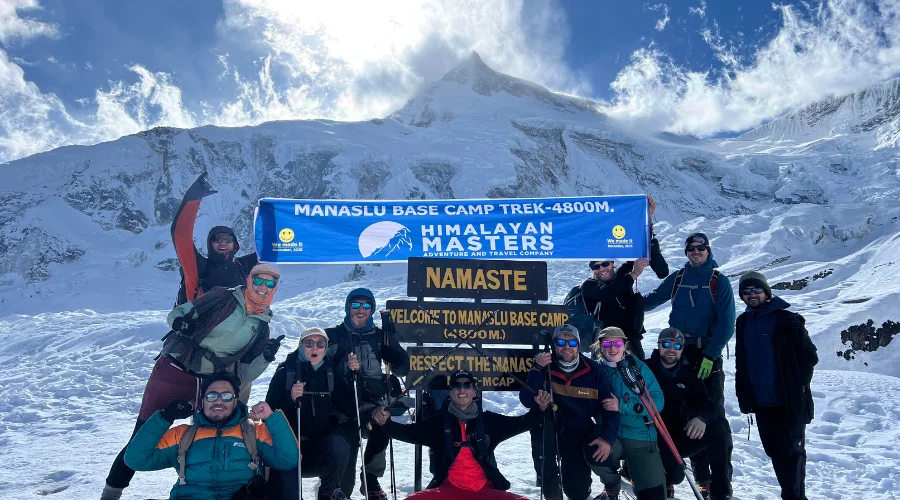
Manaslu is the eighth-tallest mountain in the world. Manaslu Base Camp is the main viewpoint and staging area located at the foot of Mount Manaslu. The base camp is situated at an elevation of 4,800 meters (15,748 ft) in the remote Gorkha region of north central Nepal.
Geographically, it lies close to the border with Tibet and within the Manaslu Conservation Area.
Manaslu Base Camp serves as the starting point for climbers attempting to reach the summit of Mount Manaslu at 8,163 meters (26,781 ft) in the Mansiri Himal Range of the Himalayas.
Not just for climbers, it is also a rewarding destination for trekkers who want to experience the mountain up close without undertaking a technical climb.
From the base camp, trekkers can enjoy magnificent views of Manaslu, Manaslu Glacier, expedition camps, icefalls, and surrounding Himalayan peaks.
The Manaslu Base Camp is mostly treated as a side trip when on the Manaslu Circuit Trek. However, the trek, which merely focuses on Manaslu Base Camp, can also be done.
The journey to the base camp starting from Machha Khola passes through traditional villages, alpine landscape, and high mountain terrain that showcase the region’s natural and cultural beauty.
Manaslu Base Camp is more than just a camp because it’s a side hike that most trekkers choose to challenge themselves.
What is Manaslu Base Camp Elevation?
It lies 4800 meters (15,748 ft) above sea level. Manaslu Base Camp is at a significantly high elevation, requiring acclimatisation. The process of getting to the base of the 8th-tallest mountain in the world is step-wise. No trekker gains this altitude in a very short period, unlike climbers.
It lies directly below the massive south face of Mount Manaslu, and the environment is dominated by rocks, moraines, ice formations, and panoramic Himalayan views.
The exact elevation of the base camp keeps fluctuating due to different GPS devices and mapping systems. However, the elevation generally remains close to 4,800 meters.
Manaslu Base Camp Latest 2026 Coordinates
Knowing the exact coordinates can be useful for trip planning, emergency communication, and tracking your progress during the trek. However, the trail to Base Camp is well established, so most trekkers follow the marked route with the assistance of local guides rather than relying solely on GPS navigation.
The exact coordinates of Manaslu Base Camp are 28.602103° N, 84.620948° E (or decimal coordinates 28.5494° N, 84.5619° E).
Altitude Profile from Kathmandu
The journey from Kathmandu to the base camp of Manaslu involves a gradual but significant increase in elevation.
| Location | Elevation (In meter/feet) |
| Kathmandu | 1,400 meters (4,600 feet) |
| Machha Khola | 869 meters (2851 feet) |
| Jagat | 1340 meters (4396 feet) |
| Deng | 1860 meters (6102 feet) |
| Namrung | 2630 meters (8628 feet) |
| Lho | 3180 meters (10,433 feet) |
| Samagaon | 3530 meters (11581 ft) |
| Manaslu Base Camp | 4800 meters 15748 ft |
| Overnight at Samagaon | 3530 meters (11581 ft) |
Altitude Gain Breakdown
The altitude gain becomes more noticeable after Namrung. Therefore, proper acclimatisation is essential, especially around Samagaon, where most trekkers spend extra nights before ascending higher.
The following chart shows the daily altitude gain.

Manaslu Base Camp Trek Map
Following is the Map of the Manaslu Circuit Trek, Manaslu Base Camp, and Manaslu Tsum Valley.

The route for the Manaslu base camp trekking map is Maccha Khola- Jagat- Deng- Namrung- Sama Gaon- Manaslu Base Camp
Best time for Manaslu Base Trek
Manaslu Base Camp trek is only doable in a few specific months of the year, and timing makes a real difference here. The trail is narrow, often uneven, and in many sections covered with loose rocks or deep snow.
Once you cross 4,000 meters, the air gets thinner, the ground gets colder, and every step feels heavier.
In winter, heavy snowfall can block paths and hide trail markers. In monsoons, rain makes the route slippery and increases the risk of landslides. That’s why choosing the right season is very important for safety and clear navigation.
The trail opens up beautifully during the right window. Snow starts melting, the path becomes more stable, and the mountain views get sharper and clearer. You can walk with better balance, better visibility, and far fewer risks.
The best time for the Manaslu Base Camp trek is spring (March to May) and autumn (September to November). These seasons bring stable weather, clearer skies, and safer trekking conditions, making the journey smoother and far more rewarding.
What’s the weather like at Manaslu Base Camp?
The Manaslu Base Camp Weather changes significantly throughout the year due to its height. Even on the same day, the weather can change quickly. The sunny and clear days can change into cloudy and stormy.
During spring and autumn, daytime temperatures usually range between 5°C and 12°C, while nighttime temperatures often fall below freezing. Winter is much colder with heavy snowfall and temperatures that can drop below -15°C.
How to Reach Manaslu Base Camp?
Reaching Manaslu Base Camp involves multiple days of journey through winding roads, Tibetan settlements and high-altitude landscape. Before starting the trek, a solid plan, permits, a licensed guide, and proper preparation are necessary. Let’s break this trip into three stages.
Drive from Kathmandu to Machha Khola
The journey starts with a drive to Machha Khola from Kathmandu, covering 160 kilometres (99 miles). Trekkers have two options for transportation to Machha Khola. They can either book a private vehicle, which comes with freedom and comfort but is also a bit expensive or book public transport, which is budget-friendly, but comfort and freedom can be compromised. The drive takes 6-7 hours, depending on the road conditions.
As trekkers begin their journey, the busy streets of Kathmandu slowly fade behind, giving way to winding mountain roads, peaceful villages, flowing waterfalls, green hills, and warm smiles from locals along the way. With every turn, the scenery changes, offering a new glimpse of Nepal’s raw and beautiful landscapes.
We end our journey on the vehicle and start the trek after staying overnight at Machha Khola.
Trek From Machha Khola to Samagaon
From Machha Khola the real trek starts with full energy. It takes about 6 to 7 days to reach Samagaon. The total distance is around 65 to 70 km. Each day you walk 6 to 8 hours through ups and downs and river valleys.
On the lower trail you pass villages like Jagat Deng and Namrung. The path goes through forests rivers and waterfalls. As you go higher toward Lho the air gets colder and the views open up with snow peaks and strong Tibetan culture.
Reaching samagon after 6-7days of walking feels amazing but exhausting. You rest, refuel and recharge here to conquer another challenge.

Samagaon, One of the Key Villages
Trek from Samagaon to Manaslu Base Camp
The final climb to Manaslu Base Camp is short but tough. The round trip is about 12-14 km and takes 7-9 hours. Trekkers climb from Samagaon at 3,530m to 4,800m, gaining over 1,270m in one day.
Reaching base camp feels rewarding. After enjoying the views, trekkers return the same way, taking around 5 hours up and 3 hours down.
What Is the Trail Condition from Samagaon to Manaslu Base Camp?
The trail starts from the vibrant village of Samagaon and crosses the Budhi Gandaki River flowing from the glacier. The Manaslu Base Camp trek route begins on a gradual path above Samagaon.
The first 15-20 minutes include walking in easy terrain. Trekkers walk across open grazing fields and stone steps trail from where they see the beautiful Birendra Lake. The higher you go, the more beautiful the scenery gets. Birendra Lake is a few meters away from the Manaslu Base Camp trail.

As you gain altitude, the trail becomes steeper and rougher. Large rocks, loose stones, glacial moraine, and uneven ground are common along the base camp route. The trail is not technical and does not require mountain climbing gear during normal trekking seasons.
However, the high altitude makes the hike more demanding than the terrain itself. The terrain is somewhat challenging with constant uphill, loose rocks and steep sections. The walk should be steady and requires good pace control due to thinner air.
Trekkers gain more than 1,200 meters (3937 ft) of elevation from Samagaon to the base camp, so ascents can feel slow and tiring.
With increasing altitude, the landscape becomes more barren and dramatic, with wide glacier and lake views and towering peaks in the distance. It is a demanding section, but the raw Himalayan scenery keeps you motivated until you reach Base Camp.
The Adventure of Reaching Manaslu Base Camp from Samagaon
The morning starts with tea and breakfast while enjoying the views of the mountains. Then you return to your room to pack the essentials for the day. There is no need to carry extra gear since you will return to the same teahouse in the evening.
You begin trekking at around 8 AM from Samagaon. The first section of the trail feels quite gentle as you cross open yak pastures and small patches of forest.
At this stage of the hike, your energy is high. You are having fun and taking in the beautiful surroundings.
However, as the altitude increases, your pace naturally slows, and your energy begins to drop. You realise the air is becoming thinner and your breathing gradually gets heavier.
The trail becomes rougher, but the scenery becomes even more impressive. After walking for 2-3 hours, you stop for 1 hour for lunch on the mountainside, sitting on rocks, soil, or in the traditional cross-legged style while chatting and sharing jokes with friends.
After a short break, you continue toward the base camp with frequent rests. Pace is very important here. The high altitude and constant uphill climb tire your lungs, legs, and entire body. Therefore, maintaining a slow pace and taking regular breaks is essential.
The final section is the most challenging part of the Manaslu Base Camp route. It involves a continuous uphill climb above 4,500 meters when your body is already tired.
This is where mentality matters. Many people think about turning back, yet a little extra effort is often enough to reach the base camp at 4,800 meters.
Reaching base camp feels slightly emotional. You have put in so much effort and overcome many challenges to get there. After a 15-20 minute break to celebrate, you trace back on the same trail very carefully, reaching Samagaon during dusk.
How hard is Manaslu Base Camp?
The trek to the base camp of Manaslu is challenging. It includes longer duration walking at high altitude, making it hard. The trail climbs above 4,800 meters, so altitude sickness is always a concern throughout this trip.
The path is steep, rocky and sometimes snowy. There are no villages or teahouses on the way, so you need to be fully prepared.
Acclimatisation, pace control, and altitude sickness require attention. It is doable for fit trekkers who prepare well, but it is not an easy walk.
What to Explore at Manaslu Base Camp?
Once you reach Manaslu Base Camp, the first thing you do is celebrate the achievement with your friends. After that, you do what you came here for.
Observe the Mountain Views
The biggest attraction at base camp is the incredible mountain view. You will see the huge mountain Manaslu dominating the landscape with its massive snow-covered face. You can also see iconic mountains like Himalchuli, Ngadi Chuli, and the Ganesh Himal range in the distance.
Manaslu Glacier
The Manaslu Glacier lies below the mountain and is one of the most fascinating features of the area. The glacier from which rivers and lakes originate and helps maintain the global environment.
From the base camp, you can observe large ice fields, deep crevasses, and impressive ice formations shaped by wind and temperature changes. During spring, the glacier often looks bright white with fresh snow. In autumn, more of the blue ice and rocky moraine become visible.
Expedition Camps
During the spring and autumn climbing seasons, you may see expedition camps at Manaslu Base Camp. Colourful tents are set up by climbers, guides, and support staff preparing for summit attempts.
Trekkers can observe these tents and activities and get a close look at how Himalayan expeditions are organised. Seeing a real climbing expedition in action adds another exciting dimension to the base camp experience.
Loading...
Author

Shobita is an SEO expert and a very experienced Content writer. She has been working with Himalayan Masters for over two years and has contributed to us with excellent interactive content and images.


Leave Your Comment