




Top 10 Mountain Peaks in Nepal for Beginner Climbers
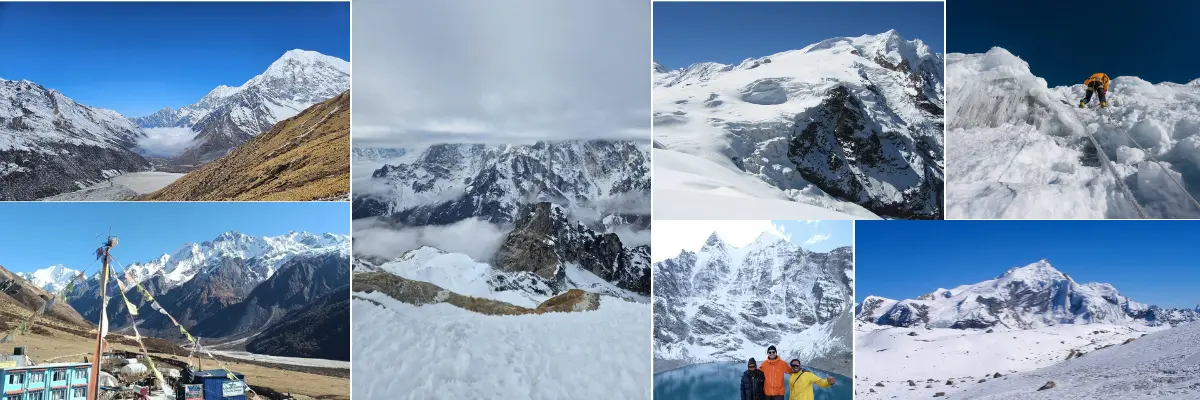
If you are wondering how many mountain peaks there are in Nepal, well, there are hundreds of peaks. There are over 1,300 mountain peaks in Nepal above 5,000 meters, with more than 75 eight-thousanders.
Nepal is home to the mighty Mount Everest, known as Sagarmatha in the Nepali language, the highest mountain in the world. Apart from Mount Everest, 7 of the top 10 highest peaks in the Himalayas are located in Nepal. This makes Nepal the ultimate destination for expeditions and trekking.
While Everest expedition draws most of the attraction, Nepal also offers expeditions perfect for beginners. Those who are eager enough, these mountain peaks in Nepal are organized from easy to mid and difficult summits.
Peaks just above 5,000 meters are considered for acclimatization, build confidence, and prepare for more ambitious peaks later.
Overview of Mountain Peaks in Nepal
The Nepal Himalayas stretch for approximately 800 km (500 miles) from east to west. This challenging yet breathtakingly beautiful structure of rock and ice has captivated adventurers globally for centuries.
Out of all the mountains in Nepal, only 414 of them have been officially open for mountaineering.
The history of mountaineering in Nepal dates back to the early 20th century, the “Golden Decade of Climbing”. During this era, the first successful ascents of many major peaks, including Annapurna I in 1950 and Mount Everest by Sir Edmund Hillary and Tenzing Norgay in 1953, were made.
This opened a vast array of adventures in the Himalayas. Thereafter, countless climbers have been heading for Himalayan expeditions.
While Nepal is home to some of the biggest mountain peaks, it also boasts a number of smaller trekking and climbing peaks. These trekking peaks, typically between 5,500 and 6,5000 meters, allow mountaineers to get habituated to the trail, terrain, and acclimate.
These peaks offer a genuine Himalayan climbing experience, complete with scenic and cultural experiences, without the extreme technical challenges.
So, which are the top 10 mountain peaks in Nepal for beginner climbers? Let’s categorize them as focused on safety, simplicity, and achievable yet unforgettable Himalayan climbs.
1. Yala Peak
It is one of the easiest and most accessible trekking peaks in Nepal, making it a perfect first Himalayan summit for beginners. Unlike the technical challenges of the highest mountain peaks in Nepal, Yala is a non-technical trekking peak that requires minimal equipment.
Yala Peak, situated in the beautiful Langtang region, lies north of Kathmandu. It offers some of the great views across the Langtang region and the Tibetan border.

Facts About Yala Peak
Region: Langtang region.
Duration (from Kathmandu): 10-12 days.
Elevation: 5,520 meters/18,110 ft.
Distance (from Kathmandu): The trek to Yala Peak starts with a scenic drive from Kathmandu to Syabrubesi, 6-7 hours, covering around 120 km (75 miles). Then the trek towards Kyanjin Gompa begins, which is approximately 32 km (20 miles) long. The final push to the peak is approximately 13 km (8 miles).
Difficulty: Though graded easy, you don’t need technical skill; having prior mountaineering experience and a good level of physical fitness is recommended.
Highlights: Tibetan-influenced culture, Tamang villages, and panoramic views of Shishapangma (8,013 m), the highest mountain in Tibet. Views of Langtang Lirung, Dorje Lakpa, and other peaks in the Langtang Himal range.
Altitude Risk: As it is a high-altitude trip, there is a risk of altitude sickness. Get enough rest and acclimatize properly.
Climbing and Other Necessary Permits: You don’t need a climbing permit for Yala Peak. However, you will need a Langtang National Park entry permit.
Yala Peak Base Camp to Summit: From Yala Peak Low Camp (4,800 m/15,748 ft), the summit distance is approximately 9 km (5.6 miles), which takes around 4-5 hours. Ans takes about 2 hours to descend.
Nearby Village: It’s a traditional trek via several Ghodatabela and Tamang villages, including Langtang Village, and Kyanjin Gompa.
2. Naya Kanga Peak
Also called Ganja La Chuli, Naya Kanga is one of the most remote yet beginner-friendly mountain peaks in Nepal. This peak lies directly above the Langtang Valley and is just 55 km (34 miles) northeast of Kathmandu.
Although you don’t need any steep ice climbing, this peak is graded as somewhat difficult. Trekkers need to have good physical as well as mental fitness and endurance.
Facts About Naya Kanga Peak
Region: Langtang Region, inside Langtang National Park.
Duration (from Kathmandu): 14-16 days.
Elevation: 5,8440 meters/19,168 ft.
Distance (from Kathmandu): First, you need to drive up to Syabrubesi. Then, start trekking up to Kyanjin Gompa and then to the Naya Kanga Base Camp, which is approximately 45 km (28 miles) away.
Difficulty: It is graded moderately difficult, Peu Difficile (PD+). The climb includes glacier travel, steep snow slopes, and fixed-rope sections.
Highlights: This trek is a perfect blend of cultural and natural beauty. Trekkers can walk through lush rhododendron and pine forests, visit Tamang villages, and explore Buddhist monasteries, and may spot rare wildlife such as the red panda and musk deer. From the summit, you can see Himalayan peaks such as Shishapangma, Langtang Lirung, Pemthang Ri, Ganesh Himal, and Yala Peak.
Altitude Risk: As the climb reaches over 5,800 meters, there is a high chance of getting altitude sickness. For acclimatization, you can hike up Tserko Ri or/and Kyanjin Ri, and include a rest day at Kyanjin Gompa.
Climbing and Other Necessary Permits: You will require a climbing permit for Naya Kanga issued by NMA and a Langtang National Park entry permit. The price of a climbing permit varies according to season. It costs NPR 4,000 in spring and NPR 2,000 in autumn; it is cheaper in summer/winter.
Naya Kanga Base Camp to Summit: It takes approximately 4-6 hours to reach Naya Kanga High Camp (5,000 m/16,404 ft) from Naya Kanga Base Camp (4,400 m/14,436 ft), gaining approximately 650 meters in elevation. Additionally, the ascent from high camp to summit can take 8-10 hours.
Nearby Village: It is a culturally rich village, influenced by Tamang and Tibetan traditions, famous for its yak cheese factories. The journey passes through villages like Langtang Village and Syabrubesi.

3. Pokalde Peak
Located just 12 km (7.5 miles) southwest of Mount Everest in the Khumbu region, Pokalde Peak is one of the most excellent mountain peaks in Nepal for beginner climbers. Also known as Dolma Ri in the local language, it is often considered one of the easiest climbing mountains in the Everest region.
It is a low-elevation trekking peak offering some of the world’s great views of the highest mountains. From its summit, trekkers can enjoy panoramic views of peaks such as Makalu, Ama Dablam, and Pumori.
Facts About Pokalde Peak
Region: Khumbu region, part of Sagarmatha National Park.
Duration (from Kathmandu): The trek and climb typically take around 17-20 days, including the duration.
Elevation: 5,806 meters/19,049 ft.
Distance (from Kathmandu): This trip starts with a flight from Kathmandu to Lukla. Then the trek to the Pokalde peak starts, which is approximately 163 km (101 miles). The vertical elevation from Pokalde Base Camp to Peak is nearly 650 meters (2,133 ft).
Difficulty: It is considered an easy trekking peak with minimal technical difficulty. A person with a moderate level of fitness can successfully reach the summit.
Highlights: The trek to Pokalde Peak follows the classic Everest Base Camp trail. Trekkers can enjoy diverse landscapes and the views of snow-capped mountain peaks in Nepal. Its summit offers close-up views of Mount Everest, Makalu, and Ama Dablam.
Altitude Risk: High chances of altitude sickness, requires proper acclimatization, and should include rest days in your itinerary. Itineraries usually include an acclimatization day in Namche Bazaar.
Climbing and Other Necessary Permits: For Pokalde Peak climbing, you will need a climbing permit from Nepal Mountaineering Association (NMA) along with Sagarmatha National Park entry permit and local area permit.
Pokalde High Camp to Summit: First, you need to ascend from Pokalde Base Camp (4,400 m/14,436 ft) to Pokalde High Camp (5,400 m/17,716 ft), then attempt the final push to the summit. From high camp, the summit is a short but challenging 3-5 hours climb.
Nearby Village: Traditional Sherpa villages like Lobuche, Gorakshep, Dingboche, and Tengboche.
4. Island Peak
Imja Tse or Island Peak is one of the most popular trekking mountain peaks in Nepal. Its stunning location in the heart of the Khumbu makes it a great preparation peak for aspiring mountaineers.
Climbing Island Peak introduces exposure to glacier travel, crampons, and basic rope work via a headwall, yet avoids vertical rock climbing.

Facts About Island Peak
Region: Khumbu region, inside Sagarmatha National Park.
Duration (from Kathmandu): About 12-18 days.
Elevation: 6,189 meters/20,305 ft.
Distance (from Kathmandu): After Lukla flight, the trail to Island Peak is approximately 45-50 km (28-31 miles) long.
Difficulty: Island Peak is considered a moderately challenging trekking peak, suitable for beginners with a good level of fitness. Especially the last section includes a steep headwall.
Highlights: From the summit, mountaineers can enjoy a spectacular 360° view of the world’s highest mountain peaks in Nepal. It offers breathtaking views of Lhotse, Nuptse, and Makalu. Along with the view, this journey provides a raw experience of Sherpa culture.
Altitude Risk: Usually, itineraries include acclimatization days in Namche Bazaar, Chhukung, and Dingboche. Summit day starts early to avoid bad weather and
Climbing and Other Necessary Permits: An Island Peak climbing permit from the NMA, a Sagarmatha National Park permit, and Khumbu Pasang Lhamu Rural Municipality Permit are required.
Island Base Camp to Summit: The summit attempt begins from Base Camp (5,080 m/16,667 ft). It is a long and strenuous 10-to 12-hour round trip. Therefore, we recommend starting the ascent as early as possible.
Nearby Village: This journey takes adventurers through famous Sherpa communities in the Khumbu region, providing a rich cultural experience.
5. Lobuche East Peak
Another classic peak in the Everest region, Lobuche East, is considered more technical and challenging than Island Peak. The peak is graded moderately difficult due to its snowy, rocky slopes. However, with proper preparation, the peak remains accessible to beginners.
For those who dare, the peak rewards them with some of the best views of staggering mountains in the Everest region. The route itself is exciting. It follows the classical Everest Base Camp trail. So, the mountaineers/trekkers can witness the magnificence of the Khumbu region.

Facts About Lobuche East Peak
Region: Everest Region.
Duration (from Kathmandu): 15-20 days.
Elevation: 6,119 meters/20,075 ft.
Distance (from Kathmandu): After the Lukla flight from Kathmandu, the distance from Lukla to Lobuche High Camp is approximately 50 km (31 miles).
Difficulty: Although the peak is considered a moderately challenging trekking peak, it is a perfect peak for beginners to prepare and acclimatize, who are aiming to summit Everest.
Highlights: The climb offers incredible views of Everest, Lhotse, Nuptse, Ama Dablam, and Pumori. This journey offers an opportunity to trek up to Everest Base Camp and Kala Patthar.
Altitude Risk: Most of the itinerary includes acclimatization days in Namche Bazaar and Dingboche. However, it is an active rest day, where you will be hiking to Hotel Everest View and Nagarjuna Viewpoint.
Climbing and Other Necessary Permits: A climbing permit from the NMA is mandatory, along with all the other Everest Base Camp Trek permits.
Lobuche High Camp to Summit: The summit attempt starts from Lobuche High Camp 5,400 meters (17,717 ft). It’s about a 5 km (3 miles) short climb but can take nearly 4-5 hours from the crampon point.
Nearby Village: The Lobuche East Peak climbing passes through some of the most famous Sherpa villages, including Lukla, Phakding, Namche Bazaar, and Lobuche village.
6. Chulu West Peak
Situated in the Annapurna region, Chulu West is a challenging yet rewarding peak. Chulu West offers a true Himalayan expedition experience for both seasoned and novice mountaineers.
Chulu West is a challenging trekking peak requiring a good level of fitness and well-preparation. This expedition requires establishing multiple camps, navigating through icy, steep terrains, snowy slopes, and using an ice axe, crampons, and rope.
Facts About Chulu West Peak
Region: Annapurna Region.
Duration (from Kathmandu): 17-20 days.
Elevation: 6,419 meters/21,059 ft.
Distance (from Kathmandu): Chulu West Peak expedition follows classic Annapurna Circuit Trek route. Starting from Kathmandu, the drive route up to Dharapani is 250 km (155 miles). Then the trek up to Ledar is approximately 60 km (37 miles). From Ledar, Chulu West Base Camp (4,900 m/16,072 ft) is around 4-5 km (2.5-3 miles), and the High Camp is another 1.5-2 km (around 1 mile) away.
Difficulty: It’s a technical and strenuous journey. Although you don’t need climbing experience, prior high-altitude trekking experience is highly recommended.
Highlights: From its summit, you can enjoy awe-inspiring views of Annapurna and Dhaulagiri ranges, as well as the vast Tibetan plateau to the north. The trek route is filled with beautiful and culturally rich Gurung and Thakali villages.
Altitude Risk: It is a quite high-altitude trip that requires a well-planned itinerary and acclimatization. The itinerary usually includes a rest day in Manang.
Climbing and Other Necessary Permits: A climbing permit from NMA is mandatory, along with an Annapurna Conservation Area Permit (ACAP).
Chulu West High Camp to Summit: The ascent from Chulu West High Camp (5,200 m/17,060 ft) to the summit is a long and straining walk. It takes more than 10 hours to climb up to the summit and return to lower camp.
Nearby Village: Some of the popular traditional villages en route are Chame, Pisang, and Manang, before drifting away from the standard Annapurna Circuit Trek from Ledar.

7. Mera Peak
The Mera Peak is the highest trekking peak in Nepal. Located within the Sagarmatha National Park, it is a challenging yet achievable peak for beginner mountaineers, a perfect practice ground for high-altitude peaks.
While its altitude is significant, the technical difficulties are minimal, making it ideal for those with excellent physical fitness and looking to climb Mount Everest.
Facts About Mera Peak
Region: Everest region.
Duration (from Kathmandu): 14-18 days.
Elevation: 6,476 meters/21,247 ft.
Distance (from Kathmandu): With a thrilling Lukla flight, the Mera Peak Base Camp is nearly 40 km (25 miles).
Difficulty: It’s a non-technical but high-altitude climb. Due to the elevation, you will need to have excellent cardiovascular endurance.
Highlights: The summit of Mera Peak offers one of the most spectacular views of the entire Himalayas. On a clear day, five of the world’s six highest peaks are visible: Mount Everest (8,848.86 m), Kanchenjunga (8,586 m), Lhotse (8,516 m), Makalu (8,485 m), and Cho Oyu (8,188 m).
Altitude Risk: Acclimatization is crucial in Mera Peak Trek. As it is the highest trekking peak, altitude sickness, hypothermia, dry lips, and facial cracking are common. High winds are another problem that you need to look out for.
Climbing and Other Necessary Permits: A Mera Peak climbing permit from the NMA, Sagarmatha National Park entry permit, and a Khumbu Pasang Lhamu Rural Municipality permit are required.
Mera High Camp to Summit: From the Mera Peak High Camp (5,800 m/19,029 ft) to the summit, the trek is approximately 4-5 hours long. And the descent is nearly 3-4 hours long. So, you will need to start the climb as early as possible, around 2-3 am.
Nearby Village: The trek passes through less-visited Sherpa villages like Khare, Thangnak, and Kothe, offering a more immersive experience.

8. Thorong Peak
The Thorong Peak is a thrilling side trip or expedition option in the famous Annapurna Circuit Trek route. It’s a challenging yet rewarding climb, with stunning views from the Thorong La Pass.
Although the climb is considered less technical than other peaks, it requires navigating snow slopes and rocky terrain at high altitude. So, don’t be reckless. Accidents can occur anytime in the mountains.
Facts About Thorong Peak
Region: Annapurna region.
Duration (from Kathmandu): 17-20 days.
Elevation: 6,144 meters/20,157 ft.
Distance (from Kathmandu): The Drive distance from Kathmandu to Dharapani is 250 km (155 miles). Then, the trek to Thorong Phedi is nearly 65 km (40 miles). From there, you can start the Thorong Peak Climbing.
Difficulty: While the climb itself is considered easy compared to other peaks of the same height, it demands good physical and mental preparedness.
Highlights: One of the most challenging and exciting parts of this journey is crossing Thorong La Pass (5,416 m). The summit provides an incredible panorama of the Annapurna, Dhaulagiri, and Manaslu ranges, as well as the barren, Tibetan-like landscape of Mustang.
Altitude Risk: Including a day’s acclimatization day in Manang is mandatory. Also, an extra day in Thorong Phedi or Base Camp allows your body enough time to adjust to increasing elevation.
Climbing and Other Necessary Permits: A Thorong Peak climbing permit and ACAP are mandatory.
Thorong La Pass to Summit: After reaching Thorong La Pass, with just a 1-2 km trek, around a 3-4 hour descent, you can reach Thorong Peak Base Camp (5,350 m/17,552 ft). Then, after resting 1 day in the Base Camp, it’s approximately a 6-7 hour climb to the summit.
Nearby Village: Manang is the most popular village nearby. After the summit, you will need to descend to Muktinath, a sacred Hindu and Buddhist temple.
9. Mardi Himal Peak
It is a relatively new yet equally popular trekking peak in the Annapurna region. Mardi Himal is a low-altitude and thrilling destination offering up-close views of the Annapurna massif and Machhapuchhre (Fishtail).
It is an excellent trek choice for first-time trekkers and climbers, for both internal and international adventurers. The route is a well-marked, straight trail, with rocky terrain and moraines in the final section.
Though the altitude makes it challenging, the climb itself is non-technical.

Facts About Mardi Himal Peak
Region: Annapurna region.
Duration (from Kathmandu): 7-10 days.
Elevation: 5,553 meters/18,218.5 ft.
Distance (from Kathmandu): You can choose to drive or fly to Pokhara (201 km/125 miles) and then drive to Phedi (18.7 km/11.6 miles). Additionally, there is approximately 26 km (16 miles).
Difficulty: It’s an easy climb, ideal for beginner mountaineers to get an experience of Himalayan trekking and climbing.
Highlights: The Base Camp of Mardi Himal offers 360° views of Annapurna South, Hiunchuli, and Fishtail. Drinking a cup of tea at Chiya Kaka’s stall is one thing you must not miss in Mardi Himal Viewpoint (4,200 m/13,780 ft). Furthermore, the route itself is beautiful; decorated with vibrant rhododendron forests and alpine landscapes.
Altitude Risk: It is a relatively low-altitude trek. With gradual ascent and proper acclimatization, anyone with average fitness can summit Mardi Himal.
Climbing and Other Necessary Permits: A climbing permit for Mardi Himal from the NMA and ACAP is necessary.
Mardi Himal Base Camp to Summit: The summit of Mardi Himal is approximately 3-4 km (2-2.5 miles) from Low Camp (2,970 m/ 9,744 ft). From High Camp (3,600 m/11,811 ft), it is a roughly 2-hour climb. Then, you can climb up to the viewpoint and finally summit.
Nearby Village: Pitam Deurali, Forest Camp, Siding, and Pothana are some of the popular traditional Gurung villages in the Mardi Himal Trek route.
10. Gokyo Ri
Situated in the Khumbu region, Gokyo Ri is a climbing peak. Although it’s a non-technical climb, you will need basic climbing skills. It requires no ropes or ice gear, just strong lungs and determination.
The path is windy and very cold, offering some of the best views of Himalayan giants. High altitude, actual climbing experience in the Himalayas, and excellent landscapes make it perfect for beginner mountaineers.
Note: Gokyo Ri is usually an acclimatization hike in the Gokyo Lake Trek.
Facts About Gokyo Ri
Region: Khumbu region
Duration (from Kathmandu): 12-14 days
Elevation: 5,360 meters/17,585 ft
Distance (from Kathmandu): The journey starts with a flight from Kathmandu to Lukla. Then, the route up to the Gokyo is 36 km (22 miles). Finally, with just 1.8 km (1 mile) climb, you can reach the summit.
Difficulty: It is a long, strenuous trek. The climb is physically demanding, requiring high-altitude and steep incline navigation.
Highlights: The summit presents a panoramic 360° view of four of the world’s 8,000-meter peaks: Mount Everest, Lhotse, Makalu, and Cho Oyu. Additionally, the view of the vibrant, turquoise Gokyo Lake and the vast Ngozumpa Glacier is surreal.
Altitude Risk: It is a high-altitude journey, so including rest days in your Gokyo Ri climbing is mandatory. Usually, itineraries include a rest day in Namche Bazaar.
Climbing and Other Necessary Permits: Sagarmatha National Park entry permit and Khumbu Rural Municipality Local Area Permit are needed. You don’t need any climbing permit.
Gokyo Village to Gokyo Ri: The climb begins from Gokyo Village. It’s about a mile climb, but a steep climb. It is about 5 5-hour climb altogether.
Nearby Village: Gokyo village, Machhermo, and Lungden are some of the popular villages near Gokyo Ri.

Summary Table of 10 Beginner Peaks
Here’s a summary table of the best beginner mountain peaks in Nepal:
| Peak Name | Region | Elevation (m/ft) | Duration (from KTM) | Difficulty | Highlight |
| Gokyo Ri | Khumbu | 5,360 m/17,585 ft | 12-14 days | Strenuous Trek | View of 4 of the 8000 m peaks and Gokyo Lakes |
| Yala Peak | Langtang | 5,520 m/18,110 ft | 10-12 days | Easy (Non-technical) | View of Shishapangma; no climbing permit needed |
| Mardi Himal | Annapurna | 5,553 m/18,219 ft | 7-10 days | Easy | Stunning up-close view of Machhapuchhre |
| Pokalde Peak | Khumbu | 5,806 m/19,049 ft | 17-20 days | Easy (Minimal technicality) | On EBC trail with close-up views of Everest and Makalu |
| Naya Kanga Peak | Langtang | 5,844 m/19,168 ft | 14-16 days | Moderately Difficult (PD+) | Remote trek with a blend of culture and nature |
| Thorong Peak | Annapurna | 6,144 m/20,157 ft | 17-20 days | Hard (Physically demanding) | Combined with crossing the famous Thorong La Pass |
| Lobuche East Peak | Khumbu | 6,119 m/20,075 ft | 15-20 days | Moderately Technical | Views of Everest and an opportunity for EBC trek |
| Island Peak | Khumbu | 6,189 m/20,305 ft | 12-18 days | Moderately Challenging | The most popular trekking peak; steep headwall finish |
| Chulu West Peak | Annapurna | 6,419 m/21,059 ft | 17-20 days | Technical and Strenuous | A true expedition experience on the Annapurna Circuit |
| Mera Peak | Khumbu | 6,476 m/21,247 ft | 14-18 days | Non-technical but high-altitude | Highest trekking peak with views of 5 of the 8000 m peaks |
Basic Knowledge Tips for Beginner Climbers in Nepal
As a beginner climber, you must be filled with excitement. However, it is also natural that you wouldn’t know how the route is, from where to start the climb, or how to obtain a permit, or arrange logistics.
You need to be both physically and mentally fit. Or, you can just hire a trekking/climbing agency for a better, convenient, and comfortable experience.
Here are some important tips to ensure a safe and successful climb on the mountain peaks in Nepal.
Climb With a Certified Guide or Local Agency
Hiring a certified guide or local agency ensures your safety and significantly increases the success rate of the climb. They will arrange all the necessary permits, transportation, food, and accommodation, so you can trek without worrying about logistics.
In addition, they are well-versed in the terrain, weather patterns, and local culture, drastically increasing the immersive experience of the expedition.
Acclimatize Properly
Proper acclimatization is the key to avoiding altitude sickness. Altitude sickness and hypothermia are the most common risks associated with high-elevation trek.
Altitude sickness can cause nausea, headaches, insomnia, loss of appetite, shortness of breath, and other symptoms. So, including 1 or 2 rest days in your itinerary is mandatory.
Train Before the Climb
Although these peaks are graded easy to moderate and do not include any technical climb, they are not a walk in the park. You need to have a good level of both physical and mental fitness.
Build your cardiovascular strength, engage in leg core training, and strength and stamina-building exercises.
You can practice running, cycling, and swimming to improve cardiovascular strength. Likewise, doing some weight training and hiking with a weighted backpack are good for building leg and core strength.
For those without formal mountaineering training, the NMA offers introductory climbing courses.
Research About Climbing Regulations
There might be an update on climbing regulations by Nepal Mountaineering Association (NMA) or the Nepal government. Also, there might be different rules for different peaks. Stay up to date on this climbing regulation.
For instance, as of 2025, mountaineers are required to have climbed a mountain above 7,000 meters before attempting any eight-thousanders.
Furthermore, do some prior research on required permits and their cost. Permit’s cost can increase or decrease based on the season.
In addition to that, climbers must follow the “Leave No Trace” principle.
Buy or Rent Quality Gear in Kathmandu or Pokhara
For a safe and comfortable climbing experience, having the right gear is essential. You can either bring your own gear from your own country or buy it in Kathmandu or Pokhara.
For those looking to head towards the Everest region, you can rent high-quality equipment in Lukla or Namche Bazaar too.
Nonetheless, as soon as you land in Nepal, there might not be enough time to explore and try gear. So, bringing your own basic mountaineering gear might be a good idea.
Some of the essential mountaineering gear includes mountaineering boots, crampons, an ice axe, a helmet, a harness, a warm down jacket, and waterproof layers.
Mountaineering Insurance Is a Must
Wherever you plan on high-altitude mountaineering adventure, having travel insurance that covers mountaineering, emergency helicopter evacuation, and medical bills is mandatory.
A helicopter evacuation and medical expenses can be costly. And having to pay it out of your pocket further increases the overall cost of the expedition, which is not a good thing.
Ensure your policy covers altitudes up to the summit of your chosen peak.
Physical and Mental Fitness Is Vital
If not directly, physical and mental fitness play a vital role in the success of your climb. Knowing what to expect on the route will prepare you for anything that comes your way.
Being mentally prepared for long days of walking, cold weather, rugged terrain, and so on is crucial for a successful summit attempt. A positive attitude, strong determination, and ability to adapt to changing mountain conditions can make all the difference.
Loading...
related post


Author

Samyog Shrestha is a travel enthusiast and an excellent content writer at Himalayan Masters, the face behind the amazing content who likes to learn from experience.


Leave Your Comment