




Bandipur Nepal: Top Things to Do, How to Reach and More
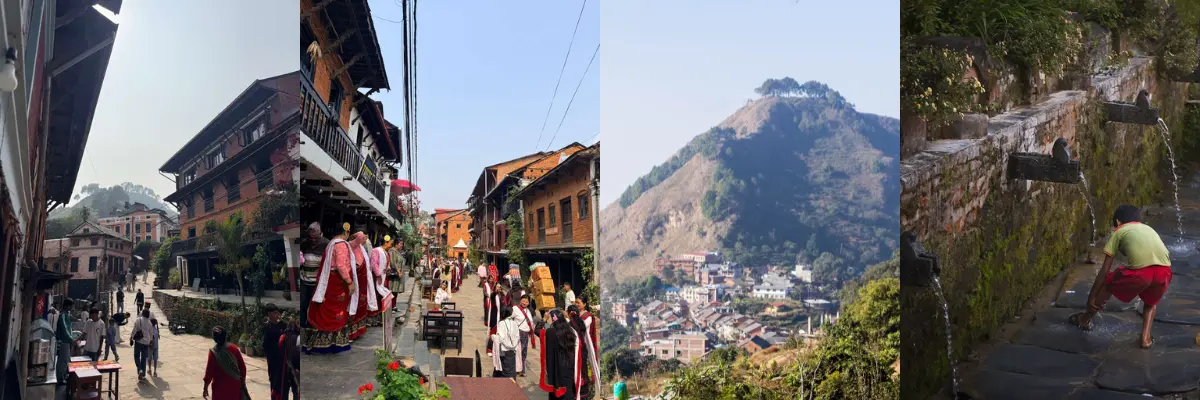
Often referred to as the “Queen of the Hills”, Bandipur Nepal is one of the most beautiful hilltop Newari towns in Nepal. This small, traditional Newari village surprises travelers with its peaceful atmosphere, preserved culture, traditional architecture, and timeless hilltop charm.
Bandipur is a kind of destination that does not lie in any popular route or travel lists, yet quietly steals the hearts of travelers. It might not be the first choice for many, but it becomes one of the best Newari towns outside of Kathmandu Valley for its Newari culture.
For tourists searching for a destination that blends centuries-old culture, jaw-dropping Himalayan panoramas, thrilling adventures, and a calm environment, Bandipur might be the perfect destination.
One of the most special things about Bandipur is how beautifully it has preserved its identity. The strong influence of old Newari tradition in Bandipur can be seen through its architecture, festivals, temples, and daily lifestyle.
Its cobbled lanes are free of traffic, its brick houses adorned with intricately carved wooden windows and doors, and ancient temples remain as stunning as they did hundreds of years ago.
Walking through the stone-paved alleys of the bazaar feels like stepping back into history, feel like time has forgotten to move forward.
On clear days, tourists can get panoramic views of the Himalayan ranges, including Annapurna, Dhaulagiri, Langtang, Ganesh Himal and Manaslu. Tourists can enjoy sunrise and sunset views over these mountains, while sipping coffee in one of the cafés or hiking to the Thani Mai Temple.
Whether you are interested in cultural exploration, photography, village walks, adventure activities, or peaceful mountain views, Bandipur Nepal offers something memorable for every type of traveler.
Traditional homes decorated with carved wooden windows, colorful flowers, and brick facades create a unique atmosphere rarely found elsewhere.

Where is Bandipur Nepal Located?
Looking at a Bandipur Nepal map, the town is situated in Tanahun District of Gandaki Province of Nepal. Bandipur lies between Kathmandu and Pokhara, which can be reached with a detour from the main Prithvi Highway.
The town is located at 27°56′N 84°25′E, at an elevation of 1,030 meters (3,379 ft), about 700 meters (2,297 ft) above the Marsyangdi River Valley. It lies approximately 143 km (89 miles) west of Kathmandu and 80 km (50 miles) east of Pokhara.
Its location makes it easy to access while still maintaining a peaceful hilltop environment. Due to its accessibility, the town has also become increasingly popular as part of a Kathmandu Pokhara Bandipur tour in recent years.
Many tourists choose to stay a night or two here while traveling between Kathmandu and Pokhara, or trekkers returning from long, tiring treks in Nepal, as a relaxation spot.
History of Bandipur Nepal
Bandipur is a historic Newari hilltop town in central Nepal.
Located in the Tanahun District, the town used to be a trade route between India and Tibet. After Prithvi Narayan Shah conquered the Kathmandu Valley, Newar merchants from Bhaktapur migrated to Bandipur for its strategic location and malaria-free hilltop location.
They built the town into the aesthetic Bandipur Newari architecture location, and began trading copperware, textiles, and imported goods.
During the Rana regime, between the 18th and 19th centuries, the town became well known, drawing traders from as far as Lhasa and Kolkata. Bandipur has its own schools, courts, and library. The town was at its peak.
But after the construction of Prithvi Highway in 1973, Bandipur Bazar (Bandipur Town) faced a low blow. After highway construction, the route bypassed Bandipur entirely. Traders moved down to Dumre, the district headquarters shifted away, and Bandipur became kind of semi-ghost town.
However, this unfavorable situation actually became the greatest blessing. Due to this, the town froze in time; it escaped the concrete-heavy modernization, while preserving authentic Bandipur Nepal old town.
Later, in 1992, local residents formed a committee, raised funds, trained locals to run homestays, and slowly revived the town as one of Nepal’s major attractions and a traditional tourist destination.
In 1998 only, access road to Bandipur from Dumre was constructed. Then, since 2003, the town began operating as a tourist town.
Today, Bandipur stands as one of Asia’s finest examples of community-led heritage conservation, a Newari town outside Kathmandu.
Once abandoned by history, later rescued by its own people, and now a cultural destination, Bandipur is an excellent proof of resilience and community.

How to Reach Bandipur Nepal?
Reaching Bandipur is relatively easy as the town lies near the main Prithvi Highway. Travelers from any part of Nepal can either directly drive to Bandipur, or first take a flight to Kathmandu, Pokhara, or Bharatpur, which are the nearest airports to the town. From these cities, they can continue their journey by road to reach this beautiful Newari hilltop town.
The exact highway point on Prithvi Highway to reach Bandipur is a little further from Dumre Bazaar, about 1 km (0.6 miles) towards Pokhara if you are traveling from Kathmandu, at a place called Bandipur Gate.
If you are on the way to Annapurna Circuit Trek and other treks in the Annapurna region, you can take a right turn towards Besisahar from Dumre Bazaar. So, you can either visit Bandipur once you have completed the trek, or before then too.

How to go from Kathmandu to Bandipur?
If you choose to travel from Kathmandu to Bandipur, it takes about 5-6 hours depending on traffic.
After driving for about 5 hours, you’ll arrive at Dumre Bazaar, Tanahun via local villages like Mugling and Abukhaireni, 134 km (83 miles). Then, you need to cover about 1 km to Bandipur Gate.
From there, you take a left turn towards Bandipur. After driving for about 20-30 minutes on a slightly uphill winding road, covering about 7.6 km (4.8 miles), you can reach Bandipur hilltop.
However, one thing you must know is that public vehicles will drop you at either Dumre or Bandipur Gate. From there, you will need to take a local jeep, taxi, or shuttle vehicle.
Private jeeps and cars from Kathmandu can directly drive to Bandipur without needing to change transportation.
How to go from Pokhara to Bandipur?
It takes around 2 to 3 hours to reach Bandipur from Pokhara. The route from Bandipur Nepal to Pokhara is shorter and quite scenic, passing through several small, local villages, green hills, rivers, and terraced farmland.
One of the best things about this route is the smooth, black-topped road, which is more relaxing than from Kathmandu to Bandipur.
After reaching Bandipur Gate, you take a right turn towards Bandipur, the same as from Kathmandu.
Visiting Bandipur before or after a tiring Upper Mustang Trek offers a relaxing option.
How to Reach Bandipur via Bandipur Cable Car Nepal?
One of the most exciting and quickest ways to reach Bandipur is through the newly opened Bandipur Cable Car Nepal. The cable car ride to the Bandipur hilltop is scenic and thrilling.
Covering a distance of 1.616 km (1 mile), the Bandipur Cable Car route begins at Thuldhunga and extends to a place called Baralthok, up to Queen Tower Hotel (an under-construction 5-star hotel in Bandipur).
The cable car is approximately 1.3 km (0.8 miles) further from Dumre Bazar, towards Kathmandu.
For this, you can take a public or private vehicle to Thuldhunga. Then walk a little farther, buy a Bandipur Cable Car ticket, and hop on a cable car to the hilltop. You can get one-way and two-way tickets too.
Top 10 Things to Do in Bandipur Nepal
To think of Bandipur as just a stop point would be wrong. There are plenty of exciting and relaxing things to do in Bandipur. Ranging from sunrise temple hikes and paragliding to cave exploration and village tours, there are many things we suggest you do while you’re in Bandipur.
Explore the Historic Bandipur Bazaar
The historic Bandipur Bazaar is the living cultural heart of the old town. Once a trade hub between India and Tibet, this town still beautifully preserves old Bandipur Newari architecture and culture. During its prime, the town used to be bustling with traders exchanging spices, textiles, metals, and medicinal herbs.
Walking through the cobblestone streets is one of the best ways to experience centuries-old brick and wood build houses, and the lifestyle. Today, the same shops that once traded Himalayan goods promote and sell locally made Newari crafts, hand-woven textiles, thangka paintings, carved wooden souvenirs, and traditional jewelry.
Another popular trend in the town is trying on traditional dresses. You can rent traditional dresses from different castes in Bandipur and take photos and make videos.

Enjoy Traditional Bandipur Newari Architecture
One of the defining features of Bandipur is Newari architecture. The moment you step through the entrance gate of Bandipur, a peaceful cultural experience begins.
Although you can find vehicles around the outskirts of Bandipur, the old town is completely traffic-free. All vehicles park at the entrance, and from there you explore the town on foot.
While you’re on foot, you can see beautifully crafted windows, brick buildings, tiled roofs, carved balconies, and ancient courtyards, reflecting traditional Newari craftmanship.
Newari houses are usually three to four stories tall, built with brick walls, clay-tiled roofs, open courtyards, wooden doors and windows, and rooms with low ceilings.
For those who want an in-depth experience, guided heritage walks are available from the Bandipur Tourist Information Center. A tour guide can give insight into the symbolism of the carvings, explain the history of the town, and take you to places that you might miss.
The Bandipur Newari architecture is not a backdrop; it is the story of the town itself, written in brick and timber.

Visit Bindabasini Temple and Thani Mai Temple
Located at the far western end of the main Bazaar Street, Bindabasini Temple is a striking three-tiered pagoda-style Hindu temple. The temple is dedicated to the goddess Durga in her form as Bindabasini, the guardian deity of Bandipur.
This temple is believed to be over 200 years old, featuring wooden carved struts depicting gods and goddesses. Inside the temple, a statue of the goddess is adorned with gold and silver ornaments.
Each morning, you will find locals performing rituals and making offerings of flowers and incense. Visit early in the morning for the most genuine, undisturbed atmosphere.

Similarly, located on a scenic hilltop, Thani Mai Temple is one of the best viewpoints in Bandipur. Located at the top of Gurunche Danda (Gurunche Hill), it’s a short 30-minute hike from the bazaar, offering 360° panoramic views.
From the hilltop, you can see the Annapurna range, Dhaulagiri, Manaslu, Himalchuli, and Baudha Himal. There is also a small shrine.
Often described as the best sunrise experience, at sunrise, mist fills the valley like a lake while the peaks catch the first light of the day.

Visit Martyr’s Memorial Park
A short and easy walk from the main bazaar, Martyr’s Memorial Park is a peaceful location dedicated to those who sacrificed their lives in Nepal’s struggle for democracy.
The park features lawns, walking paths, statues, plaques, and memorial structures. It is both a place of civic pride and a genuinely peaceful spot for quiet reflection. Visitors can relax here while learning about the region’s historical significance.
What makes the park popular among visitors is its location on the edge of the ridge. It offers clear views of the surrounding Himalayan ranges and the Marsyangdi Valley below, making it one of the most accessible viewpoints in Bandipur.
For those who want the panorama without the steep climb up to Thani Mai, it is a perfect alternative option.
The park sits adjacent to the Tundikhel, the former Gurkha parade ground that today serves as Bandipur’s main football field and picnic area. Together, they make for a lovely afternoon stroll: walk the Tundikhel ridge.
Visit Tundikhel Viewpoint
Tundikhel is a large open ground located above the main town area. It offers incredible panoramic views of the Himalayas and surrounding hills. Locals and tourists alike gather here during sunrise and sunset to enjoy the changing mountain colors and cool hilltop breeze.
This area also serves as a gathering point during festivals and community events.
There is a future plan for Bandipur to build a 97 meters (318 ft) cantilever glass skywalk near Tundikhel Bandipur.
Experience Bandipur Paragliding
For the adventurers and thrill-seekers, Bandipur paragliding is one of the most exhilarating things to do in the entire region. Flying above the green hills, terraced fields, forests, and traditional villages offers a different perspective of Bandipur Nepal.
Local operators in Bandipur offer tandem flights, flying with an experienced, certified pilot. So, even if you don’t have previous experience, you can do this. Make sure to book early morning flights during spring and autumn, as during this time the skies are clear and the weather is stable.
Bandipur paragliding delivers a comparably dramatic experience in a far more intimate, crowd-free setting.
Ride the Bandipur Cable Car Nepal
One of the most exciting recent additions to Bandipur Nepal tourism is the Bandipur cable car. About 4-5 minutes long cable car ride, it connects the old Bandipur area to the lower Marsyangdi Valley below.
Particularly for those traveling in public vehicles and do not want to hire a private vehicle or walk to Bandipur Hilltop, it is a good option.
Bandipur Cable Car, with a capacity of 500 passengers per hour, has added a modern attraction to the area while improving accessibility for visitors.
For physically disabled passengers, the cable car operators will assist while boarding and disembarking the cabins. Also, for the children below 12 years need to be accompanied by an adult over 15 years.
However, make sure to check their operation schedule. The cable car operates daily from 8 am to 7 pm, but remains closed every last Tuesday of the month for scheduled maintenance.
Here’s the ticket rate for Bandipur Cable Car Nepal:
| Ticket Type | One Way | Two Way |
| Normal | NPR 350 | NPR 600 |
| Student | NPR 200 | NPR 350 |
| Senior | NPR 200 | NPR 250 |
| Diff-Able | NPR 200 | NPR 300 |
| Foreign Fare | NPR 400 | NPR 700 |
Note: For children up to 3 feet in height, you don’t need to buy a ticket. Senior citizen (citizens above 70 years) and student rates are applicable only to Nepali citizens, and you need to submit proof of ID.

Explore Siddha Cave and Patalidwar Cave
Beneath the hills surrounding Bandipur lies some of the most extraordinary natural and spiritual wonders in all of Nepal. The opportunity to explore not just one but two remarkable caves makes this one of the most unforgettable Bandipur Nepal attractions.
Siddha Cave (Siddha Gufa) is Nepal’s largest cave and the second largest in all of South Asia. The cave measures approximately 50 meters (164 ft) in height and 437 meters (1,434 ft) in depth.
Discovered only in 1988 by a group of hikers, the cave is estimated to be around 3,500 years old and carries profound spiritual significance. “Siddha” refers to the ascetics and holy men; the cave is believed to have been used for deep meditation for centuries.
The limestone walls, formed by the stalactites and stalagmites, are shaped like elephants, tigers, butterflies, snakes, and the face of Lord Shiva when your torchlight falls upon them. Witnessing these structures, exploring this spiritual cave feels like a whole different universe; an otherworldly atmosphere.

Likewise, another lesser-visited but deeply sacred site is the Patalidwar Cave. Located approximately 1.5 hours from Bandipur via the village Dhungebari, the cave is locally known as the “Gateway to Heaven”.
Patalidwar Cave receives pilgrims from Bandipur, Chitwan, Gorkha, Kathmandu, and other nearby villages, particularly on Tuesdays and during week-long poojas observed in December and January.
Visitors often describe Patalidwar Cave as more intimate and spiritual than Siddha Gufa. For travelers who enjoy quieter, off-the-beaten-path experiences, it is a good alternative.
Enjoy a Side Trek to Ramkot Village
One of the finest half-day adventures available from Bandipur is the trek to Ramkot village to experience traditional rural life around Bandipur. It is a small traditional Magar village situated on a hilltop approximately 5 km (3.1 miles) on foot and 7.7 km (4.8 miles) drive from the main bazaar.
Bandipur to Ramkot hike takes around 1.5 to 2.5 hours (one-way). The trail follows through dense forest, terraced farmland, and several smaller villages, with constant glimpses of the Himalayan ranges.
Ramkot is famous as one of the last remaining villages in the region with traditional thatched-roof roundhouses. These types of houses are examples of the classic architectural form of the indigenous Magar people.
At the village, a simple local restaurant with thatched cabanas serves fresh food along with panoramic views of Dhaulagiri, the entire Annapurna massif, Manaslu, and the Langtang range on a clear day.
The farming families of Ramkot are warm and welcoming; if you have time, stay for lunch and learn a few words of Magar or Nepali phrases.
The trail is also excellent for mountain biking for those looking to add an extra dimension to the experience.
Visit Tindhara, traditional stone water taps
Tindhara is another historical site in Bandipur known for its traditional stone water taps and cultural importance.
The name translates simply as “three taps”, which used to be one of the major sources of water in the past. Now, it reflects the heritage of the town.
There is nothing spectacular about Tindhara, and that is precisely what makes it so valuable. It lies at one of the corners of the village, quietly preserving everyday history, traditional architecture, and a simple lifestyle, further making Bandipur more attractive.
Every morning, visitors can see women doing laundry on the stone platforms, children filling vessels at the taps, and people who have known each other their whole life, exchanging conversations.
A small, ancient Shiva temple built from stone stands just opposite the washing area, quiet and unassuming. Together, Tindhara and its adjacent temple represent the ordinary daily life of Bandipur village Nepal.

Weather in Bandipur Nepal
The weather in Bandipur is shaped by the altitude of Bandipur Nepal. Bandipur has moderate, pleasant temperatures year-round compared to the lowland Terai, with four distinct seasons.
Spring (March to May) and Autumn (September to November) are the best times to visit Bandipur Nepal.
During spring, the weather in Bandipur is warm and bright, with rhododendron blooming across the surrounding hillsides. Hiking trails in spring are at their most lush, green, and comfortable.
Similarly, autumn is another of the best times to visit Bandipur. The air after the monsoon feels fresh and crisp. The Himalayan views are at their sharpest, the rice harvests paint the terraces gold, and the town is filled with a different kind of festive vibe. Dashain and Tihar, Nepal’s biggest festivals, make Bandipur lively.
Moreover, summer/Monsoon (June to August) in Bandipur is featured with heavy rainfall, high humidity, limited views, and slippery trails. While the town’s alleys and road to the Bazaar are doable, hiking trails and Siddha Gufa (Siddha Cave) become slippery, and parts of the cave may flood.
Likewise, winter in Bandipur, from January to February, becomes cool and crisp. While the daytime temperature ranges between 12 and 21°C, night can feel cooler. However, Bandipur during winter offers clear skies, providing great mountain views. If you want quieter surroundings with crisp Himalayan mornings, visiting Bandipur during winter can be a peaceful time to visit.

Where to Stay in Bandipur?
Despite being a small hilltop town, Bandipur offers a range of accommodation options for different types of travelers. Travelers can choose to stay in a cozy family-run guesthouse or a traditional Bandipur homestay to boutique heritage hotels with mountain views.
For the most authentic stay experience, there are several homestays in Bandipur. Similarly, there are heritage-style hotels in Bandipur, offering visitors a more immersive connection to local culture and hospitality.
If you seek an authentic experience, local homestays are highly recommended. They offer homemade food, cultural interaction, and a chance to experience daily life in Bandipur village Nepal.
There is a 5-star luxury hotel under construction that plans to accommodate over 200 guests in total.
Most of the accommodations are located around the old Bandipur bazaar area, allowing travelers to enjoy the peaceful atmosphere, traditional surroundings, and beautiful Himalayan scenery.
The guesthouse owners and locals are quite friendly. Interact with them. They are happy to share their knowledge and experience, and provide insights into the local community and its history.

What to Eat in Bandipur?
For most, the first places that come to mind for tasting authentic Newari cuisine are Bhaktapur, Patan, and Kathmandu Durbar Square. However, outside Kathmandu Valley, Bandipur is one of the finest places in Nepal to eat authentic Newari cuisine.
Tourists can taste several Newari foods in Bandipur, not prepared for commercial purposes but for offering a taste of simple daily life.
Samay Baji, Newari khaja sets, is the most satisfying Newari food that we recommend. It comes with a little bit of every Newari item. A Newari Samay Baji, meaning “time to eat beaten rice”, comes with beaten rice, Choila (smoked spiced meat), soyabeans, spiced potatoes, fried egg, aalu tama soup, and pickles. You can add additional side dishes like bara, chatamari, yomari, sel roti, and so on.
No Newari meal is truly complete without “aaila”. It is a traditionally homemade spirit distilled from fermented grains or rice. It is a perfect celebratory drink, especially for trekkers returning from long, challenging treks.
Additionally, you can eat Dal Bhat, Mo: Mo, samosa, dhido, etc. Small cafés and restaurants around the bazaar also serve fresh coffee, bakery items, pancakes, pizza, and continental meals for international travelers.
Many local eateries use locally grown fresh vegetables and ingredients, produced in nearby villages, adding a homemade taste.

Bandipur Nepal Tourism and Sustainable Travel
Bandipur’s story is not just one of preservation; it is one of the most inspiring examples of community-led sustainable tourism in all of Asia.
Recently, efforts have been made by the Nepal government and Bandipur Nepal on sustainable and heritage preservation. In the early 2000s, local communities, supported by international NGOs, made efforts aiming to develop Bandipur as a model town for eco-friendly tourism.
These efforts have made Bandipur one of Nepal’s most successful examples of heritage conservation through tourism, protecting the town’s cultural identity while promoting responsible tourism practices.
During “Visit Bandipur Year 2025”, Bandipur welcomed over 630,000 tourists as per The Rising Post. The figure shows the increasing tourism in Bandipur while preserving it for future generations.
The campaign’s central slogan, “Earn and Enjoy in the Village”, encourages local communities to take an active role in tourism while benefiting financially from the increased number of visitors.
Most recently, Bandipur Rural Municipality has launched a new homestay circuit, a collaborative initiative creating a sustainable tourism model centered around local heritage, products, and the environment, with particular focus on opportunities for rural youth, women, and marginalised communities.
As a visitor, your choices matter here. You stay where you want to, and you eat what you want. Utilize what you need. Carry your rubbish out. Be a responsible traveler.
Every traveler who visits Bandipur thoughtfully becomes part of the effort to keep it that way.

Why Bandipur Nepal Belongs on Every Traveler’s Itinerary?
Bandipur Nepal is far more than just a stop between Kathmandu and Pokhara. It is a living proof of history, culture, Newari architecture, local traditions, and flavors, along with some of the most stunning mountain views.
From exploring the peaceful old bazaar to hiking to ancient temples and the second-largest cave in South Asia, Siddha Cave, Bandipur Nepal is full of cultural as well as adventurous experiences.
Every corner of Bandipur offers something meaningful. Whether you are interested in culture, photography, adventure, relaxation, or authentic local experiences, Bandipur remains one of Nepal’s most rewarding hidden gems.
Between the cultural intensity of Kathmandu and the dramatic lake and mountain beauty of Pokhara, Bandipur Nepal is the stop that most travelers speed past on the highway below. Don’t be that traveler. Turn off at Dumre, climb that 8 km road, step through the gate, and let the cobblestones take you somewhere extraordinary.
Loading...
related post


Author

Samyog Shrestha is a travel enthusiast and an excellent content writer at Himalayan Masters, the face behind the amazing content who likes to learn from experience.


Leave Your Comment