




Everest Base Camp vs Annapurna Base Camp: How They Differ?
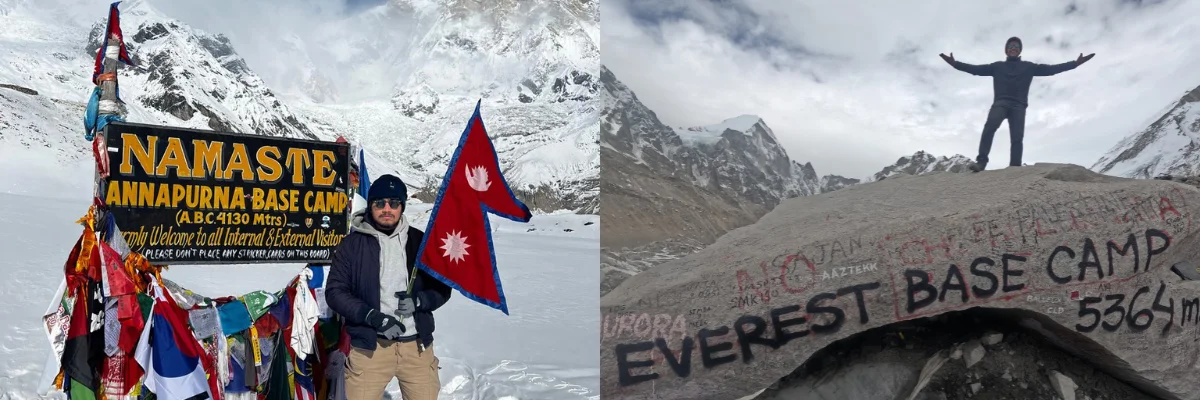
Everest Base Camp vs Annapurna Base Camp is one of the most common comparisons among trekkers planning a Himalayan adventure in Nepal. When compared, both the base camps are amazing in their own ways; however, they differ in experience, views, accessibility, cost, altitude reached, challenges, culture, and many other factors.
Everest Base Camp is perfect for those seeking high-altitude alpine adventure and looking to prepare for expeditions. Annapurna Base Camp is known among trekkers who want to explore varied landscapes, multicultural experiences, and scenery while staying within budget.
Everest Base Camp (EBC) is famous for leading trekkers to the iconic base camp of Mount Everest, the tallest mountain in the world. For many, reaching EBC is a lifelong dream and a chance to follow the path of famous climbers. This trek is all about enjoying the area’s stunning views, Sherpa culture, and the feeling of standing beneath the highest peak on Earth.
On the other hand, Annapurna Base Camp (ABC) is often considered more about the journey than just the destination. The trail passes through traditional villages, terraced fields, rhododendron forests, waterfalls, and a variety of landscapes before reaching the Annapurna Sanctuary. This journey is a great choice for anyone wanting a mix of culture and nature in a shorter time.
So the choice is yours, you decide which base camp is perfect for you, which is a winner: Everest Base Camp vs Annapurna Base Camp.
For your convenience, here’s a detailed comparison between Everest Base Camp and Annapurna Base Camp. In this article, we’ll compare their accessibility, duration, challenges, and required preparations, views, cultural significances, etc.
Everest Base Camp vs Annapurna Base Camp: Complete Comparison Table
This summary compares Everest Base Camp vs Annapurna Base Camp across more than 25 points. Check the table to see differences in cost, altitude, crowds, permits, weather, and other key factors.
| Feature | Everest Base Camp (EBC) | Annapurna Base Camp (ABC) |
| Highest point | Kala Patthar: 5,550 m (18,209 feet) | ABC: 4,130 m (13,550 feet) |
| Trek duration | 12-14 days | 5-7 days |
| Trek distance | 100–180 km (62–112 miles) round trip, depending on the route | About 64 km (40 miles) one way (around 128 km/80 miles round trip) |
| Cost | Higher | Lower |
| Starting Point | Lukla (Domestic Flight required) | Nayapul (3 hours drive from Pokhara) / Jhinu Danda |
| Permits required | Sagarmatha National Park Permit, Khumbu Pasang Lhamu Rural Municipality Permit | Annapurna Conservation Area Permit (ACAP) |
| Best season | Spring (March-May) and autumn (September-November) | Spring (March-May) and autumn (September-November) |
| Winter Trek | Less Recommended | Possible |
| Temperature range | Extreme cold: -10°C or lower at night above 4,000m | 0°C daytime at base camp, -5°C at night |
| Difficulty level | Challenging due to altitude, steep sections, longer duration | Moderate with gradual ascent and shorter days |
| Altitude sickness risk | Higher due to extreme altitude and rapid ascent | Lower due to gradual natural acclimatization |
| Acclimatization | Rest days at Namche Bazaar and Dingboche essential | Gradual slope allows natural adaptation |
| Mountain views | Everest (from Kala Patthar), Lhotse, Nuptse, Ama Dablam, Pumori | Annapurna I, Machhapuchhre, Annapurna South, Hiunchuli, Gangapurna |
| View from base camp | Everest hidden, requires 2.5-hour climb to Kala Patthar | 360-degree mountain panorama directly from camp |
| Cultural experience | Sherpa-focused: Tibetan Buddhism, monasteries, prayer flags, mani walls, sacred atmosphere | Multicultural: Magar, Gurung, Thakali. Hindu temples, varied traditions. Less ceremonial |
| Side trips | Hotel Everest View (Namche), Khumjung Village, Nagarjuna Hills, Kala Patthar (required walk) | Poon Hill (on the way to ABC), Ghandruk/Landruk (on return, 1-day extension) |
| Best suited for | Experienced trekkers, Everest seekers, high-altitude challenge enthusiasts, 2 weeks+ available | Budget-conscious, limited time (1 week+), moderate fitness, cultural variety, solitude seekers, ages 50+ |
How Do You Get to Everest Base Camp and Annapurna Base Camp?
Everest Base Camp lies in the Khumbu region of eastern Nepal, deep within Sagarmatha National Park. To get to the trailhead, you take a 25-minute flight from Kathmandu to Lukla. The flight offers amazing views but is often delayed by weather, especially during the monsoon season when cancellations are common.
Starting from Lukla, most people spend about six days trekking to Everest Base Camp. The route climbs gradually, with stops to help you adjust to the altitude. Along the way, you’ll pass through traditional Sherpa villages like Phakding, Namche Bazaar, Tengboche, Dingboche, and Lobuche before reaching Gorakshep and finally Everest Base Camp.
Your Annapurna Base Camp adventure starts in Kathmandu. From there, you can fly or drive to Pokhara. After arriving in Pokhara, you’ll drive to Nayapul to begin your trek. The trail leads through Ulleri, Ghorepani, Tadapani, Sinuwa, and Deurali before reaching Annapurna Base Camp.
Along the way, you’ll pass mountain villages, terraced fields, rhododendron forests, and enjoy beautiful alpine views. The trek from Nayapul usually takes about six days, and the whole journey from Kathmandu takes around eight days. This makes it one of the easiest high-altitude treks to access in Nepal.
Which Trek Takes Longer: Everest Base Camp or Annapurna Base Camp
EBC trek takes 14 to 18 days in total, with a round-trip distance of 100 to 180 kilometers (62–112 miles) depending on the route. The daily climbs are gradual, with 500 meters (1,640 feet) daily gain. You’ll need at least two days of acclimatization to adjust at Namche Bazaar and Dingboche. The pace is tough, and many trekkers feel tired by the eighth day.

ABC, on the other had is a shorter trek. Most people finish it in 5 to 7 days from Nayapul to base camp, covering about 64 kilometers (40 miles) one way. The climb are steeper, with 800 meters (2,625 feet) each day, which helps you get used to the altitude.
If you have around two weeks, you can do EBC. If you have a lesser days, ABC is a better option.
Which is Harder Everest Base Camp or Annapurna Base Camp
You need to be in good shape for both Everest Base Camp (EBC) and Annapurna Base Camp (ABC), but each trek has its own challenges. The main challenge on the Everest Base Camp trek is the altitude.
At its highest point, Kala Patthar, you reach 5,550 meters (18,209 feet), which is about 1420 meters (4,659 feet) higher than Annapurna Base Camp. The EBC trail is usually more gradual and less steep than ABC, but the higher elevation means there is much less oxygen.
Once you go above 4,000 meters (13,123 feet), many trekkers get headaches, feel tired or nauseous, have trouble sleeping, and some develop Acute Mountain Sickness (AMS). Since you spend several nights above 4,000 meters, it’s important to acclimatize properly. The descent from EBC is also fairly gradual.
Annapurna Base Camp sits at a lower altitude of 4,130 meters (13,550 feet), so altitude sickness happens less often and is usually milder. However, the trail is often more physically demanding.
You’ll face many steep climbs and descents, lots of stone steps, and frequent changes in elevation. Even though the altitude gain is less than EBC, the daily climbs on ABC can be tougher on your legs.
Most trekkers get used to the altitude over six days, and after reaching base camp, you head down to much lower elevations within two days, which lowers the risk of altitude sickness.
Everest Base Camp is harder because of the high altitude and higher risk of AMS. Annapurna Base Camp is more challenging because of the steep and constant ups and downs. If you’re thinking about physical effort, ABC can feel tougher on your body.
But if you’re looking at altitude and the overall challenge, Everest Base Camp is the more demanding trek.
What Cultural Experiences Will You Have on Each Trek?
The Sherpa culture shapes life in the Everest region. You can see prayer flags flutter above the villages, and stone mani walls follow the trail. Monasteries such as Tengboche sit on the ridges, surrounded by the mountain views in every direction. The whole landscape feels sacred. Sherpa hospitality is sincere. Guides and lodge owners remember guests by name, ask about their families, and share stories over butter tea.
The Annapurna region has a more diverse mix of cultures. Magar and Gurung communities live in the lower foothills. As you climb higher, you meet Thakali traders from the Kali Gandaki valley. You’ll find temples and monasteries throughout the region, though daily life is more focused on farming, trade, and village routines.
This difference is important. If you want to be fully immersed in one culture, Everest offers a more unified experience. If you enjoy cultural variety, the Annapurna Base Camp trail brings many surprises. Lodge owners speak fluent English, and the stories you hear are very different from each other. The region feels less polished and more genuine.
Mountain scenery comparison: EBC vs ABC
At Everest Base Camp, you cannot see Everest itself because rock walls block the view. Pumori (7,161m) is to the south, Nuptse (7,861m) to the southwest, and Khumbutse (6,640m) to the east.
To see Everest, you need to hike to Kala Patthar (5,550m), which takes about 2.5 hours from Gorakshep. From there, Everest is to the north, Lhotse (8,516m) to the northeast, and Nuptse to the southwest.

At Annapurna Base Camp, you get 360° mountain views right from the camp itself. Annapurna I (8,091m) is to the north, Machhapuchhare (6,993m) to the east, Annapurna South (7,219m) to the southeast, and Hiunchuli (6,441m) to the west where as Gangapurna (7,455m) and Annapurna III (7,555m) are to the northwest. The camp is surrounded by mountains in every direction, so you do not need to climb further for the views.
Even though the journey and overall experience are very different on these two treks, both offer spectacular mountain views from their respective base camps.
Best time to trek EBC vs ABC
The best times for both treks are autumn (September to November) and spring (March to May). During these months, you can expect clear skies, pleasant weather, and perfect temperatures.
Annapurna Base Camp is warmer throughout the year. Even in winter, daytime temperatures at the camp are usually around 0°C (32°F), and nights go down to about -5°C (23°F). Snow sometimes falls but doesn’t last long. Because the camp is at a lower altitude, there’s more oxygen and most people sleep better.

Everest Base Camp is much colder. At higher elevations, nighttime temperatures can fall to -10°C (14°F) or even lower. The wind makes it feel even colder and increases the risk of frostbite if you are not properly prepared. If you trek in winter, you will need serious gear, like sleeping bags rated for -25°C (-13°F). Many trekkers find the cold at EBC discouraging rather than just challenging.
During the monsoon season (June to August), both areas receive heavy rainfall. Visibility is poor, and the trails become muddy and slippery. ABC is a bit drier than EBC because it is lower and has different geography, but neither trek is recommended during the monsoon.
Why Is Everest Base Camp More Expensive Than Annapurna Base Camp?
The Annapurna Base Camp trek usually costs between 800 and 1,200 USD depending on the service you take. This price includes permits, transport from Pokhara to the trailhead, guides, porters, accommodation, and meals. Himalayan Masters offers packages for 980 USD. Because you can get to Pokhara by road, you save money by not needing domestic flights.
With Himalayan Masters, the Everest Base Camp trek costs between 1,650 and 3,650 USD, depending on your itinerary. This price covers permits, round-trip Lukla flights, guides, porters, accommodation, and meals. As you go higher, prices increase, food gets more expensive at higher elevations because supplies have to be carried or flown in, and lodge prices double above 4,000 meters.
The main reason for the big price difference between these treks is the Lukla flight. You can get to the Annapurna Base Camp trailhead by road, so you avoid this extra cost. For Everest Base Camp, you need to fly, which makes it much more expensive before you even begin trekking.
What Permits Do You Need for Each Trek?
For Annapurna Base Camp, you only need the Annapurna Conservation Area Permit (ACAP), which costs 3,000 Nepalese rupees (about 23 USD). You can get this permit in Pokhara or on the trail at Nayapul. However, purchasing it at Nayapul costs twice as much, so it’s best to get it in Pokhara before starting the trek.
For Everest Base Camp, you need two permits: a Sagarmatha National Park entry permit and a Khumbu Pasang Lhamu Rural Municipality permit. Together, these cost 5,000 Nepalese rupees (about 33 USD). You can get both permits in Kathmandu through the Nepal Tourism Board (NTB) or Lukla or Monjo.
What’s the Accommodation Like on Each Trek?
ABC offers everything from simple tea houses to mid-range guesthouses. Some higher lodges have solar-heated showers, but the water is usually only lukewarm. Beds are basic but clean, and rooms fit two to four people.
At base camp, the lodge serves simple meals like Dal Bhat, noodles, pasta, and fried potatoes. The food is plain but filling, and prices are reasonable.

EBC lodges actually improve as you go higher, which is a bit unusual. Lower villages like Phakding have basic places to stay. By the time you reach Namche Bazaar, about two days in, you can find comfortable rooms with private bathrooms and hot showers. You get decent accommodation, but it gets expensive as you go higher.
Which Trek Offers More Solitude?
When comparing Everest Base Camp vs Annapurna Base Camp for crowds, EBC gets crowded during peak season. In spring, hundreds of trekkers use the route each day, along with Everest climbers.
The trail from Lukla to Namche is always busy. Namche Bazaar feels like a resort town. Popular tea houses fill up by the afternoon, and you need to book guest houses weeks ahead. You won’t find solitude here.
Annapurna Base Camp has far fewer trekkers. You might see other groups near base camp, but the trail is usually quiet. Sometimes you can walk for hours without seeing anyone. Villages stay peaceful throughout the trek, and lodges have beds available if you book them in advance.
Which Trek Requires More Acclimatization Time?
The gradual slope of the ABC trek helps your body adjust to the altitude. Most trekkers sleep well and keep a normal appetite. The trek feels more like a journey than a test of endurance.

EBC requires planned acclimatization days. Including acclimatization in Namche Bazaar and Dingboche is essential in you itinerary. Without these breaks, AMS is common. Even with rest days, many trekkers have trouble sleeping above 4,000 meters (13,123 feet), lose their appetite, or get headaches for days.
How Can Insurance Protect You on Everest Base Camp vs Annapurna Base Camp?
Trekking insurance covers medical emergencies, evacuation, and trip interruptions. Most travel insurance does not include high-altitude trekking. Some plans does not cover treks above 4,000 meters.
Insurance for EBC is especially important because the high altitude, remote location, and unpredictable weather make it riskier. Without insurance, a helicopter evacuation can cost between 5,000 and 12,000 USD. Most serious problems happen above 4,500 meters, where rescue is harder.
Insurance for ABC is also important, even if the risk is a little lower. The altitude is not as high, so evacuation costs are lower. Still, injuries from falls or altitude can occur.
The cost of insurance policy differs on the basis of altitude range. As Everest Base Camp reaches higher altitude compared to Annapurna Base Camp, the insurance policy cost expensive for EBC than ABC. These plans cover evacuation, hospital bills, trip cancellations, and emergency flights home. Himalayan Masters suggests getting insurance before you book your trek.
Which Trek Has Better Helicopter Access?
Both Everest Base Camp (EBC) and Annapurna Base Camp (ABC) offer helicopter services, but EBC has better and more reliable helicopter access. Helicopter flights are widely available for transport, scenic tours, and emergency evacuations due to the region’s high trekking demand and well-established aviation network in the Everest region. Trekkers can also choose a helicopter return from Everest Base Camp or nearby locations to shorten the journey.
At ABC, helicopter services are available mainly for charter flights, luxury trekking packages, and emergency rescues. However, they are less frequent than in the Everest region. If helicopter accessibility is an important factor, Everest Base Camp is the better choice.
Phone Coverage and Internet: EBC vs ABC?
Both Everest Base Camp (EBC) and Annapurna Base Camp (ABC) offer phone and internet services, but the way you connect at each place is a bit different.
On the EBC Trek, Nepal Telecom and Ncell give mobile coverage in many villages, but the signal gets weaker as you climb higher. Most teahouses have internet through Everest Link, a paid Wi-Fi network found in much of the Khumbu region. This Wi-Fi is usually easier to access than mobile data, but it can still be slow, especially when there are many trekkers.
On the ABC Trek, you can usually get mobile coverage in the lower and middle villages, but the signal gets weaker as you get closer to Annapurna Base Camp. Many tea houses offer paid Wi-Fi, but the quality depends on each lodge’s internet connection and is less reliable than at EBC.
To sum up, EBC has better and wider internet access thanks to the Everest Link network. In contrast, ABC tends to have more reliable mobile coverage in the lower sections of the trail.
What’s the Difference in Equipment Needs?
For Everest Base Camp, you’ll need gear that can handle extreme weather. Bring a sleeping bag rated for -20°C to -25°C, thermal layers, a down jacket, and insulated boots. If the trail is icy or snowy, you’ll need crampons and an ice axe. Overall, your gear will be heavier.
At Annapurna Base Camp, you can use lighter, flexible layers. A sleeping bag rated for 0°C to -10°C is enough, and standard hiking boots will do. You’ll still want thermal layers and a down jacket, but nothing too heavy. Regular hiking poles are fine, and your gear will be lighter overall.
Annapurna Base Camp is a good option if you already own basic hiking gear. For Everest Base Camp, you’ll need more specialized equipment. If you’re missing anything, you can rent gear in Thamel, Kathmandu.
Note: If you don’t have the required sleeping bag for your trek, Himalayan Masters will provide one complimentary at no extra cost.
Are There Side Trips on Everest Base Camp vs Annapurna Base Camp?
There are several side trips you can take while trekking to Everest Base Camp. You can stop at Hotel Everest View in Namche Bazaar at 3,880 meters for great mountain views. Khumjung Village lets you experience traditional Sherpa life, and Nagarjuna Hills are great for scenic ridge walks.
The standard 12 to 14 day Everest Base Camp itinerary with Himalayan Masters includes both Everest Base Camp and a hike to Kala Patthar (5,550 m). After reaching Gorakshep, you’ll trek to Everest Base Camp, return to Gorakshep for the night, and hike to Kala Patthar the following morning for sunrise before beginning the descent. If you prefer to skip the Kala Patthar hike and visit only Everest Base Camp, we can customize the itinerary accordingly.

On the Annapurna Base Camp trek, side trips are included in the main route. Poon Hill (3,210m/10,530feet) is along the way and is famous for its stunning sunrise views of Annapurna and Dhaulagiri. On your return, you can add one more stop to enjoy the traditional Ghandruk and Landruk villages. If you like, you can add a day to stay in one of these villages and experience Gurung and Magar culture. These small detours don’t take much extra time but make the trek more rewarding.
The main difference is that side trips on the Everest Base Camp trek often mean going back the way you came or doing extra climbs, while on the Annapurna Base Camp trek, they’re included in the main route. Himalayan Masters can help you plan a trek that matches your schedule and interests.
How the Everest and Annapurna Experiences Differ
Everest Base Camp and Annapurna Base Camp are two of the most famous treks in the Himalayas, but each offers a different experience. The Annapurna Base Camp trek starts at about 1,070 meters (3,510 feet) and gradually climbs to 4,130 meters (13,550 feet).
On the way, you walk through terraced fields, local villages, rhododendron forests, bamboo groves, waterfalls, and alpine scenery before reaching the Annapurna Base Camp. Each day offers new sights and opportunities to meet local people.
The Everest Base Camp trek begins in Lukla at 2,860 meters (9,383 feet) and climbs to 5,364 meters (17,598 feet) at base camp. From the start, the area feels more remote and wild, surrounded by towering mountains.
The trail leads through deep river valleys, across suspension bridges, and past Sherpa villages, old monasteries, and icy ground with tall Himalayan peaks nearby. As you climb higher, the plants thin out and the views become even more dramatic.
Annapurna has a wide variety of landscapes, cultures, and ecosystems, while Everest offers a more intense high-altitude adventure. Annapurna lets you experience Nepal’s natural beauty and culture, while Everest takes you close to the world’s tallest peaks and the well-known Khumbu region.

Which Trek Suits You the Best?
When choosing between Everest Base Camp and Annapurna Base Camp, consider how much time you have, your budget, your fitness level, and what you hope to get from the trek.
ABC is a good option if you have limited time, want to experience different cultures, are on a budget, or prefer not to spend too long at high altitude. It’s also a favorite among older trekkers and those new to high-altitude hiking.
EBC is ideal for those who want to explore the Everest region, seek a bigger physical challenge, and want to experience one of the world’s most famous treks. The higher altitude and longer journey make it more demanding.
Both treks have their own charm. Annapurna Base Camp and Everest Base Camp each give you a special way to see the Himalayas. Annapurna shows off Nepal’s diverse landscapes and cultures, while Everest takes you right into the Everest region. Both offer unforgettable mountain adventures and are among Nepal’s best treks.
Loading...
related post


Author

Kadambini Thapaliya is a content writer and researcher with a passion for storytelling, culture, heritage, and travel. She creates engaging, well-researched content that helps readers discover unique places, traditions, and experiences. Through her writing, she aims to make information accessible, meaningful, and enjoyable for diverse audiences.


Leave Your Comment