With a short and exciting trekking Itinerary, the Helambu region is a hidden gem of the Langtang region of Nepal. Langtang Helambu trek route in Nepal offers great exposure to the Nepalese community’s unique village landscape and culture in the lower mountain region.
Particularly close to Kathmandu, it’s your chance to indulge with local communities and enjoy the best mountain panorama without having to trek more.
Helambu lies in the northeast of Kathmandu, around 43 km from Nepal’s capital. It is protected by Langtang National Park and Shivapuri National Park. The Helambu trekking is relatively easy for newbies and inexperienced trekkers, and it reaches an altitude of 3,640 meters.
Where is Langtang Helambu Located?
The Langtang Helambu is located in the Langtang region of Nepal. North of Kathmandu, Helambu Valley is located within the Langtang National Park.
The Helambu trek takes you to the Helambu Valley and other parts of the Langtang region, situated near the Tibetan border. The villages located in between the Langtang Himalayas and Jugal Himal offer stunning views of landscapes and mountain peaks.
The journey begins in Kathmandu, followed by trekking in Sundarijal.
Why Choose Helambu Circuit Trek?
Helambu, the land of sweet, juicy laptops and Himalayan delegates, is an important development for peaceful tourism. During the trek, you can visit Sundarijal (a small dam along the river) and trek past marvellous Buddhist monasteries.
Helambu trek is not about difficult walks and long, tiring days. Rather, this is an opportunity to find peace and calmness in the simplicity of village life. It’s your chance to indulge in Buddhist culture and tradition, looking for change and peace within yourself.
The Langtang Helambu trek region is never crowded, and you can witness nature in its best form without any disturbance. It is one of the best treks in the Langtang region.
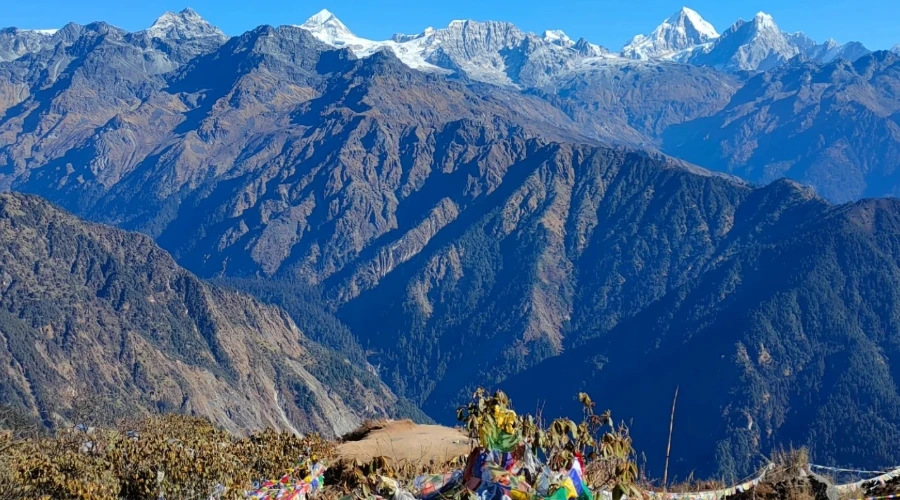
Nevertheless, you can capture beautiful pictures of snow-topped mountains such as Gang Chhenpo, Jugal, Nayagang, Dorje Lakpa, Ganesh, and Langtang Lirung.
Comfortable trek with a good number of homestays and tea houses.
Trek is possible throughout the year without barriers to snowfall and bad weather.
Where to start the Langtang Helambu Trek?
Helambu is a rather circuit trek that begins and ends in Kathmandu. Initially, the trailhead commences from Sundarijal, 28 km away from Kathmandu, only 1 hour of ride. You can easily find a local bus or private chip from Kathmandu to Helambu. Even if you book a taxi, the price in the region is quite affordable.
To complete the circuit to Kathmandu, we will walk down to Melamchi, the small settlement that lies before in the hills, right next to the highway. A bus from Melamchi to Kathmandu can be found each hour, or you can also take a jeep.
Himalaya/Mountains Seen during Trek to Helambu
The Langtang Helambu trekking offers breathtaking views of the Himalayas, including several prominent mountain ranges. Some of the mountain peaks seen during the trek are:
Langtang Lirung – 7,227 meters (23,711 feet)
Dorje Lakpa – 6,966 meters (22,854 feet)
Gangchenpo – 6,387 meters (20,955 feet)
Shishapangma (in Tibet) – 8,027 meters (26,335 feet)
Yala Peak – 5,520 meters (18,110 feet)
Naya Kanga (Ganja La Chuli) – 5,844 meters (19,160 feet)
Culture and Wildlife on Langtang Helambu Trek
People (Tamang, Sherpa, and Yolmo)
Tamang, Sherpa, and Yolmo communities are the major people living in the Langtang region. The total population of the Helambu rural municipality, where the trek route passes, is 17,497, according to the census 2021 of Nepal.
The Sherpas are more concentrated in the Helambu region and are known for their strong cultural ties to mountaineering. The Yolmo people (also known as Hyolmo) are significant in Helambu, with deep roots in Tibetan Buddhism. The population in the trekking areas is scattered among small, remote villages.
Yolmo (Hyolmo) people celebrating their famous Hyolmo Shyar Tsechu Festival
Culture (Influenced by Tibetan Buddhist culture)
The cultural aspects in the Langtang Helambu region are influenced by Tibetan Buddhist culture. The majority of the people living here follow Buddhism, which can be seen through their lifestyle, festivals, customs, and religious practices.
Trekkers can see Buddhist monasteries, chortens (Buddhist stupas), mani walls (walls made of stones that are engraved in prayers), and prayer flags on the way. All these aspects are different experiences for all visiting the Helambu region.
Wildlife seen during the Helambu trek
As the Helambu trek passes through Langtang National Park, trekkers can see a wide variety of wildlife. Trekkers might be able to see endangered red pandas, Himalayan black bears, musk deer, and even snow leopards.
Additionally, they can see Himalayan tahr and langur monkeys along with over 250 species of birds. Colourful Himalayan monal is a major bird attraction here, with blood pheasants, golden eagles, and lammergeier (bearded species of vulture).
Himalayan Tahr
Important Notes for Helambu Valley Trek
Helambu Trek is a moderate difficulty level trek that can be done with friends and family and is ideal for experienced and beginner trekkers.
The trek reaches a maximum altitude of around 3700 meters for 6 days.
If you do not have heavy luggage, you can carry it yourself, or you can hire a porter and share the porter with fellow trekkers. A porter can carry up to 26 kg.
Hiring a guide for trekking in the Himalayas of Nepal is compulsory. However, trekking solo to Helambu Valley is possible.
Apart from your trek package, you can expect to spend around $20 per day during the trek for hot water and showers, snacks, drinks, internet, etc.
Respect the local culture and costume and act and wear accordingly.
Do not enter the kitchen in the teahouse unless you are invited to.
Listen to your guide at all times for a safe and comfortable trekking experience.
Normally, tips for the guide and porter are 10% of your trip, but you can tip them as you please.
Himalayan Masters Adventure and Travel Company is known as one of the best trekking agencies in Nepal for Langtang Region Trek at the most affordable prices. We ensure that you are going to have an exceptional trekking experience.
Trekkers at the office of Himalayan Masters before the Langtang Helambu Trek.
We have a dedicated and experienced team of guides and porters, prioritizing your safety and comfort and making the journey unforgettable.
Apart from the trek, we are committed to assisting our clients even before and after the trek. At Himalayan Masters, you’re not just a client but a part of our family.
In addition, we offer a complimentary Himalayan Masters brand cap, t-shirt, water bottle, duffle bag, water purification tablets, and a down jacket for the trek. We also provide a trek map and a safety-first aid box.
Langtang Helambu Trek 6-day Itinerary Outline
Day
Itinerary
Distance
Time
Sleep Altitude
01
Drive to Sundarijal and Trek to Chisapani
35.5 Km/22.1 mi (*including drive)
5-6 hr
2215 m/7,267 ft
02
Trek from Chisapani to Kutumsang
15 Km/9.3 mi
7 hr
2470 m/8,104 ft
03
Trek from Kutumsang to Thadepati
12 Km/7.5 mi
6 hr
3690 m/12,106 ft
04
Trek from Thadepati to Tarke Ghyang
14 Km/8.7 mi
6 hr
2600 m/8,530 ft
05
Trek from Tarke Ghyang to Sermathang
11 Km/6.8 mi
4 hr
2590 m/8,497 ft
06
Trek to Melamchi Bazar & Drive to Kathmandu
53 Km/32.9 mi (*including drive)
7-8 hr
1400 m/4,593 ft
Itinerary
Expand All
Day 01:
Drive to Sundarijal and Trek to Chisapani (2215 m)
Drive Route: Kathmandu → Sundarijal Trek Route: Sundarijal → Mulkharka → Chisapani Beginning Point: Kathmandu (1400 m) Ending Point: Chisapani (2215 m) Lunch: Mulkharka Kathmandu to Sundarijal Drive Distance: 20 km (12.4 miles) Sundarijal to Chisapani Trek Distance: 18 km (11 miles) Total Ascent: 815 meters (2674 ft) from Kathmandu to Chisapani Overnight: Chisapani
On the first day of the trek, we will receive you at your hotel and then drive towards Sundarijal. This small town in the hilly foothills of Kathmandu is where we begin the walk.
After a short drive (about 1 hour) to Sundarijal, we will enter Shivapuri National Park and begin our journey to Chisapani. The path until Mulkharka and Borlang Bhanjyang follows a steep uphill route.
We will be hiking on a small path of National Park until Mulkharka for about 2.5 hours, covering about 4-5 km. We will be spending a couple of hours here for lunch.
Then, the path continues through the dense oaks and rhododendron forest. It takes about 2 hours to reach Borlang Bhanjyang (2430 m/7972 ft). After that, the route follows a sloppy downhill path for an additional half an hour until we reach the hilltop of Chisapani.
About Mulkharka
Mulkharka, situated at an elevation of 1855 meters (6086 ft), is a beautiful local village on the route of Helambu Trek. The village is located in the midst of the jungle, offering an excellent view of the jungle and occasional sitings of various wild birds and animals.
About Chisapani
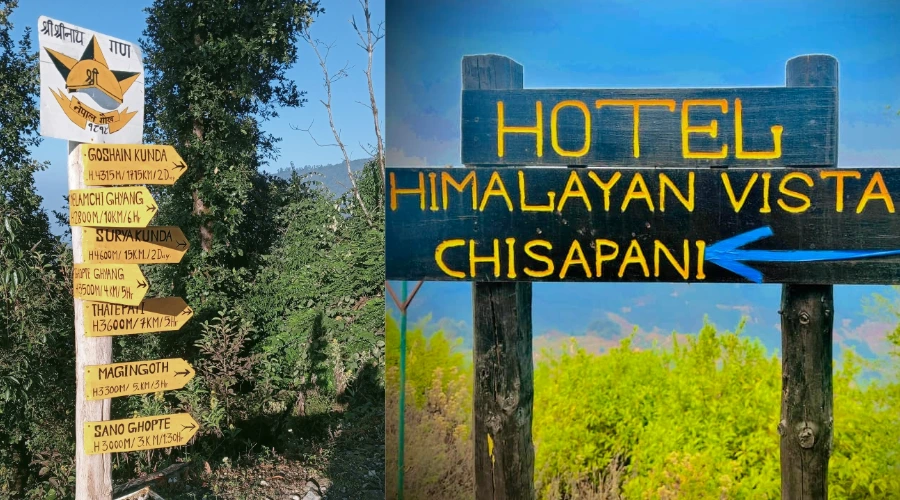
Chisapani is a popular village during the trek. The village, situated at an elevation of 2215 meters (7267 ft), offers an excellent view of mountains, such as the Gaurishankar Himalaya range, Annapurna range, Langtang Himal, and Ganesh Himal range.
Additionally, you might be able to see a variety of wild animals like wild boar, puma, jackal, and birds like dove, sarau, crow, eagle, vulture, etc. Besides, you can visit a few local temples around the village.
Teahouses in Chisapani
8-10 good quality teahouses
Single, twin and private rooms with attached bathrooms are available
Wi-Fi, hot water, hot shower, etc. are available
Dining hall with central heating system
Clean and warm food and accommodation
: Lunch and Dinner
: Teahouse
: Around 1 hour driving and 3-4 hours walking
Day 02:
Trek from Chisapani to Kutumsang (2470 m)
Trek Route: Chisapani → Gul Bhanjyang → Kutumsang Beginning Point: Chisapani (2215 m) Ending Point: Kutumsang (2470 m) Lunch: Gul Bhanjyang Chisapani to Kutumsang Distance: 15 km (9.3 miles) Total Ascent: 255 meters (837 ft) Overnight: Kutumsang
The 2nd day of our trekking might be the longest day of the trip as we need to hike for about 7 hours from Chisapani to Kutumsang. However, the jingle view, village view, and trek trail with hiking on off-road make the trip worth it.
A morning in Chisapani greets us with the mountain view before we walk via the temperate forested path. After having breakfast, the path follows a slight downhill via the dense sub-tropical forest up to Pati Bhanjyang. From there, the road is somewhat plain, and it is easier to get to Thankune Bhanjyang.
Then, the trail takes a gradual uphill track until you reach Laspe Danda. Now, it is time for a challenging, steep uphill hike to reach Gul Bhanjyang, where we will be having lunch and resting for a while.
From Chisapani to Gul Bhanjyang, it is a hike of a total of 9-10 km, about 4-5 hours. Just before Gul Bhanjyang, we can stop at Thotungdanda to visit a small monastery.
Following our lunch, we take a steep uphill path to Kutumsang, where we will spend the night. The latter part of the trek after lunch is about 5-6 km long and takes about 2-2.5 hours to complete.
About Gul Bhanjyang
Gul Bhanjyang is a very beautiful local village in the Helambu Valley Trek. The village, situated at an elevation of 2130 meters, offers an excellent jungle view. The village also has well-established structures such as health posts, schools, police stations, etc.
There are some local gumbas and temples that you can visit. Additionally, more than 100 households provide a great village experience, as well as its people and lifestyle.
Further, there are about 3-4 basic teahouses offering food prepared from locally grown fresh vegetables. However, there are no rooms with attached bathrooms and Wi-Fi, but there are shared bathrooms and bucket showers.
About Kutumsang
Kutumsang is another local village that is inhibited by native Yolmo/Hyolmo people. There are local gumbas, temples, and a Kutumsang Chorten, where trekkers can visit. Furthermore, you can visit an army barrack nearby. It is also a checkpoint, the first checkpoint, of Langtang National Park.
Teahouses in Kutumsang
5-6 basic teahouses
Some teahouses have attached bathroom
Wi-Fi, hot shower, hot water, charging, etc. are available
Centrally heated dining
Neat and warm accommodation
: Breakfast, Lunch and Dinner
: Teahouse
: 7 hours walking
Day 03:
Trek from Kutumsang to Thadepati (3690 m)
Trek Route: Kutumsang → Mangengoth → Thadepati Beginning Point: Kutumsang (2470 m) Ending Point: Thadepati (3690 m) Lunch: Mangengoth Kutumsang to Thadepati Distance: 12 km (7.5 miles) Total Ascent: 1180 meters (3871 ft) Overnight: Thadepati
The plan for the 3rd day of Langtang Helambu Trek is to cross through local villages and reach Thadepati (Thadepati Bhanjyang). On the way, you can visit local stupas and immerse yourself in the beauty of nature.
First, after breakfast, the trek route follows an uphill path until Mangengoth. There is no teahouse or anything before reaching Mangengoth. It is a hike of about 3 hours, covering around 6-7 km.
Mangengoth is also our lunch stop for today. After having a hearty lunch, we will continue our trek to Thadepati. The path after lunch is slightly easier. The path from Mangengoth to Thadepati takes a slightly uphill path for about 3 hours (about 5-6 km).
Just before reaching Thadepati, where we will stay overnight today, we need to cross a pass called Thadepati Bhanjyang (3690 m/12,106 ft). One of the major highlights of today’s trek is a view of Ganchenpo Peak (6388 m/20,925 ft).
About Magengoth
Magengoth is a small village in Helambu Circuit Trek. The village, situated at 3390 meters in height, is just a lunch place, with just 2-3 basic teahouses. The teahouses here offer basic food options from the menu, as well as Wi-Fi, hot shower, hot water, etc. facilities. Some of the teahouses might have attached bathrooms.
About Thadepati
Thadepati is a beautiful traditional village on the route to Helambu Valley. The village, situated around an elevation of 3650 meters, offers an awe-inspiring view of the surrounding mountains and jungle.
There is also a beautiful small hiking hill that you can hike to. From the top of the hill, you can even see Lauribina Pass (situated above 4600 meters in height). Or, you can go explore a small local cave nearby.
Teahouses in Thadepati
3-4 basic teahouses
Hot and cold water for drinking and bathing is available
No attached bathroom
Food according to the menu, prepared in “Daura Chulo”
Centrally heated dining
: Breakfast, Lunch and Dinner
: Teahouse
: 6 hours walking
Day 04:
Trek from Thadepati to Tarke Ghyang (2600 m)
Trek Route: Thadepati → Melamchigaon → Tarkeghyang Beginning Point: Thadepati (3690 m) Ending Point: Tarkeghyang (2600 m) Lunch: Melamchigaon Thadepati to Tarkeghyang Distance: 14 km (8.7 miles) Total Descent: 1050 meters (3445 ft) Overnight: Tarkeghyang
Tarkeghyang village
The trek route for day 4 is going to be a little longer but an easier path.
The route from Thadepati to Melamchigaon takes on a completely downhill path through the dense jungle and terraced fields. The first half of the 6-day trek itinerary from Thadepati to Melamchigaon is around 6-7 km long and takes about 3 hours to cover.
The path is rather interesting as we might be able to spot some rare wildlife. Also, a classic monastery dating back a few centuries in the Melamchigaon/Melamchi Village, making it a good spot to take photos. Melamchigaon is our lunch stop for today.
After having a delicious lunch, we will continue to walk down the hill until we cross a suspension bridge. Once we cross the bridge, the path takes an uphill route again until Tarkeghyang.
A suspension bridge on the Helambu Trek
Tarkeghyang was the biggest settlement during the Langtang Helambu Trek. Unlike other nearby villages, this is your place to witness the Sherpa community with their unique lifestyle and culture. Also, there are two oldest monasteries, which are also marked as the largest ones in this area.
While you are on the trek, you can interact with the local Tamang people. Further, you will be staying in one of the homes of the Hyolmo caste people.
Now, you can unload your luggage and order dinner. This 2nd half of the trek is around 7 km long and takes around 3 hours to cover.
About Melamchigaon
Melamchigaon is a popular village in the Helambu route, with more than 50 local households. The region is mostly inhabited by Hyolmo people, with a few Brahmins and Chhetri caste people, such as Dhital, Darlami, Deshar, etc.
The village, located on the bank of the Melamchi River, offers an excellent river and village view. Besides just views, there are some monasteries and gumbas that you can visit. Melamchi Village is also a well-established region with schools, police stations, medical facilities, etc.
Further, there are about 5-6 good quality teahouses that offer all sorts of facilities such as Wi-Fi, hot water and shower, attached bathroom, heated dining, variety of foods from the menu, etc., for some additional fees.
About Tarkeghyang
Tarkeghyang, situated at 2600 meters (8530 ft), is the biggest settlement region of Hyolmo/Yolmo and Sherpa people. The village is home to some of the oldest Buddhist monasteries in the region, especially Tarkeghyang Monastery. From the village, you can see a great view of Ganja La Peak (5844 m/19,173 ft).
Agriculture is a major source of income for the people living here. So, you can eat food prepared from organic vegetables like potatoes, barley, and maize. Seeing farming in terraced fields is going to be a unique experience for its visitors.
Teahouses in Tarkeghyang
3-4 simple teahouses
Warm and clean accommodation
Food prepared from locally grown vegetables
The attached bathroom, Wi-Fi, hot water and shower, electronic charging, etc., are available.
: Breakfast, Lunch and Dinner
: Teahouse
: 6 hours walking
Day 05:
Trek from Tarke Ghyang to Sermathang (2590 m)
Trek Route: Tarkeghyang → Ghangyul → Sermathang Beginning Point: Tarkeghyang (2600 m) Ending Point: Sermathang (2590 m) Lunch: Ghangyul Tarkeghyang to Sermathang Distance: 11 km (6.8 miles) Total Descent: 815 meters (2674 ft) Overnight: Sermathang
Gaurishankar Himalayan range seen from Chisapani
Day 5 of the Helambu Circuit Trek is rather an easy day. The trek route follows a slightly uphill path and needs to cover less distance, i.e. about 11 km.
After having satiating breakfast in the tea house of Tarkeghyang, we will begin our trek at the usual time, around 8 am. Then, we walk down from the Tarkeghyang to reach Sermathang.
The route is a combination of a trekking trail and a motorable road through forested trails and local villages.
It takes about 2 hours to reach Ghangyul, covering around 5.5 km. We can have some lunch or snacks here or continue to trek to Sermathang for lunch.
After having lunch, with an additional almost 2 hours trek, around 5.5 km, you can reach Sermathang. Sermathang is our final destination for today.
About Ghangyul
Ghangyul is a small local village situated at an elevation of 2770 meters. The village faced massive damage due to the earthquake in 2015 in Nepal. So, the settlement shifted to a newly built two-room building, which had about 50-70 houses.
It is just a lunch place that offers basic Dal Bhat, curry, tea/coffee, and a few other local delicacies.
About Sermathang
Sermathang is another popular Sherpa village in the lap of the Rolwaling range. The village is situated at an elevation of 2590 meters (8497 ft), offering an alluring panoramic view of Jugal Himal (6095 m), Dorje Lhakpa Himal (6966 m), and Gaurishankar Himal (7134 m).
There are about 200 households in this region, offering excellent village views. Sermathang is also known for some great apple farms, an important apple-growing area.
Teahouses in Sermathang
5-7 decent teahouses and 1 good quality resort
Wi-Fi, hot water and shower, electronic charging, etc. are available
Centrally heated dining hall
Western and Nepali cuisine, according to the menu
Single, twin, and private rooms with attached bathroom
: Breakfast, Lunch and Dinner
: Teahouse
: 4 hours walking
Day 06:
Trek to Melamchi Bazar & Drive to Kathmandu
Trek Route: Sermathang → Kakani → Melamchi Bazaar Drive Route: Melamchi Bazaar → Kathmandu Beginning Point: Sermathang (2590 m) Ending Point: Kathmandu (1400 m) Lunch: Melamchi Bazaar Sermathang to Melamchi Bazaar Trek Distance: 12 km (7.5 miles) Melamchi Bazaar to Kathmandu Drive Distance: 41 km (25.5 miles) Total Descent: 1190 meters (3904 ft) Overnight: Kathmandu
Day 6 is the last day of our trekking.
First, we walk down from Sermathang in the morning and hike down to Melamchi Bazaar via Kakani. The trek from Sermathang to Melamchi Bazaar is about 11-12 km long and takes around 3-4 hours to cover. Melamchi Bazaar is also our last lunch place and trek ending point of Langtang Helambu Valley Trek.
Before reaching Melamchi Bazaar, you can stop at Dubachaur to explore this small yet picturesque village at a 1500-meter elevation.
Once you have had lunch and rested for a while, we will arrange a private jeep or catch a public bus to Kathmandu. The drive from Melamchi Bazaar to Kathmandu is only a 3-4 hour drive, around 41 km long, on a slightly rough route.
Once you are in Kathmandu, you can rest, visit Kathmandu Valley, or go to a refreshing spa.
About Melamchi Bazaar
Melamchi Bazaar is the biggest settlement in the area and also joins the highway from Kathmandu. The town is situated at an elevation of 870 meters (2854 ft), a gateway to the treks in the Helambu region and a central hub for trade and transport.
It is a hustling town in the Helambu Valley Trekking, with Melamchi Hospital, primary and secondary school, municipality office, police station, etc. There are also banks, ATMs, and money exchanges, so you can use those services.
A little further from the town, there is a Melamchi Water Supply Board, from where water is supplied to the capital city of Nepal, Kathmandu.
Teahouses in Melamchi
10-15 good quality lodges
Comfortable and warm accommodation
Nepalese and Western food options
Wi-Fi, hot shower, hot and cold water, electricity and charging point, etc. are available
Clean and safe drinking water
: Breakfast and Lunch
: Not included in package
: 3-4 hours walking and 3-4 hours driving
Gallery
useful info
Weather/Temperature of Helambu Nepal
The weather on the Langtang Helambu Trek varies depending on the season.
Spring (March-May) and autumn (September-November) are the best times for trekking. The skies are clear, with temperatures ranging from 10°C to 20°C (50°F to 68°F) during the day at lower altitudes. Meanwhile, the temperature can drop to -5°C at night at higher altitudes.
Winter (December-February) in the Helambu region brings colder weather conditions, with temperatures falling as low as -10°C at higher altitudes.
During the monsoon/summer season (June-August), the reason faces heavy rain, making the trail muddy and slippery. Moreover, daytime temperature ranges between 15°C and 25°C (59°F to 77°F).
Helambu Trek Difficulty
The Langtang Helambu Trek is considered moderate, ideal for both experienced and novice trekkers. The trek path is a mix of sloppy and steep ascents, descents, and narrow trails, sometimes rocky, uneven and slippery landscapes during monsoon.
Similarly, the weather also plays a significant role in affecting the difficulty of the trek. The nights in this region are cold, especially at the higher altitudes, with occasional snowfall during winter.
Besides, the monsoon makes it difficult to navigate due to the hazy surroundings. Monsoons also pose the dangers of leeches and other insect bites.
For all these reasons, the trekkers should be extra attentive and take essential precautions to avoid all these difficulties. They need to be prepared with first aid services, should hydrate regularly, and know the early signs of altitude sickness. One of the best ways to encounter these dangers is by hiring an experienced guide.
Altitude Sickness During Trekking
The maximum altitude during this trek is Thadepati at 3650 meters. As long as you are hydrated and railways state, there is no chance that you can catch altitude sickness. Since you will have an expert guide with Himalayan Masters, they will be helpful during the emergency condition.
Altitude Scale for 6-day Langtang Helambu Trekking Nepal
Best season for the Helambu Trek
Best time for Langtang Helambu Trek
Helambu trek is, in fact, possible throughout the year. Since it is a moderate high-altitude trek, the weather conditions in all months are favourable for trekking.
If you are travelling to Nepal in summer and winter, when other popular trekking routes are closed, this might be the best option for you.
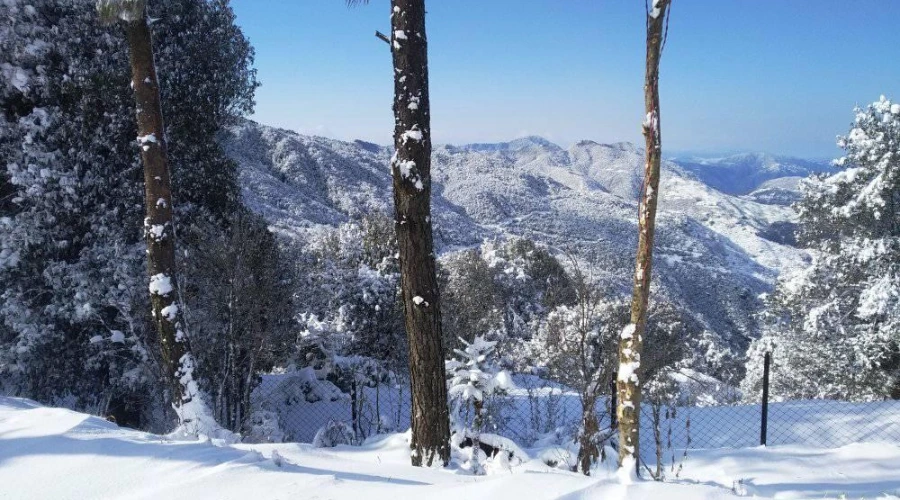
The trekking agencies in Nepal mark Helambu as the best trekking destination for monsoon/summer in Nepal. Also, in winter, the snow falls only in the area above 3000 m, and you can easily complete the trek.
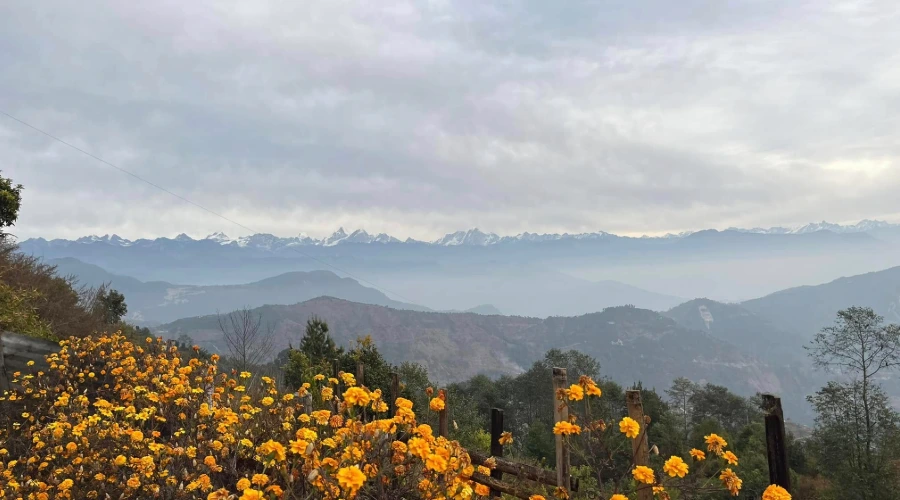
In autumn, the weather is clear, and the Himalayas are very distinctively visible. And, during spring, the blooming of wildflowers makes it all beautiful.
Trek Roads/Route & How to Avoid
The Langtang Helambu Trek begins from Kathmandu and follows a beautiful route through the Langtang region to Helambu Valley. The trek starts from Sundarijal and can also be started from Syabrubesi.
From Sundarijal, the trail passes through the Shivapuri National Park and continues towards the villages of Chisapani and Kutumsang. While trekking, you can see beautiful views of the surrounding hills and mountains.
If you are trekking from Syabrubesi, the route leads to Bamboo, Lama Hotel, Langtang Village, and Kyanjin Gompa.
The Langtang Helambu Trek is often considered a circuit trek. So, while returning, you will be passing through local traditional villages like Thadepati, Tarke Ghyang, and Sermathang to Melamchi Bazaar. From there, you will be driving back to Kathmandu.
Permits for Helambu Trekking
It’s necessary to get three different kinds of permits for trekking in the Langtang region. If you are booking any trek package in Nepal, the agency will be responsible for arranging all your permits and documents. So, do talk to your agency about this.
However, if you are travelling as an independent traveller, then make sure you issue these permits in Kathmandu or during the trek. The Tourism Board of Nepal can issue a TIMS card while you are in Kathmandu.
Other permits can be issued at the entry point of the national park itself. Both the Langtang National Park Permit and Shivapuri National Park Permit can be collected from Kathmandu during the Langtang Trek for 6 days.
To get the permits, you need a valid visa to Nepal, two copies of passport-sized photos, copies of your passport, and any booking details. Then, you can fill out the form and get the permits.
The cost for permits to Helambu Langtang National Park is NPR 3000 per person, Shivapuri National Park NPR 1000 per person, and TIMS Card costs NPR 1000 per person.
Helambu Trek Cost
The Helambu Circuit trek is one of the cheapest treks in Nepal. You do not need to take a flight due to close proximity from Kathmandu, which significantly reduces trek costs. It is a short trek in a less popular and less populated area, so the accommodation and food can be found at a reasonable price.
Since not all tourists prefer this trek, agencies offer special discounts for this trek. Additionally, you do not need any special permits to travel in this region; this also reduces your trek cost.
Overall, the price of trekking to Helambu ranges from $500 to $800 for 6 days. However, if you travel independently, the cost can be reduced by around $400.
If you are travelling with Himalayan Masters, you can complete the Langtang Helambu Trek for $750. A huge chunk of money goes to transport, but the accommodation and food costs compensate for it.
Moreover, you might have to pay about $30 for food and accommodation in teahouses. Also, the guide costs about $25 per day during this trek.
Additional Cost
Normally, all your travel costs, including 3 meals, accommodation, permits, etc., are included in the trip package. However, you might need to pay an additional charge for a hot shower and water, Wi-Fi, battery charging, etc. This might add up to extra expenses to your standard trip cost.
Additionally, opting for a private shared jeep ride will cost you extra money. In addition to that, snacks, drinks, and other additional expenses add up to the trekking budget. Tips for the guide and porter are not included in the trip package.
Langtang Helambu Trekking Itinerary 3 days
Helambu Nepal
To be honest, we don’t recommend you to complete the Langtang Helambu Trek in just 3 days. With the long distance, you need to cover each day, it’s almost impossible to complete this trek in 3 days.
However, the Helambu Valley trek can be easily done in 4 days. The 4 days Itinerary can be:
Day 1: Drive to Sundarijal and trek to Chisapani
Day 2: Trek from Chisapani to Kutumsang
Day 3: Trek from Kutumsang to Melamchi Gaun
Day 4: Trek from Melamchi Gaun and drive to Kathmandu
But if you must complete the Helambu trek in 3 days, you can walk down from Kutumsand to Maleamchi Bazaar in just one day and get an evening ride from Melamchi to Kathmandu.
Langtang Helambu Trekking Itinerary 5 days
Also, this trek can be completed in 5 days if you trek to Tharepati Pass. This Langtang trek 5 days is equally comfortable as the 6-day trek but doesn’t allow you to spend one additional day in Sermathang. Also, it’s easier to extend your trek to Gosaikunda with this Helambu Trek for an additional 5 days.
Day 01: Drive from Kathmandu to Sundarijal and trek to Chisopani
Day 02: Trek to Kutumsang
Day 03: Trek to Tharepati Pass (3650 m)
Day 04: Trek to Tarkeghyang (2743m)
Day 05: Trek to Timbu 3 hours walk and ride to Kathmandu
Accommodation During The Trek
Trekkers can find all sorts of accommodations on the Langtang Helambu Valley Trek. You can choose to stay in hotels or guesthouses in lower altitude regions such as Kathmandu, Sundarijal, Syabrubesi or Melamchi Bazaar. While you will be staying in teahouses during the trek, or request to stay in a camp or tent where available.
Melamchi River
Hotel/Guest House
The hotels offer private and shared rooms with attached bathrooms. Also, hot showers and internet facilities are available but at an additional charge. However, you can get charging ports in your room and a warm and comfortable bed to sleep in.
Teahouses
In contrast, teahouses are local houses used for accommodation. Hence, the services in the teahouses are normally basic, but they give you an internal experience of the Nepali lifestyle.
The teahouses typically have shared rooms with twin beds; some may have single rooms, too. Likewise, bathrooms are usually shared outside the room. Services like hot showers, hot drinking water, Wi-Fi, and charging ports are available in most of the teahouses but at an extra charge.
Note: Normally, the accommodation during the trek is neat and warm, but it is always better to carry your own sleeping bag for your own personal use.
Camp/Tent
Camping while trekking to Langtang Helambu could be an adventurous experience. It could be an experience of a lifetime to sleep under billions of stars in the Himalayas. However, it might not be possible at all times and places, and also due to cold, especially at higher altitudes.
Since you won’t have a hot shower, no charging ports, internet, warm and comfortable beds, and attached bathrooms, it might really be challenging. Therefore, it is best to carry a sleeping bag that can withstand negative temperatures.
Food
The food in Langtang Helambu Valley Trek is a blend of local Tibetan and Nepali cuisine. Trekkers can enjoy these delicacies in the teahouses along the way.
The foods provided in the teahouse give enough energy to last for the day. You need to be well nourished so as to have a successful trekking journey and avoid any other risks, such as altitude sickness.
Breakfast
Tibetan bread with jam, butter, or honey
Oatmeal
Porridge
Pancakes (plain, apple, banana, etc.)
Egg items
Tea or coffee
Sherpa stew
Tsampa (roasted barley flour mixed with tea or milk), etc.
Lunch
Dal Bhat with veg and non-veg curries
Noodle soup
Fried rice
Mo: Mo
Tibetan bread
Chowmin
Thukpa
Potato items
Chocolate rolls, etc.
Dinner
Dal Bhat with veg and non-veg curries
Thukpa or noodle soup
Sherpa stew
Pasta
spaghetti
Puddings
Chocolate roll
Roti or chapati, etc.
Water En Route
The main source of water during the trek is the natural spring water. But it is important that you ask your guide if it is drinkable or not before drinking. In addition, it is equally important to purify the water with a water purification tablet.
Besides this, you can also get bottled water in the teahouses, though the prices increase with altitude. You can also get boiled at the teahouses for an additional dollar.
Communication En Route
Speaking about the mode of communication, in almost all parts of the trek, you can find Wi-Fi and mobile network services. The Wi-Fi could be a little slow and might cost you extra money.
Likewise, mobile network coverage is comparatively good at lower altitudes. But as you go higher, it might not be good enough. You can get the mobile network from Nepali SIM cards, NTC and NCELL, which can be bought in Kathmandu or Sundarijal.
Additionally, some trekking groups carry satellite phones for emergencies, as communication in remote areas can be challenging sometimes.
Do I need a guide?
Though hiring a guide for Langtang Helambu Trek is not compulsory, we recommend that you hire one. A guide can help you navigate, know the local culture and tradition, and safely arrange all the transport, food, and accommodation.
Especially in unfamiliar and restricted areas, as in Upper Mustang Trek or Upper Dolpo Trek, it is better to have a licensed and experienced guide. They will also be responsible for giving information on weather and terrain.
Do I need a porter?
Hiring a porter is optional.
Hiring a porter can significantly reduce the weight of your luggage, giving you more freedom to walk and enjoy the trek. It is less tiring if you can walk freely without worrying about the burden of heavy bags.
Moreover, a porter can only carry up to 26 kg. But if you have less weight, you can carry it yourself or share a porter with another fellow trekker.
Booking Procedure
Langtang Helambu Trekking Nepal can be booked with Himalayan Masters by following a few easy steps, as mentioned below.
Please fill out the online form on our trip page, or you can directly contact Himalayan Masters via WhatsApp, email, phone, or SMS.
Then, we will contact you through email for further information. (If you have any special requests or need trek customization, you can mention them.)
Once you pay $200, your booking will be confirmed.
Finally, after the full payment for the trip is made, you can visit Nepal anytime and set out on a trek.
Documents for Booking
A copy of your passport
A copy of your flight ticket
Two passport-sized photographs
Emergency contact details
A copy of your travel insurance (optional)
Last-minute Booking
Langtang Helambu Valley Trek can be booked at the last minute by directly contacting us on WhatsApp, email, phone calls, or directly visiting the Himalayan Masters office at Saat Ghumti Marg 3, Thamel. However, you need to inform us 1 day before going on the trek and make the full payment for the trip.
Cancellation and Postpone Policy
Once you have completed the booking process and paid the money for the trek with Himalayan Masters, the amount is non-refundable. However, your deposit is for the lifetime. You can visit Nepal anytime and go trekking, or you can refer anyone for the trek on your behalf.
Feedback and Review Policy
Do not forget to leave feedback and review once you have completed the trek. Your feedback and reviews are most appreciated and allow us to improve even more.
Packing List
Packing appropriately is crucial to the success of your Langtang Helambu trekking journey. Overpacking or packing less can greatly affect your trekking experience. When packing, trekkers should be careful to pack essential items and avoid unnecessary items.
The suggested packing list for a 6-day Langtang Helambu Trek is as follows:
General
Four-season (zero-degree) sleeping bag
Puffy down jacket
Daypack (35–45 liters) with rain cover
Sleeping bag liner
Upper Body
Sun hat or cap
Knitted hat/Beanie
Headlamp
Sunglasses
Undergarments
Technical fabric/quick-drying underwear
Sports bras (women)
Pajamas or sleeping clothes
First Aid & Medications
Sunscreen
Lip balm
Ointment
Personal medications
Personal first-aid kit
Other Essentials
Passport
Extra copies of passport-sized photos
Reusable water bottle
Toiletry kit
Water purification tablets or UV water purifier
Hydration bladder
Towel
Pillowcase
Toilet paper
High-protein snacks such as protein bars or nuts
Waterproof/dry bags
Airline tickets
Optional Items
Power bank or extra batteries
Camera and mobile phone
Cards/book
Binoculars
Whistle
Thermos for hot water
Trekking poles
Packing Tips:
Trekker should avoid packing heavy items, such as excessive clothing or shoes, valuables like jewelry, unnecessary toiletries, and non-essential, heavy gadgets.
FAQs
How far is Helambu from Kathmandu?
The village of Helambu is about 42 km in the northeast direction of Kathmandu. It is reachable within 5 to 6 hours of jeep ride from Kathmandu.
How hard is Langtang Helambu trek?
Langtang Helambu Trek is one of the easiest trekking routes in Nepal. You must walk for 4 to 5 hours, covering around 10 km daily on a very easy, sloppy route.
Where is Sarmanthang?
Sarmanthang, also known as Sermathang, is a lovely town in the Langtang Helambu region of Nepal, northeast of Kathmandu, at an altitude of around 2600 meters. The village, which is mostly inhabited by Yolmo people, is known for its Tibetan Buddhist monasteries and serene environment.
How long is Langtang Helambu Trek?
Langtang Helambu trek duration is about 6 days as per the Itinerary of Himalayan Masters. However, it can be shortened to 4 days trek. But we do not recommend doing so, as the standard itinerary is planned so that you can make the most out of the trek. This trek can also be completed in one day if you opt for Langtang Helicopter Tour.
Can I get ATM/Money Changer en route of Langtang Helambu Trek?
ATM/Money changers en route of the Langtang Helambu trek are scarce. So, it is advised that you withdraw enough cash in Kathmandu or Sundarijal before starting the trek, as these are the last major cities with ATM services.
Are there vegetarian/vegan options on Helambu trekking routes?
Yes, you can eat all kinds of vegetarian or vegan foods on the menu along the Helambu trekking routes. The menus typically include Dal Bhat, veg curries, noodles, soup, etc.
What kind of wildlife can I encounter while trekking in Helambu?
Trekkers in Helambu might encounter various wildlife like langur monkeys, Himalayan tahr (wild goat), red pandas, and various species of birds like Himalayan pheasants, eagles, and vultures.
Are there any risks from wild animals while trekking in Helambu?
Typically, encountering wild animals is rare, and there are no risks from wild animals. However, it is wise to stay alert, avoid straying off the main trails, and not disturb the wildlife.
Are there medical facilities on trekking routes?
Some of the villages en route to the Helambu Valley trek might have basic health posts, so it is better to carry a first aid kit with you. In case of any emergencies, the nearest reliable medical facility is in Kathmandu.
Can I trek Helambu during the monsoon season?
Trekking Helambu during the monsoon season (June to August) is possible but challenging. The trekking trails are slippery due to rain, and there are risks of leeches, mosquitoes, and other insects.
Can I do the Helambu trek with my family?
Yes, the Helambu trek can be done with friends and family as it is a moderately difficult and relatively lower-altitude trek.
Reviews
L
Luca Moretti
Italy
Verified Purchase
An Unforgettable Helambu Trek, It’s Nature and Culture
The Langtang Helambu Trek was an unforgettable journey for me. The trails were perfect, passing through several traditional villages, forests, and mountains up and down, all along the calming melody of the river. This journey, arranged by Himalayan Masters, I
...
The Langtang Helambu Trek was an unforgettable journey for me. The trails were perfect, passing through several traditional villages, forests, and mountains up and down, all along the calming melody of the river. This journey, arranged by Himalayan Masters, I suppose is the best trek itinerary to enjoy that all the Langtang had to surprise with. Thank you Raj (our guide) for your excellent knowledge, insight about the region, and helpful and kind manner. I intend to return back next season and explore other regions in Nepal.
Based on your preferences, location, timeframe, and budget, our team can design your dream trek based on our extensive knowledge and experience of the Himalayas. Get in touch with us for detailed information and assistance planning your dream trek. With our 97% success rate on trekking and climbing trips in 2025 and 2026 spring season, we will answer any questions you may have and guide you for an unforgettable experience.