




Dharapani Village, Manang: The Best Travel Guide for Trekkers
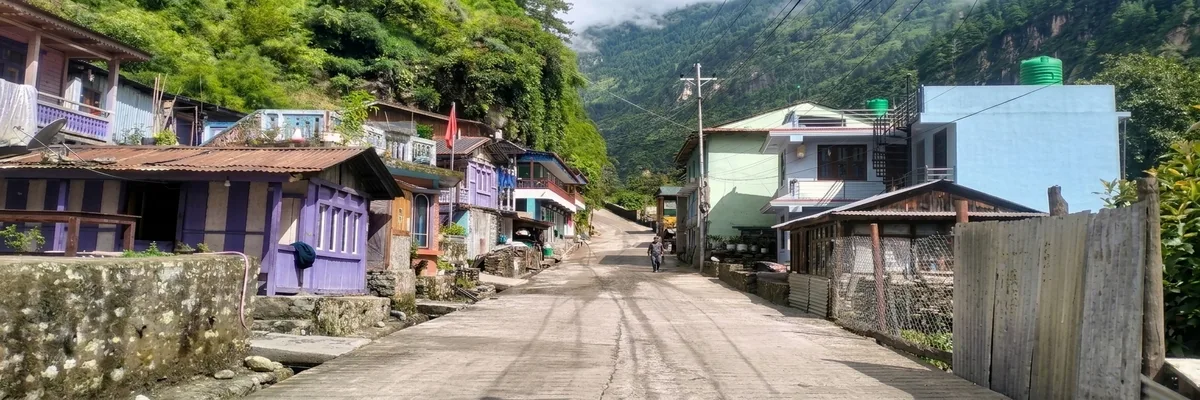
Most villages on the Himalayan trekking routes are just places you pass by; Dharapani Village cannot be said the same. Nestled in the lower Manang district, at the convergence of the Marsyangdi River and Dudh Khola, it is where two of Nepal’s most famous treks physically overlap: the Annapurna Circuit and the Manaslu Circuit.
The name Dharapani comes from two Nepali and Sanskrit-derived words: “dhara”, meaning a natural spring, stream, or water spout, and “pani”, meaning water.
The combined meaning refers to a location defined by or built around a natural freshwater source or spring. It is a very common name for settlements in the hilly and mountainous regions of Nepal where access to a reliable water source was historically crucial for travellers and local communities.

Trekkers coming from Larkya La Pass end their Manaslu journey here, while others use this place as the starting gate towards Manang, Tilicho Lake, and Thorong La Pass of the Annapurna Circuit.
That makes this village one of the most strategically important stops on the entire Upper Annapurna and Manaslu trekking network for a small village.
This guide has all you need to know before you arrive at Dharapani, where exactly Dharapani Village sits, how to get there, what activities one can do there, and practical details.
If you are spending a single night here on the way to Thorong La Pass or arriving exhausted after several days of the Manaslu Circuit Trek, this is the perfect reference to have read before you go.
Quick facts about Dharapani
Before you dive into the full details, here’s a quick overview of what makes Dharapani worth knowing about.
| Category | Facts |
| Altitude | Approx. 1,960 m (6,430 ft); some local signage lists it slightly higher |
| Region | Lower Annapurna region, on the border with Gorkha’s Manaslu region |
| Rivers | Sits near the confluence of the Marsyangdi River and Dudh Khola |
| Known For | Meeting point of the Annapurna Circuit and Manaslu Circuit treks |
| Permits Checked Here | ACAP (Annapurna Conservation Area Permit) and MCAP (Manaslu Conservation Area Permit) |
| Ethnic Communities | Primarily Gurung, with Tibetan and Magar influence |
| Road Access | Yes, by jeep or local bus from Besisahar; unsealed and occasionally blocked in monsoon |
| Best Seasons | March-May (spring) and September-November (autumn) |
| Typical Overnight Cost | Around $20-$30 including bed, dinner and breakfast |
Where is Dharapani Located?
Dharapani Village is a major mountain village in Nashong Rural Municipality, Manang District, Gandaki Province, in northern Nepal. Dharapani also lies within the Annapurna Conservation Area. Sitting along the Marsyangdi River at an elevation of roughly 1,960 meters (6,430 ft), its approximate map coordinates are 28°31′05″ N latitude and 84°51′ E longitude (approx. 28.518° N, 84.35° E).

Geography and Rivers
Dharapani Village is located in a narrow valley of the Marsyangdi River near the confluence of the smaller Dudh Khola and the Marsyangdi.
Steep, forest-covered hillsides rise on either side, lending the village a protected, almost enclosed appearance, as opposed to the higher-altitude stops further up the trek.
The banks of the river are a feature in their own right. The Marsyangdi is swift, cold, and boulder-strewn, and over the centuries it has carved this valley. It has been the primary source of water for irrigation, potable water, and micro-scale hydropower generation in the area.
Furthermore, Dharapani lies in the mid-hill zone, with trees still plentiful, compared to the villages higher up the Annapurna Circuit where trees have become sparse, and the terrain rocky and exposed.
Much of the surrounding land is forested with pines, oaks, and rhododendron, which gives the village the distinct impression of having been somewhat protected from the whims of nature compared to the land to be experienced ahead.
Which district is Dharapani Village in?
Even though some sources also describe it as part of the lower Gorkha district as it sits close to the Manaslu Conservation Area, it actually lies in Manang District of Nepal. This village is a part of Nashong Rural Municipality.
This village physically overlaps both the popular trekking regions. If your itinerary crosses both regions, you can obtain permits only at the checkposts there. Gladly, that won’t be a problem for you since it’ll be prearranged if you’re trekking with us.
Note:
If you’re looking for the clockwise Manaslu Circuit Trek, your permits will be checked here. You can only issue new ACAP at Dharapani. You’ll have to get MCAP and RAP from Nepal Tourism Board in Kathmandu.
Altitude and Climate
The village lies well below the high alpine passes at roughly 1,960 meters that make this region popular. The air here is noticeably thicker and warmer than at Manang or Larke La, which makes this place a great rest stop.
We can expect a moderate, forested climate in spring and autumn, heavy rain in the monsoon months, and cold but snow-free conditions in the winter.
History and Cultural Significance of Dharapani Village
Dharapani Village is not just a stopover. It carries centuries of cultural blending from its days when it used to be a trade route between the mid-hills and the high Himalayan region. The history is still reflected in the mix of Gurung and Tibetan influence found here today.
Here’s a clear description of the people, traditions, and culture that give this village its character.
A Village Shaped by Two Trade Routes
Dharapani historically functioned as a trade corridor connecting communities in the mid-hills with those living higher towards the Tibetan plateau before it became a trekking waypoint.
That history is still evident today in the cultural mix of the village, where a blend of Gurung tradition and Tibetan Buddhist influence is visible in small chortens, prayer flags, and mani walls scattered along the trail edges.
Gurung, Tibetan and Magar Communities
This village is home mostly to the Gurung community, people traditionally known for farming and their historic service as Gurkha soldiers.
We can also notice a clear blend of Tibetan and Magar influence throughout the area. This unique blend of cultures shapes everything from the village architecture, characterised by traditional stone houses with wooden window frames, to the small monasteries and prayer sites scattered throughout.
As we walk through the village, we will see locals practising terrace farming, wearing handmade clothing during festivals, and weaving textiles using methods that have remained unchanged for generations.
Culture, lifestyle and festivals
Dharapani is a vibrant village home to Gurung, Magar, and Tibetan-descended families who live in harmony. It’s a village where diverse mountain traditions meet.
Historically, the lifestyle of people centred on terraced farming, livestock herding, and trade. But today, many residents also run local teashops and teahouses, welcoming trekkers on the popular trekking route.
The daily life of people carries a deep spiritual rhythm, visible across their colorful prayer flags, ancient mani walls, and brass prayer wheels scattered throughout the village.

The local heritage truly comes alive during major celebrations. The entire village comes together during festive seasons for celebration.
People here celebrate national festivals such as Dashain and Tihar, as well as cultural festivals such as Tamu Lhosar (Gurung New Year).
People tend to gather around monasteries near the village, wearing their ethnic attire and enjoying traditional music and community feasts.
Religious Sites Worth a Look
A stop here offers trekkers a chance to see small-scale Buddhist and animist influences side by side. Mani walls carved with prayers, weathered chortens at the village edge, and strings of prayer flags stretched across the trail are some common sights. Most sit directly along the main path through the village, so it’s worth taking a short break to explore around.
Why Dharapani Village Matters for Trekkers?
For a village of its size, Dharapani village has a lot to offer. It’s one of the few places where two popular trekking circuits overlap. It’s also a permit checkpoint and a natural rest stop before the altitude gets serious.
A Crossroads of Two Circuits
Only a few villages in Nepal see traffic from two separate long-distance treks. If you are finishing the gruelling 12 to 20 days of the Manaslu Circuit, you will finally drop into town from the north after crossing the high Larkya La Pass (also pronounced “Larke”).
At the same exact time, trekkers on the Annapurna Circuit Trek are pushing through the opposite way, heading up toward Chame and Manang.
It creates an incredible vibe in the local teahouses, where you will find both groups sitting around the same dining tables, trading stories about completely different but both extraordinary trails over hot tea.
Permit Checkpoints
Because this place serves as a checkpoint for both ACAP and MCAP permits, you can expect to stop here briefly while trekking staff check your paperwork.
If you are starting the Annapurna Circuit from Besisahar, make sure to keep your permit handy. While checking in is usually quick, the village gets incredibly busy during the peak autumn season.
Keeping your documents in an outer pocket of your pack rather than buried at the bottom will save you plenty of time when multiple groups arrive at once.
An Acclimatization Stop
Dharapani, sitting at a comparatively low altitude, makes it an ideal place to build in a night before pushing on towards Chame and the higher villages of the Annapurna Circuit. It’s a sensible place to let your body adjust before the elevation gain becomes more serious.
Trekkers who have just crossed Larkya La often have the opposite ideology for this place, treating Dharapani as the first real chance to rest after days at higher altitude with thinner air.
Dharapani Village: Annapurna Side vs. Manaslu Side
As Dharapani works both as a starting point and an ending point, the experience of arriving there depends heavily on where you’re coming from. The table below clarifies the practical differences.
| Comparison | Arriving via Annapurna Circuit | Arriving via Manaslu Circuit |
| Direction of Travel | Heading up toward Manang, Tilicho, and Thorong La | Coming down after crossing Larke La Pass |
| Typical Trekker mood | Fresh, gearing up for higher altitude | Tired but relieved, trek nearly finished |
| What’s next | Continue on foot deeper into the Annapurna region | Jeep or bus out via Besisahar to Kathmandu or Pokhara |
| Permit needed | ACAP permit | MCAP permit (Checked before reaching Dharapani) |
| Typical trek length to this point | 1 day (Drive route) | 10-18 days (Depending on Route) |
How to Get to Dharapani?
There’s more than one way to reach this village. It depends on which direction you’re coming from and how long you’re planning to stay on the trail.
From Kathmandu to Dharapani Village
Most trekkers start with a public bus from Kathmandu to Besisahar and then a private or shared jeep to Dharapani. Or you can take a private jeep directly from Kathmandu to Dharapani.
The drive typically takes around 8 to 9 hours depending on traffic and road conditions. For monsoon trekkers, there’s a chance the monsoon might affect the roads and make it slightly late to reach there on time.

Tourist buses run daily during the peak trekking seasons, while private jeeps offer more flexibility, especially for groups wanting an early start.
From Pokhara to Dharapani Village
Trekkers who are already at Pokhara can take a public bus to Besisahar and get a private or shared jeep till Dharapani. They can also choose to book a private jeep directly from Pokhara to Dharapani. The total drive time usually takes between 6 to 7 hours depending on the road conditions.
Arriving From the Manaslu Side
For those coming from the Manaslu Circuit, they will first need to drive from Kathmandu to Machha Khola or Jagat, then continue trekking the Manaslu Circuit to reach Dharapani Village.
Following the trail down from Larkya La pass through Bimthang and a string of smaller settlements, it takes about 6-7 hours of trekking to reach Tilje. There’s no shortcut as road access doesn’t exist from this direction. But when you trek with us, you can get a jeep from Tilje to Besisahar and pass through the village on the way.
What is the Best Time to Visit Dharapani?
Dharapani’s weather shifts across the year, and timing your visit right can make a real difference. Here’s a season-by-season breakdown to help you pick the right choice.
Spring (March-May)
During spring, rhododendron forests bloom around the village. This turns the surrounding hillsides into shades of red and pink. Skies are generally clear, making it one of the two peak trekking seasons.
Daytime temperatures in Dharapani are comfortable, and the combination of flowering forest and mountain backdrop makes this a favourite season for photographers.

Autumn (September-November)
Autumn, the most popular season for both the Annapurna and Manaslu Circuits, offers stable weather, minimal rain, and the clearest mountain views of the year.
We can expect more crowded teahouses during this period, particularly around October, when both circuit trekkers coincide in the village at the same time.
Monsoon (June-August)
Visiting during the monsoon means dealing with heavy rain, trails full of leeches, and a much higher risk of landslides blocking the roads on your way in. The only upside is that the forests turn lush green and the village is blissfully quiet.
However, road access becomes highly unpredictable, and the trekking paths turn into slick mud, making this season perfect only for a flexible traveller comfortable with rain gear, rather than someone on a tight schedule.
Winter (December-February)
Winter is a lot quieter and colder, but because this village sits at a lower altitude, it misses the heavy snowfall that completely shuts down higher passes like Thorong La or Larkya La.
It is a fantastic option if you want to avoid the crowds and do not mind freezing mornings. Just keep in mind that if you plan to continue farther up the trail, you will need to check the pass conditions very carefully before moving on.
How is the Weather and Temperature Like in Dharapani?
Dharapani Village has a cool mountain climate with distinct seasonal shifts. The sweet spot for trekking here is during spring (March-May) and autumn (September-November), when the temperatures are comfortable, and the weather behaves itself.
Spring treats you to warmer days and crisp mornings, with April and May offering beautiful hiking conditions.
Then comes the monsoon (June-August), bringing warmer days, heavier rain and cloudy skies, though the village actually gets a bit of a break compared to the downpours south of the Annapurna range.
Autumn is the real crowd-pleaser, serving up the clearest skies and most stable weather of the year, especially through October and November.
The temperature in Dharapani during winter (December-February) drops significantly, especially once the sun goes down, and you can expect heavy snow to start piling up at the higher elevations just up the trail.
The 12-month overview of Dharapani Village weather is presented in the table below:
| Month | Typical Daytime Temperature | Typical Night Temperature | Weather Conditions |
| January | 18–20°C (64–68°F) | 6–8°C (43–46°F) | Cold mornings and nights, mostly dry |
| February | 19–21°C (66–70°F) | 7–10°C (45–50°F) | Cold mornings and nights; mostly dry |
| March | 21–24°C (70–75°F) | 9–12°C (48–54°F) | Mild and generally comfortable for trekking |
| April | 23–26°C (73–79°F) | 11–15°C (52–59°F) | Warm, pleasant and generally favorable |
| May | 24–28°C (75–82°F) | 14–18°C (57–64°F) | Warm with increasing rainfall toward monsoon |
| June | 24–28°C (75–82°F) | 16–20°C (61–68°F) | Increasing cloud and rainfall |
| July | 23–27°C (73–81°F) | 16–20°C (61–68°F) | Wettest period, cloudy and rainy |
| August | 23–27°C (73–81°F) | 16–20°C (61–68°F) | Monsoon continues, frequent rain and cloud |
| September | 23–27°C (73–81°F) | 15–19°C (59–66°F) | Rain gradually decreases |
| October | 22–26°C (72–79°F) | 12–16°C (54–61°F) | Dry, clear and comfortable |
| November | 20–23°C (68–73°F) | 8–12°C (46–54°F) | Dry and increasingly cool |
| December | 18–20°C (64–68°F) | 5–8°C (41–46°F) | Cold and mostly dry, snow possible at higher elevations |
Note:
Temperatures are approximate typical ranges for Dharapani. Actual conditions can vary depending on the year, weather patterns, and elevation.
Wildlife and Nature Around Dharapani
The forests around here lie within a transition zone between Nepal’s mid-hills and the higher alpine terrain further along both circuits, making the area unusually rich for a village of its size.
The lower slopes are covered with pine and oak, giving way slowly to dense rhododendron stands that put on a strong show of colour each spring. Birdlife is especially good. A number of Himalayan species are attracted to the mixed forest canopy, and early morning walks along the river or the edge of the forest, are often the best time to see them.
Larger wildlife is not often seen so close to a village, but the Annapurna and Manaslu conservation areas are known to contain species such as Himalayan tahr, musk deer and occasional spottings of snow leopard at higher altitudes.
Trekkers shouldn’t expect dramatic sightings right here itself, but the surrounding conservation areas are part of the reason both regions have protected status, and it’s worth keeping an eye out on the trail.
Things to Do in Dharapani Village
Although being a smaller village, Dharapani has several activities you can do to pass the time and make the most of your rest day. From walking along the Marsyangdi River to learning about the culture of the locals, here are some suggestions of the things you could do in Dharapani.
- Take a stroll along the Marsyangdi River, listening to the sound of water and enjoying the scenic surrounding cliffs.
- Visit the local Dharapani Monastery and relax around the different prayer areas to glimpse into the spiritual aspect of the village.
- Spend time observing the daily lifestyles of villagers and their traditions, from stone houses to small family-run shops.
- Take a short walk to the nearby pine, oak and rhododendron forest, which could also be a good option for birdwatching.
- Wander the terraced fields where local farmers still work using traditional methods.
- Visit the mani walls or small chortens along the trail edges and take some time to appreciate the Tibetan Buddhist influence in the area.
Local Food and What to Eat in Dharapani
Teahouse menus here follow the same classic pattern you will find all over the Annapurna and Manaslu regions. Dal Bhat, a massive plate of lentils, rice, and vegetable curry with unlimited free refills, is the absolute king of food on the trail. It is exactly what keeps your guides and porters fueled every day.
You will also find plenty of other items such as noodle soups, fried rice, and basic egg dishes on the menu, alongside hot milk tea and, in a lot of lodges, a surprisingly good bakery lineup of biscuits and fried bread. Since easily accessible road access to Dharapani is available, you can get fresh meat here. Locally available vegetables, dried buffalo meat (Sukuti), and Thukpa are common local favourites.
Where to Stay: Teahouses and Accommodation
Dharapani Village has 10-15 teahouses. It can be considered one of the better-developed stops on either circuit since it has a good number of modern traditional teahouses and guesthouses.
Rooms usually with twin beds and shared bathrooms are quite common. Newer teahouses also offer an attached bathroom and hot showers for some extra charges.
What to Expect from a Typical Room
Most rooms are basic with twin beds, foam mattresses, and heavy blankets. Generally, rooms have shared bathrooms, though as mentioned earlier, a few lodges offer attached options.
Electricity and Wi-Fi are commonly available with a small fee. Hot showers heated by gas and solar are available in a few teahouses, though some teahouses might charge extra.
Booking Ahead vs Walking In
Since spring and autumn are the peak trekking season, it’s worth calling ahead or having a guide confirm a room, as teahouses can fill up with larger groups arriving from both directions. Outside of the peak season, simply walking in and asking is usually enough.
Camping Options
Groups occasionally travelling with tents can camp nearby, though this is uncommon given enough teahouse options already exist. Camping does make more sense for larger organised expeditions; otherwise, there are easier options with larger teahouses.
Trekking Routes From Dharapani Village
From Dharapani, the trails split more than one way, and each route leads to a different destination. Here’s a breakdown of where you can head next.
Towards Annapurna Circuit Route
Continuing along the Annapurna Circuit Trek, the trail climbs gradually from Dharapani to Chame, then Manang, before reaching the highest point of the circuit at Thorong La Pass. When you trek with Himalayan Masters, your destination for the night from Kathmandu will be at Dharapani itself.
This stretch marks a clear shift in the landscape, from a forested valley to increasingly open, high-altitude terrain. This is where most trekkers begin to notice the effects of elevation gain. Acclimate properly, stay hydrated, and eat healthy.
Towards Annapurna Circuit including Tilicho Lake
Following the path towards the Annapurna Circuit, trekkers can opt to trek further towards Tilicho Lake as well, continuing straight towards Tilicho Base Camp from Shri Kharka instead of heading straight to Yak Kharka.

Clockwise Manaslu Circuit
The clockwise Manaslu Circuit starts from Dharapani or Tilje and follows the trail through Bhimtang, Larkya La Pass, Samagaun, and Machha Khola. It crosses the circuit from the Annapurna side toward the Manaslu region, ending at Machha Khola.
You will notice the shift almost immediately; the vibe feels way more remote right out of the gate. The settlements get smaller, the facilities are fewer, and the entire trail becomes blissfully quiet compared to the bustling, road-connected Annapurna side.
Saftey Note!
Doing a clockwise Manaslu Circuit can be quite challenging as there’ll be maximum gain of altitude in short period of time and the terrain being uphill only can be physically challenging as well.
Short Side Trips
For trekkers spending an extra night to acclimatize, short forest walks and riverside strolls near the village could be an easy way to stay active without gaining significant elevation. You could also visit the Sangey Choling Gompa or the Thinje suspension bridge.
Practical Travel Tips For Those Thinking To Visit Dharapani
Dharapani is one of the last comfortable stops before things get more remote, so it is advised that our trekkers double-check every essential here.
Permits and Paperwork
Trekkers are advised to carry both ACAP and MCAP permits if your itinerary touches both conservation areas. Dharapani is also a checkpoint for both permits.
Altitude and Health
Dharapani village, sitting at a comparatively lower altitude, has rare to no cases of altitude sickness. Trekkers should watch out for altitude sickness symptoms once they leave and start climbing. This is generally the last low-altitude stop before the terrain gets tough.
Connectivity and Money
Wi-Fi and cellular connectivity are there, but it may be inconsistent. We suggest you not completely rely on data coverage once you’re past the village. There are no reliable ATMs here, so it’s better to cash out at the ATMs in Besisahar. Currency exchange is also not a popular service here.
Pick the Perfect Trek to Visit Dharapani With Himalayan Masters
If Dharapani is on your travel list, we, Himalayan Masters, the best registered trekking agency, offer several trekking options to explore this beautiful village. You can choose our 12-day Tilicho Lake Trek, 11-day Annapurna Circuit Trek itinerary, or 13-day Manaslu Circuit Trek, all of which can include Dharapani in the itinerary.
Alternatively, we can customize the itinerary to match your schedule, interests, and trekking preferences, allowing you to explore Dharapani as part of your own personalized adventure.
Final Thoughts on Dharapani Village
Dharapani may not have the drama of Thorong La or the remoteness of Larke La, but it plays a role that no other village in these circuits can.
It’s where two different treks physically overlap, where permits are checked, where tired trekkers get a comfortable breadth, and excitement for starters is at its highest.
It is also where the culture of the mid-hills quietly blends with Tibetan-influenced culture carried down from the higher Himalayas.
Between the teahouses, the riverwalks, the forest trails, and a good plate of dal bhat, there’s more here than most itineraries give it credit for.
FAQs
Where is Dharapani in Nepal?
What is Dharapani famous for?
How high is Dharapani?
Is Dharapani on the Annapurna Circuit?
Is Dharapani on the Manaslu Circuit?
Can you drive to Dharapani?
Can you start the Annapurna Circuit from Dharapani?
How many days should you spend in Dharapani?
Is Dharapani safe?
Which is the best month to visit Dharapani?
Does it snow in Dharapani?
Are there ATMs?
Is it possible to start Manaslu Circuit Trek from Dharapani?
Is there mobile network?
Is WiFi available?
What food is available?
Are hot showers available?
Can you find accommodation without booking?
Do you need a guide?
What permits are required for Dharapani?
How far is Dharapani from Chame?
How far is Dharapani from Manang?
Can you trek from Dharapani to Manang in two days?
Can you visit Dharapani without trekking?
What should you pack?
Is Dharapani suitable for beginner trekkers?
Loading...
related post


Author

Jayanta Neupane is a travel content writer with a genuine passion for exploring, researching, and sharing travel experiences. He enjoys turning firsthand experiences and destination research into engaging, informative, and practical content. With an interest in adventure, trekking, and Nepal’s diverse landscapes and cultures, he focuses on creating authentic content that helps travelers better understand and experience their destinations.


Leave Your Comment