




20 Manaslu Circuit Trek Safety Tips for Your Best Trip
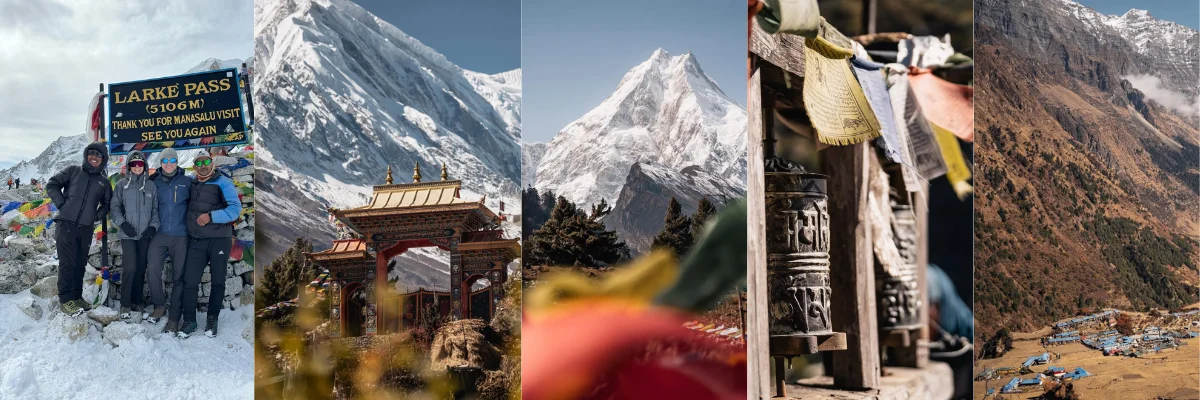
If you are planning the Manaslu Circuit Trek, having the right Manaslu Circuit Trek safety tips in hand before you set foot on the trail can make all the difference. The Manaslu Circuit is one of Nepal’s most remote and rewarding treks, but it is also one that demands real preparation.
Unlike busier trails in Nepal, the Manaslu Circuit passes through a restricted zone. Phone signal disappears for long stretches. Villages are spread far apart.
The terrain shifts from hot subtropical gorges at the start to frozen mountain passes near the end. Weather changes fast, and rescue options are limited.
Therefore, to tackle the challenges during the Manaslu Tsum Valley Trek, or simply make the journey comfortable, it is always better to know, understand, and follow Manaslu Trek safety tips.
At Himalayan Masters, we have guided trekkers through every version of this route across all seasons. These 20 tips come from real experience on this trail, not from a generic checklist. Read them before you go. They could save your trip, or more than your trip.

Sort Out Your Manaslu Circuit Trek Safety Permits Before You Go
The Manaslu Circuit is a restricted trekking area. You cannot enter without the correct permits, and rangers check papers at multiple checkpoints along the route. Missing a permit means getting turned back; however they can sometimes issue permit at checkpoints or ask the trek organizer to arrange then.
Permits you need:
- Manaslu Restricted Area Permit (RAP): It is mandatory for all trekkers on the circuit.
- Manaslu Conservation Area Permit (MCAP): It is required alongside the RAP.
- Tsum Valley Restricted Area Permit: It’s only needed if your route includes the Tsum Valley. This is a separate permit, and many trekkers do not know this until they reach the checkpoint. Without it, you will be turned back.
- Annapurna Conservation Area Permit (ACAP): It is required if your route exits through the Annapurna region toward Besisahar.
One rule that applies to everyone:
- A licensed guide is mandatory on the Manaslu Circuit. It is a government requirement and is strictly enforced at every checkpoint on the route.
Tips: At Himalayan Masters, we handle all permit paperwork for you. Everything is ready before your first step on the trail. You do not need to visit government offices or worry about being turned back at a checkpoint.
Understand the Manaslu Circuit Trek Safety Demands of the Route
Before you leave Kathmandu, take time to understand what the Manaslu Circuit actually asks of you physically. Many trekkers underestimate the trail and pay for it in the first few days.
- The lower section through the Budhi Gandaki gorge involves long, hot walking days over rough, rocky terrain. This section can be physically demanding even before the altitude kicks in.
- The trail then climbs rapidly once you pass Namrung; the altitude increases fast from here, and your body needs to keep up.
- The Larkya La Pass crossing is the hardest single day of the entire trek. It starts in the early hours of the morning in the cold and dark and involves a long, steep descent on the far side.
- The final descent to the finish point is long and hard on the knees after many days on the trail.
The right mindset:
- This is not a casual walk. Prepare for it like the serious high-altitude trek it is.
- Know your longest days and hardest sections before you leave Kathmandu.
- Speak to your guide at Himalayan Masters before departure. We will walk you through exactly what each section involves.
Follow Safe Acclimatization Practices
Proper acclimatization is the single most important thing you can do to stay safe on the Manaslu Circuit. The altitude on this route climbs fast, and your body needs time to catch up with depleting breathable oxygen.

Key acclimatization rules on the Manaslu Circuit:
- Never gain more than 400 to 500 meters of sleeping altitude per day once you are above 3,000 meters.
- The rest day in Samagaon is included in most itineraries for a reason; do not skip it even if you feel completely fine. Altitude sickness does not always show up right away.
- On your rest day in Samagaon, do a short hike to a higher point, such as the Manaslu Base Camp hike, and come back down to sleep. This is the classic climb high, sleep low technique, and it works.
- Some itineraries include a rest day in Samdo as well; use it. A short optional hike toward the Tibetan border from Samdo is one of the best acclimatization moves on the whole route.
- Never push upward if you feel unwell; one extra rest day at altitude costs you a day, but pushing through costs you the whole trek.
- If you feel symptoms, such as headache, nausea, or unusual tiredness, stop and rest at the same altitude. If you do not improve within 24 hours, descend immediately; do not wait for morning.
Know the Altitude Sickness Warning Signs
Altitude sickness can affect anyone on the Manaslu Circuit regardless of age, fitness, or previous trekking experience. Knowing what to look for and how to act fast is essential.
AMS (Acute Mountain Sickness)
- Symptoms of AMS can include a headache, nausea, dizziness, loss of appetite, and unusual tiredness.
- Stop ascending, rest at the same camp, drink water, and monitor closely. If symptoms do not improve, descend immediately.
HACE (High Altitude Cerebral Edema)
- Symptoms of HACE can include confusion, loss of balance, difficulty walking in a straight line, and extreme drowsiness.
- This is a medical emergency. Descend immediately; do not wait until morning.
HAPE (High Altitude Pulmonary Edema)
- Symptoms of HAPE include a persistent cough, shortness of breath even at rest, and a gurgling or bubbling sound when breathing.
- This is a life-threatening situation. Descend immediately and activate your helicopter evacuation plan.
What to carry:
- A pulse oximeter to check your blood oxygen levels daily above Namrung.
- If Diamox is recommended by your doctor, discuss the dosage before leaving home.
- Your guide should carry a portable altitude sickness treatment kit.
Remember:
- Never go higher with any altitude symptoms, no matter how minor they feel.
- The nearest health post on the upper section of the route is in Samagaon; above that, a helicopter is the only and fastest evacuation option.
Build Your Fitness Before Your Manaslu Circuit Trek Journey Starts

The Manaslu Circuit is physically demanding from day one. The lower gorge section is hot and involves long trekking days on rough terrain. The high-altitude section tests your cardiovascular fitness. The pass crossing and long descents test your leg strength. You need to arrive in Nepal ready.
How to prepare? Start at least 2 to 3 months before departure
- Walk uphill every day with a loaded backpack; this is the closest training you can do to what the actual trail feels like.
- Build cardiovascular endurance through cycling, swimming, or running.
- Strengthen your quads and knees specifically; the long, steep descent after Larkya La Pass is where unprepared knees suffer most.
- Do ankle strengthening exercises; the rocky trail in the lower gorge is uneven and rolls ankles easily.
- Practice back-to-back long walking days; the Manaslu Circuit does not give you easy days to recover mid-route.
Remember:
- You do not need to be an athlete, but you do need a solid base fitness level.
- If you are unsure whether your fitness is sufficient, speak to our team at Himalayan Masters before you book. We can advise you honestly based on the specific route you are planning.
Pack the Right Gear for Manaslu Circuit Trek Safety in All Conditions
The Manaslu Circuit takes you from subtropical heat at the start to freezing cold near Larkya La Pass. Your gear needs to work across all of it. Pack smart, not heavy, but complete.
Essential gear for the whole route:
- Thermal base layers for cold nights in the upper section.
- A warm down or synthetic insulated jacket, nights above Namrung are cold and get colder as you climb.
- A waterproof and windproof outer shell for weather changes and the exposed pass crossing.
- A sleeping bag rated for at least -10°C, and teahouses in the upper section have minimal heating.
- Trekking poles are essential for the steep descent after the pass and for the rocky lower gorge trail.
- Gaiters are needed in spring when snow covers the pass approach, and are useful after fresh snowfall in autumn.
- Sturdy waterproof trekking boots; fully broken in before you arrive in Nepal.
- Headlamp with spare batteries, the Larkya La crossing starts in complete darkness in the early hours of the morning.
- Water purification tablets or a filter bottle.
- SPF 50 sunscreen, UV sunglasses, and sun hat.
For the lower gorge days:
- Light, breathable, fast-drying clothing; it is hot and humid in this section.
Do not bring:
- Cotton clothing of any kind holds moisture and makes you cold.
- Anything heavy that you genuinely do not need, every extra kilogram hurts at altitude.
- Avoid carrying jewelry on the trek. Valuables are hard to secure in shared tea house rooms.

Tips: Consider getting a packing list suited to your trip and hiring a porter. Himalayan Masters can send you one based on your itinerary and season, and a porter can carry up to 26 kg so you don’t have to.
Choose the Right Season
When you trek the Manaslu Circuit, the right season matters as much as how you trek it. The route has two safe seasons and two that carry significant risk.
Spring (March to May): good conditions
- March and early April: snow still on the pass approach; gaiters and cold gear are essential.
- Late April and May: snow clears, rhododendron forests bloom in the lower section, and the weather is warm.
- Late May: monsoon rain can begin; check forecasts carefully.
Autumn (October to November): the best season
- October is the sweet spot, as it offers stable weather, dry trails, and excellent mountain views.
- In late November, temperatures at altitude drop sharply, and early winter snow can arrive.
Monsoon (June to August): dangerous
During the monsoon season, the trail becomes significantly more challenging. Heavy rainfall can trigger landslides and rockfall, particularly in the lower gorge section. The section between Jagat and Philim is often extremely muddy, making the trail slippery and increasing the risk of falls.
Strong river flows and flooding may also damage or wash out suspension bridges. In exposed sections of the gorge, the risk of rockfall increases significantly, requiring trekkers to remain alert and move through these areas with caution. Leeches and insect bites are also possible, particularly during monsoon season on the lower, forested sections of the trail.
Winter (December to February): not recommended
- Larkya La Pass is frequently buried under heavy snow and impassable.
- Teahouses above Namrung might be closed for the season.
- Only suitable for trekkers with mountaineering experience and cold-weather camping gear.
Know the Trail Hazards Specific to the Manaslu Circuit Trek Route
The Manaslu Circuit is not one kind of trail. Each section has its own specific dangers, and knowing them before you arrive keeps you prepared and alert. Especially from Jagat to Deng, this section passes under steep, unstable cliff faces along the Budhi Gandaki Gorge.
Rocks fall without warning, especially after rain and in the early morning when frost loosens the surface. Walk quickly through exposed sections under overhanging cliffs. Do not stop to rest below steep rock walls; keep moving. Listen for sounds of falling debris above you at all times.

Slippery Sections on the Route
Several parts of the trail require extra caution. In the lower gorge, wet, moss-covered rocks can make descents to river crossings slippery.
After rainfall, loose gravel on steep sections in the middle part of the route can make walking less secure. Higher up, ice and loose snow can make both the pass crossing and the steep descent on the far side more challenging.
Heavy rain can also cause trails near the river in the lower sections to become flooded and muddy. When using the suspension bridge, cross one person at a time, keep a steady pace, and hold the side rails for support. Avoid running, bouncing, or crowding the bridge.
The pass crossing and descent
- The descent after Larkya La is the most technically difficult section of the whole trek.
- Use trekking poles on every step going down.
- Follow your guide’s exact footsteps on the snow and ice sections.
- Do not rush; take your time through the steepest parts.
Always Give Way to Mules (Kachad)
Kachad or Mules (pack donkeys) carry supplies to villages along the entire Manaslu Circuit. You will encounter them regularly, especially in the lower and middle sections of the route. They are heavy, strong, and take up the full width of a narrow trail.
- Move to the hillside of the trail and stand completely still whenever mules or kachad approach from either direction. Stay on the mountainside, never near the outer edge, and let them pass before continuing.
- Wait for every single animal to pass before stepping back onto the trail.
- Never try to squeeze past or rush through a moving mule train.
Why this matters on the Manaslu Circuit
On the narrow sections of the gorge trail, the outer edge of the path drops sharply to the river far below. One nudge from a loaded mule on those sections is all it takes. This is not a guideline; it is a rule that keeps you alive on this trail. Give the animal the trail every time, without any hesitation.
Set Up Your Emergency Plan
On a remote restricted trail like the Manaslu Circuit, your emergency plan needs to be in place before you leave Kathmandu, not put together when something goes wrong.
Phone signals exist in some lower villages but disappear almost completely once you climb past the lower gorge section. On the entire upper section of the route, you are in a near-total communication blackout.
Medical help on the route
- There is a health post in Samagaon; it is the only meaningful medical facility in the upper section.
- Above Samagaon, a helicopter is the only fast evacuation option, and it is weather-dependent.
- Do not wait at altitude if someone is seriously ill; descend first, call for help on the way.
Before you leave Kathmandu
- Buy travel insurance that specifically covers helicopter evacuation above 5,000 meters; confirm this with your insurer before you travel.
- Keep your policy number and insurer’s 24-hour rescue line printed on paper in your backpack.
- Register your trek with your country’s embassy or consulate in Nepal.
- Leave a day-by-day itinerary with someone reliable at home, including your guide’s contact details.
Protect Yourself from Sun and Wind Exposure

Above the upper villages on the Manaslu Circuit, the UV radiation is intense, and the terrain is wide open with almost no shade. Many trekkers come off the Larkya La crossing with serious sunburn, and they never felt it happening because the cold wind masked the heat the whole time.
- Apply SPF 50 sunscreen on your face, neck, ears, and the backs of your hands every morning; reapply during long days above the treeline.
- Wear UV-protective glacier glasses on all snow sections; the snow reflection above the upper camps is bright enough to cause snow blindness.
- Use UV lip balm daily above the higher villages, cracked, burned lips at altitude are painful and slow to heal.
- Cover your neck and arms even when the climbing warms you up, cold wind does not block UV radiation.
Wind protection on the pass
- The wind at the top of Larkya La can hit suddenly and hard.
- Dress in all your warm layers before you reach the top; do not wait until you feel cold.
- A buff or neck gaiter and windproof gloves are essential for the pass crossing in any season.
Start your journey at the right pace
Many trekkers leave the trailhead on day one and walk too fast. The excitement makes people push hard early. On the Manaslu Circuit, this is one of the most common and most avoidable mistakes.
Why pacing matters so much here
- The lower gorge section is long, hot, and physically demanding, and burning out in the first few days means arriving at the high-altitude section already tired.
- Tired legs and a tired body at altitude are a dangerous combination.
- There is little room for error on this route; managing your energy across all days is more important than moving fast on any one day.
How to pace yourself correctly
- Walk at a speed where you can hold a normal conversation without breathing hard.
- Stop to drink water at every natural rest point; do not push through to the next teahouse without hydrating.
- Let the trail set your rhythm, especially in the first few days.
In Nepal, this approach has a name: “Bistari, bistari”, which means “slowly, slowly.” It is the wisest advice on any Himalayan trek, and it applies every single day on the Manaslu Circuit. A slow start is not a weak start; it is the smart one.
Take Care of Your Feet Every Day
The Manaslu Circuit covers over 170 km of trail. The lower section is rocky and rough. The high-altitude sections are snow and scree. The long descent after the pass is steep and loose. Your feet carry you through all of it; if they break down, your trek breaks down.

Before you leave home
- Never start this trek in boots you have not fully broken in; the rocky lower gorge trail creates serious blisters on new boots within the first two days.
- Trim your toenails short before you leave Kathmandu; the long, steep descent after the pass presses toes hard against the front of your boot.
While on the trail
- Check your feet every evening at every overnight stop. Look for red spots and warm areas before they turn into blisters.
- If you feel rubbing anywhere during the day, stop and fix it immediately, tape it, adjust your laces, or change your socks. Five minutes now will save two days of pain later.
- Carry blister plasters and moleskin foam in your daypack so you can reach them quickly on the trail.
- Change your socks daily and air your feet out at every teahouse stop.
- Wear good-quality merino wool or synthetic trekking socks; never cotton.
Protect Your Knees and Joints

The Manaslu Circuit has long, steep descents that test even well-prepared trekkers. After many days of walking, your legs are carrying significant accumulated fatigue, and the biggest descents come at the end of the trek when you are most tired.
The major descent to prepare for:
- The descent after Larkya La Pass is the steepest and most technically demanding section of the whole circuit: steep, icy, loose rock, and scree on tired legs.
- The following day continues with a long descent to the finish point, nearly 1,600 meters more of downhill on a trail that switchbacks through forest and open terrain.
How to protect your knees
- Use trekking poles on every steep descent; they absorb a major portion of the impact that would otherwise go directly through your knees.
- Take smaller steps on the steepest sections; shorter steps reduce the angle of impact on the knee joint.
- Walk slightly sideways on the very steep icy sections; this reduces knee strain and improves stability.
- Wear a knee brace or support if you have any history of knee problems, put it on before the big descent day, not after the pain starts.
- Take short rest stops on the long descents rather than pushing the full distance without stopping.
- If knee pain starts on the descent, tell your guide immediately; do not push through it.
Stay Hydrated and Eat Well
Staying hydrated and eating healthy during this trek. Food and water during the Manaslu Trek can be a determining factor in making or breaking your trek.

Your body loses water quickly on the Manaslu Circuit through sweating in the hot lower gorge and through breathing in the dry, cold air at altitude. At the same time, appetite often drops in the higher villages. Both happening at the same time is one of the main reasons trekkers struggle on the upper sections.
- Drink at least 3 to 4 liters of water every day, more on long hot days in the lower gorge.
- Never drink directly from the river or any side stream without purifying it first.
- Carry purification tablets or a filter bottle; clean water becomes harder to find as you go higher up the route.
- Avoid alcohol completely above the higher villages, even a small amount at altitude dehydrates you faster and impairs your body’s ability to acclimatize.
Food and eating on the trail
- Eat at every teahouse stop, even when you are not hungry; your body needs fuel, even if it is not asking for it.
- Dal Bhat is the best food on this route, warm, filling, energy-rich, and safe to eat at every teahouse along the way. Most places offer free refills.
- Avoid raw salads and uncooked vegetables at remote teahouses; stomach illness at altitude makes everything harder.
- Carry energy snacks in your daypack for the long days; nuts, dried fruit, chocolate, and energy bars make a real difference when the trail is long, and the next teahouse is hours away.
Look After Your Mental Health
The Manaslu Circuit is a long and remote trek. Across the many days on the trail, physical tiredness, altitude, cold nights, basic teahouses, no phone signal, and isolation from familiar life can wear you down mentally in ways you did not expect.
When it hits and why
- The middle section of the trek, after the drama of the lower gorge but before the wide mountain views open up above the higher villages, is where many trekkers hit a mental low point.
- The combination of tired legs, increasing altitude, and the remote vastness of the landscape can feel overwhelming if you are not prepared for it.
What helps
- Set small daily goals, focus on today’s teahouse, not on the past or the finish line.
- Talk to your guide when you feel overwhelmed; they have seen this many times and know exactly how to help.
- Keep a small journal and write what you see each day. It keeps you present and connected to the experience.
- Push through to the next major valley if you hit a low point; the views from the upper villages tend to reset everything.
- Rest when your body and mind both ask for it; a proper rest hour costs nothing and pays back a great deal.
Your guides at Himalayan Masters check in on every trekker’s mental state and physical condition. If you are struggling, speak up; we adjust, we slow down, and we support you through it.
Respect the Restricted Zone Rules
The Manaslu Circuit is not an open trekking trail. It passes through protected and restricted terrain, and the rules here exist for good reasons, including your own safety.
Trial and legal rules
- Trekking without a licensed guide is illegal. Rangers enforce this at every checkpoint along the route.
- Always stay on the marked trail. Leaving the designated path in the upper restricted zone puts you in terrain with no rescue infrastructure and no landmarks to navigate by. You may end up in dead end road or might entered the animal territory, which can be dangerous.
- Carry all your rubbish out of the restricted area; there is no waste collection once you leave the lower villages.
- Do not attempt to enter restricted side routes without the correct permits; rangers check at key junctions and will turn you back.

Cultural rules in the villages
- Walk clockwise around all mani walls, chortens, and stupas; you will pass many throughout the upper section of the route.
- Remove your shoes before entering any gompa or monastery.
- Ask before photographing local people or religious ceremonies.
- Dress modestly in every village you pass. Make sure to cover your shoulders and knees.
- Do not touch prayer wheels or other religious objects unless invited to do so.
- Take permission before entering the tea house kitchen.
Respecting these communities builds trust and goodwill, and that goodwill matters when you need help or cooperation on a remote trail.
Never Walk Alone
The legal requirement for a licensed guide on the Manaslu Circuit is there for a practical reason. This is one of the most remote trekking routes in Nepal, and the consequences of something going wrong without experienced help close by are very serious.
Why staying with your guide matters
If you fall, get altitude sickness, or lose the trail in fog or darkness, getting help without your guide could take many hours. The pre-dawn pass crossing is especially critical; you walk in complete darkness on snow and ice, and staying within sight of your guide on this section is not optional.
Practical rules
- Always tell your guide if you need to stop, fall behind, or take a different path.
- Never leave your teahouse at night alone, especially at the high camps where the cold is extreme, and the terrain outside is rough.
- Do not take unmarked shortcuts or side paths; they are not on the route for a reason.
- Stay within sight of your group on foggy mornings and during the night crossing of the pass.
Stay Warm at Night
Warm nights on the Manaslu Circuit are not just about comfort. Poor sleep in the cold leaves your body tired, weakens your immune system, and makes acclimatization harder, exactly the conditions that increase the risk of altitude illness.
- Temperatures in the upper villages drop well below zero at night, colder than many trekkers expect, especially in spring.
- At Larkya La Base Camp the night before the pass crossing, temperatures can drop to -15°C or lower. The teahouse there is a basic stone with no heating at all.
- Cold nights on consecutive days accumulate; each poor night of sleep makes the next day harder.

How to stay warm every night from the upper villages onwards
- Sleep in your sleeping bag every night, even if the teahouse provides blankets; use both together.
- Wear your thermal base layer, a warm hat, and thick socks to bed at every high-altitude stop.
- Ask the teahouse for a hot water bottle to put inside your sleeping bag before you get in. Most teahouses in the upper section can provide this for a small fee.
- Keep your water bottle inside your sleeping bag overnight at the highest camps; it will freeze solid if you leave it out.
- Close all windows and seal drafts in your room before sleeping, stone teahouses at altitude let cold air in all night through gaps in the walls.
- Keep your phone, camera, and other electronics close to your body or somewhere warm overnight; cold temperatures drain batteries fast, and a fully charged phone can show low battery by morning if left out in the cold.
Rest and Recover Properly After Your Journey Ends
Finishing the Manaslu Circuit is a major physical achievement. After many days of high-altitude trekking, a demanding pass crossing, and long descents on tired legs, your body needs real recovery time before you travel home.
What to do when you reach Kathmandu
- Do not fly home the day after you arrive. Give yourself at least one or two full days, ideally three, before any long travel.
- Eat well; your muscles need proper nutrition to repair after weeks on the trail.
- Rehydrate over several days, not just one big drink.
- Get a massage; your legs, back, and shoulders have earned it, and your body recovers faster with treatment.
- If you feel like it, head to Pokhara to relax by the lake for a few days before flying out.
Watch for these symptoms after you descend
- Breathlessness that does not ease with rest
- Unusual or persistent fatigue
- Chest discomfort or tightness
- Headaches that continue after returning to lower altitude
Any of these is a sign to see a travel medicine doctor before you board a plane. Altitude effects can surface or continue for days after you come down. Do not dismiss them just because you are off the mountain.
Conclusion
The Manaslu Circuit Trek is one of the finest mountain journeys in Nepal. From the deep gorge of the Budhi Gandaki to the wide open valleys below Mount Manaslu, from the ancient villages of the restricted zone to the extraordinary crossing of Larkya La Pass, this trail gives you something that very few places on earth can match.
But it asks for your respect and your preparation in return. Follow these 20 Manaslu Circuit Trek safety tips, and you give yourself the best possible chance of completing this journey safely and coming back with memories that stay with you for the rest of your life.
At Himalayan Masters, we have walked every kilometer of this trail in every season. When you trek with us, you carry that experience with you from your first step on the trail to your last jeep ride back to Kathmandu. Get in touch with our team today and let us help you plan your Manaslu Circuit trek the right way.
Loading...
related post


Author

Kadambini Thapaliya is a content writer and researcher with a passion for storytelling, culture, heritage, and travel. She creates engaging, well-researched content that helps readers discover unique places, traditions, and experiences. Through her writing, she aims to make information accessible, meaningful, and enjoyable for diverse audiences.


Leave Your Comment