




Shyala Village in Manaslu Circuit Trek: Why is it Best?
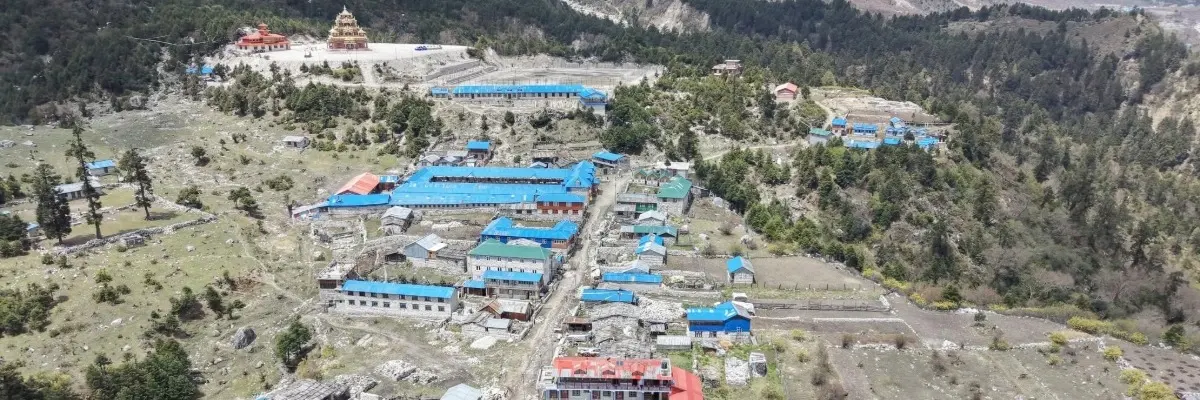
Shyala Village, also pronounced Syala or Shyalla, is a traditional small settlement most itineraries barely mention. It sits quietly in an open glacial basin between the region’s biggest hub, Samagaun, and Lho. It has ample space, a full amphitheater of 8,000-meter peaks, and a particular kind of peace that only shows up once a valley stops narrowing.
Shyala sits at around 3,500 meters (11,483 feet) in the upper Nubri Valley of Gorkha District. Trekkers heading up from Namrung and Lho on the Manaslu Circuit Trek reach Shyala, and from here on the trail continues towards Samagaun, Samdo and eventually Larke La Pass.
After trekking for around 5-7 days, through pine forest and narrow gorge villages like Deng and Namrung, the valley finally opens into wild alpine ground. Once you reach Shyala, you’ll be welcomed with a stunning view of Mount Manaslu rising directly ahead of you.
Here we cover exactly where Shyala village sits, how high it really is, what makes it a worthy place to stay, the cultural shift once you arrive, and practical details you’ll want before you arrive.
If you’re planning a full day here to acclimatize or simply passing through on the way to Samagaun, this is the perfect reference to have read beforehand.
Quick facts about Shyala Village
Before diving into the full details about it, here’s a quick overview of what makes this village worth knowing about.
| Category | Facts |
| Region | Manaslu |
| Altitude | Approximately 3,500 meters (11,483 feet) above sea level |
| Location | Upper Nubri Valley, Manaslu Conservation Area, Gorkha District |
| Position on Manaslu Region | Between Lho (3,180 meters) and Samagaun (3,530 meters) |
| Known For | Uninterrupted views of Manaslu, wide alpine landscape, and quiet Tibetan village |
| Permits Needed | MCAP (Manaslu Conservation Area Permit) and RAP (Restricted Area Permit) |
| Guide Requirement | Mandatory |
| Ethnic Community | Gurung and Tamang |
| Accessibility | Reached entirely on foot from Machha Khola, or by helicopter flight |
| Best Seasons | Spring (March-June) and Autumn (September-December) |
| Typical Overnight Cost | Around $25-$35 including bed, dinner and breakfast |
Where is Shyala Located on the Manaslu Circuit?
Shyala lies in the Nubri Valley of the Manaslu Conservation Area in Gorkha District along the upper stretch of Budhi Gandaki Valley. It sits close to an altitude of 3,500 meters above sea level.
It is a high-altitude settlement lodged in the Upper Nubri Valley that acts as a scenic stepping stone between the popular trekking villages of Lho and Samagaun. Its approximate map coordinates are 28.574° N, 84.672° E.
Where Shyala Sits on the Trail?
Shyala is situated in a wide, glaciated valley alongside a glacial stream. It is a strategic spot in the Manaslu Circuit itinerary because trekkers usually spend a night here to acclimatize.

The trail from Lho to Shyala is around 3-4 km (1.9-2.5 miles) and climbs through rhododendron forest before the trees start to thin. The valley opens dramatically wider than anything trekkers have walked through so far. This is the location where the entire circuit’s landscape turns.
Which District is Shyala Village in?
Shyala village lies within Gorkha District inside the Manaslu Conservation Area. It lies in the upper Budhi Gandaki valley, deep inside the Manaslu Conservation Area.
Gorkha District covers the entire Manaslu Circuit route, from the lowland villages near Soti Khola up to Samdo and Larkya La Pass. The area is governed locally by Chum Nubri Rural Municipality, which administers most of the upper Manaslu villages, including Lho, Shyala, and Samagaun.
How Shyala Compares to Lho and Samagaun in terms of Altitude?
You’ll likely gain around 320 (1,050 feet) meters of elevation along the way from Lho to Shyala, which takes around 4 hours of trekking. Here’s a table comparing the heights of the surrounding villages of Shyala.
| Village | Altitude | Altitude Difference from Shyala |
| Lho | 3,180 meters (10,433 feet) | 320 meters (1,050 feet) |
| Shyala | 3,500 meters (11,483 feet) | – |
| Samagaun | 3,530 meters (11,581 feet) | 30 meters (98 feet) |
How Much Altitude Have You Gained by the time you reach Shyala?
By the time you reach Shyala, you’d have already climbed 2,631 meters (8,632 feet) from the start of the trail at Machha Khola (869 meters/2,851 feet). However, if you calculate the elevation gain from Kathmandu (1400 meters/4,593 feet), you’d gain 2,100 meters (6,890 feet).
That makes Shyala a necessary acclimatization stop before the bigger gains ahead towards Samdo, Dharamsala, and Larke La Pass at 5,106 meters.
People, Culture, Religion, and Daily Life in Shyala Village
Shyala sits within the broader Nubri cultural zone, a strip of Tibetan-origin settlements running from Namrung through Lho, Shyala, Samagaun, and Samdo.
The people of Shyala have preserved their traditional way of life, with Buddhism playing an important role in the community. Buddhist people in Shyala mainly follow the Nyingma and Kagyu schools.
Walking through the village, you can pass over rows of flat stones stacked into low walls, sculpted with the Buddhist mantra “Om Mani Padme Hum”. Trekkers are advised to follow local customs, keep these walls on their right, and walk around them clockwise.
If you look up, you can see lines of colorful prayer flags stretched across the village. The five repeating colors of the flags stand each for an element of nature. The local belief is that the wind sweeps up all the printed blessings and carries them to the passers-by.
You can also pass through white chortens across the village.

Locals believe Manaslu is a living deity, and the Pungyen monastery symbolizes a sacred bond. Since this place is an active worship site, trekkers are advised to dress modestly, keep quiet, and always ask before taking indoor photos.
The houses here are based on old mountain architecture, built specifically for the harsh mountain climate. They feature heavy stone walls, small windows, and low enough doors that require you to duck as you enter.
The people in Manaslu are very welcoming after you break the ice and start conversing. For trekkers, spending a little time talking with locals can offer a more personal glimpse into Shyala, one that goes beyond its mountains and scenery.
What makes Shyala Village so Special?
Shyala is one of the most beautiful and scenic villages in the entire Manaslu Circuit with an unobstructed 360-degree mountain panorama.
It is celebrated for a dramatic terrain transition and its sense of peace and quiet. Here, the dense pine forests vanish to give way to high-alpine pastures and stone-built paths lined with cultural prayer flags.
The Majestic Mountain Views
This is the first place on the trek where Mount Manaslu (8,163 meters) stops being a general idea and appears clearly ahead infront of you. Alongside Manaslu, trekkers can get a clear view of Himalchuli (7,893 meters) and Ngadi Chuli, also called Peak 29 (7,871 meters).

Many trekkers generally set an early alarm to catch the first ray of sunlight hitting the summit of Manaslu. It’s a mesmerizing moment worthy of losing a bit of your sleep.
Dramatic Change of Landscape
This is one of the things trekkers consistently mention: the sudden shift of the landscape. The walk from Lho to Shyala is a steady, moderate climb along pine and rhododendron-shaded forest that levels out as the valley widens into the pasture where Shyala sits.
It is one of the clearest terrain transitions on the overall circuit.
An Authentic Himalayan Village Atmosphere
Shyala carries a strong Tibetan Buddhist character that carries the authentic atmosphere of a Tibetan plateau village rather than a typical Nepalese mid-hill town.
Most of the teahouses in Shyala are traditional stone houses with flat rooftops scattered across the hillside.
Historically, the local economy ran on barley cultivation, potato farming, and yak herding for generations, which has now shifted to running teahouses during the peak trekking seasons.
As you walk to explore the village, you’ll pass through mani walls carved with prayers, prayer flags, and yak pastures where the animals graze.
Trekkers who stop here rather than pushing directly to Samagaun describe it as one of the calmest nights of the entire trek.
Less Commercial Trekking Experience
Comparatively, Shyala doesn’t have as many teahouses as Lho or Samagaun. While the neighboring villages can feel busy and crowded during the peak season, Shyala stays calm, uncrowded, and reasonably quiet.
Trekkers can observe the unmatched comfort and lesser commercial experience in Shyala Village.
Shyala Village’s Photography Appeal
Shyala Village in the Manaslu Region is considered one of the best photography locations in the entire circuit.
It is set in a wide and flat valley that offers a rare 360-degree panorama of giant peaks including Mount Manaslu itself. Trekkers can also see Mount Himalchuli and Ngadi Chuli without any obstruction of view.
The combination of an open valley, yak pastures, traditional stone houses, monasteries and an undisturbed view of the snow-capped mountains makes Shyala one of the most photogenic stops. It is one of the most popular scenic stops on the whole trek.
Why Shyala is More Than a Lunch Stop?
Various itineraries for the Manaslu Region list Shyala as a quick pass through on the way to Samagaun, missing the calmest village of the entire trek. Staying overnight here has a real practical value beyond the scenery, as it functions as a high-altitude acclimatization stop as well.
At 3,500 meters, spending a night in Shyala gives your body meaningful time to adjust. This is before the bigger jumps ahead to Samagaun, Dharamshala, and the push towards Larkya La.
Shyala offers an uncrowded view of the sunrise on Manaslu, which’ll definitely be worth waking up early for.
There’re also quite a few side excursions from Shyala. These involve active movement and moderate elevation gain during the daylight hours. This also helps you in the acclimatization process rather than just passing time.
The Wild Side of Shyala Village: Nature and Wildlife
While you climb upwards to the alpine zone around Shyala, you’ll notice wildlife changes from the forest down the valley.
You may often spot Himalayan tahr, a big and sturdy wild goat munching on the grassy slopes above the village. If you look higher up in the rocky areas, you might spot blue sheep too.
You could also spot high-altitude birds like Himalayan Monal and Himalayan Griffon soaring over the valley, while snow finches and choughs occupy the open ground near the village.
Guides might occasionally point out fresh Snow Leopard prints, noting that it might have crossed paths with the trekkers.
The forest right below the valley is the last bit of proper dense tree cover before the trail gets completely open and rocky. It is packed with Juniper and rhododendrons, which look incredibly beautiful when they bloom in April and May.
The Nubri community has followed a code of nonviolence known as Shyagya, which forbids hunting and limits deforestation. This tradition has helped protect local biodiversity for generations. It existed well before the conservation area was formally established in 1998.
The local government later formalized this practice as the Tsum Shyagya Act through the Tsumanubri Rural Municipality in 2022/2023.
You can also check out our guide to learn more about spotting rare and fascinating wildlife in the Manaslu Region.
Nearby Attractions from Shyala Village
Shyala village sits close to several attractions, making it one of the most rewarding overnight stops on the route. Staying here doubles as a smart acclimatization day too, as you’ll be sleeping at the same altitude that helps your body adjust, not just pass time.
Some nearby attractions from Shyala are mentioned below.
Shyala Monastery
Shyala Monastery, also known as a Buddhist Gompa, is a serene Tibetan Buddhist monastery located around 200-300 meters above the village. The monastery is just about a 15-minute walk from the village, which will require you to cross a football field as well.

Pungyen Gompa
Pungyen Monastery, popularly known as Pungyen Gompa, is the most notable monastery along the Manaslu Circuit Trek. It is located between Shyala and Samagaun, which is a short detour on the way to Samagaun. It sits at the base of Manaslu Himal and also serves as a meditation retreat center.
Reaching here from Shyala is already included in the Himalayan Masters’ Manaslu Circuit Trek 13-day itinerary. It’s a short 3-4-hour trek covering around 6 km (3.73 miles) that requires only a gradual climb and a lighter pace.

Green Lake, Puggen Lake and Numla Khola
En route to Pungyen Gompa, you’ll be walking along the banks of Numla Khola, which forms two small lakes named Green Lake and Puggen Tal. The peaceful walk with the sound of clear water flowing and scenic grassland on the side can be therapeutic to many.

Sunrise and Sunset Viewpoints
Shyala and the nearby ridgelines provide a number of unique perspectives that are worth indulging in during your visit. Early morning strolls along the low moraine ridges outside the valley provide a clear, unhindered view of Manaslu, Himalchuli, and Ngadi Chuli at first light.
A different, higher vantage point is located close to Pungyen Gompa itself. From there, the view shifts to a direct view of Manaslu’s south face, and on clear days, Ganesh Himal can be seen farther away. This view is completely different from anything at valley level.
HangSangFu Meditation Center
The HangSangFu Meditation Center is a spiritual site located near Shyala Village. This center is tied deeply to the local Tibetan Buddhist culture of the people of Nubri Valley.
It is located about 600 meters east of the village and takes about 20-30 minutes to reach the meditation center. This can be a perfect place to relax your thoughts on your rest day at Shyala.
Things to Do in Shyala Village
Shyala is the kind of village that is not built around typical tourist activities. There’re not many set attractions here, which is what actually makes this place worth spending the night.
The best things to do here are completely unplanned and slow-paced. That said, here are a few things you could make use of your time for:
- Wake up early and watch the first ray of light hit the summit of Manaslu; arguably, this could be the best sunrise view of your life.
- Take a walk into the open pastures around the village to watch yaks and dzos graze with Himalchuli and Peak 29 in the background.
- Look out for mani walls and prayer flags scattered across the trail to remind yourself of the strong Tibetan Buddhist presence in the Nubri region.
- Play football with the locals on one of the high-altitude football grounds of Nepal.
- Ask your guide about the old salt trade routes that once passed through the valley.
- Explore local village life and interact with locals.
How to Reach Shyala?
The only way to reach Shyala Village is on foot, as there’s no proper road access after Maccha Khola. Local vehicles can take you up to Phangsing, depending on the road conditions. These roads are mostly disturbed by floods or landslides during the monsoon season.
It generally takes around 5-7 days to reach Shyala from Kathmandu. With Himalayan Masters, you reach Shyala Village on day 5 of our 13-day itinerary.
The typical approach follows driving to Machha Khola from Kathmandu and trekking through Jagat, Deng and Namrung. The route covers 78.5 km (48.7 miles) of pure walking.
Can I fly directly to Shyala?
Trekkers wanting to start their trek directly from Shyala can also take a helicopter from Kathmandu. This is not a common option, and flight schedules depend on weather, landing conditions, aircraft performance, and required aviation permissions.
While flying directly to Shyala saves time, you miss the opportunity to trek through the lower villages along the route, where you can take in the changing landscapes, local culture, and traditional mountain settlements.
For those with time, trekking up to Shyala offers a much more rewarding experience of the Manaslu region.
Staying Overnight in Shyala Village: Teahouses and Accomodation Facilities
Accommodation in Shyala is quite basic. There are around 10-15 small-scale, family-run teahouses. They provide similar facilities to other villages accomodation in the Manaslu Circuit.
Teahouses here are constructed in the traditional local style, built of stone, with small windows and low doorways. They are built with a wooden interior rather than concrete walls.
Though Shyala is generally uncrowded, it is better to pre-book your stays during peak trekking seasons, such as Spring and Autumn.

What to Expect Inside the Teahouses?
Most teahouses have simple rooms that are usually twin-sharing, with wooden bed frames, basic mattresses, and clean sheets and blankets.
Teahouses generally do not provide sleeping bags, so trekkers should bring their own, preferably rated to around -10°C, for extra warmth.
Teahouses usually have shared, basic bathrooms, with hot showers available at some lodges using solar or gas heating.
As temperatures can be very cold in the morning, it is better to shower later in the afternoon or in the early evening, when the water has had time to warm up.
Electricity here is limited and mostly solar-powered, so some lodges may charge you a small extra fee (ranging from NPR 300 to 500) for charging your electronic devices. It’s better to pack a higher-capacity power bank as a backup, since blackouts aren’t unusual.
Wi-Fi is provided by the tea house, and you could be charged a small fee to use it depending on the lodge you stay in. Cellular signal or data is also available. Both WiFi and cellular data are slower than in lower villages and less reliable.
A few teahouses also sell basic items, including snacks such as chips, packaged noodles, biscuits, protein bars, chocolates, and chewing gum; tissues; and a few odd bits of trail gear. It’s worth stocking up on anything essential before you arrive here.
Experiencing Local Taste in Shyala Village
Shyala’s food options resemble the standard Manaslu trekking menu found in other villages along the route. However, options become more limited the higher you climb compared to the lower villages.
Dal Bhat is the most stable and popular recipe available here: the standard rice, lentil, vegetable plate with unlimited refills. At this altitude, where your body burns calories faster, it’s simply the meal that keeps you fueled for the next day’s climb.
Other options include noodle soup, thukpa, fried rice, momos, Tibetan bread, chapati, and pancakes. Tea and instant coffee are common as well.
Non-vegetarian options can be limited, and getting fresh meat meals is rare. The prices range from $5 to $10 per meal.
Bottled water is available in Shyala. Most teahouses also offer boiled water for a small fee, which is a cheaper and more eco-friendly option than buying plastic bottles.
It is recommended to carry water purification tablets or a UV purifier to ensure safe drinking water throughout your trek. Depending on just bottled water might not be practical.
Note:
The cost of food and water is comparatively higher in higher-elevation villages in the Himalayas than in the lower part of the valley, due to higher transportation costs.
Shyala Village Weather: What to Expect at This Altitude
Sitting at 3,500 meters (11,483 feet), Shyala has a proper high-altitude alpine climate. It is noticeably colder and more exposed than Namrung and Lho’s forested setting.
The recommended time to visit Shyala is the same as for most of the Manaslu region: either Spring (March-May) or Autumn (September-November). During these seasons, the weather is most stable, and the mountain views are the clearest.
Spring (March-May)
Spring brings blooming rhododendrons through the forest that lies below Shyala, along with longer daylight hours and usually stable weather.
April is considered one of the best months to visit Shyala for reasons like clear mornings, warm afternoons, and a fully open trail. Trekkers can plan for early June as well since the initial monsoon doesn’t affect much.
Autumn (September-November)
Autumn is the most crowded but most reliable season, offering the clearest skies and most stable weather of the year. October and November are widely considered the two best months to be in Shyala specifically, with crisp air, dry trails, and unobstructed views of Manaslu.
It is also the festive season in Nepal, which attracts local trekkers as well because of a month-long holiday in most schools and colleges, making prebooking during this season essential.
You may also catch local celebrations such as the Yartung Festival that concludes (celebrated) with horse racing and traditional dances.
Monsoon (June-August)
Monsoon season drenches the lower Budhi Gandaki Valley with heavy rain, inviting leeches and a real risk of landslides on the trail sections below Namrung.
Since Shyala is quite high, the rain is less intense here. However, thick clouds often roll in to obstruct the mountain views, which may be disappointing to a lot of trekkers. This makes the surrounding area lush green, with abundant wildlife and beautiful natural scenery.
It’s a season better suited to flexible and more capable trekkers than to anyone who’s a beginner or mountain bagger.
Trek with a guide and check the route and road conditions, and follow the guide’s suggestion.
Winter (December-February)
Winter at this height is truly cold, with probable snowfall above Shyala, and sometimes in Shyala too. The temperatures drop well below freezing at night.
Fewer teahouses are open during this time, since there are likely only a few trekkers and it is extremely difficult to operate.
Most owners come down to less remote areas. It’ll be better if you first confirm the availability of teahouses before you travel in winter.
Typical Temperatures around Shyala
Shyala village daytime temperature during peak trekking seasons (spring and autumn) typically ranges around 10-18°C, while nighttime temperature can drop below freezing. It can feel noticeably colder with wind chill higher up the valley above the tree line.
However, the warmth of a furnace or central heating in the dining room of the teahouse and chatting with fellow trekkers become among the most memorable experiences in Shyala or the entire trek.
Although you won’t have any heating system in the bedrooms, they remain reasonably warm under thick blankets.
Mornings are usually the coldest time of the day and can be very different from the midday sun, especially since frost often covers the trail and rooftops.
October and early November are dry and generally quite stable, with crisp air and clear mountain views, but as the days get longer towards late November, temperatures drop.
The temperature around early December is relatively manageable, with daytime temperatures ranging from -5°C to 8°C, with snow starting to build at higher altitudes.
Winter is the harshest season, with daytime temperatures hovering around -5°C to 8°C and nights dropping to around -18°C. Temperatures at villages above Shyala can fall below -10°C even during the day. Trails can also ice over and become hazardous.
Travel Tips for Visiting Shyala
Before you reach Shyala, it’s worth reviewing these essential Manaslu Circuit trekking tips to help you prepare for the journey ahead.
Permits and Guides
As Shyala lies in Manaslu Conservation Area, you’ll require MCAP (Manaslu Conservation Area Permit) and RAP (Restricted Area Permit).
There’s a permit checkpoint right after Shyala Village at Samagaun where your permits are checked.
With Himalayan Masters, your guides will have it prearranged and checked across the checkpoint, so you don’t have to worry about it at all. Also, if you were unaware, know that a licensed guide is compulsory in the Manaslu region. This is not the same as other parts of Nepal, where permit regulations have eased over the years.
It’s not just a formality; trails above Shyala are less used, less marked, and less kind in bad weather. A guide who is familiar with the trail is at least as important for safety as for paperwork!
Altitude and Health
Mild altitude symptoms like headaches, slight breathlessness, and restless sleep are fairly common around 3,500 m. Shyala is more than just a stop on the trail. It creates a valuable chance to acclimatize before the higher, tougher terrain toward Samagaun, Samdo, and Larkya La.
Take it slow, drink more water than you think you need, don’t drink alcohol on the night before a big climb, and listen to your body before going further.
If the symptoms worsen overnight, tell your guide immediately; don’t just wait for them to get better on their own. At this height, it’s better to tell them early than late.
Network and Connectivity
Once you are in Shyala, both NTC and Ncell networks are reachable, but don’t expect a consistent mobile signal or internet connection. This is the way of most villages in the upper Manaslu valley, where you will find a fragile connection at best.
Most trekkers just switch off and enjoy a break from gadgets.
If you need to stay in touch for work or family, give them a heads up. Let family and friends know that you will not be reachable for a period of time.
Cash and ATM Access
The valley doesn’t have any ATMs, and card payments are impractical here. Bring enough Nepali rupees in cash from Kathmandu, where functioning ATMs are readily available.
If you’re arriving with foreign currency, it’s better to exchange your money in Kathmandu before starting the trek, as currency exchange facilities are not available along the trail.
Although necessary expenses are covered by your trip package when you book a package, don’t forget to bring a little extra cash to buy snacks and other necessities along the way.
What to Pack for Trekking to Shyala?
By the time you reach Shyala, sub-zero-rated warm clothes, a good 4-season sleeping bag, and waterproof trekking boots are all necessary items, as teahouse bedrooms here do not provide any additional heating.
A headlamp is good for early mornings and dark teahouse corridors at night. A large-capacity powerbank is truly worthy of its weight in this part of the circuit where solar charging is often and significantly limited.
Trekking poles make a noticeable difference on the uneven, rocky trail leading into and out of Shyala, especially on the steeper sections. Good sunglasses and a high-SPF sunscreen are also worth packing, since the glare off the surrounding snowfields can be intense even on cold days.
A warm hat, gloves, and a buff or scarf to cover your face help against the sharp wind that tends to pick up in the village once the sun starts to set. By this point in the trek, a basic first-aid kit, plus altitude medicine (if the climber is prescribed it in advance by a doctor), is worth the additional pack weight.
For complete packing ideas for trekking to Shyala, our Manaslu trek packing list guide will definitely come in handy.
Final Thoughts on Shyala Village
While not as popular or busy as Samagaun on the Manaslu Circuit Trek, Shyala has its own niche and appeal. The trail ends its journey through the forest and enters the true high Himalayan terrain of Shyala.
Located in the upper Nubri Valley in the Manaslu Conservation Area, here the trees give way, and the valley widens openly to give you a clearer and unobstructed view of Mount Manaslu itself.
If you are making a Manaslu Circuit plan, then do not miss out on Shyala as more than a quiet pause between Lho and Samagaun. It is a true acclimatization stop before the steeper climbs that follow. This village provides some of the best views of the mountains, the calmest teahouses and some of the most authentic Tibetan Buddhist village life on the route.
Sunrise over Manaslu, open yak pastures and a quieter night than Samagaun can provide are all the reasons for spending an overnight in Shyala.
You may think of it as just a single point on the Manaslu circuit, but for many trekkers, it is the one that ultimately makes the trip. Many consider this village the most beautiful on the entire trek, and we totally agree.
FAQs
What is Shyala Village famous for?
Where is Shyala Village located?
What is the altitude of Shyala Village?
How high is Shyala compared to Lho and Samagaun?
How do I reach Shyala on the Manaslu Circuit?
How far is Shyala from Lho?
How far is Shyala from Namrung?
How far is Shyala from Samagaun?
Can you stay overnight in Shyala?
Are there teahouses in Shyala?
What mountains can you see from Shyala?
Can you see Manaslu from Shyala?
Is Shyala good for photography?
Is Shyala better than Samagaun?
Is Shyala better than Lho?
What is the best time to visit Shyala?
Is trekking to Shyala possible in winter?
Is Shyala an acclimatization stop?
Is Shyala difficult to reach?
What should I pack for Shyala Trek?
Do you need a permit to visit Shyala?
Do I need a guide to trek to Shyala?
Is there cellular network or WiFi in Shyala?
What wildlife might you see near Shyala?
What is Pungyen Gompa, and is it worth visiting?
Are there festivals to experience around Shyala?
Loading...
related post


Author

Jayanta Neupane is a travel content writer with a genuine passion for exploring, researching, and sharing travel experiences. He enjoys turning firsthand experiences and destination research into engaging, informative, and practical content. With an interest in adventure, trekking, and Nepal’s diverse landscapes and cultures, he focuses on creating authentic content that helps travelers better understand and experience their destinations.


Leave Your Comment